
A.T. Robertson Commentary 1 John 4:18
A.T. Robertson Commentary
1 John 4:18
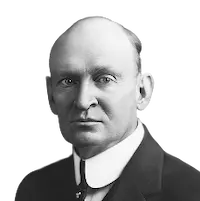
A.T. Robertson Commentary
1 John 4:18
SCRIPTURE
"There is no fear in love: but perfect love casteth out fear, because fear hath punishment; and he that feareth is not made perfect in love." — 1 John 4:18 (ASV)
Fear (φοβος). Like a bond-slave (Romans 8:15), not the reverence of a son (ευλαβεια, Hebrews 5:7f.) or the obedience to a father (εν φοβω, 1 Peter 1:17). This kind of dread is the opposite of παρρησια (boldness).
Perfect love (η τελεια αγαπη). There is such a thing, perfect because it has been perfected (verses 12,17). Cf. James 1:4.
Casteth out fear (εξω βαλλε τον φοβον). "Drives fear out" so that it does not exist in real love. See εκβαλλω εξω in Joh 6:37; 9:34f.; 12:31; 15:6 to turn out-of-doors, a powerful metaphor. Perfect love harbours no suspicion and no dread (1 Corinthians 13).
Hath punishment (κολασιν εχε). Old word, in N.T. only here and Mt 25:46. Τιμωρια has only the idea of penalty, κολασις has also that of discipline, while παιδεια has that of chastisement (Hebrews 12:7). The one who still dreads (φοβουμενος) has not been made perfect in love (ου τετελειωτα). Bengel graphically describes different types of men: "sine timore et amore; cum timore sine amore; cum timore et amore; sine timore cum amore."