
A.T. Robertson Commentary 2 Corinthians 7
A.T. Robertson Commentary
2 Corinthians 7
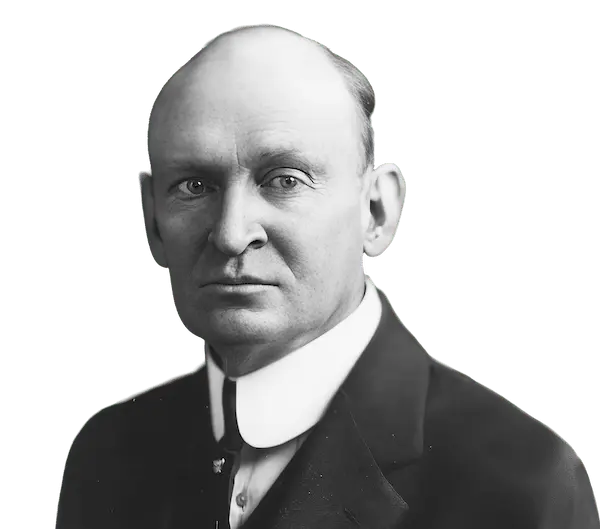
A.T. Robertson Commentary
2 Corinthians 7
"Having therefore these promises, beloved, let us cleanse ourselves from all defilement of flesh and spirit, perfecting holiness in the fear of God." — 2 Corinthians 7:1 (ASV)
These promises (ταυτας τας επαγγελιας). So many and so precious (2 Peter 2:4 επαγγελματα; Hebrews 11:39f.).
Let us cleanse ourselves (καθαρισωμεν εαυτους). Old Greek used καθαιρω (in N.T. only in Joh 15:2, to prune). In Koine καθαριζω occurs in inscriptions for ceremonial cleansing (Deissmann, Bible Studies, p. 216f.). Paul includes himself in this volitive aorist subjunctive.
From all defilement (απο παντος μολυσμου). Ablative alone would have done, but with απο it is plainer as in Heb 9:14. Μολυσμος is a late word from μολυνω, to stain (see on 1 Corinthians 8:7), to pollute. In the LXX, Plutarch, Josephus. It includes all sorts of filthiness, physical, moral, mental, ceremonial, "of flesh and spirit." Missionaries in China and India can appreciate the atmosphere of pollution in Corinth, for instance.
Perfecting holiness (επιτελουντες αγιοσυνην). Not merely negative goodness (cleansing), but aggressive and progressive (present tense of επιτελεω) holiness, not a sudden attainment of complete holiness, but a continuous process (1 Thessalonians 3:13; Romans 1:4; Romans 1:6).
"Open your hearts to us: we wronged no man, we corrupted no man, we took advantage of no man." — 2 Corinthians 7:2 (ASV)
Open your hearts to us (χωρησατε ημας). Old verb (from χωρος, place), to leave a space, to make a space for, and transitive here as in Mt 19:11. He wishes no further στενοχωρια, tightness of heart, in them (6:12). "Make room for us in your hearts." He makes this plea to all, even the stubborn minority.
We wronged no man (ουδενα ηδικησαμεν). A thing that every preacher ought to be able to say. Cf. 4:2; 1 Thessalonians 2:3; Acts 20:26f.
We corrupted no man (ουδενα εφθειραμεν). We ruined no one. "It may refer to money, or morals, or doctrine" (Plummer). He is answering the Judaizers.
We took advantage of no man (ουδενα επλεονεκτησαμεν). That charge was made in Thessalonica (1 Thessalonians 4:6) which see for this late verb and also on 2 Corinthians 2:11. He got the best of (note πλεον more in the root) no one in any evil way.
"I say it not to condemn [you]: for I have said before, that ye are in our hearts to die together and live together." — 2 Corinthians 7:3 (ASV)
Not to condemn you (προς κατακρισιν ου). "Not for condemnation." Late word from κατακρινω, found in Vettius Valens, and here only in N.T.
To die together and live together (εις το συναποθανειν κα συνζηιν). "For the dying together (second aorist ingressive active infinitive of συναποθνησκω) and living together (present active infinitive)." One article (το) with both infinitives. You are in our hearts to share death and life.
"Great is my boldness of speech toward you, great is my glorying on your behalf: I am filled with comfort, I overflow with joy in all our affliction." — 2 Corinthians 7:4 (ASV)
I overflow with joy in all our affliction (υπερπερισσευομα τη χαρα επ παση τη θλιψε ημων). A thoroughly Pauline sentiment. Περισσευω means to overflow, as we have seen. Hυπερ-περισσευω (late word, so far only here and Byzantine writers) is to have a regular flood. Vulgate superabundo.
"For even when we were come into Macedonia our flesh had no relief, but [we were] afflicted on every side; without [were] fightings, within [were] fears." — 2 Corinthians 7:5 (ASV)
When we had come (ελθοντων ημων). Genitive absolute with second aorist active participle of ερχομα. Paul now returns to the incident mentioned in 2:12 before the long digression on the glory of the ministry.
Had no relief (ουδεμιαν εσχηκεν ανεσιν). Perfect active indicative precisely as in 2:13 which see, "has had no relief" (dramatic perfect).
Afflicted (θλιβομενο). Present passive participle of θλιβω as in 4:8, but with anacoluthon, for the nominative case agrees not with the genitive ημων nor with the accusative ημας in verse 6. It is used as if a principal verb as in 9:11; 11:6; Romans 12:16 (Moulton, Prolegomena, p. 182; Robertson, Grammar, pp. 1132-35).
Without were fightings (εξωθεν μαχα). Asyndeton and no copula, a parenthesis also in structure. Perhaps pagan adversaries in Macedonia (cf. 1 Corinthians 15:32).
Within were fears (εσωθεν φοβο). Same construction. "Mental perturbations" (Augustine) as in 11:28.
Jump to: