
A.T. Robertson Commentary 2 Timothy 1:3
A.T. Robertson Commentary
2 Timothy 1:3
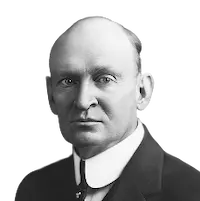
A.T. Robertson Commentary
2 Timothy 1:3
SCRIPTURE
"I thank God, whom I serve from my forefathers in a pure conscience, how unceasing is my remembrance of thee in my supplications, night and day" — 2 Timothy 1:3 (ASV)
I thank (χαριν εχω). "I have gratitude." As in 1 Timothy 1:12. Robinson cites examples of this phrase from the papyri. It occurs also in Lu 17:9; Acts 2:47. Χαρις in doxologies Paul uses (1 Corinthians 15:57; 1 Corinthians 2:14; 1 Corinthians 8:16; 1 Corinthians 9:15; Romans 6:17; Romans 7:25). His usual idiom is ευχαριστω (1 Corinthians 1:4; Romans 1:8) or ευχαριστουμεν (1 Thessalonians 1:2; Colossians 1:3) or ου παυομα ευχαριστων (Ephesians 1:16) or ευχαριστειν οφειλομεν (2 Thessalonians 1:3).
Whom I serve from my forefathers (ω λατρευω απο προγονων). The relative ω is the dative case with λατρευω (see Ro 1:9 for this verb), progressive present (I have been serving). For προγονων (forefathers) see 1 Timothy 5:4. Paul claims a pious ancestry as in Ac 24:14; Acts 26:5; Galatians 2:14; Php 3:4-7.
In a pure conscience (εν καθαρα συνειδησε). See 1 Timothy 1:5; Acts 23:1.
Unceasing (αδιαλειπτον). Late and rare compound, in N.T. only here and Ro 9:2 which see. The adverb αδιαλειπτως is more frequent (in the papyri, literary Koine, 1 Thessalonians 1:2; Romans 1:9). The adjective here is the predicate accusative, "how I hold the memory concerning thee unceasing." The use of αδιαλειπτως (adverb) is a sort of epistolary formula (papyri, 1 Thessalonians 1:2; 2:13; 5:17; Romans 1:9).
Remembrance (μνειαν). Old word, in N.T. only Pauline (seven times, 1 Thessalonians 1:2; Romans 1:9).