
A.T. Robertson Commentary 2 Timothy 2
A.T. Robertson Commentary
2 Timothy 2
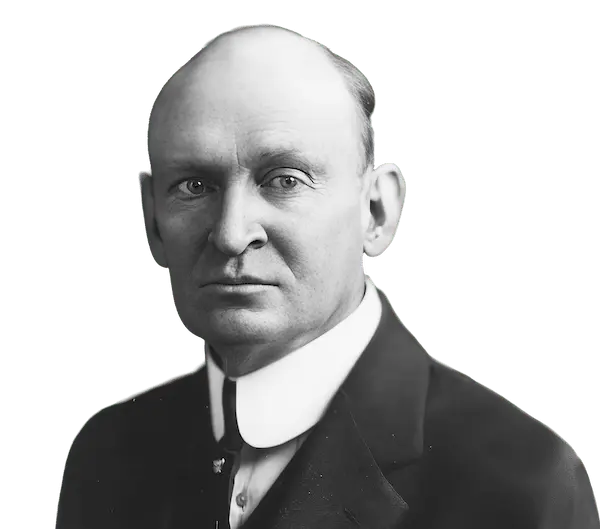
A.T. Robertson Commentary
2 Timothy 2
"Thou therefore, my child, be strengthened in the grace that is in Christ Jesus." — 2 Timothy 2:1 (ASV)
Be strengthened (ενδυναμου). Present passive imperative of ενδυναμοω. See already 1 Timothy 1:12; Romans 4:20; Php 4:13; Ephesians 6:10. "Keep on being empowered," "keep in touch with the power."
In the grace that is in Christ Jesus (εν τη χαριτ τη εν Χριστω Ιησου). Where the power is located. Christ is the dynamo for power only when and while we keep in touch with him.
"And the things which thou hast heard from me among many witnesses, the same commit thou to faithful men, who shall be able to teach others also." — 2 Timothy 2:2 (ASV)
From me (παρ' εμου). As in 1:13. Paul was Timothy's chief teacher of Christ.
Among many witnesses (δια πολλων μαρτυρων). Plutarch has δια in this sense and Field (Ot. Norv.) suggests that it is a legal phrase "supported by many witnesses." Not mere spectators, but testifiers. See Paul's use of δια 1 Thessalonians 4:2; 2 Corinthians 2:4; Romans 2:27; 14:20. Paul in 1 Corinthians 15:1–8 gives many witnesses of the resurrection of Christ.
Commit thou (παραθου). Second aorist middle imperative of παρατιθημ (1 Timothy 1:18) to deposit, same metaphor as παραθηκη in 1:12,14. "Deposit thou."
Faithful (πιστοις). "Trustworthy," "reliable," as in 1 Timothy 1:12 of Paul himself.
Able (ικανο). Capable, qualified, as in 1 Corinthians 15:9; 2 Corinthians 2:16; 3:5.
Others also (κα ετερους). Not necessarily "different," but "others in addition." This is the way to pass on the torch of the light of the knowledge of God in Christ. Paul taught Timothy who will teach others who will teach still others, an endless chain of teachertraining and gospel propaganda.
"Suffer hardship with [me], as a good soldier of Christ Jesus." — 2 Timothy 2:3 (ASV)
Suffer hardship with me (συνκακοπαθησον). See 1:8 for this verb. The old preacher challenges the young one to share hardship with him for Christ.
As a good soldier (ος καλος στρατιωτης). Paul does not hesitate to use this military metaphor (this word only here for a servant of Christ) with which he is so familiar. He had already used the metaphor in 1 Corinthians 9:7; 2 Corinthians 10:3f.; 1 Timothy 1:18. In Php 2:25 he called Epaphroditus "my fellow-soldier" (συνστρατιωτην μου) as he did Archippus in Phm 1:2.
"No soldier on service entangleth himself in the affairs of [this] life; that he may please him who enrolled him as a soldier." — 2 Timothy 2:4 (ASV)
No soldier on service (ουδεις στρατευομενος). "No one serving as a soldier." See 1 Corinthians 9:7 for this old verb and 2 Corinthians 10:3; 1 Timothy 1:18 for the metaphorical use.
Entangleth himself (εμπλεκετα). Old compound, to inweave (see Mt 27:29 for πλεκω), in N.T. only here and 2 Peter 2:20. Present middle (direct) indicative.
In the affairs (ταις πραγματειαις). Old word (from πραγματευομα, Luke 19:13), business, occupation, only here in N.T.
Of this life (του βιου). No "this" in the Greek, "of life" (course of life as in 1 Timothy 2:2, not existence ζωη).
Him who enrolled him as a soldier (τω στρατολογησαντ). Dative case after αρεση (first aorist active subjunctive of αρεσκω, to please, 1 Thessalonians 2:4, purpose clause with ινα) of the articular first aorist active participle of στρατολογεω, literary Koine word (στρατολογος, from στρατος and λεγω), only here in N.T.
"And if also a man contend in the games, he is not crowded, except he have contended lawfully." — 2 Timothy 2:5 (ASV)
If also a man contend in the games (εαν δε κα αθλη τις). Condition of third class with present (linear) active subjunctive of αθλεω, old and common verb (from αθλος, a contest), only this verse in N.T., but συναθλεω in Php 1:27. Note sharp distinction between αθλη (present subjunctive, engage in a contest in general) and αθληση (first aorist active subjunctive, engage in a particular contest). Not "except he have contended," but simply "unless he contend" (in any given case) "lawfully" (νομιμως). Old adverb, agreeably to the law, in N.T. only here and 1 Timothy 1:8.
Is not crowned (ου στεφανουτα). Present passive indicative of στεφανοω, old verb (from στεφανος, crown), in N.T. only here and Heb 2:7,9. One apodosis for two protases. The victor in the athletic contests was crowned with a garland.
Jump to: