
A.T. Robertson Commentary Acts 16
A.T. Robertson Commentary
Acts 16
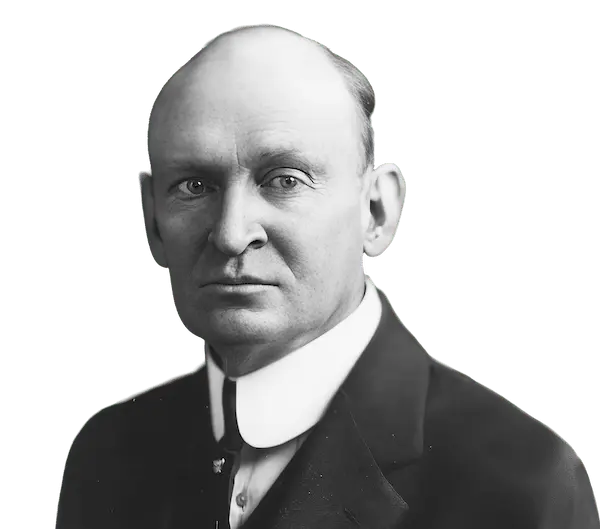
A.T. Robertson Commentary
Acts 16
"And he came also to Derbe and to Lystra: and behold, a certain disciple was there, named Timothy, the son of a Jewess that believed; but his father was a Greek." — Acts 16:1 (ASV)
And he came also to Derbe and Lystra (κατηντησεν δε κα εις Δερβην κα εις Λυστραν). First aorist active of κατανταω, late verb to come down to, to arrive at. He struck Derbe first of the places in the first tour which was the last city reached then.
Timothy (Τιμοθεος). Apparently a native of Lystra ("there," εκε), his Hebrew mother named Eunice and grandmother Lois (2 Timothy 1:5) and his Greek father's name not known. He may have been a proselyte, but not necessarily so as Timothy was taught the Scriptures by his mother and grandmother (2 Timothy 3:15), and, if a proselyte, he would have had Timothy circumcised. It is idle to ask if Paul came on purpose to get Timothy to take Mark's place. Probably Timothy was about eighteen years of age, a convert of Paul's former visit a few years before (1 Timothy 1:2) and still young twelve years later (1 Timothy 4:12). Paul loved him devotedly (1 Timothy 1:3; 1 Timothy 5:23; 2 Timothy 3:15; Php 2:19f.). It is a glorious discovery to find a real young preacher for Christ's work.
"The same was well reported of by the brethren that were at Lystra and Iconium." — Acts 16:2 (ASV)
Was well reported of (εμαρτυρειτο). Imperfect passive. It was a continuous witness that was borne the young disciple both in his home town of Lystra and in Derbe. Already he had so borne himself that his gifts and graces for the ministry were recognized. It is a wise precaution that the approval of the local church is necessary for the licensing and the ordaining of a preacher. If God has called a man for the work signs of it will be manifest to others.
"Him would Paul have to go forth with him; and he took and circumcised him because of the Jews that were in those parts: for they all knew that his father was a Greek." — Acts 16:3 (ASV)
Him would Paul have to go forth with him (τουτον ηθελησεν ο Παυλος συν αυτω εξελθειν). This one (note emphatic position) Paul wanted (first aorist active indicative of θελω with temporal augment as if from εθελω the old form). Here was a gifted young man who was both Jew and Greek.
He took and circumcised him (λαβων περιετεμεν αυτον). Any one could perform this rite. Paul had stoutly resisted circumcision in the case of Titus, a pure Greek (Galatians 2:3,5), because the whole principle of Gentile liberty was at stake. But Timothy was both Jew and Greek and would continually give offence to the Jews with no advantage to the cause of Gentile freedom. So here for the sake of expediency, "because of the Jews" (δια τους Ιουδαιους), Paul voluntarily removed this stumbling-block to the ministry of Timothy. Otherwise Timothy could not have been allowed to preach ln the synagogues. Idem non est semper idem. But Timothy's case was not the case of Titus. Here it was a question of efficient service, not an essential of salvation. Hovey notes that Timothy was circumcised because of Jewish unbelievers, not because of Jewish believers.
Was a Greek (Hελλην υπηρχεν). Imperfect active in indirect assertion where ordinarily the present υπαρχε would be retained, possibly indicating that his father was no longer living.
"And as they went on their way through the cities, they delivered them the decrees to keep which had been ordained of the apostles and elders that were at Jerusalem." — Acts 16:4 (ASV)
They delivered them (παρεδιδοσαν αυτοις). Imperfect active, kept on delivering to them in city after city. This is a proof of Paul's loyalty to the Jerusalem compact (Knowling). The circumcision of Timothy would indicate also that the points involved were under discussion and that Paul felt no inconsistency in what he did.
The decrees (τα δογματα). Old word from δοκεω, to give an opinion. It is used of public decrees of rulers (Luke 2:1; Acts 17:7), of the requirements of the Mosaic law (Colossians 2:14), and here of the regulations or conclusions of the Jerusalem Conference. Silas was with Paul and his presence gave added dignity to the passing out of the decrees, a charter of Gentile freedom, since he was one of the committee from Jerusalem to Antioch (15:22,27,32).
Which had been ordained (τα κεκριμενα). Perfect passive articular participle of κρινω, to judge, emphasizing the permanence of the conclusions reached by the apostles and elders in Jerusalem.
For to keep (φυλασσειν). This present active infinitive likewise accents that it is a charter of liberty for continual living, not a temporary compromise.
"So the churches were strengthened in the faith, and increased in number daily." — Acts 16:5 (ASV)
Were strengthened (εστερεουντο). Imperfect passive of στερεοω, old verb to make firm and solid like the muscles (Acts 3:7,16), these three the only examples in the N.T.
Increased (επερισσευον). Imperfect active of the old and common verb περισσευω from περισσος (overplus). The blessing of God was on the work of Paul, Silas, and Timothy in the form of a continuous revival.
Jump to: