
A.T. Robertson Commentary Colossians 1
A.T. Robertson Commentary
Colossians 1
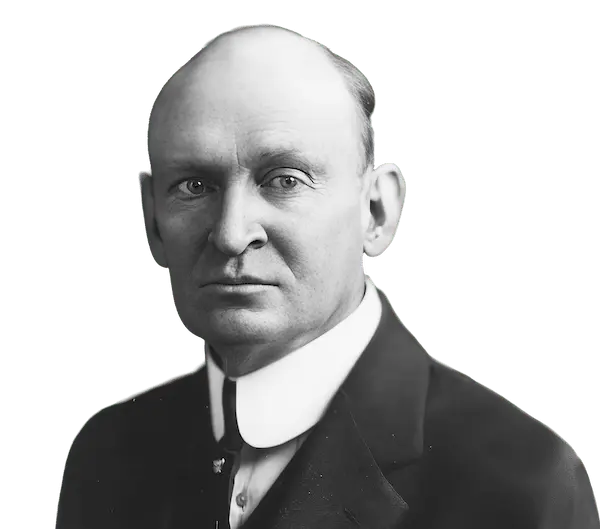
A.T. Robertson Commentary
Colossians 1
"Paul, an apostle of Christ Jesus through the will of God, and Timothy our brother," — Colossians 1:1 (ASV)
Of Christ Jesus (Χριστου Ιησου). This order in the later epistles shows that Χριστος is now regarded as a proper name and not just a verbal adjective (Anointed One, Messiah). Paul describes himself because he is unknown to the Colossians, not because of attack as in Ga 1:1.
Timothy (Τιμοθεος). Mentioned as in I and II Thess. when in Corinth, II Cor. when in Macedonia, Phil. and Philemon when in Rome as here.
"To the saints and faithful brethren in Christ [that are] at Colossae: Grace to you and peace from God our Father." — Colossians 1:2 (ASV)
At Colossae (εν Κολοσσαις). The spelling is uncertain, the MSS. differing in the title (Κολασσαεις) and here (Κολοσσαις). Colossae was a city of Phrygia on the Lycus, the tributaries of which brought a calcareous deposit of a peculiar kind that choked up the streams and made arches and fantastic grottoes. In spite of this there was much fertility in the valley with two other prosperous cities some ten or twelve miles away (Hierapolis and Laodicea). "The church at Colossae was the least important of any to which Paul's epistles were addressed" (Vincent). But he had no greater message for any church than he here gives concerning the Person of Christ. There is no more important message today for modern men.
"We give thanks to God the Father of our Lord Jesus Christ, praying always for you," — Colossians 1:3 (ASV)
God the Father of our Lord Jesus Christ (τω θεω πατρ του κυριου ημων Ιησου Χριστου). Correct text without κα (and) as in 3:17, though usually "the God and Father of our Lord Jesus Christ" (2 Corinthians 1:3; 2 Corinthians 11:31; Romans 15:6; 1 Peter 1:3; Revelation 1:6). In verse 2 we have the only instance in the opening benediction of an epistle when the name of "Jesus Christ" is not joined with "God our Father."
Always (παντοτε). Amphibolous position between ευχαριστουμεν (we give thanks) and προσευχομενο (praying). Can go with either.
"having heard of your faith in Christ Jesus, and of the love which ye have toward all the saints," — Colossians 1:4 (ASV)
Having heard of (ακουσαντες). Literary plural unless Timothy is included. Aorist active participle of ακουω of antecedent action to ευχαριστουμεν. Epaphras (verse 8) had told Paul.
Your faith in Jesus Christ (την πιστιν υμων εν Ιησου Χριστω). See Eph 1:15 for similar phrase. No article is needed before εν as it is a closely knit phrase and bears the same sense as the objective genitive in Ga 2:16 (δια πιστεως Χριστου Ιησου, by faith in Christ Jesus).
Which ye have (ην εχετε). Probably genuine (Aleph A C D), though B omits it and others have the article (την). There is a real distinction here between εν (sphere or basis) and εις (direction towards), though they are often identical in idea.
"because of the hope which is laid up for you in the heavens, whereof ye heard before in the word of the truth of the gospel," — Colossians 1:5 (ASV)
Because of the hope (δια την ελπιδα). See Ro 8:24. It is not clear whether this phrase is to be linked with ευχα ιστουμεν at the beginning of verse 3 or (more likely) with την αγαπην just before. Note also here πιστις (faith), αγαπη (love), ελπις (hope), though not grouped together so sharply as in 1 Corinthians 13:13. Here hope is objective, the goal ahead.
Laid up (αποκειμεινην). Literally, "laid away or by." Old word used in Lu 19:20 of the pound laid away in a napkin. See also αποθησαυριζω, to store away for future use (1 Timothy 6:19). The same idea occurs in Mt 6:20 (treasure in heaven) and 1 Peter 1:4 and it is involved in Phm 3:20.
Ye heard before (προηκουσατε). First aorist indicative active of this old compound προακουω, though only here in the N.T. Before what? Before Paul wrote? Before the realization? Before the error of the Gnostics crept in? Each view is possible and has advocates. Lightfoot argues for the last and it is probably correct as is indicated by the next clause.
In the word of the truth of the gospel (εν τω λογω της αληθειας του ευαγγελιου). "In the preaching of the truth of the gospel" (Galatians 2:5,14) which is come (παροντος, present active participle agreeing with ευαγγελιου, being present, a classical use of παρειμ as in Ac 12:20). They heard the pure gospel from Epaphras before the Gnostics came.
Jump to: