
A.T. Robertson Commentary Colossians 2
A.T. Robertson Commentary
Colossians 2
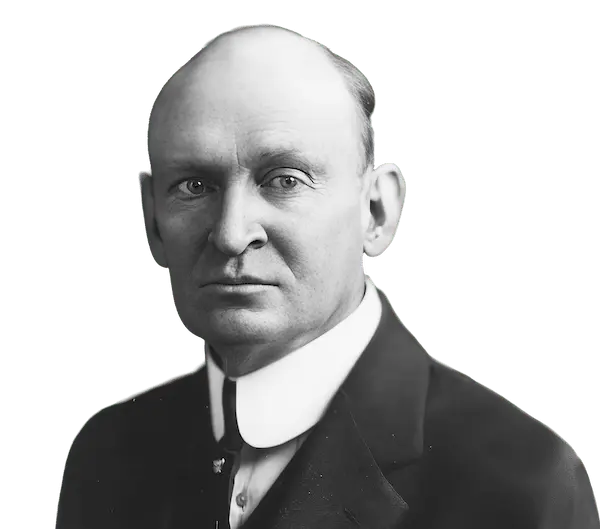
A.T. Robertson Commentary
Colossians 2
"For I would have you know how greatly I strive for you, and for them at Laodicea, and for as many as have not seen my face in the flesh;" — Colossians 2:1 (ASV)
How greatly I strive (ηλικον αγωνα εχω). Literally, "how great a contest I am having." The old adjectival relative ηλικος (like Latin quantus) is used for age or size in N.T. only here and Jas 3:5 (twice, how great, how small). It is an inward contest of anxiety like the μεριμνα for all the churches (2 Corinthians 11:28). Αγωνα carries on the metaphor of αγωνιζομενος in 1:29.
For them at Laodicea (των εν Λαοδικια).
Supply υπερ as with υπερ υμων. Paul's concern extended beyond Colossae to Laodicea (4:16) and to Hierapolis (4:13), the three great cities in the Lycus Valley where Gnosticism was beginning to do harm. Laodicea is the church described as lukewarm in Re 3:14.
For as many as have not seen my face (οσο ουχ εορακαν το προσωπον μου). The phrase undoubtedly includes Hierapolis (4:13), and a few late MSS. actually insert it here. Lightfoot suggests that Hierapolis had not yet been harmed by the Gnostics as much as Colossae and Laodicea. Perhaps so, but the language includes all in that whole region who have not seen Paul's face in the flesh (that is, in person, and not in picture). How precious a real picture of Paul would be to us today. The antecedent to οσο is not expressed and it would be τουτων after υπερ. The form εορακαν (perfect active indicative of οραω instead of the usual εωρακασιν has two peculiarities ο in Paul's Epistles (1 Corinthians 9:1) instead of ω (see Joh 1:18 for εωρακεν) and -αν by analogy in place of -ασιν, which short form is common in the papyri. See Lu 9:36 εωρακαν.
"that their hearts may be comforted, they being knit together in love, and unto all riches of the full assurance of understanding, that they may know the mystery of God, [even] Christ," — Colossians 2:2 (ASV)
May be comforted (παρακληθωσιν). First aorist passive subjunctive of παρακαλεω (for which see 2 Corinthians 1:3–7) in final clause with ινα.
Being knit together (συνβιβασθεντες). First aorist passive participle of συνβιβαζω, old verb, causal of βαινω, to make go together, to coalesce in argument (Acts 16:10), in spiritual growth (Colossians 2:19), in love as here. Love is the συνδεσμος (3:14) that binds all together.
Unto all riches (εις παν πλουτος). Probably some distinction intended between εν (in love as the sphere) and εις (unto as the goal).
Of the full assurance of understanding (της πληροφοριας της συνεσεως). On πληροφορια, see 1 Thessalonians 1:5. From πληροφορεω and only in N.T. (1 Thessalonians 1:5; Colossians 2:2; Hebrews 6:11; Hebrews 10:22), Clement of Rome (Cor. 42) and one papyrus example. Paul desires the full use of the intellect in grasping the great mystery of Christ and it calls for the full and balanced exercise of all one's mental powers.
That they may know (εις επιγνωσιν). "Unto full knowledge." This use of επιγνωσις (full, additional knowledge) is Paul's reply to the Gnostics with the limited and perverted γνωσις (knowledge).
The mystery of God, even Christ (του μυστηριου του θεου, Χριστου). The MSS. differ widely here, but this is Westcott and Hort's reading. Genitive (objective) with επιγνωσιν and Χριστου in apposition. Christ is "the mystery of God," but no longer hidden, but manifested (1:26) and meant for us to know to the fulness of our capacity.
"in whom are all the treasures of wisdom and knowledge hidden." — Colossians 2:3 (ASV)
In whom (εν ω). This locative form can refer to μυστηριου or to Χριστου. It really makes no difference in sense since Christ is the mystery of God.
All the treasures of wisdom and knowledge (παντες ο θησαυρο της σοφιας κα γνωσεως). See on Mt 2:11; 6:19-21 for this old word, our thesaurus, for coffer, storehouse, treasure. Paul confronts these pretentious intellectuals (Gnostics) with the bold claim that Christ sums up all wisdom and knowledge. These treasures are hidden (αποκρυφο, old adjective from αποκρυπτω, to hide away, Mr 4:22) whether the Gnostics have discovered them or not. They are there (in Christ) as every believer knows by fresh and repeated discovery.
"This I say, that no one may delude you with persuasiveness of speech." — Colossians 2:4 (ASV)
This I say (τουτο λεγω). Paul explains why he has made this great claim for Christ at this point in his discussion.
May delude (παραλογιζητα). Present middle subjunctive of παραλογιζομα, old verb, only here in N.T., from παρα and λογιζομα, to count aside and so wrong, to cheat by false reckoning, to deceive by false reasoning (Epictetus).
With persuasiveness of speech (εν πιθανολογια). Rare word (Plato) from πιθανος and λογος, speech, adapted to persuade, then speciously leading astray. Only here in N.T. One papyrus example. The art of persuasion is the height of oratory, but it easily degenerates into trickery and momentary and flashy deceit such as Paul disclaimed in 1 Corinthians 2:4 (ουκ εν πιθοις σοφιας λογοις) where he uses the very adjective πιθος (persuasive) of which πιθανος (both from πειθω) is another form. It is curious how winning champions of error, like the Gnostics and modern faddists, can be with plausibility that catches the gullible.
"For though I am absent in the flesh, yet am I with you in the spirit, joying and beholding your order, and the stedfastness of your faith in Christ." — Colossians 2:5 (ASV)
Though (ε κα). Not κα ε (even if).
Yet (αλλα). Common use of αλλα in the apodosis (conclusion) of a conditional or concessive sentence.
Your order (την ταξιν). The military line (from τασσω), unbroken, intact. A few stragglers had gone over to the Gnostics, but there had been no panic, no breach in the line.
Steadfastness (στερεωμα). From στερεοω (from στερεος) to make steady, and probably the same military metaphor as in ταξιν just before. The solid part of the line which can and does stand the attack of the Gnostics. See Ac 16:5 where the verb στερεοω is used with πιστις and 1 Peter 5:9 where the adjective στερεος is so used. In 2 Thessalonians 3:6,8,11 Paul speaks of his own ταξις (orderly conduct).
Jump to: