
A.T. Robertson Commentary Ephesians 4
A.T. Robertson Commentary
Ephesians 4
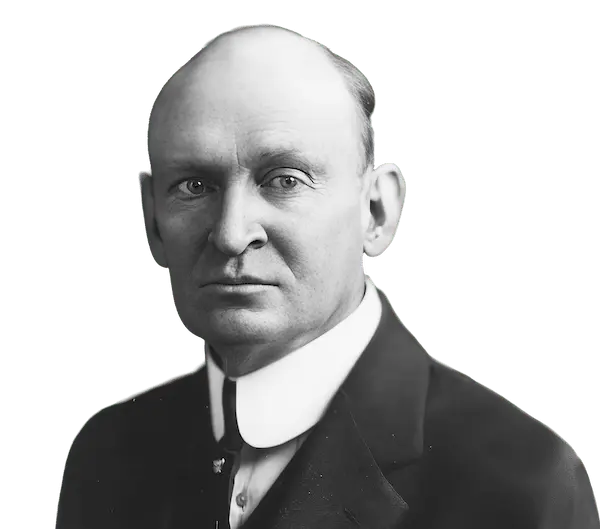
A.T. Robertson Commentary
Ephesians 4
"I therefore, the prisoner in the Lord, beseech you to walk worthily of the calling wherewith ye were called," — Ephesians 4:1 (ASV)
Wherewith ye were called (ης εκληθητε). Attraction of the relative ης to the genitive of the antecedent κλησεως (calling) from the cognate accusative ην with εκληθητε (first aorist passive indicative of καλεω, to call. For the list of virtues here see Col 3:12. To ανεχομενο αλληλων (Colossians 3:13) Paul here adds "in love" (εν αγαπη), singled out in Col 3:14.
"giving diligence to keep the unity of the Spirit in the bond of peace." — Ephesians 4:3 (ASV)
The unity (την ενοτητα). Late and rare word (from εις, one), in Aristotle and Plutarch, though in N.T. only here and verse 13.
In the bond of peace (εν τω συνδεσμω της ειρηνης). In Col 3:14 αγαπη (love) is the συνδεσμος (bond). But there is no peace without love (verse 2).
"[There is] one body, and one Spirit, even as also ye were called in one hope of your calling;" — Ephesians 4:4 (ASV)
One body (εν σωμα). One mystical body of Christ (the spiritual church or kingdom, cf. 1:23; 2:16).
One Spirit (εν πνευμα). One Holy Spirit, grammatical neuter gender (not to be referred to by "it," but by "he").
In one hope (εν μια ελπιδ). The same hope as a result of their calling for both Jew and Greek as shown in chapter 2.
"one Lord, one faith, one baptism," — Ephesians 4:5 (ASV)
One Lord (εις Κυριος). The Lord Jesus Christ and he alone (no series of aeons).
One faith (μια πιστις). One act of trust in Christ, the same for all (Jew or Gentile), one way of being saved.
One baptism (εν βαπτισμα). The result of baptizing (βαπτισμα), while βαπτισμος is the act. Only in the N.T. (βαπτισμος in Josephus) and ecclesiastical writers naturally. See Mr 10:38. There is only one act of baptism for all (Jews and Gentiles) who confess Christ by means of this symbol, not that they are made disciples by this one act, but merely so profess him, put Christ on publicly by this ordinance.
"one God and Father of all, who is over all, and through all, and in all." — Ephesians 4:6 (ASV)
One God and Father of all (εις θεος κα πατηρ παντων). Not a separate God for each nation or religion. One God for all men. See here the Trinity again (Father, Jesus, Holy Spirit).
Who is over all (ο επ παντων),
and through all (κα δια παντων),
and in all (κα εν πασιν). Thus by three prepositions (επι, δια, εν) Paul has endeavoured to express the universal sweep and power of God in men's lives. The pronouns (παντων, παντων, πασιν) can be all masculine, all neuter, or part one or the other. The last "in all" is certainly masculine and probably all are.
Jump to: