
A.T. Robertson Commentary Matthew 14
A.T. Robertson Commentary
Matthew 14
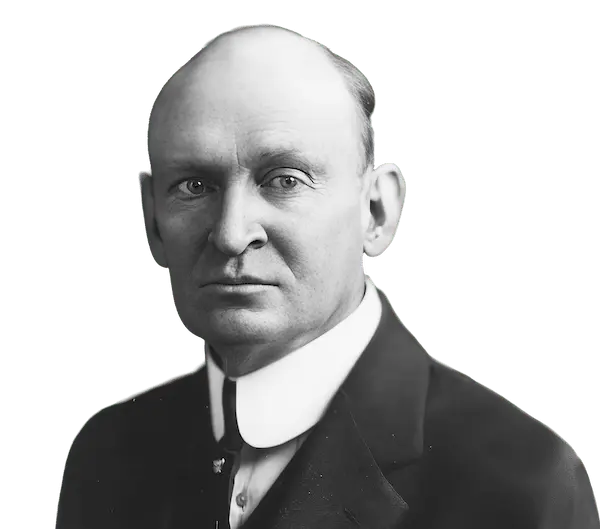
A.T. Robertson Commentary
Matthew 14
"At that season Herod the tetrarch heard the report concerning Jesus," — Matthew 14:1 (ASV)
Herod the tetrarch (Hηρωιδης τετρααρχης). Herod Antipas ruler of Galilee and Perea, one-fourth of the dominion of Herod the Great.
The report concerning Jesus (την ακουην Ιησου). See on 4:24. Cognate accusative, heard the hearing (rumour), objective genitive. It is rather surprising that he had not heard of Jesus before.
"and said unto his servants, This is John the Baptist; he is risen from the dead; and therefore do these powers work in him." — Matthew 14:2 (ASV)
His servants (τοις παισιν αυτου). Literally "boys," but here the courtiers, not the menials of the palace.
Work in him (ενεργουσιν). Cf. our "energize." "The powers of the invisible world, vast and vague in the king's imagination" (Bruce). John wrought no miracles, but one redivivus might be under the control of the unseen powers. So Herod argued. A guilty conscience quickened his fears. Possibly he could see again the head of John on a charger. "The King has the Baptist on the brain" (Bruce). Cf. Josephus (War, I. xxx. 7) for the story that the ghosts of Alexander and Aristobulus haunted the palace of Herod the Great. There were many conjectures about Jesus as a result of this tour of Galilee and Herod Antipas feared this one.
"For Herod had laid hold on John, and bound him, and put him in prison for the sake of Herodias, his brother Philip`s wife." — Matthew 14:3 (ASV)
For the sake of Herodias (δια Hηρωιδιαδα). The death of John had taken place some time before. The Greek aorists here (εδησεν, απεθετο) are not used for past perfects. The Greek aorist simply narrates the event without drawing distinctions in past time. This Herodias was the unlawful wife of Herod Antipas. She was herself a descendant of Herod the Great and had married Herod Philip of Rome, not Philip the Tetrarch. She had divorced him in order to marry Herod Antipas after he had divorced his wife, the daughter of Aretas King of Arabia. It was a nasty mess equal to any of our modern divorces. Her first husband was still alive and marriage with a sister-in-law was forbidden to Jews (Leviticus 18:16). Because of her Herod Antipas had put John in the prison at Machaerus. The bare fact has been mentioned in Mt 4:12 without the name of the place. See 11:2 also for the discouragement of John εν τω δεσμωτηριω (place of bondage), here εν τη φυλακη (the guard-house). Josephus (Ant. xviii. 5.2) tells us that Machaerus is the name of the prison. On a high hill an impregnable fortress had been built. Tristram (Land of Moab) says that there are now remains of "two dungeons, one of them deep and its sides scarcely broken in" with "small holes still visible in the masonry where staples of wood and iron had once been fixed. One of these must surely have been the prison-house of John the Baptist." "On this high ridge Herod the Great built an extensive and beautiful palace" (Broadus). "The windows commanded a wide and grand prospect, including the Dead Sea, the course of the Jordan, and Jerusalem" (Edersheim, Life and Times of Jesus).
"For John said unto him, It is not lawful for thee to have her." — Matthew 14:4 (ASV)
For John said unto him (ελεγεν γαρ Ιωανης αυτω). Possibly the Pharisees may have put Herod up to inveigling John to Machaerus on one of his visits there to express an opinion concerning his marriage to Herodias (Broadus) and the imperfect tense (ελεγεν) probably means that John said it repeatedly. It was a blunt and brave thing that John said. It cost him his head, but it is better to have a head like John's and lose it than to have an ordinary head and keep it. Herod Antipas was a politician and curbed his resentment toward John by his fear of the people who still held (ειχον, imperfect tense) him as a prophet.
"But when Herod`s birthday came, the daughter of Herodias danced in the midst, and pleased Herod." — Matthew 14:6 (ASV)
When Herod's birthday came (γενεσιοις γενομενοις του Hηρωιδου). Locative of time (cf. Mr 6:21) without the genitive absolute. The earlier Greeks used the word γενεσια for funeral commemorations (birthdays of the dead), γενεθλια being the word for birthday celebrations of living persons. But that distinction has disappeared in the papyri. The word γενεσια in the papyri (Fayum Towns, 114-20, 115-8, 119-30) is always a birthday feast as here in Matthew and Mark. Philo used both words of birthday feasts. Persius, a Roman satirist (Sat. V. 180-183), describes a banquet on Herod's Day.
Danced in the midst (ωρχησατο εν τω μεσω). This was Salome, daughter of Herodias by her first marriage. The root of the verb means some kind of rapid motion. "Leaped in the middle," Wycliff puts it. It was a shameful exhibition of lewd dancing prearranged by Herodias to compass her purpose for John's death. Salome had stooped to the level of an αλμε, or common dancer.
Jump to: