
A.T. Robertson Commentary Matthew 19
A.T. Robertson Commentary
Matthew 19
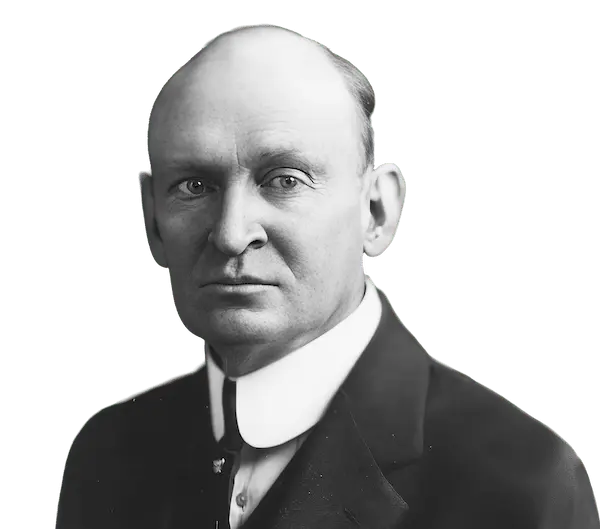
A.T. Robertson Commentary
Matthew 19
"And it came to pass when Jesus had finished these words, he departed from Galilee, and came into the borders of Judaea beyond the Jordan;" — Matthew 19:1 (ASV)
He departed (μετηρεν). Literally, to lift up, change something to another place. Transitive in the LXX and in a Cilician rock inscription. Intransitive in 13:53 and here, the only N.T. instances. Absence of οτ or κα after κα εγενετο, one of the clear Hebraisms in the N.T. (Robertson, Grammar, pp. 1042f.). This verse is a sort of formula in Matthew at the close of important groups of λογια as in 7:28; 11:1; 13:53.
The borders of Judea beyond Jordan (εις τα ορια της Ιουδαιας περαν του Ιορδανου). This is a curious expression. It apparently means that Jesus left Galilee to go to Judea by way of Perea as the Galileans often did to avoid Samaria. Luke (Luke 17:11) expressly says that he passed through Samaria and Galilee when he left Ephraim in Northern Judea (John 11:54). He was not afraid to pass through the edge of Galilee and down the Jordan Valley in Perea on this last journey to Jerusalem. McNeile is needlessly opposed to the trans-Jordanic or Perean aspect of this phase of Christ's work.
"And there came unto him Pharisees, trying him, and saying, Is it lawful [for a man] to put away his wife for every cause?" — Matthew 19:3 (ASV)
Pharisees tempting him (Φαρισαιο πειραζοντες αυτον). They "could not ask a question of Jesus without sinister motives" (Bruce). See 4:1 for the word (πειραζω).
For every cause (κατα πασαν αιτιαν). This clause is an allusion to the dispute between the two theological schools over the meaning of De 24:1. The school of Shammai took the strict and unpopular view of divorce for unchastity alone while the school of Hillel took the liberal and popular view of easy divorce for any passing whim if the husband saw a prettier woman (modern enough surely) or burnt his biscuits for breakfast. It was a pretty dilemma and meant to do Jesus harm with the people. There is no real trouble about the use of κατα here in the sense of προπτερ or because of (Robertson, Grammar, p. 509).
"and said, For this cause shall a man leave his father and mother, and shall cleave to his wife; and the two shall become one flesh?" — Matthew 19:5 (ASV)
Shall cleave (κολληθησετα). First future passive, "shall be glued to," the verb means.
The twain shall become one flesh (εσοντα ο δυο εις σαρκα μιαν). This use of εις after ειμ is an imitation of the Hebrew, though a few examples occur in the older Greek and in the papyri. The frequency of it is due to the Hebrew and here the LXX is a direct translation of the Hebrew idiom.
"So that they are no more two, but one flesh. What therefore God hath joined together, let not man put asunder." — Matthew 19:6 (ASV)
What therefore God hath joined together (ο ουν ο θεος συνεζευξεν). Note "what," not "whom." The marriage relation God has made. "The creation of sex, and the high doctrine as to the cohesion it produces between man and woman, laid down in Gen., interdict separation" (Bruce). The word for "joined together" means "yoked together," a common verb for marriage in ancient Greek. It is the timeless aorist indicative (συνεζευξεν), true always.
Bill (βιβλιον). A little βιβλος , a scroll or document (papyrus or parchment). This was some protection to the divorced wife and a restriction on laxity.
"He saith unto them, Moses for your hardness of heart suffered you to put away your wives: but from the beginning it hath not been so." — Matthew 19:8 (ASV)
For your hardness of heart (προς την σκληροκαρδιαν υμων). The word is apparently one of the few Biblical words (LXX and the N.T.). It is a heart dried up (σκληρος), hard and tough.
But from the beginning it hath not been so (απ' αρχης δε ουκ γεγονεν ουτως). The present perfect active of γινομα to emphasize the permanence of the divine ideal. "The original ordinance has never been abrogated nor superseded, but continues in force" (Vincent). "How small the Pharisaic disputants must have felt in presence of such holy teaching, which soars above the partisan view of controversialists into the serene region of ideal, universal, eternal truth" (Bruce).
Jump to: