
Charles Spurgeon Commentary 2 Peter 3
Charles Spurgeon Commentary
2 Peter 3
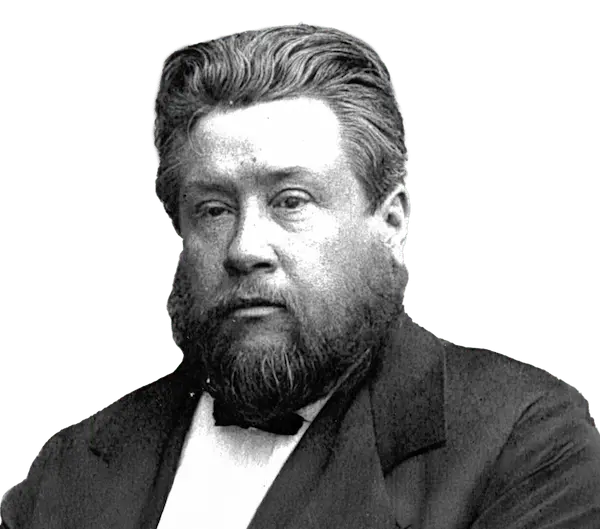
Charles Spurgeon Commentary
2 Peter 3
Commentary Groups
This author has written multiple commentaries over their lifetime on this chapter. We have grouped their commentaries for easier reading."This is now, beloved, the second epistle that I write unto you; and in both of them I stir up your sincere mind by putting you in remembrance; that ye should remember the words which were spoken before by the holy prophets, and the commandments of the Lord and Saviour through your apostles: knowing this first, that in the last days mockers shall come with mockery, walking after their own lusts," — 2 Peter 3:1-3 (ASV)
This second epistle, beloved, I now write to you; in both which I stir up your pure minds by way of remembrance: that you may be mindful of the words which were spoken before by the holy prophets, and of the commandment of us the apostles of the Lord and Saviour: knowing this first that there shall come in the last days scoffers, walking after their own lusts,
This prophecy is most certainly being fulfilled in these days.
"This is now, beloved, the second epistle that I write unto you; and in both of them I stir up your sincere mind by putting you in remembrance;" — 2 Peter 3:1 (ASV)
This second epistle, beloved, I now write unto you; in both which I stir up your pure minds by way of remembrance:
The purest minds need stirring up at times. It would be a great pity to stir up impure minds. That would only be to do mischief; but pure minds may be stirred as much as you please, and the more the better. There are hallowed memories in the minds of all Christians; but those memories are apt to lie asleep, and it is well to ring the alarm bell, and wake up all the memories within the believer's heart, even as Peter did when he wrote, I stir up your pure minds by way of remembrance.
"that ye should remember the words which were spoken before by the holy prophets, and the commandments of the Lord and Saviour through your apostles:" — 2 Peter 3:2 (ASV)
That ye may be mindful of the words which were spoken before by the holy prophets, and of the commandment of us the apostles of the Lord and Saviour:
Peter believed in the inspiration of the very "words" of Scripture; he was not one of those precious "advanced thinkers" who would, if they could, tear the very soul out of the Book, and leave us nothing at all; but he wrote, That ye may be mindful of the words — the very words — which were spoken before by the holy prophets.
"Oh!" says one, "but words do not signify; it is the inward sense that is really important." Exactly so; that is just what the fool said about egg-shells. He said that they did not signify; it was only the inward life-germ of the chick within that was important; so he broke all the shells, and thereby destroyed the life that was within.
We contend for every word of the Bible, and believe in the verbal and plenary inspiration of Holy Scripture, believing indeed that there can be no other inspiration but that. If the words could be taken from us, the sense itself would be gone.
"knowing this first, that in the last days mockers shall come with mockery, walking after their own lusts," — 2 Peter 3:3 (ASV)
Knowing this first, that there shall come in the last days scoffers,—
A prophecy which has been abundantly fulfilled. You need not go far to find them; they come in the form of living men, and they swarm in the form of their books. They are to be met with almost everywhere; like the locusts, they fill the air, and hide the light of the sun: There shall come in the last days scoffers,—
Walking after their own lusts,—
Errors of doctrine are almost always accompanied by errors of practice, and certainly they naturally lead that way. Those who scoff according to the lusts of their intellect are very likely to live according to the lusts of their flesh. The two things are congruous; they are born from the same cause, they flourish for the same reasons, and they tend to the same ends: Walking after their own lusts,—
"and saying, Where is the promise of his coming? for, from the day that the fathers fell asleep, all things continue as they were from the beginning of the creation." — 2 Peter 3:4 (ASV)
And saying, Where is the promise of his coming? for since the fathers fell asleep, all things continue as they were from the beginning of the creation.
Only the modern scoffers have tried to improve upon their predecessors, for they say, "All things have developed by evolution from the beginning, which never had a beginning, but which somehow or other has always existed."
Thus the scoffers change their approach, but they never alter their spirit; it is always an attack upon revealed truth.
Indeed, they scarcely seem to believe that there is any revealed truth, and they will only accept what they themselves might have invented.
Despite what these men say, all things have not continued as they were since the beginning of the creation, for there have been great interpositions of divine power in the past, as Peter goes on to show.
Jump to: