
Charles Spurgeon Commentary 2 Timothy 1
Charles Spurgeon Commentary
2 Timothy 1
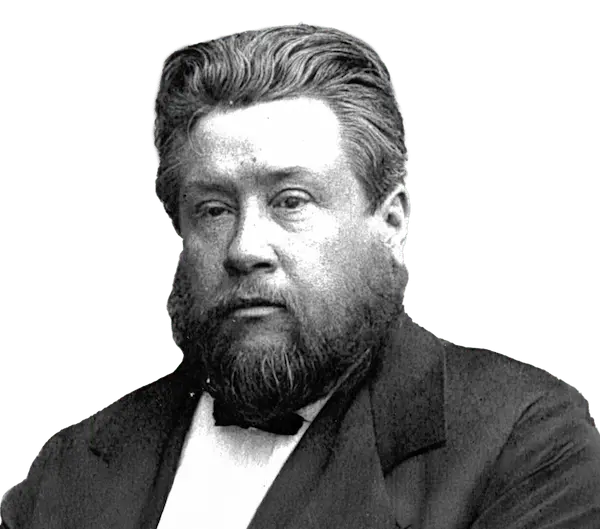
Charles Spurgeon Commentary
2 Timothy 1
Commentary Groups
This author has written multiple commentaries over their lifetime on this chapter. We have grouped their commentaries for easier reading."Paul, an apostle of Christ Jesus through the will of God, according to the promise of the life which is in Christ Jesus, to Timothy, my beloved child: Grace, mercy, peace, from God the Father and Christ Jesus our Lord." — 2 Timothy 1:1-2 (ASV)
Paul, an apostle of Jesus Christ by the will of God, according to the promise of life which is in Christ Jesus, to Timothy, my dearly beloved son: Grace, mercy, and peace, from God the Father and Christ Jesus our Lord. (2 Timothy 1:1–2)
I would again remind you, as I have often done before, that the apostle Paul, when he is writing to a minister, invariably begins his epistle with the triple greeting, Grace, mercy, and peace, but when he is writing to a church, he commences with the double benediction, Grace and peace.
You will find that this is his wish for the Romans, Corinthians, Galatians, Ephesians, Philippians, Colossians, and Thessalonians, Grace be unto you and peace, from God our Father, and the Lord Jesus Christ. This is also his form of greeting to Philemon, who was a private Christian, not a minister; but when the apostle is writing to Timothy and Titus, his own sons in the faith and fellow-ministers of the gospel, he says, Grace, mercy, and peace, from God our Father and Jesus Christ our Lord.
It seems as though, guided by the Holy Spirit, he thought that the office of the Christian ministry is of so weighty and responsible a character that the man who rightly fills that honourable position not only needs the grace and peace that are necessary for all believers, but that he must in addition have a special supply of mercy; and, truly, no one needs mercy more than the preacher of mercy. Note, too, that the grace, mercy, and peace are to come from God the Father and Christ Jesus our Lord. Father and Son are united in the gracious act of bestowing grace, mercy, and peace. The Father is the great eternal fountain of all these blessings, but the Son is the divinely appointed channel through whom they flow down to us.
"Paul, an apostle of Christ Jesus through the will of God, according to the promise of the life which is in Christ Jesus, to Timothy, my beloved child: Grace, mercy, peace, from God the Father and Christ Jesus our Lord." — 2 Timothy 1:1-2 (ASV)
Paul, an apostle of Jesus Christ by the will of God, according to the promise of life which is in Christ Jesus, to Timothy, my dearly beloved son: (2 Timothy 1:1–2)
There is the greatest possible affection between the preacher and his convert. This is a relationship which even death will not destroy.
They neither marry nor are given in marriage in the Heavenly Kingdom, but this fatherhood and sonship shall endure forever.
"to Timothy, my beloved child: Grace, mercy, peace, from God the Father and Christ Jesus our Lord." — 2 Timothy 1:2 (ASV)
Grace, mercy, and peace, from God the Father and Christ Jesus our Lord.
It is quite remarkable that, when the Apostle writes to churches, he usually wishes them "Grace and peace"; but when he writes to a minister, he generally prays for "Grace, mercy, and peace," as if we needed more mercy than other Christians. Having such a great work to do, and falling into such great sin if we are unfaithful in it, we may well ask that we may have special mercy shown to us by the God of mercy.
"Paul, an apostle of Christ Jesus through the will of God, according to the promise of the life which is in Christ Jesus," — 2 Timothy 1:1 (ASV)
Paul, an apostle of Jesus Christ by the will of God, according to the promise of life which is in Christ Jesus,
Paul takes high ground. He is not an apostle by the will of the Church, but an apostle by the will of God. God's will is the great motive power in the Church of God. Some talk a great deal about man's will. What do you think of God's will, the will of the Almighty?
Surely that will stand. Paul felt that he had that supporting him.
Paul, an apostle of Jesus Christ by the will of God. Hence, he always speaks very boldly. He never asks anyone's permission. If he is an apostle by the will of God, he exercises his office without fear.
"to Timothy, my beloved child: Grace, mercy, peace, from God the Father and Christ Jesus our Lord." — 2 Timothy 1:2 (ASV)
To Timothy, my dearly beloved son:
Son in the faith. When all the ties of natural descent will be forgotten, sonship in Christ will continue. I do not doubt that in heaven Timothy is still Paul's son; Paul is still father to Timothy, for the relation is of the Spirit.
Grace, mercy, and peace, from God the Father and Christ Jesus our Lord.
I believe I have previously pointed out to you that when Paul writes to a church, his greeting is Grace and peace. Whenever he writes to a minister, it is Grace, mercy, and peace.
I have sometimes wondered whether we ministers need mercy more than other people, and I suppose that we do, otherwise the Apostle would not have said, Grace, mercy, and peace.
Oh! If a minister gets to heaven, it will be a wonder. His responsibilities are so great. Who is sufficient for these things? It will be a marvelous display of mercy if any of us will be able to say at last, I am clear of the blood of all men; for we are responsible not only for our own blood, but also for the blood of others in this matter.
Jump to: