
Charles Spurgeon Commentary Acts 26
Charles Spurgeon Commentary
Acts 26
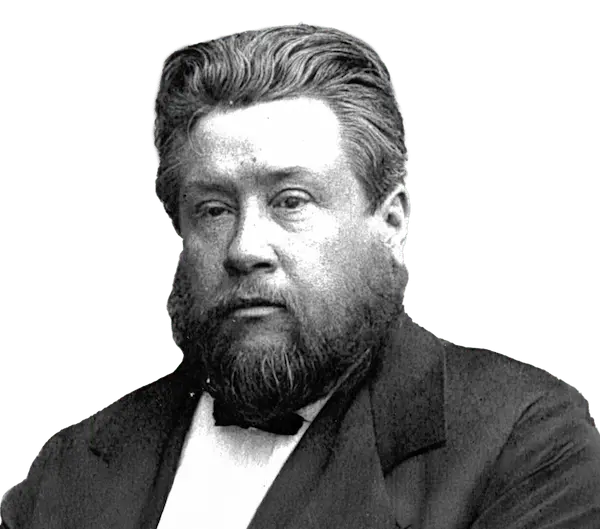
Charles Spurgeon Commentary
Acts 26
Commentary Groups
This author has written multiple commentaries over their lifetime on this chapter. We have grouped their commentaries for easier reading."And Agrippa said unto Paul, Thou art permitted to speak for thyself. Then Paul stretched forth his hand, and made his defence:" — Acts 26:1 (ASV)
Then Agrippa said unto Paul, Thou art permitted to speak for thyself. Then Paul stretched forth the hand, and answered for himself:
I do not suppose Agrippa imagined that Paul would take all the liberty that he did.
But since the king had said to him, Thou art permitted to speak for thyself, Paul, even when he was permitted to speak for himself, did not forget that he was the servant of God.
He used that liberty as the servant of God and so took the opportunity to seek to impress the truth upon the conscience and heart of the king.
Thus Paul answered for himself.
"I think myself happy, king Agrippa, that I am to make my defense before thee this day touching all the things whereof I am accused by the Jews: especially because thou art expert in all customs and questions which are among the Jews: wherefore I beseech thee to hear me patiently." — Acts 26:2-3 (ASV)
I think myself happy, King Agrippa, because I shall answer for myself this day before you concerning all the things of which I am accused of the Jews, especially because I know you to be an expert in all customs and questions which are among the Jews. Therefore, I implore you to hear me patiently.
It is always well to try to be on good terms with the person whom you wish to impress with the truth of the gospel. Paul therefore did not begin bluntly, as some foolish people would have done, but he addressed the king most courteously and respectfully. I think I see the little man, as he doubtless was. Paul the man with feeble eyes, and with no great bodily presence to command attention, yet bravely stretching out his hand, and, like a preacher, thus addressing Herod Agrippa:-
"My manner of life then from my youth up, which was from the beginning among mine own nation and at Jerusalem, know all the Jews; having knowledge of me from the first, if they be willing to testify, that after the straitest sect of our religion I lived a Pharisee. And now I stand [here] to be judged for the hope of the promise made of God unto our fathers; unto which [promise] our twelve tribes, earnestly serving [God] night and day, hope to attain. And concerning this hope I am accused by the Jews, O king!" — Acts 26:4-7 (ASV)
My manner of life from my youth, which was at the first among mine own nation at Jerusalem, know all the Jews; which knew me from the beginning, if they would testify, that after the most straitest sect of our religion I lived a Pharisee. And now I stand and am judged for the hope of the promise made of God unto our fathers: unto which promise our twelve tribes, instantly serving God day and night, hope to come. For which hope's sake, King Agrippa, I am accused of the Jews.
The Jews still had hope concerning the promise of the Messiah, and all the promises in God's covenant with them; and Paul says that for the sake of this hope he had been led to do that which had now brought him as a prisoner before the king. Notice that the fiction concerning "the ten lost tribes" has no foundation in Scripture. There are no lost tribes; several of them are mentioned by name in the New Testament. The apostle James writes to the twelve tribes which are scattered abroad, and here Paul speaks of them as "our twelve tribes." The Jews who are among us today belong to all of the twelve tribes, as they will tell you if you ask them.
There are no lost tribes yet to be discovered, neither are we, as a nation, those ten tribes that are supposed to have been lost. We are Gentiles, and not Jews. The apostle speaks here concerning the hope of the whole nation of the Jews. We who have believed in Jesus are the inheritors of that grand hope, as we have understood it rightly, and have realized that it is fulfilled in the person of Jesus of Nazareth, the only-begotten Son of God.
"And Agrippa said unto Paul, Thou art permitted to speak for thyself. Then Paul stretched forth his hand, and made his defence: I think myself happy, king Agrippa, that I am to make my defense before thee this day touching all the things whereof I am accused by the Jews: especially because thou art expert in all customs and questions which are among the Jews: wherefore I beseech thee to hear me patiently." — Acts 26:1-3 (ASV)
Then Agrippa said unto Paul, Thou art permitted to speak for thyself. Then Paul stretched forth the hand, and answered for himself: I think myself happy, king Agrippa, because I shall answer for myself this day before thee touching all the things whereof I am accused of the Jews. Especially because I know thee to be expert in all customs and questions which are among the Jews: wherefore I beseech thee to hear me patiently.
With what courtesy does he speak! Paul is bold; but see how he is all things to all men! And he begins an address for his life with great adroitness and skill, teaching us that we are to use all the courtesies of life toward those to whom they are due, and never to cause needless irritation. There is enough offence in the Cross itself, without our being offensive when uplifting it.
"My manner of life then from my youth up, which was from the beginning among mine own nation and at Jerusalem, know all the Jews; having knowledge of me from the first, if they be willing to testify, that after the straitest sect of our religion I lived a Pharisee. And now I stand [here] to be judged for the hope of the promise made of God unto our fathers; unto which [promise] our twelve tribes, earnestly serving [God] night and day, hope to attain. And concerning this hope I am accused by the Jews, O king!" — Acts 26:4-7 (ASV)
My manner of life from my youth, which was at the first among my own nation at Jerusalem, know all the Jews, which knew me from the beginning, if they would testify, that after the most straitest sect of our religion I lived a Pharisee. And now I stand and am judged for the hope of the promise made of God unto our fathers. (Acts 26:4–6)
Unto which promise our twelve tribes, instantly serving God day and night, hope to come. For which hope's sake, king Agrippa, I am accused of the Jews. (Acts 26:7)
For the Pharisees held very firmly the doctrine of the resurrection of the dead, and Paul often cites this as the very thing, though no longer a Pharisee, to which he was glad to testify.
Jump to: