
Charles Spurgeon Commentary Genesis 1:9-13
Charles Spurgeon Commentary
Genesis 1:9-13
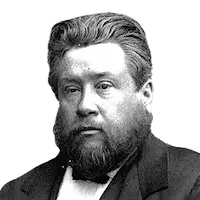
Charles Spurgeon Commentary
Genesis 1:9-13
SCRIPTURE
"And God said, Let the waters under the heavens be gathered together unto one place, and let the dry land appear: and it was so. And God called the dry land Earth; and the gathering together of the waters called he Seas: and God saw that it was good. And God said, Let the earth put forth grass, herbs yielding seed, [and] fruit-trees bearing fruit after their kind, wherein is the seed thereof, upon the earth: and it was so. And the earth brought forth grass, herbs yielding seed after their kind, and trees bearing fruit, wherein is the seed thereof, after their kind: and God saw that it was good. And there was evening and there was morning, a third day." — Genesis 1:9-13 (ASV)
Having attended to the air, God further exercised His power by setting the earth in order. Observe this remarkable fact: as soon as God made the dry land appear, it seemed as if He could not bear to see it in its nakedness.
What a strange place this world must have looked, with its plains and hills and rocks and vales, without a single blade of grass, or a tree, or a shrub!
So, at once, before that day was over, God threw the mantle of verdure over the earth and clad its mountains and valleys with forests, plants, and flowers.
This was as if to show us that what is fruitless is uncomely in God's sight, and that the one who bears no fruit to God is unendurable to Him.
There would be no beauty whatever in a Christian without any good works and with no graces. As soon as the earth appeared, then came the herb, and the tree, and the grass. So, dear brethren, in like manner, let us bring forth fruit to God, and bring it forth abundantly, for in this our heavenly Father is glorified, that we bear much fruit.