
Charles Spurgeon Commentary Habakkuk 2
Charles Spurgeon Commentary
Habakkuk 2
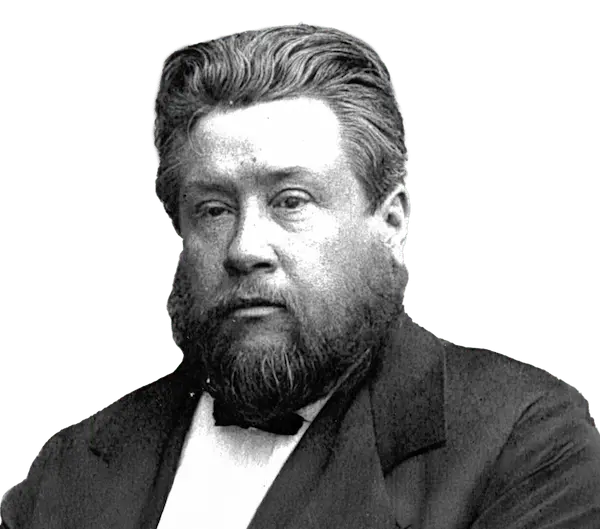
Charles Spurgeon Commentary
Habakkuk 2
"I will stand upon my watch, and set me upon the tower, and will look forth to see what he will speak with me, and what I shall answer concerning my complaint." — Habakkuk 2:1 (ASV)
"I shall look to God, and I shall also look to myself. There shall be an expectation as I gaze upward to my Lord, and there shall also be an examination as I look within at my empty, guilty, good-for-nothing self."
"And Jehovah answered me, and said, Write the vision, and make it plain upon tablets, that he may run that readeth it." — Habakkuk 2:2 (ASV)
And the LORD answered me, and said, Write the vision, and make it plain upon tables, that he may run that readeth it.
The prophets were accustomed to write their messages on wax tablets, and the Lord commanded Habakkuk to write what he had seen in this way.
God desires both His law and His gospel to be plainly revealed to people, so that they might know and understand His will. Paul wrote to the Corinthians, We use great plainness of speech; and the Lord desires all His servants to do likewise. It is not for us to bury the gospel under a mass of fine words, but to set it forth in the simplest and clearest possible language, for it is not the power of human words that God blesses, but the truth itself as it is applied to the heart by His Spirit.
"For the vision is yet for the appointed time, and it hasteth toward the end, and shall not lie: though it tarry, wait for it; because it will surely come, it will not delay." — Habakkuk 2:3 (ASV)
Is that a contradiction—Though it tarry, ... it will not tarry?
No; to us, it appears to tarry; but, in God's way of reckoning, it does not really tarry. To our impatient spirits, it seems long in coming; but God knows that it will not be a moment beyond the appointed time.
"Behold, his soul is puffed up, it is not upright in him; but the righteous shall live by his faith." — Habakkuk 2:4 (ASV)
This grand text was quoted by Paul when he wrote his Epistles to the Romans, the Galatians, and the Hebrews. It proves that Old Testament saints understood New Testament life. David and Abraham lived by faith, even as Paul and Peter and the other apostles did.
"Yea, moreover, wine is treacherous, a haughty man, that keepeth not at home; who enlargeth his desire as Sheol, and he is as death, and cannot be satisfied, but gathereth unto him all nations, and heapeth unto him all peoples." — Habakkuk 2:5 (ASV)
This was spoken of the Chaldeans. They were an ambitious nation, so exceedingly greedy that it seemed as if the whole world would not be large enough to satisfy their voracious appetite. Their great kings enlarged their mouths like Gehenna, and they seemed as insatiable as the very maw of death itself.
They heaped up nation upon nation to make a huge empire for themselves.
Jump to: