
Charles Spurgeon Commentary Hebrews 1
Charles Spurgeon Commentary
Hebrews 1
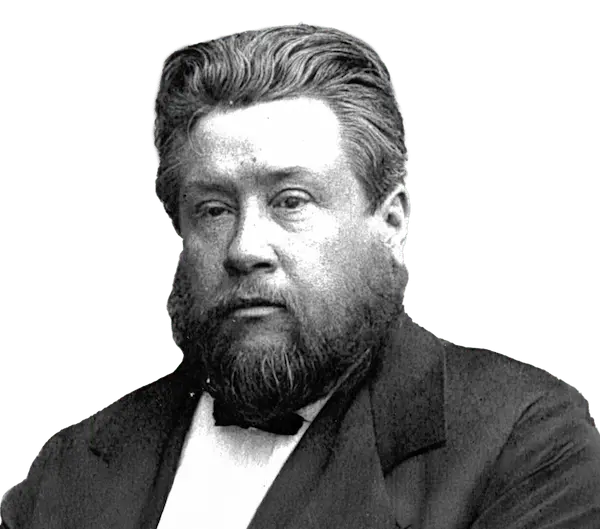
Charles Spurgeon Commentary
Hebrews 1
"God, having of old time spoken unto the fathers in the prophets by divers portions and in divers manners, hath at the end of these days spoken unto us in [his] Son, whom he appointed heir of all things, through whom also he made the worlds;" — Hebrews 1:1-2 (ASV)
God, who at sundry times and in divers manners spake in time past unto the fathers by the prophets, hath in these last days spoken unto us by his Son, (Hebrews 1:1–2).
God's rule is always to save the best for last. Thou hast kept the best wine until now. (John 2:10). Prophets are a very blessed means of communication, but how much more sure, how much more condescending is it for God to speak to us by his Son!
"hath at the end of these days spoken unto us in [his] Son, whom he appointed heir of all things, through whom also he made the worlds; who being the effulgence of his glory, and the very image of his substance, and upholding all things by the word of his power, when he had made purification of sins, sat down on the right hand of the Majesty on high;" — Hebrews 1:2-3 (ASV)
Whom he has appointed heir of all things, by whom also he made the worlds; who being the brightness of his glory, and the express image of his person, and upholding all things by the word of his power, when he had by himself purged our sins, sat down on the right hand of the Majesty on high;
You see, dear friends, how glorious was his original – the express image of his Father's person. How lowly did he become to purge away our sins and that by himself, too, using his own body to be the means, by his sufferings, of taking away our guilt. Not by proxy did he serve us, but by himself. Oh, this is wondrous love!
And then see the glory which followed after the shame. He has now ascended up on high, and sits down at the right hand of God's great Majesty. Follow him, believer, follow him with the eye of your faith; let your soul lovingly track him in his upward march, and as you see him, say – He is my Lord and my God, and know that all that he did and all that he is, he is, and he did for you.
"having become by so much better than the angels, as he hath inherited a more excellent name than they. For unto which of the angels said he at any time, Thou art my Son, This day have I begotten thee? and again, I will be to him a Father, And he shall be to me a Son?" — Hebrews 1:4-5 (ASV)
They are servants, but they are not sons; they are created, but they are not begotten. You see what he says to the Son – I will be to him a Father, and he shall be to me a Son.
"And when he again bringeth in the firstborn into the world he saith, And let all the angels of God worship him. And of the angels he saith, Who maketh his angels winds, And his ministers a flame a fire: but of the Son [he saith,] Thy throne, O God, is for ever and ever; And the sceptre of uprightness is the sceptre of thy kingdom." — Hebrews 1:6-8 (ASV)
So you perceive that Christ is no created angel. He is sometimes compared to an angel. He is sometimes called the angel of the covenant, but he is not a created angel.
He is higher in nature, higher in rank, higher in intellect, and higher in power than they. He is nothing less than very God of very God. The very man who suffered on Calvary.
"This is the man, the exalted man,
Whom we unseen adore."
"Thou hast loved righteousness, and hated iniquity; Therefore God, thy God, hath anointed thee With the oil of gladness above thy fellows." — Hebrews 1:9 (ASV)
As man Christ claims all men as his fellows, but as God he counts it no robbery to be thought equal to God. As man he is most truly man, and only superior to man by reason of the purity of his birth and the perfection of his nature, and the exaltation of his manhood by God; as God he is nothing less than God, though he took upon himself the nature of men.
Jump to: