
Charles Spurgeon Commentary John 10
Charles Spurgeon Commentary
John 10
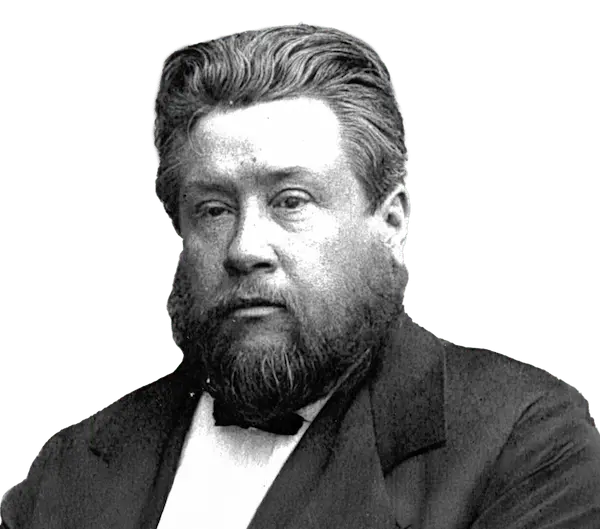
Charles Spurgeon Commentary
John 10
Commentary Groups
This author has written multiple commentaries over their lifetime on this chapter. We have grouped their commentaries for easier reading."Verily, verily, I say unto you, He that entereth not by the door into the fold of the sheep, but climbeth up some other way, the same is a thief and a robber. But he that entereth in by the door is the shepherd of the sheep." — John 10:1-2 (ASV)
Verily, verily, I say to you, he who does not enter by the door into the sheepfold, but climbs up some other way, he is a thief and a robber. But he who enters in by the door is the shepherd of the sheep.
The true Shepherd cares for the flock; the false ones are thieves and robbers who only care for the flesh or the fleece.
"Verily, verily, I say unto you, He that entereth not by the door into the fold of the sheep, but climbeth up some other way, the same is a thief and a robber." — John 10:1 (ASV)
Verily, verily, I say unto you, He that entereth not by the door into the sheepfold, but climbeth up some other way, the same is a thief and a robber.
The positiveness of our Lord's teaching is noteworthy. Whatever may be said about dogmatical teaching now, it is certain that His teaching is of that character. He does not raise questions, but He solves them. He does not suggest probabilities, but He declares certainties.
This might be taken as the key-word to all the Saviour's teaching, Verily, verily. He makes a strong asseveration; He speaks as one having authority, not as the scribes who only claimed to have authority, but as the Sent One of the Father who really has it: Verily, verily, I say unto you. Whatever comes to us with the imprimatur of the Verily, verily, of the Son of God is not to be questioned or doubted by us for a single moment.
He that entereth not by the door into the sheepfold, but climbeth up some other way, the same is a thief and a robber. Christ Himself did enter by the door.
He came according to the ancient types, symbols, and prophecies. He came as God said that He would come. He entered by the door. There is no irregularity about Christ's office as the Shepherd of His sheep.
It is confirmed to Him by the sanction of the Holy Spirit. The witness of the Father is borne to Him: This is my beloved Son, in whom I am well pleased: hear ye him. We rejoice to think that Jesus our Saviour is also Christ the Anointed.
He is Jesus to us, but He is the Anointed of the Father. He comes by right as the appointed Shepherd of the sheep, entering in by the door.
"But he that entereth in by the door is the shepherd of the sheep. To him the porter openeth; and the sheep hear his voice: and he calleth his own sheep by name, and leadeth them out." — John 10:2-3 (ASV)
But he that entereth in by the door is the shepherd of the sheep.
To him the porter openeth;—To him
John the Baptist, as the porter, opened the door. He pointed to him, and said, Behold the Lamb of God, which taketh away the sin of the world. And every God-sent minister is a porter to Christ, opening the door to him; that is our office—to stand and open the door that Christ may come forth among you, and that you may come in to him, and find the spiritual pasture on which your souls can feed. To him the porter openeth;—
"Verily, verily, I say unto you, He that entereth not by the door into the fold of the sheep, but climbeth up some other way, the same is a thief and a robber." — John 10:1 (ASV)
Verily, verily, I say unto you,
Now we may be absolutely certain that there is something of the utmost importance whenever Christ uses the solemn affirmation Verily, verily—the same word is Amen, amen. It has been well observed that if it were not for Christ's "Amens," our "Amens" would be of little value.
It is because he who is the Amen, the Faithful and True Witness, pleads in heaven that our "Amens" are accepted there. If, dear friends, Christ pays earnest attention to our "Amens," how much more should we attend to his, especially when he doubles them—Amen, amen, I say unto you.
"Verily, verily, I say unto you, He that entereth not by the door into the fold of the sheep, but climbeth up some other way, the same is a thief and a robber. But he that entereth in by the door is the shepherd of the sheep. To him the porter openeth; and the sheep hear his voice: and he calleth his own sheep by name, and leadeth them out." — John 10:1-3 (ASV)
He that entereth not by the door into the sheepfold, but climbeth up some other way, the same is a thief and a robber. But he that entereth in by the door is the shepherd of the sheep. To him the porter openeth; and the sheep hear his voice: and he calleth his own sheep by name, and leadeth them out.
Here the people of God are compared to sheep. Their harmlessness and gentle character, their feebleness and quiet in the fold, their profitable uses, their defenseless state, requiring someone always to watch over them, the patience with which they are led to the shearer or to the slaughter, and the constancy with which they are associated with sacrifice, render sheep a most excellent symbol of the people of God.
Undoubtedly, the fold is the Church. Within this fold, all the saints of God are gathered—not always in the visible, but always in the invisible and indivisible Church of Christ.
No one may set up to be shepherds of this fold except those who come in a proper and fitting way. This way is not by a pretended apostolical descent—that is, not by a commission they have received from their own assumption—but by a commission direct from Christ—coming in through him as by the door.
The great true Shepherd, the antitype of all shepherds, is Christ himself. To him the porter openeth.
All the prophecies, which, like porters, kept the gates, opened at once to Christ; all godly hearts, which, like the porters of the gate, were watching for the coming of the true Shepherd, opened at once to Jesus; whether it were Anna or Simeon, they at once confessed him.
The sheep hear his voice, and he calleth his own sheep by name, and leadeth them out.
We are told by Eastern travelers that in the large district folds into which the sheep-farmers put their different flocks, while they are all assembled in one common flock, the shepherd of any one flock has but to make his appearance and begin to speak, and his sheep at once recognize him.
Though another person should dress up in his garments, they would take no notice of him; they know their shepherd by his voice.
Jump to: