
Charles Spurgeon Commentary John 2
Charles Spurgeon Commentary
John 2
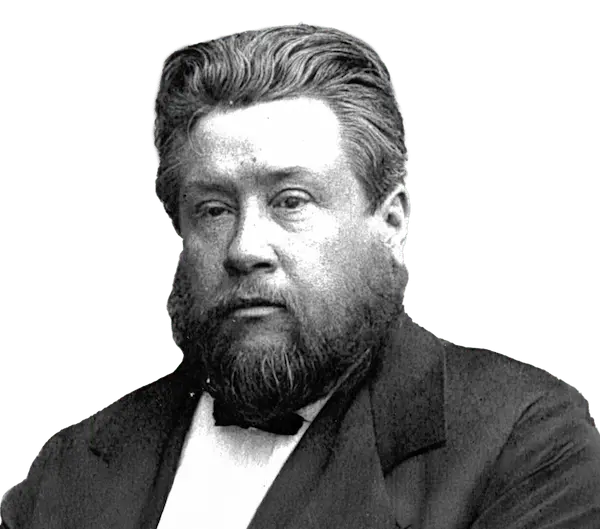
Charles Spurgeon Commentary
John 2
"And the third day there was a marriage in Cana of Galilee; and the mother of Jesus was there:" — John 2:1 (ASV)
And the third day there was a marriage in Cana of Galilee;
The third day. John keeps a kind of diary for Christ. In those first days there was something for every day, and they were a specimen of the whole life of the Saviour. He could never say, like Titus, "I have lost a day." Every day had its deed, glorifying to God, and blessed to men.
Let us also try to labour for Christ every day; let there be no day without its mark. May God grant that there may be something to make every day memorable!
And the third day there was a marriage in Cana of Galilee. The first miracle of our Lord was not performed at Jerusalem, but away there in the back settlements, in Galilee of the Gentiles.
It was necessary for him to be seen, and to work miracles which might be seen; but he began in an obscure region, among a despised people.
And the mother of Jesus was there:
This expression leads to the belief that there was some kind of kinship between the bridegroom or the bride and the mother of Jesus, for it is not said that she was invited to be there, but that she was there.
"and Jesus also was bidden, and his disciples, to the marriage." — John 2:2 (ASV)
And both Jesus was called, and his disciples, to the marriage.
Happy marriage, where Christ is invited to be present! Where Christ goes, his disciples go. If they suffer with him, they also rejoice with him. If he goes to a feast, they must go, too: Both Jesus was called, and his disciples.
They were only five; but five is a large number to add to a poor family's wedding party. It shows the generosity of their heart that they invited Jesus to come and bring his disciples; and he went to put honour upon marriage, especially as he foresaw that the day would come when the apostate church of Rome would reckon marriage to be dishonourable, and not permit one who was married to officiate as a minister.
"And when the wine failed, the mother of Jesus saith unto him, They have no wine." — John 2:3 (ASV)
I notice that John calls Mary "the mother of Jesus." I suppose he had in his mind the dying word of Christ, "Behold thy mother!"
Such things make a deep impression upon us; and we are apt, when writing, to use the phrases that have been burnt into the memory.
"The mother of Jesus." Because she has been too much exalted in the Romish church, I fear that we run to the other extreme and think too little of this woman to whom the angel Gabriel said, "Hail, thou that art highly favored, the Lord is with thee: blessed art thou among women."
"They wanted wine." They had not been long married before there was want in the house. Even in the brightest days of life, they wanted something more.
The mother of Jesus saw that they were in want, and that the marriage festival would be dishonoured; so she went to her son and she said, "They have no wine." I fear she spoke a little like an ordinary mother addressing her son, but the time had come when that discipline was to end.
Mary was not his mother as the Son of God. He was about to work a miracle, and he would have her and all his relatives know that he would not use his miraculous powers merely for their advantage, but for the glory of God and the instruction of men.
"And Jesus saith unto her, Woman, what have I to do with thee? mine hour is not yet come." — John 2:4 (ASV)
It was a very difficult position for him to be in, to act the part of a loving and obedient son as far as his humanity was concerned, and yet, as the Son of God, by no means to compromise his divine character, but to stand out as being under no influence of the flesh. Just as we are not to know Christ after the flesh, so he no longer knew mother, or brother, or friend, according to earthly relationship.
When Mary intruded her motherhood upon him, it was only right and fitting that he should say, What have I to do with thee? mine hour is not yet come. The Savior had an hour for everything: an hour for suffering, and an hour for working; and he did everything punctually, promptly to the minute.
That was one of the beauties of his life: Mine hour is not yet come. Perhaps he meant, "My hour to work this miracle is not yet come;" and he would not be hurried by anyone. Beloved, it is not easy to be familiar with Christ, as I trust we are, and yet always to maintain humble deference to his sacred will. Never let us pray as if we were dictators, or his equals. We must keep our place, however near we come to the dear bosom of our Lord. He is still in heaven, and we are on earth. He is the Master, we are the servants; and if we are as favored as his mother was, we must not go too far, as she did.
"His mother saith unto the servants, Whatsoever he saith unto you, do it." — John 2:5 (ASV)
This holy woman took the rebuke in silence. She said nothing; she felt the force of Christ's words, and proved she did so by then fully believing that he would do something or other. Had he not said, My hour is not yet come? Did that not mean that the hour would come, and that he would do something eventually? So she quietly accepted his reproof.
Oh, you who are in great trouble, you feel as if you could force the hand of Christ; but you must not think of doing that. Even if you could have power over him, you would be very foolish to use it. Let him alone; he knows best how and when to show his grace towards you. Keep silence before him, and in patience commit your way to him.
Jump to: