
Charles Spurgeon Commentary John 6:25-26
Charles Spurgeon Commentary
John 6:25-26
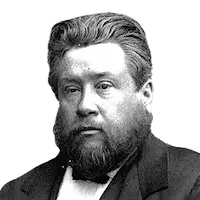
Charles Spurgeon Commentary
John 6:25-26
SCRIPTURE
"And when they found him on the other side of the sea, they said unto him, Rabbi, when camest thou hither? Jesus answered them and said, Verily, verily, I say unto you, Ye seek me, not because ye saw signs, but because ye ate of the loaves, and were filled." — John 6:25-26 (ASV)
And when they had found him on the other side of the sea, they said unto him, Rabbi, when camest thou hither? Jesus answered them and said, Verily, verily, I say unto you, Ye seek me, not because ye saw the miracles, but because ye did eat of the loaves, and were filled.
What very plain talk this is! Our Lord does not try to gain popularity by the concealment of truth, but he tells these people to their faces, "You are only following me because of what you get out of me."
"Oh!" some worldly-wise man would have said, "that is a very imprudent speech; it will drive the people away." Just so; and Christ seemed to say, on more than one occasion, "If people will be driven away by the truth, let them be driven away."
John the Baptist had declared that Christ had his fan in his hand, and that he would thoroughly purge his floor; and if that floor is to be purged, there must be a driving away of the chaff.
Our Lord's example should teach us to speak in his name nothing less and nothing more than the truth, in all love and kindness. After thus pointing out the true motive which made the people seek him, our Saviour uttered a very singular paradox:
And when they had found him on the other side of the sea, they said unto him, Rabbi, when camest thou hither? Jesus answered them and said, Verily, verily, I say unto you, Ye seek me not because ye saw the miracles but because ye did eat of the loaves, and were filled.
He did not gratify their curiosity by telling them how or when he came there, for that was no concern of theirs. Neither is it the business of Christ's preachers to spin ingenious theories about the gospel, or to tell pretty tales to amuse their hearers. Their business is to deal faithfully with men's hearts and consciences as their Master did when he said to these people, Ye seek me, not because ye saw the miracles.
They said that at first, no doubt. Christ's miracles dazzled them, so they sought him in order to see more miracles performed by him. This was not the highest motive for seeking the Saviour, but they had found a still lower one; they were now following him because they did eat of the loaves, and were filled.
Yet the Master did not reveal them, and thus he teaches us that it is better to follow him from the lowest motive than not to follow him at all. Perhaps some of us have been too severe on certain people.
We have said that they come to our place of worship out of mere curiosity. What if they do? It is well that they come at all, so let us not cut even the spider's web that links a man in any sense with Christ.
That web may grow into a thread, that thread into a cord, that cord into a cable, and there may yet be an unbreakable union between that man and Christ. That which begins in an inferior way may lead to something higher and better.
Still, it is wise to let people know that they are not deceiving Christ, even though they deceive themselves as to their motive in seeking him. So he said to them, –