
Charles Spurgeon Commentary John 7
Charles Spurgeon Commentary
John 7
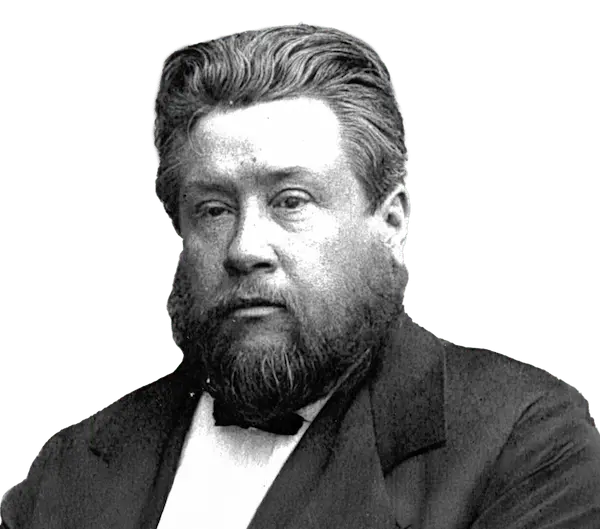
Charles Spurgeon Commentary
John 7
Commentary Groups
This author has written multiple commentaries over their lifetime on this chapter. We have grouped their commentaries for easier reading."And after these things Jesus walked in Galilee: for he would not walk in Judaea, because the Jews sought to kill him. Now the feast of the Jews, the feast of tabernacles, was at hand. His brethren therefore said unto him, Depart hence, and go into Judaea, that thy disciples also may behold thy works which thou doest. For no man doeth anything in secret, and himself seeketh to be known openly. If thou doest these things, manifest thyself to the world. For even his brethren did not believe on him." — John 7:1-5 (ASV)
After these things Jesus walked in Galilee: for he would not walk in Jewry, because the Jews sought to kill him. Now the Jews' feast of tabernacles was at hand. His brethren therefore said unto him, Depart hence, and go into Judaea, that thy disciples also may see the works that thou doest. For there is no man that doeth anything in secret, and he himself seeketh to be known openly. If thou do these things, show thyself to the world. For neither did his brethren believe in him.
It is a very painful truth, that those who were the near relations of the Saviour were not believers in his divine mission—at any rate, at first. He was truly a prophet who was without honour in his own country and among his own kindred; and, on this occasion, they half-taunted him concerning his claims. In effect, they said to him, "If indeed you are a prophet, get out into the world and prove it. We hear that you profess to work miracles; then why do you hide yourself away in this country place down here in Galilee?
Go to Jerusalem and perform your wonders before the crowds in the capital;"—half hoping, perhaps, that his claims might prove to be true, yet not, at that time, at any rate, being themselves willing to become his disciples. See how perverse is the human heart. These men might even live in close companionship with Christ, and even be nearly related to him after the flesh, and yet not be converted to him.
So the best of men need not wonder if they have unconverted relations, and we may not feel certain that there is any fault to be found in their example if others are not converted by it; for, certainly, there was no fault in the example of Christ, yet neither did his brethren believe in him. Mark, also, that no earthly relationship is of any avail in the kingdom of heaven: for neither did his brethren believe in him. So, although I may be the child of godly parents, and one born of a long line of saints, yet I am, because of that, no nearer to the kingdom unless I myself become a believer in Christ.
Remember what Peter said on the day of Pentecost; you have often heard that passage of Scripture half-quoted, let me quote the whole of it to you: For the promise is unto you, and to your children. If you stop there, you do not get the true sense of it. The promise is unto you, and to your children, and to all that are afar off, even as many as the Lord our God shall call.
Therefore, that text teaches that there is no distinction between the children of believers and any other children. We must be called by the grace of God like the far-off ones, or else we shall not inherit eternal life.
"And after these things Jesus walked in Galilee: for he would not walk in Judaea, because the Jews sought to kill him." — John 7:1 (ASV)
Jesus went to the Mount of Olives.
That is, as everyone went to their own house to rest, so Jesus found rest in secret prayer on the Mount of Olives. There is a very striking contrast here; it is a pity that a dividing saw was run right through the middle of such charming, consecutive sentences.
"Now the feast of the Jews, the feast of tabernacles, was at hand." — John 7:2 (ASV)
And early in the morning he came again into the temple, and all the people came unto him; and he sat down, and taught them.
That is always the posture in the East; the teachers sit, and the hearers stand. We may have to try that plan one of these days; it might be better for me, and also for you. There might be less drowsiness, perhaps, if the congregation had to stand to listen to the preacher's message.
"His brethren therefore said unto him, Depart hence, and go into Judaea, that thy disciples also may behold thy works which thou doest. For no man doeth anything in secret, and himself seeketh to be known openly. If thou doest these things, manifest thyself to the world." — John 7:3-4 (ASV)
And the scribes and Pharisees brought unto him a woman taken in adultery; and when they had set her in the midst, they say unto him, Master, this woman was taken in adultery, in the very act.
They did this only to entangle the Saviour—not because they wanted to learn anything from him, or to do this woman any good, or even to vindicate morality; but it was simply an effort to entrap him.
"For even his brethren did not believe on him. Jesus therefore saith unto them, My time is not yet come; but your time is always ready." — John 7:5-6 (ASV)
Now Moses in the law commanded us, that such should be stoned: but what sayest thou? This they said, tempting him, that they might have to accuse him.
They could accuse him either way. If he sanctioned their stoning the woman, they would charge him with violating the Roman law; but if he said that she should not be stoned, then they would say that he differed from Moses and set aside the law of God.
Jump to: