
Charles Spurgeon Commentary Luke 18:13
Charles Spurgeon Commentary
Luke 18:13
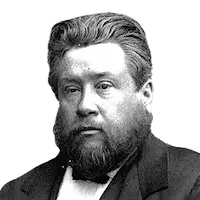
Charles Spurgeon Commentary
Luke 18:13
SCRIPTURE
"But the publican, standing afar off, would not lift up so much as his eyes unto heaven, but smote his breast, saying, God, be thou merciful to me a sinner." — Luke 18:13 (ASV)
Would not lift up so much as his eyes unto heaven but smote upon his breast, saying, God be merciful to me a sinner.
He makes no reflection upon others; but confesses his own sin, and appeals to the great Propitiation, for the word he used means, "God be propitious to me, a sinner."
And the publican, standing afar off, –
Away in some distant corner.
And the publican, standing afar off, –
Just on the edge of the crowd, keeping as far away as he could from the most holy place, –
And the publican, standing afar off, –
Not afar off from the Pharisee only, but afar off from the sacred shrine, the innermost temple, as if unworthy to be there at all: the publican, standing afar off, –
Would not lift up so much as his eyes unto heaven, but smote upon his breast, saying, God be merciful to me a sinner.
That was all prayer; it was a prayer for mercy, it was a prayer in which the suppliant took his right place, for he was, as he said, "a sinner." He does not describe himself as a penitent sinner, or as a praying sinner, but simply as a sinner, and as a sinner he goes to God asking for mercy. Our English version does not give the full meaning of the publican's prayer; it is, "God be propitious to me," that is, "be gracious to me through the ordained sacrifice;" and that is one of the points of the prayer that made it so acceptable to God.
There is a mention of the atonement in it; there is a pleading of the sacrificial blood. It was a real prayer, and an acceptable prayer, while the Pharisee's boasting was not a prayer at all.
And the publican, standing afar off, would not lift up so much as his eyes unto heaven, but smote upon his breast, saying, God be merciful to me a sinner.
The sinner, it should be; it is so emphatically in the Greek.
There is a Pharisee, the righteous man according to his own estimate, and all the rest were sinners. Here is the publican, he is the sinner, and he thinks everybody else is righteous. These were two very conspicuous individuals, the self-righteous man and the sinner; and they are both here tonight. I will not ask them to stand up; but no doubt they are both of them present. Now what became of them?
But smote upon his breast,—
His heart smote him, and he smote upon his heart,—
Would not lift up so much as his eyes unto heaven, –
That throne of the Highest, – as if even a glance from his unholy eyes might defile that sacred place. He bowed his eyes downward, as if to read in the earth the record of his sin; he did not dare to look up; –