
Charles Spurgeon Commentary Luke 21
Charles Spurgeon Commentary
Luke 21
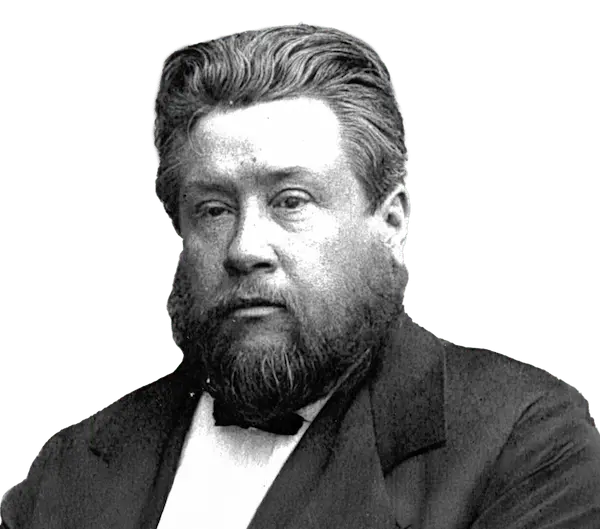
Charles Spurgeon Commentary
Luke 21
"And he looked up, and saw the rich men that were casting their gifts into the treasury. And he saw a certain poor widow casting in thither two mites. And he said, Of a truth I say unto you, This poor widow cast in more than they all: for all these did of their superfluity cast in unto the gifts; but she of her want did cast in all the living that she had. And as some spake of the temple, how it was adorned with goodly stones and offerings, he said, As for these things which ye behold, the days will come, in which there shall not be left here one stone upon another, that shall not be thrown down." — Luke 21:1-6 (ASV)
This was literally true of the temple at Jerusalem; and today there remains nothing of it. It is also true of all earthly buildings and of all earthly things. However firm they appear to be, as though they might outlast the centuries themselves, yet the things which are seen are temporal, and like the baseless fabric of a vision, they shall all melt into thin air, and pass away. The things which are seen are temporal; but the things which are not seen are eternal.
"And they asked him, saying, Teacher, when therefore shall these things be? and what [shall be] the sign when these things are about to come to pass?" — Luke 21:7 (ASV)
Those questions are always being asked; they are being asked to this very day about Christ's second coming. They will have no answer, for Christ himself assures us that, as the Son of Man, he did not know the day nor the hour of his own coming. As the Son of God he knew all things; but as a man like ourselves, he was willing to profess ignorance on that point.
"And he said, Take heed that ye be not led astray: for many shall come in my name, saying, I am [he]; and, The time is at hand: go ye not after them." — Luke 21:8 (ASV)
This passage refers, in the first place, to the siege of Jerusalem and, in its second and yet fuller meaning, to the coming of the Lord.
It looks to me that our Lord regarded the destruction of Jerusalem as "the beginning of the end," the great type and anticipation of all that will take place when he himself shall stand in the latter day upon the earth. And, as before the destruction of Jerusalem there were many false christs, so will there be more of them the nearer the end of the world shall be. This will be for us one of the signs of our Lord's speedy appearing, but we shall not be deceived by it.
Take heed that ye be not deceived: for many shall come in my name, saying, I am Christ; and the time draweth near: go ye not therefore after them.
"And when ye shall hear of wars and tumults, be not terrified: for these things must needs come to pass first; but the end is not immediately." — Luke 21:9 (ASV)
Everywhere throughout the Scriptures there is this double message of our Lord – "Watch, for I may come at any moment.
Expect me to come, and to come soon; yet never be terrified as though the time were immediately at hand, for there are certain events which must occur before my advent." How to reconcile these two thoughts, I do not know, and I do not care to know. I would like to be found in that condition which consists in part of watching and in the other part of patiently waiting and working until Christ appears.
"Then said he unto them, Nation shall rise against nation, and kingdom against kingdom; and there shall be great earthquakes, and in divers places famines and pestilences; and there shall be terrors and great signs from heaven." — Luke 21:10-11 (ASV)
Someone says, perhaps, "All this we have experienced countless times; yet Christ has not come." Exactly so, for these signs are not sent to satisfy our curiosity, but to keep us always on the watch. Whenever we observe these earthquakes, and wars, and famines, and pestilences, then we are to think, "Behold, He comes," and watch all the more earnestly.
You know how it is often with a man who is very sick. It is reported that he cannot last long; you visit many times, yet he is still living. Do you therefore conclude that he will not die?
No, but you expect all the more certainly that he will soon be gone. So it is with Christ's second advent.
He instructs us to note the signs of His coming. And yet, when some of those signs appear, He does not come. All this is to keep us still alert, watching for Him. Even in His own day, when He spoke in such a way that His servants expected Him to come at once, He also added words from which they might fairly judge that He would not come immediately.
Jump to: