
Charles Spurgeon Commentary Matthew 1
Charles Spurgeon Commentary
Matthew 1
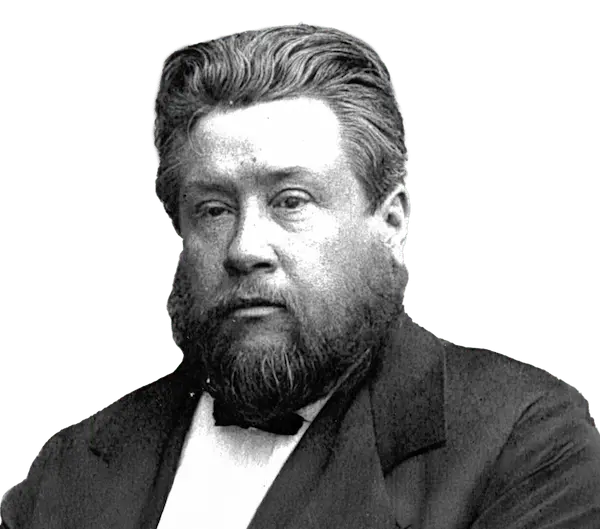
Charles Spurgeon Commentary
Matthew 1
"The book of the generation of Jesus Christ, the son of David, the son of Abraham." — Matthew 1:1 (ASV)
This verse gives us a clue to the special focus of Matthew’s Gospel. He was moved by the Holy Spirit to write of our Lord Jesus Christ AS KING—the son of David. He is to be spoken of as specially reigning over the true seed of Abraham; therefore He is called, the son of Abraham. Lord Jesus, make each one of us call You, “My God and King!” As we read this wonderful GOSPEL OF THE KINGDOM, may we be full of loyal obedience and pay You humble homage! You are both a King and a King’s Son.
The portion before us looks like a string of names, and we might imagine that it would yield little spiritual food, but we must not think lightly of any line of the inspired volume. Here the Spirit sets before us the pedigree of Jesus and sketches the family tree of the King of the Jews. Marvelous condescension, that He should be a man and have a genealogy, even HE who was in the beginning with God, and thought it not robbery to be equal with God! Let us read each line of The book of the generation with adoring gratitude that we have a King who is one with us in our nature—“in ties of blood with sinners one.”
"Abraham begat Isaac; and Isaac begat Jacob; and Jacob begat Judah and his brethren;" — Matthew 1:2 (ASV)
The covenant was made with Abraham that in his seed all the nations of the earth would be blessed. The line did not run through Ishmael, the offspring of the flesh, but through Isaac, who was born after the promise; and by the divine purpose, it flowed through the elect Jacob and not through the firstborn, Esau. Let us observe and admire the sovereignty of God.
Our Lord sprang from Judah, a tribe about which nothing is said concerning the priesthood, so that it might be clear that His priesthood is not after the law of a carnal commandment, but after the power of an endless life. Yet He comes from Judah’s royal tribe, for He is King.
"and Judah begat Perez and Zerah of Tamar; and Perez begat Hezron; and Hezron begat Ram; and Ram begat Amminadab; and Amminadab begat Nahshon; and Nahshon begat Salmon;" — Matthew 1:3-4 (ASV)
Observe the dash of unclean blood which enters the stream through Judah’s incest with Tamar. O Lord, you are the sinner’s Friend!
"and Salmon begat Boaz of Rahab; and Boaz begat Obed of Ruth; and Obed begat Jesse;" — Matthew 1:5 (ASV)
We note that two women are mentioned in this fifth verse, a Canaanite and a Moabitess. Thus, Gentile blood mingled with the Hebrew lineage. Our King has come to break down the partition wall. As Gentiles, we rejoice in this. Jesus is heir of a line in which flows the
"and Jesse begat David the king. And David begat Solomon of her [that had been the wife] of Uriah; and Solomon begat Rehoboam; and Rehoboam begat Abijah; and Abijah begat Asa; and Asa begat Jehoshaphat; and Jehoshaphat begat Joram; and Joram begat Uzziah; and Uzziah begat Jotham; and Jotham begat Ahaz; and Ahaz begat Hezekiah;" — Matthew 1:6-9 (ASV)
Well may our hearts melt at the memory of David and Bathsheba! The fruit of their unholy union died, but after repentance, she who “had been the wife of Uriah” became the wife of David and the mother of Solomon. Remarkable was the grace of God in this case, that the line should be continued in this once guilty pair, but oh, what kinship with fallen humanity does this indicate in our Lord! We will not pry into the mystery of the incarnation, but we must wonder at the condescending grace which appointed our Lord such a pedigree.
Jump to: