
Charles Spurgeon Commentary Matthew 12
Charles Spurgeon Commentary
Matthew 12
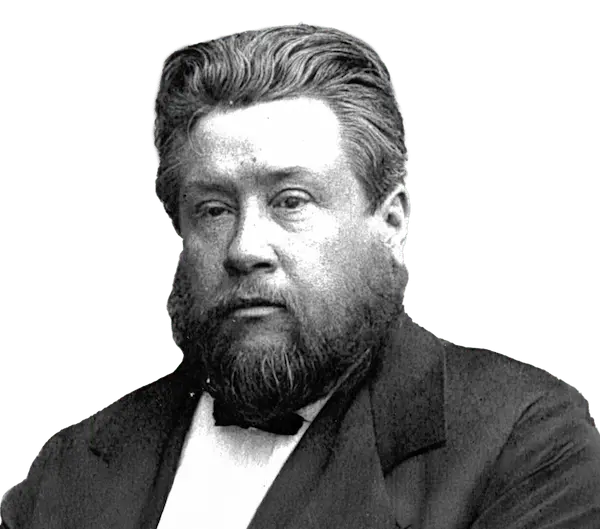
Charles Spurgeon Commentary
Matthew 12
"At that season Jesus went on the sabbath day through the grainfields; and his disciples were hungry and began to pluck ears and to eat. But the Pharisees, when they saw it, said unto him, Behold, thy disciples do that which it is not lawful to do upon the sabbath." — Matthew 12:1-2 (ASV)
They were probably on their way to the synagogue. They were allowed by law to take ears of grain as they passed along, but the Pharisees' objection was to their doing this on the Sabbath. Plucking was reaping, rubbing the grain from the husk was threshing, to their hypercritical minds. Their traditions and fancies they regarded as a code of law, and according to this, the disciples were doing that which is not lawful to do upon the sabbath day. They came to Jesus Himself with their grave complaints. For once they plucked up courage to deal with the Leader, for they felt very strong on the Sabbath question and they thought it fair to lay the faults of the disciples at the door of their Teacher.
We incidentally learn from this story that our Lord and His disciples were poor, and that He who fed the multitudes did not use His miraculous power to feed His own followers, but left them until they did what poor men are forced to do to obtain a little relief from their hunger. Our Lord bribes no one into following Him. They may be His apostles and yet be hungry on a Sabbath.
Why did these Pharisees not give them bread and so prevent them from doing what they objected to? We might also fairly ask, how did they happen to see the disciples? Did they not break the Sabbath by setting a watch over them?
"But he said unto them, Have ye not read what David did, when he was hungry, and they that were with him; how he entered into the house of God, and ate the showbread, which it was not lawful for him to eat, neither for them that were with him, but only for the priests?" — Matthew 12:3-4 (ASV)
He speaks to his learned opponents as if they had not read the law which they professed to uphold. Have you not read? The instance of David served the Son of David well. It was clear from his example that necessity has no law. The Tabernacle law was broken by David when he and his band were pressed with hunger and that breach of law touched Jewish ritual in a very special and tender point, and yet he was never rebuked for it.
To have eaten the holy bread out of profanity, or bravado, or levity might have involved the offender in the judgment of death, but to do so in urgent need was not blameworthy in the case of David. As men excuse any breach of manners necessitated by the pressure of hunger, so does the Lord permit any ceremonial point of law to give way to His mercy and to man’s evident necessity. The law of the Sabbath was never meant to compel hungry men to starvation, any more than the law of “the house of God” and “the shewbread.” Works of necessity are lawful on the Sabbath.
"Or have ye not read in the law, that on the sabbath day the priests in the temple profane the sabbath, and are guiltless? But I say unto you, that one greater than the temple is here." — Matthew 12:5-6 (ASV)
This instance is absolutely to the point. The priests worked hard on the Sabbath in offering sacrifice and in other appointed ways, but they were to be honored rather than censured for doing so, since they had the approval of the temple law. But in the case of Christ’s disciples, what they did had the sanction of the temple’s Lord, who is far greater than the temple.
Work done for God on the Sabbath is no real profanation of the Sabbath, though it may seem to be so to those whose religion lies wholly in external observances. If we work with Jesus and for Jesus, we do not care for the criticisms of formalists. As the substance is greater than the shadow, so is our Lord greater than the temple or any or all ceremonial laws, and His sanction overrules all the interpretations of the law which asceticism or superstition may impose upon us.
Works of piety are lawful on the Sabbath.
"But if ye had known what this meaneth, I desire mercy, and not sacrifice, ye would not have condemned the guiltless." — Matthew 12:7 (ASV)
Our Lord had galled the Pharisees by saying twice, Have ye not read? Did He imagine that they had left any part of the Psalms or Law unread? Now He assails them again with the charge of ignorance of the meaning of a passage from the prophets, If ye had known what this meaneth. Then He quotes from Hosea 6:6, which He had used against them before. (See Matthew 9:13.) I will have mercy, and not sacrifice. There must be very much in this word of the prophet to make it so great a favorite with our Lord.
God preferred that His priests should rather give the consecrated shewbread to David as an act of mercy, than keep it sacred to its use. He would rather that the disciples should spend a few minutes in plucking ears of corn for their hunger than suffer faintness in order to preserve the sanctity of the day. Having thus the permit of the Lord Himself, those who allowed the merciful act of removing hunger were guiltless, and ought not to be condemned. Indeed, they would not have been condemned had their critics been better instructed.
Works of mercy are lawful on the Sabbath.
"For the Son of man is lord of the sabbath." — Matthew 12:8 (ASV)
This sets the whole matter beyond further question. “The Son of man,” Christ Jesus, being in union with the Godhead, “is Lord” of everything which lies in the range of that law which concerns God and man, since He is Mediator, and therefore He may arrange and dispose of Sabbaths as He pleases. He has done so and has interpreted the Sabbatic law, not with license, but with a sweet reasonableness which the more rigid of religionists do not exhibit.
From His example and teaching we learn that the Sabbath is not profaned by works of necessity, piety, or mercy and that we do not need to heed the sharp speeches of hypercritical formalists who strain the Sabbatic law and make a bondage of what was intended to be a season of holy rest.
Jump to: