
Charles Spurgeon Commentary Matthew 16
Charles Spurgeon Commentary
Matthew 16
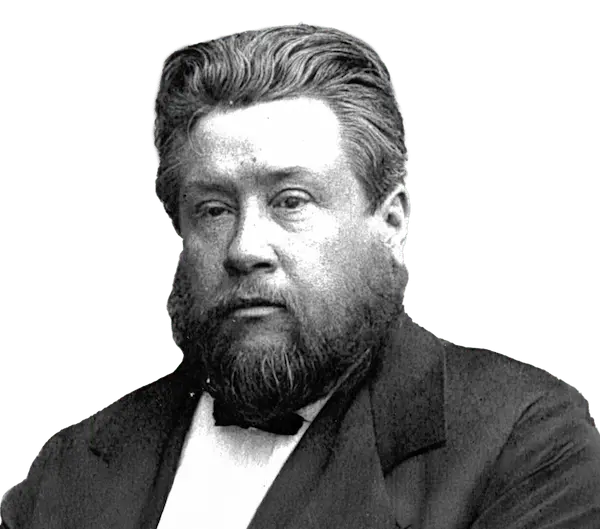
Charles Spurgeon Commentary
Matthew 16
"And the Pharisees and Sadducees came, and trying him asked him to show them a sign from heaven." — Matthew 16:1 (ASV)
The King is again met by His foes. Two sects, which were violently opposed to each other, unite their forces against Him. It is the way of the wicked to become friends when seeking the overthrow of the kingdom of heaven.
On this occasion they do not come with a question, but with the old demand for a sign. This time it must be “a sign from heaven,” possibly a marvel in the sky. What right did they have to set Him a test of such a kind as their fancy might suggest? What need was there for more signs when His miracles were so many? Were not all His miracles signs from heaven? Did not this demand cast a slur on all that He had already done? Was it not a practical ignoring of all His previous works of power?
Too often we also have fallen into the weakness of asking for a new token of divine love, thus undervaluing previous favors. If the evidence we have already received of our Lord’s grace and power is not enough, when will our doubts be ended?
In this demand for a sign, our Lord’s foes were tempting Him. Did the temptation lie in urging Him to seek His own glory by some ostentatious display of power, for which there would be no real need? Whatever it was, our Lord passed unscathed through this ordeal, for there was no pride in Him. Pharisees and Sadducees will tempt us also. From their wiles and smiles may the Lord deliver us! From the desire to stand well with men may we be happily freed by our love to Jesus!
"But he answered and said unto them, When it is evening, ye say, [It will be] fair weather: for the heaven is red. And in the morning, [It will be] foul weather to-day: for the heaven is red and lowering. Ye know how to discern the face of the heaven; but ye cannot [discern] the signs of the times." — Matthew 16:2-3 (ASV)
They could forecast the weather by certain signs, and our Lord Jesus mentions the weather signs of Palestine, yet they could not read the clearer and more plentiful warnings of the near future. Weather signs are doubtful, but there were moral and spiritual signs around them which could hardly be misunderstood if they would only consider them. Each country has its own sky warnings, and those of Palestine differ from those of England, but the signs of the times are the same in all lands. Our Lord singled out an instance of their supposed weather-wisdom. The same sign which, in the evening, was a sign of fair weather, was, in the morning, a sign of foul weather. They were able to make fine distinctions about the variable condition of the face of the sky; why could they not discern the signs of the times?
They could have seen, if they had chosen to do so, that all the prophecies were united in declaring that the date of the Messiah’s appearing had arrived. They could also have observed that every event was fulfilling those prophecies. But they were false at heart and would not see, and yet cried out for a sign. Signs were all around them, and yet they repeated the parrot cry, Show us a sign. Most justly, our Lord was indignant with them and rebuked them, using the justly severe words, O you hypocrites! Today, the men who want more evidence of the supernatural deserve a similar denunciation.
Lord, do not allow any of us to be blind to the heavenly signs—Your cross, Your resurrection, Your Word, Your Spirit, and Your work of grace. Teach us carefully to discern these things as being indeed the abiding signs of the times. Even in the growing coldness of the Church and the abounding iniquity of the world, let us see the signs of Your Advent, and stand waiting and watching for Your long-promised appearing.
"An evil and adulterous generation seeketh after a sign; and there shall no sign be given unto it, but the sign of Jonah. And he left them, and departed." — Matthew 16:4 (ASV)
It was not a lack of evidence, but the sad depravity of their minds, which caused them to seek a sign; therefore, the Lord would not satisfy their unhealthy craving. They were wicked in morals and adulterous in heart in their forsaking the one true God, and then they justified their unbelief in the Son of God by pleading a lack of proof, demanding more miracles so they could reach a right conclusion. Such is the deceit of the human heart.
Our Lord repeats His former answer. He will give them no other. In all the Old Testament, there is no fuller sign of our Lord than Jonah. Our Lord knew that He would fulfill the type of Jonah even in its details, and therefore He points them to that prophet’s life. This is a subject that deserves our careful meditation, but we cannot elaborate on it here.
Our Lord looks to His death and resurrection and gives the prophet Jonah as His sign. Jesus will be buried and will rise on the third day; and in the power of His resurrection, He will win the Gentiles to repentance. In this, He will be the antitype of Jonah, and this will be the sign that He is indeed the Christ of God. Our Lord had said this before, and He repeated it here because it was a sufficient reply, and there was no need to seek variety with a group of people who themselves perpetually harped on one string.
Our Lord left such people, for there was nothing to be done with them. He left them, and departed, and that place saw Him no more. Lord, do not leave any one of us, for that would be a sure sentence of death to us.
"And the disciples came to the other side and forgot to take bread." — Matthew 16:5 (ASV)
They had forgotten to provision their boat. They seem to have discovered this for themselves as soon as they “were come to the other side.” They seldom forgot such temporal matters. Possibly, they trusted each other, and what was every man’s business was nobody’s business.
They did not notice the omission while they were crossing the sea, but when mealtime came, their minds quickly turned to the loaves. Controversy had for a while engrossed their minds with religious matters, but the lack of bread and consequent hunger soon recalled them to the things of earth.
"And Jesus said unto them, Take heed and beware of the leaven of the Pharisees and Sadducees." — Matthew 16:6 (ASV)
He used a parabolic expression, which they would readily have understood, had not their minds been already absorbed by their lack of bread. He saw that in them, too, there would soon be a desire for a sign, now that they needed bread, and He feared the influence of both the ritualism of the Pharisee and the rationalism of the Sadducee upon His little Church. Hence His double word, “Take heed, and beware.”
The warning is needed today as much as in our Lord’s time; possibly it is even more required and will be less regarded. “Pharisees and Sadducees” are both leavening the Churches, and the spirit of the one is as bad as that of the other. Everywhere we see the one evil force, operating in two opposite ways, but rapidly leavening the meal of nominal Christendom.
Lord, save Your people from this souring and corrupting influence!
Jump to: