
Charles Spurgeon Commentary Matthew 19
Charles Spurgeon Commentary
Matthew 19
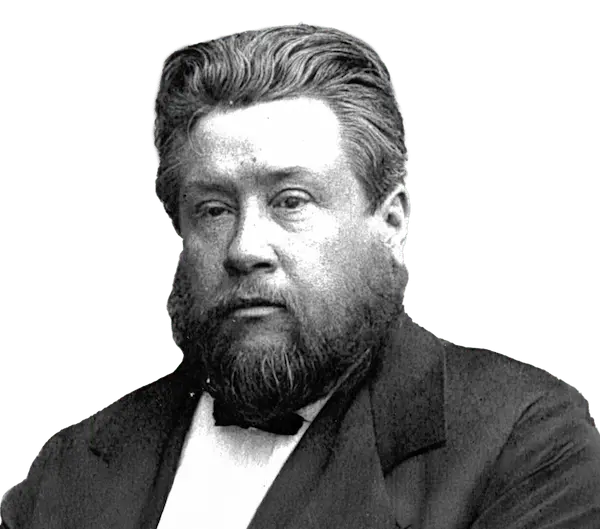
Charles Spurgeon Commentary
Matthew 19
"And it came to pass when Jesus had finished these words, he departed from Galilee, and came into the borders of Judaea beyond the Jordan; and great multitudes followed him; and he healed them there." — Matthew 19:1-2 (ASV)
He had finished these sayings about forgiveness, and so He hastened to other work which was not finished. He was always on the move, and He departed from Galilee, which had received so much of His care, so that other regions might enjoy His ministry.
He now turned more to the south, into the regions of Judea beyond Jordan, and He did good at every turn. When He had finished speaking to the disciples, He began working deeds of grace in a new district, and great multitudes followed Him.
Always the crowd was at His heels, held both by His word and by His work. He was drawing near to Jerusalem and His foes were on the watch, but He did not restrain His works of mercy because of their jealous scrutiny; He healed them THERE.
The place of our Lord’s gracious work is worthy to be remembered. Where the need was, there the help was given.
"And there came unto him Pharisees, trying him, and saying, Is it lawful [for a man] to put away his wife for every cause?" — Matthew 19:3 (ASV)
Here are these vipers again! What perseverance in malice! Little did they care for instruction, yet they assumed the air of inquirers. In truth, they were seeking to trap Him and were ready to dispute with Him whatever He might say.
The question is cunningly worded: “Is it lawful for a man to put away his wife for every cause?” The looser the terms of a question, the more likely it is to entangle the person interrogated. Their own consciences might have told them that the marriage bond is not to be severed for any and every reason that a man likes to mention. Yet it was a question much disputed at the time, whether a man could send away his wife as he pleased or whether there must be some serious reason given. Whatever Jesus might say, the Pharisees meant to use His verdict against Him.
"And he answered and said, Have ye not read, that he who made [them] from the beginning made them male and female, and said, For this cause shall a man leave his father and mother, and shall cleave to his wife; and the two shall become one flesh? So that they are no more two, but one flesh. What therefore God hath joined together, let not man put asunder." — Matthew 19:4-6 (ASV)
In His reply, Jesus challenges their knowledge of the law, “Have you not read?” It was a forceful way of appealing to their own boasted knowledge of the books of Moses. Our Lord honors Holy Scripture by drawing His argument from it. He chose especially to set His seal upon a part of the story of creation—that story which modern critics speak of as if it were fable or myth.
He took His hearers back to the beginning when God made them male and female, and made them sons. “In the image of God created he him; male and female created he them” (Genesis 1:27). The woman was taken out of man, and Adam truly said, “This is now bone of my bones, and flesh of my flesh” (Genesis 2:23).
By marriage, this unity is presented and embodied under divine sanction. This oneness is of the most real and vital kind: “They are no more twain, but one flesh.” All other ties are feeble compared with this. Even father and mother must stand second to the wife: “For this cause shall a man leave father and mother, and shall cleave to his wife.” Being divinely appointed, this union must not be broken by the caprice of men: “What God hath joined together, let not man put asunder.” Our Lord thus decides for the life-long perpetuity of the marriage bond, in opposition to those who allowed divorce for “every cause,” which very frequently meant for no cause whatever.
"They say unto him, Why then did Moses command to give a bill of divorcement, and to put [her] away?" — Matthew 19:7 (ASV)
Every reader of the passage in the books of Moses referred to here will be struck by the Pharisees’ unfair interpretation of it. In Deuteronomy 24:1-2, we read, When a man hath taken a wife, and married her, and it come to pass that she find no favor in his eyes, because he hath found some uncleanness in her: then let him write her a bill of divorcement, and give it in her hand, and send her out of his house. And when she is departed out of his house, she may go and be another man’s wife. Moses commanded nothing in this instance, but merely tolerated and greatly limited a custom then prevalent. To set Moses against Moses is not a new device, but the Pharisees would hardly venture to set Moses against God and make Him command an alteration of a divine law ordained from the beginning.
Yet our Lord made them see that they would have to do this to maintain the theory of easy divorce. The fact is that Moses found divorce existing to an almost unlimited extent, and he wisely began its overthrow by restricting the custom rather than by absolutely forbidding it immediately. They were not allowed to send away a wife with a hasty word, but had to undertake a deliberate, solemn ceremonial of it by preparing and giving a bill of divorce, and this was only allowed in a special case, because he hath found some uncleanness in her. Although many of the Pharisees explained away this last limitation and considered that the provision in Deuteronomy sanctioned almost unlimited divorce, they were not unanimous in the matter and were continually disputing over it. Therefore, there were many ways in which our Lord’s decision could be turned against Him, whatever it might be.
"He saith unto them, Moses for your hardness of heart suffered you to put away your wives: but from the beginning it hath not been so." — Matthew 19:8 (ASV)
Moses tolerated and restricted an evil custom that he knew such a people would not relinquish, once it had been established among them for so long. They could not bear a higher law, and so he treated them as people diseased with hardness of heart, hoping to lead them back to an older and better condition gradually.
As impurity ceased, and as the spirit of true religion would influence the nation, the need for divorce, and even the slightest desire for it, would die out. There was no provision in paradise for Adam to put away Eve; there was no desire for divorce in the golden age. The enactment of the Mosaic law of divorce was a later and temporary measure; and in the form into which a loose interpretation of Scripture had distorted it, it was not defensible.
Jump to: