
Charles Spurgeon Commentary Matthew 22
Charles Spurgeon Commentary
Matthew 22
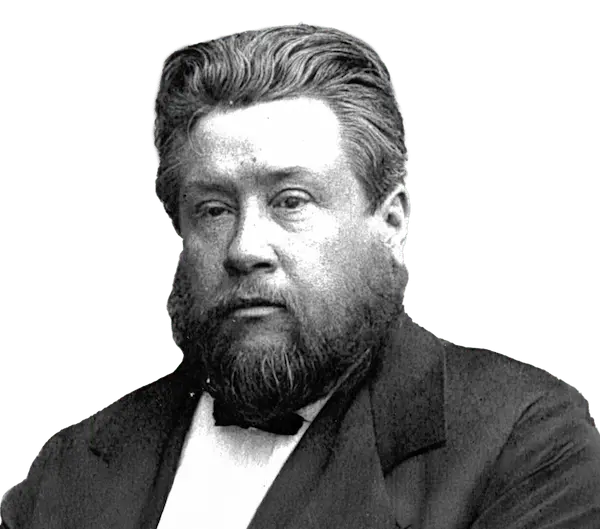
Charles Spurgeon Commentary
Matthew 22
Commentary Groups
This author has written multiple commentaries over their lifetime on this chapter. We have grouped their commentaries for easier reading."And Jesus answered and spake again in parables unto them, saying, The kingdom of heaven is likened unto a certain king, who made a marriage feast for his son, and sent forth his servants to call them that were bidden to the marriage feast: and they would not come." — Matthew 22:1-3 (ASV)
Observe that it was a king who made this wedding feast; therefore, to refuse to come to it when the command implied great honor to those who were invited, was as distinct an insult as could very well be perpetrated against both the king and his son. They would not come. Had the one who invited them been only an ordinary person, it might not have been their duty to come, and they might even have been justified in their refusal.
But this was a king, who sent his servants to summon the guests to the marriage of his son; and I urge you to take notice that the gospel marriage feast, to which you are invited, is the feast, not only of a king, but of the King of kings, your Creator, and your God; and in refusing to come in obedience to his command, you commit an overt act of rebellion against his Divine Majesty. The king sent forth his servants to call them that were bidden to the wedding: and they would not come.
They were invited, yet they would not come; from which I gather that those who think the invitations of the gospel are to be restricted to certain characters, because they say it is useless to invite others, do err, not knowing the Scriptures. What have we to do with the apparent uselessness of what we are commanded to do? It is our duty to give the invitation as our King directs us; but it is not our business to decide whether that invitation will be accepted or rejected. In this case, we know what happened: They would not come.
"And Jesus answered and spake again in parables unto them, saying," — Matthew 22:1 (ASV)
And Jesus answered, and spoke to them again. This was His reply to the hatred of the chief priests and Pharisees. He answered them by going on with His ministry. For them, and for the people also, He spoke again by parables. They came to Him with quibbles. He replied by parables. In the previous chapter, we noticed that they perceived that he spake of them. This perception did not, however, lead them to repentance, but only increased their hatred against the Savior.
Their partly concealed anger was all the greater because, through fear of the multitude, they could not yet lay hands on Jesus and put Him to death. They had willfully closed their eyes to the light, yet it continued to shine upon them. If they would not receive it, perhaps some of the people, whom they had been misleading, might accept it. Therefore, once more the King would give them a parable concerning His kingdom and concerning Himself. This parable must be distinguished from the one recorded in Luke 14:16-24, which was spoken on another occasion and with a different object. It would be worthwhile to compare the two parables and to note their resemblances and their differences.
"The kingdom of heaven is likened unto a certain king, who made a marriage feast for his son," — Matthew 22:2 (ASV)
A certain king made a marriage for his son. Thus does the King of glory celebrate the union of His Son with our humanity. The divine Son of God condescended to be united with our human nature, in order that He might redeem the beloved objects of His choice from the penalty due to their sins and might enter into the nearest conceivable connection with them.
The Gospel is a glorious festival in honor of that wondrous marriage, by which God and man are made one. It was a grand event, and grandly did the King propose to celebrate it by a wedding feast of grace. The marriage and the marriage festivities were all arranged by the King. He took such delight in His only-begotten and well-beloved Son that everything that was for His honor and joy afforded infinite satisfaction to the great Father’s heart. In addition to the Son’s equal glory with the Father as Creator, Preserver, and Provider, by His marriage He was to be crowned with fresh honors as Savior, Redeemer, and Mediator.
"and sent forth his servants to call them that were bidden to the marriage feast: and they would not come." — Matthew 22:3 (ASV)
The set time had arrived, and the Jews, who as a nation were bidden to the wedding, were invited to come and partake of the royal bounty. They had been “bidden” long before by the prophets whom the King had continued to send to them, and now that the festive day had dawned, the King sent forth his servants to call those who were bidden to the wedding. This was in accordance with the Eastern custom of sending a second invitation to those who had favorably received the first. John the Baptist and our Lord’s apostles and disciples plainly told the people that the long-awaited event was drawing near. Indeed, the appointed hour had already struck, the set time to favor Zion had come; all that was needed was that the guests should come to the wedding.
The Jews were highly honored in being chosen out of all the nations of the earth to attend the wedding of the King’s Son, but sadly, they did not prize their privileges; they would not come. They were instructed, entreated, and warned, but all to no avail: they would not come. Our Lord was very near the end of His stay on earth, and He summarized all He had observed of Israel’s conduct towards Him in this short sentence: they would not come. It is not said, “They could not come,” but, They would not come. Some for one reason, and some for another, and perhaps some without any reason at all, but without exception, they would not come. They thus manifested their disloyalty to the King, their disobedience to His command, their dislike of His Son, their distaste for the royal banquet, and their disregard for the messengers sent to them by the King.
Note: it was the King who made this wedding feast. Therefore, to refuse to be present, when the invitation implied great honor to those who received it, was as distinct an insult as could well be perpetrated against both the King and His Son. If an ordinary person had invited them, they might have done as they pleased about accepting the invitation, but a royal invitation is a command that will be disobeyed at the refuser’s peril. Let this be remembered by those who are now refusing the invitation of the Gospel.
"Again he sent forth other servants, saying, Tell them that are bidden, Behold, I have made ready my dinner; my oxen and my fatlings are killed, and all things are ready: come to the marriage feast." — Matthew 22:4 (ASV)
The King was patient and gave the disloyal people a further opportunity to come to the wedding feast. Again, He sent out other servants. He wished to make every allowance for those who had refused His invitation so that they might be left without excuse if they persisted in their refusal.
Possibly there may have been something in the servants that repelled instead of attracting them, or they may not have put the King’s message in the best possible form. Perhaps the invitation was not given clearly enough, or perhaps, after thinking over the matter, those who “would not come” might regret their hasty decision and long for another invitation to the feast.
So the King sent out other servants, and to ensure there would be no mistake about the message they were to deliver, He said to them, “Tell them which are bidden, Behold, I have prepared my dinner: my oxen and my fatlings are killed, and all things are ready: come unto the marriage.”
Jesus here seemed to glance into the near future and to foretell what would happen after His death. The apostles and the immediate disciples of our Lord went throughout the land, declaring the Gospel in all its fullness, freeness, and readiness.
At first, they kept to the Jews, according to the King’s word, “Tell them which are bidden.” At Antioch, in Pisidia, Paul and Barnabas said to the Jews who contradicted and blasphemed, “It was necessary that the word of God should first have been spoken to you” (Acts 13:46).
The apostles at first seem to have regarded their mission as restricted to the Jews, but they certainly did preach the Gospel to them. They told them that, by the death of Jesus, the preparation of salvation for men was fully made, according to the King’s words, “Behold, I have prepared my dinner.”
They preached a present salvation, one which displayed the riches of divine grace: “My oxen and my fatlings are killed.” Indeed, they proclaimed grace all-sufficient, meeting every need of the soul: “All things are ready.” And then they uttered the King’s proclamation: “Come unto the marriage.”
In His name they invited, urged, and even commanded the “bidden” ones to come. They began at Jerusalem and called to the feast the favored seed of Abraham, whose honor it was to be the first invited to the royal banquet.
Jump to: