
Charles Spurgeon Commentary Zechariah 10
Charles Spurgeon Commentary
Zechariah 10
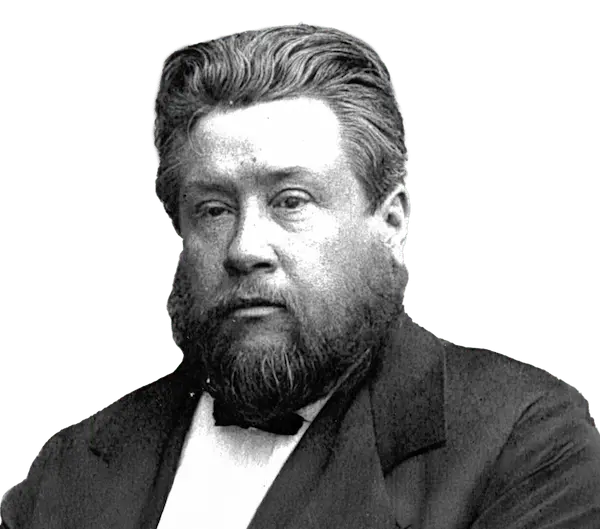
Charles Spurgeon Commentary
Zechariah 10
"Ask ye of Jehovah rain in the time of the latter rain, [even of] Jehovah that maketh lightnings; and he will give them showers of rain, to every one grass in the field." — Zechariah 10:1 (ASV)
The atheistic philosopher of the present day laughs at such a verse as this, and sneeringly asks, "What possible connection can there be between men and women praying to God and the showers of rain which fall upon the earth?" "Why!" he says, "according to the laws of nature, showers fall at such-and-such seasons; and if the atmosphere should not happen to be in such-and-such a state, all the praying in the world cannot produce a single drop of rain." But faith can clearly see where reason is blind; and the prayer of faith moves the arm of God, and the arm of God controls what the philosopher calls the laws of nature, and so the rain descends. Let us learn, from this precept and promise, the power of believing prayer. Prayer has the key of nature as well as the key of heaven hanging at her belt.
Observe also that, when we have received one mercy from the Lord, we are to go on to pray for another. These people must have had "the former rain," yet they were to ask for "the latter rain" also; and if you, dear friends, have had "the former rain" of conversion, go on to ask the Lord for "the latter rain" of sanctification. If, in our church-fellowship, we have had "the former rain" of gracious additions to our numbers, we must ask for "the latter rain" by praying that God would continue to bless us in this way. When we cease to pray for blessings, God has already ceased to bless us, but when our souls pour out floods of prayer, God is certain to pour out temporary floods of mercy.
"For the teraphim have spoken vanity, and the diviners have seen a lie; and they have told false dreams, they comfort in vain: therefore they go their way like sheep, they are afflicted, because there is no shepherd." — Zechariah 10:2 (ASV)
For the idols have spoken vanity, and the diviners have seen a lie, and have told false dreams; they comfort in vain:
Observe the readiness of man to forsake the great fountain of living waters and to make for himself broken cisterns which can hold no water. Notice too, that some sort of comfort may, for a time, be derived from a false trust, but it is "comfort in vain." As a dream yields no comfort when a man wakes up and finds himself to be not rich, as he had vainly dreamed that he was, but miserably poor, so all confidence in the flesh, all reliance upon anything except the almighty arm of God, even if it should give us temporary hope and consolation, will only make our grief the greater when its utter failure is discovered.
Therefore they went their way as a flock, they were troubled, because there was no shepherd. (Zechariah 10:2).
The sheep that belong to Christ's flock will never find any true shepherd except him who is "the good Shepherd." If, for a time, they should so lose their spiritual wits as to follow strangers, which, indeed is not a natural thing for them to do, for a stranger will they not follow, but will flee from him: for they know not the voice of strangers; (John 10:5)—they will meet with a thousand troubles because they have no shepherd.
"Mine anger is kindled against the shepherds, and I will punish the he-goats; for Jehovah of hosts hath visited his flock, the house of Judah, and will make them as his goodly horse in the battle." — Zechariah 10:3 (ASV)
Mine anger was kindled against the shepherds, and I punished the goats:
Whenever people are afflicted with unfaithful ministers, when God comes to visit these people, he will not only punish the ministers, but the religious leaders, the false professors in those churches, the he-goats who led the flock astray. Oh, what a plague and a curse will an unfaithful minister be found to have been at the last day! A well which only yields bitter water like that of Marah, merely mocks a temporary thirst; but a minister who does not preach the gospel, and who does not live the gospel, mocks the soul's eternal thirst.
Whatever I may be, God grant that I may never be an unfaithful preacher of his Word! Surely, if there is an innermost hell, a place where the soul's feet will be more firmly fixed in the stocks of the pit than anywhere else, it will be reserved for the man who, professing to be an instructor of the ignorant, and a leader of the flock, taught them falsehood, and led them out of the way. May the Lord save us from a shepherd against whom his anger must be kindled!
For the LORD of hosts has visited his flock the house of Judah, and has made them as his goodly horse in the battle.
As an expert horseman skillfully controls his caparisoned steed, and turns it as he pleases in the day of battle, and makes it obey him alone, so does the Lord rein in and direct his Church, so that she becomes like a "goodly horse in the battle."
"From him shall come forth the corner-stone, from him the nail, from him the battle bow, from him every ruler together." — Zechariah 10:4 (ASV)
Let us learn from this verse that everything comes from the Lord of hosts, the God of providence as well as of grace.
Those statesmen, who are the cornerstones of the great building of state, must come from him. Those Christian men and women of experience, who seem to be as the cornerstones of our spiritual building, must come from him. Those who are as nails, upon whom weaker Christians seem to hang, come from him. And whoever is, in the day of battle, like God's bow, must also come from him.
For, apart from the Lord, there is no strength, nor power, nor wit nor wisdom, among all his people.
We must learn, then, to lift up our eyes to God, and look to him for all that we need. Whether it be political, social, or religious needs that are to be supplied, all must come from him.
"And they shall be as mighty men, treading down [their enemies] in the mire of the streets in the battle; and they shall fight, because Jehovah is with them; and the riders on horses shall be confounded." — Zechariah 10:5 (ASV)
The Jewish infantry often put the Syrian cavalry to flight, and I may aptly compare the apostles of old to humble fighters on foot; while heathen and other philosophers were like mighty men on horseback, they were nevertheless turned back by the apparently weaker warriors of the cross, and this is still true today.
We can certainly afford to give our adversaries every advantage they can ask. Let them have state patronage, worldly dignity, learning, and wealth; yet, in the name of God, we will vanquish them, for the truth of God is mightier than all the wisdom of man, and the weakness of God is stronger than the greatest strength of man.
Jump to: