
John Calvin Commentary Genesis 5
John Calvin Commentary
Genesis 5
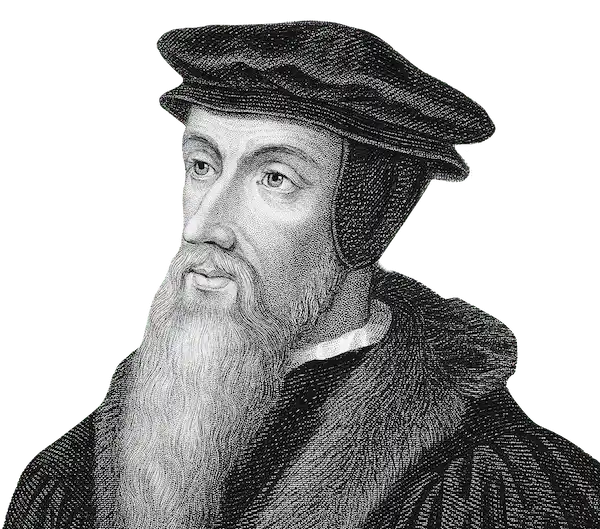
John Calvin Commentary
Genesis 5
"This is the book of the generations of Adam. In the day that God created man, in the likeness of God made he him;" — Genesis 5:1 (ASV)
This is the book of the generations of Adam. In this chapter, Moses briefly recounts the length of time that had intervened between the creation of the world and the deluge, and also slightly touches on some portion of the history of that period. And although we do not comprehend the design of the Spirit in leaving great and memorable events unrecorded, it is, nevertheless, our duty to reflect on many things that are passed over in silence.
I entirely disapprove of those speculations that everyone forms for themselves from mere conjectures; nor will I provide readers with the opportunity to indulge themselves in this regard. Yet, it may, to some degree, be gathered from a bare and seemingly dry narration what the state of those times was, as we will see in the appropriate places.
The book, according to the Hebrew phrase, is understood as a catalogue. The generations signify a continuous succession of a race, or a continuous progeny. Furthermore, the purpose for which this catalogue was made was to inform us that in the great, or rather, we might say, prodigious multitude of people, there was always a number, though small, who worshipped God; and that this number was wonderfully preserved by celestial guardianship, lest the name of God be entirely obliterated and the seed of the Church fail.
In the day that God created. He does not restrict these “generations” to the day of creation but only points out their commencement. At the same time, he distinguishes between our first parents and the rest of mankind, because God had brought them into life by a unique method, whereas others had sprung from a previous stock and had been born of parents. Moreover, Moses again repeats what he had previously stated: that Adam was formed according to the image of God, because the excellence and dignity of this favor could not be sufficiently celebrated.
It was already a great thing that the principal place among the creatures was given to humanity; but it is a nobility far more exalted that humanity should bear resemblance to its Creator, as a son does to his father. Indeed, it was not possible for God to act more generously toward humanity than by impressing His own glory upon it, thus making humanity, as it were, a living image of the Divine wisdom and justice.
This also has force in repelling the calumnies of the wicked, who would gladly transfer the blame for their wickedness to their Maker, had it not been expressly declared that humanity was formed by nature as a different being from what it has now become, through the fault of its own defection from God.
"male and female created he them, and blessed them, and called their name Adam, in the day when they were created." — Genesis 5:2 (ASV)
Male and female created he them. This clause commends the sacred bond of marriage and the inseparable union of husband and wife. For when Moses mentioned only one, he immediately afterwards includes both under one name. And He assigns a common name indiscriminately to both, so that future generations might learn to cherish this connection with each other more sacredly, when they saw that their first parents were called one person.
The trivial inference of Jewish writers, that married persons only are called Adam (or man), is refuted by the history of the creation. Nor, truly, did the Spirit in this place mean anything other than that after the establishment of marriage, husband and wife were like one man.
Moreover, He records the blessing pronounced upon them, so that we may observe in it the wonderful kindness of God in continuing to grant it; yet let us also recognize that by the depravity and wickedness of humankind it was, to some degree, interrupted.
"And Adam lived a hundred and thirty years, and begat [a son] in his own likeness, after his image; and called his name Seth:" — Genesis 5:3 (ASV)
And begat a son in his own likeness. We have recently said that Moses traces the offspring of Adam only through the line of Seth, to offer for our consideration the succession of the Church. In saying that Seth begat a son after his own image, he refers in part to the first origin of our nature; at the same time, we should also note its corruption and pollution, which, contracted by Adam through the fall, has flowed down to all his posterity.
If he had remained upright, he would have transmitted to all his children what he had received: but now we read that Seth, as well as the rest, was defiled, because Adam, who had fallen from his original state, could beget only those who were like himself.
If anyone should object that Seth with his family had been elected by the special grace of God, the answer is easy and obvious; namely, that a supernatural remedy does not prevent carnal generation from participating in the corruption of sin. Therefore, according to the flesh, Seth was born a sinner, but afterwards he was renewed by the grace of the Spirit.
This sad instance of the holy patriarch provides us with ample occasion to deplore our own wretchedness.
"and the days of Adam after he begat Seth were eight hundred years: and he begat sons and daughters." — Genesis 5:4 (ASV)
And the days of Adam after he had begotten Seth. In the number of years recorded here, we must especially consider the long period that the patriarchs lived together. For through six successive ages, when the family of Seth had grown into a great people, the voice of Adam might daily resound, to renew the memory of the creation, the fall, and the punishment of man; to testify to the hope of salvation that remained after chastisement; and to recite the judgments of God, by which all might be instructed. After his death, his sons might indeed pass on, as from hand to hand, what they had learned to their descendants; but far more efficacious would be the instruction from the mouth of him who had himself been the eyewitness of all these things. Yet so astonishing, and even monstrous, was the general obstinacy, that not even the sounder part of the human race could be retained in the obedience and the fear of God.
"And all the days that Adam lived were nine hundred and thirty years: and he died." — Genesis 5:5 (ASV)
And he died. This clause, which records the death of each patriarch, is by no means superfluous.
For it warns us that death was not in vain pronounced against humanity, and that we are now exposed to the curse to which humanity was doomed, unless we obtain deliverance elsewhere.
In the meantime, we must reflect upon our lamentable condition; namely, that with the image of God destroyed, or at least obliterated in us, we scarcely retain the faint shadow of a life, from which we are hastening to death.
And it is useful, when surveying so many ages, to observe at one glance the continual course and pattern of divine vengeance. For otherwise, we imagine that God is somehow forgetful, and there is nothing to which we are more prone than dreaming of immortality on earth, unless death is frequently brought before our eyes.
Jump to: