
John Gill Commentary Deuteronomy 34:10
John Gill Commentary
Deuteronomy 34:10
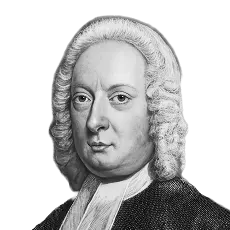
John Gill Commentary
Deuteronomy 34:10
SCRIPTURE
"And there hath not arisen a prophet since in Israel like unto Moses, whom Jehovah knew face to face," — Deuteronomy 34:10 (ASV)
And there arose not a prophet since in Israel like unto
Moses
Not in the times of Joshua, who wrote this chapter, at least the last eight verses, (Deuteronomy 34:5–12) , as say the Jews F16 ; nor to the times of Samuel, whom others take to be the writer of them; nor to the times of Ezra, as others; nor even throughout the whole Old Testament dispensation to the times of Christ, the great Prophet, like to Moses, that was to arise; and the Messiah is by the Jews owned, as by Maimonides F17 , to be equal to him, and by others to be above him: it is a well known saying of theirs F18 , that ``the Messiah shall be exalted above Abraham, and extolled above Moses, and made higher than the ministering angels;'' but as to all other prophets he excels them, and therefore they call him the prince, master, and Father of the prophets, and say, that all prophesied from the fountain of his prophecy F19 .
The difference between him and them is observed by Maimonides F20 to lie in many things. They prophesied by a dream or vision, but he awake and seeing. They prophesied by means of an angel, and saw what they did in parables and dark sayings, but Moses not by means of an angel, but the Lord spoke to him face to face. They trembled and were astonished, but not so Moses. They could not prophesy when they would, but he at any time, nor did he need to dispose and prepare his mind for it. Some of which will not hold good, especially the last; the instances in which he really exceeded them follow:
whom the Lord knew face to face
owned, took notice of, and familiarly conversed with face to face, as a man with his friend; none were permitted to such familiarity with God as he; see (Numbers 12:6–8) (Exodus 33:11) ; the Targums of Jonathan and Jerusalem paraphrase it, ``whom the Word of the Lord knew.''
FOOTNOTES:
- F16: T. Bab. Bava Bathra, fol. 15. 1.
- F17: Hilchot Teshuvah, c. 9. sect. 2.
- F18: Tanchuma in Yalkut in Isa. lii. 13.
- F19: Maimon. Yesode Hatorah, c. 7. sect. 6. & Vorst. in ib.
- F20: lb. sect. 6, 7, 8, 9.