
John Gill Commentary Luke 16:8
John Gill Commentary
Luke 16:8
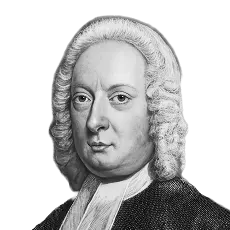
John Gill Commentary
Luke 16:8
SCRIPTURE
"And his lord commended the unrighteous steward because he had done wisely: for the sons of this world are for their own generation wiser than the sons of the light." — Luke 16:8 (ASV)
And the Lord commended the unjust steward
Not the Lord Jesus Christ, who delivered this parable, as the Syriac version seems to suggest, rendering it, "our Lord"; but the Lord of the steward, or "God", as the Ethiopic version reads: not that he commended him for the fact he did, or the injustice of it for this is contrary to his nature and perfections; but for his craft and cunning in providing himself a maintenance for time to come: for he is on that account branded as an "unjust steward", as he was, in wasting his Lord's goods; putting false glosses on the Scriptures; doing damage both to the souls and worldly estates of men: and in neglecting and despising lawful and honest ways of living, by digging or begging, asking favours at the hand of God, and doing good works; and in falsifying accounts; breaking the least of the commandments, and teaching men so to do; and in corrupting others, making proselytes twofold more the children of hell than himself; and in being liberal with another's property, to wrong objects, and for a wrong end.
It was not therefore because he had done justly to his Lord, or right to others, that he is commended; but
because he had done wisely
for himself: the wit, and not the goodness of the man is commended; which, in the language and sense of the Jews, may be thus expressed F16 :
the children of light :
by "the children of this world" may be meant the Israelites, who belonged to the Jewish nation and church, called the "world", and "this world", (1 Corinthians 10:11) (1 Corinthians 2:6 1 Corinthians 2:8) especially the princes of it, the ecclesiastical doctors and rulers: and who also were the men of this present world; in general they were such who were, as they were born into the world; in their sins, in the pollution, and under the guilt of them; were carnal, in the flesh, or unregenerate, and in darkness and blindness: they were such as were not only in the world, but of it; they belonged to it, having never been called out of it; and were under the influence of the God of it; and were taken with the things of it, its riches, honours, and pleasures; and had their portion in it, and were of worldly spirits; all which agrees with the Scribes and Pharisees; see (Psalms 17:14) and Aben Ezra on it, who has the very phrase here used: (amled) (synya) , a "man of the world", is sometimes F17 distinguished from a scholar, or a wise man; but (amle ynb) , "the children of the world", as they frequently intend the inhabitants of the world F18 , are sometimes distinguished from (ytad amle Nb) , "a son of the world to come" F19 ; and from "the children of faith" F20 , the same as "the children of light" here;
by whom are meant the children of the Gospel dispensation; or persons enlightened by the Spirit and grace of God, to see the sinfulness of sin, and their wretched state by nature; the insufficiency of their own righteousness to justify them before God; the way of life, righteousness, and salvation by Christ; who see that the several parts of salvation, and the whole, are of grace; have some light into the Scriptures of truth, and doctrines of the Gospel; and some glimpse of heaven, and the unseen glories of another world, though attended with much darkness in the present state: and who shall enjoy the light of glory.
Now, the men of the world, or carnal men, are, generally speaking, wiser than these; not in things spiritual, but in things natural, in the affairs of life, in worldly matters. The phrase seems to answer to (twdlwt) , "generations" used in (Genesis 6:9) (Genesis 37:2) "these are the generations of Noah" and "the generations of Jacob"; by which are meant, not the genealogies of them, but their affairs; what befell them in life: as so the Jewish writers F21 explain the phrase by (twrwqh) , "the things which happened" unto them in this world, in the course of their pilgrimage: or they are wise, (eiv thn genean thn eautwn) , "for their own generation": for the temporal good of their posterity, than saints are for the spiritual good of theirs: or they are wiser for the time that is to come in this life, than good men are concerning themselves for the time to come in the other world: or they are wiser, and more prudent in disposing of their worldly substance for their own secular good, and that of their offspring, than men of spiritual light and knowledge are, in disposing of their worldly substance for the glory of God, the interest of Christ, the honour of religion, their own spiritual good, and that of their posterity.
FOOTNOTES:
- F16: T. Bab. Yebamot, fol. 121. 1.
- F17: T. Bab Bava Netzia, fol. 27. 2.
- F18: Zohar in Exod. fol. 26. 2. & 58. 3, 4. Tzeror Hammor, fol. 99. 3. & 101. 2. & 102. 4.
- F19: Zohar in Exod. fol. 59. 4.
- F20: Zohar in Num. fol. 50. 4.
- F21: Aben Ezra in Gen. vi. 9. & xxxvii. 2. Sol. Urbin Obel Moed, fol. 85. 1.