
John Gill Commentary Matthew 10:40
John Gill Commentary
Matthew 10:40
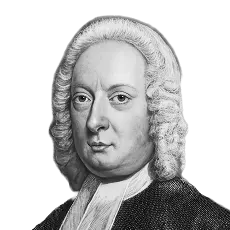
John Gill Commentary
Matthew 10:40
SCRIPTURE
"He that receiveth you receiveth me, and he that receiveth me receiveth him that sent me." — Matthew 10:40 (ASV)
He that receives you, receives me
This is said to comfort the disciples, lest they should conclude from this account of the sorrows, afflictions, and persecutions they were to meet with, that there would be none that would receive them and their message; Christ therefore suggests, that there would be some that would embrace the Gospel preached by them, and receive them kindly into their houses, and entertain them in a very hospitable manner: and, for the encouragement of such persons, who would risk their own goods and lives by so doing, he lets them know, that receiving of his disciples, was interpreted by him, a receiving of himself; and what they did to them, would be taken as kindly, as if done to him personally; and, in like manner, would it be understood and accepted by his Father:
and he that receives me, receives him that sent me .
To which agrees, what the Jews say F16 of the angel, in (Exodus 23:22) "If you shall indeed obey his voice, and do all that I shall speak": who observe, that it is not written, "that he shall speak", but "that I shall speak"; intimating, that (Mylbqm Mta yl wlak wnmyh Mta Nylbqm) (Ma) , "if you receive him, it is all one as if you received me": and the whole of this accords with a common saying among F17 them, (wtwmk) (Mda lv wxwlvv) , "that a man's messenger is as himself". The Jew F18 , therefore, has no reason to reproach Christ and his followers as he does, as if it was the sense of these words of Christ, and which the Christians give of them, that Christ and his twelve apostles were but one person.
FOOTNOTES:
- F16: Shemot Rabba Parash. 32. fol. 135. 3.
- F17: T. Bab. Baracot, fol. 34. 2. Kiddushin, fol. 41. 2. 42. 1. & 43. 1. Bava Metzia, fol. 96. 1.
- F18: R. Isaac Chizzuk Emuna, par 2. sect. 14. p. 404.