
John Gill Commentary Matthew 5:28
John Gill Commentary
Matthew 5:28
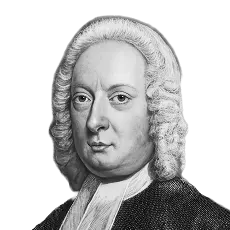
John Gill Commentary
Matthew 5:28
SCRIPTURE
"but I say unto you, that every one that looketh on a woman to lust after her hath committed adultery with her already in his heart." — Matthew 5:28 (ASV)
But I say unto you, that whosoever looketh on a woman
Many and severe are the prohibitions of the Jews, concerning looking upon a woman, which they aggravate as a very great sin: they say, it is not lawful to look upon a beautiful woman, though unmarried; nor upon another man's wife, though deformed; nor upon a woman's coloured garments: they forbid F12 looking on a woman's little finger, and say F13 that he who tells money to a woman, out of his hand into hers, that he may look upon her, though he is possessed of the law and good works, even as Moses, he shall not escape the damnation of hell: they affirm F14 that he who looks upon a woman's heel, his children shall not be virtuous; and that a man may not go after a woman in the way, no, not after his wife: should he meet her on a bridge, he must take her to the side of him; and whoever goes through a river after a woman, shall have no part in the world to F15 come: nay, they forbid F16 a man looking on the beauty of his own wife. Now these things were said by them, chiefly to cover themselves, and because they would be thought to be very chaste; when they were, as Christ calls them, an "adulterous generation" in a literal sense. They usually did what our Lord observes, "strain at a gnat, and swallow a camel".
We read in the Talmud F17 of (hjwv dyox), a "foolish saint", and it is asked, who is he? And it is answered, one who sees a woman drowning in a river, and says it is not lawful for me (hb ylwktoyal), "to look" upon her, and deliver her.
It was not any looking upon a woman that is forbidden by Christ as criminal; but so to look, as "to lust after her"; for such a one
has committed adultery with her already in his heart .
But these men, who forbade external looking upon a woman, generally speaking, had no notion of heart sins, which was the prevailing opinion of the Pharisees in Christ's time.
``A good thought, they F18 allow, is reckoned as if done, as it is said (Malachi 3:16) . Upon which it is asked, what is the meaning of that, and "that thought" upon "his name?" Says R. Ase, if a man thinks to do a good work, and is hindered, and does it not, the Scripture reckons it to him as if he did it; but an evil thought, the holy blessed God does not account of it as if done, as is said (Psalms 66:18) .''
Upon which words, a noted commentator F19 of theirs has this remark: ``Though I regard iniquity in my heart to do it, even in thought, yes, against God himself, as if I had expressed it with my lips, he does not hear it; that is, (Nwe yl bvx) (al), "he does not reckon it to me for sin"; because the holy blessed God does not account an evil thought for an action, to those who are in the faith of God, or of the true religion.'' For it seems, this is only true of the Israelites; it is just the reverse with the Gentiles, in whom God does not reckon of a good thought as if it was done, but does of an evil one as if it was in act F20 .
It must be owned that this is not the sense of them all; for some of them have gone so far as to say F21 that ``the thoughts of sin are greater, or harder, than sin itself:'' and particularly, some of them say things which agree with and come very near to what our Lord here says; as when they affirm F23 that ``everyone who looks upon a woman (hnwwkb), with intention, it is all one as if he lay with her.'' And that (Pawn arqn wynyeb Pawn), "he who commits adultery with his eyes, is called an adulterer" F24 . Yes, they also observe F25 that a woman may commit adultery in her heart, as well as a man; but the Pharisees of Christ's time were of another mind.
FOOTNOTES:
- F12: T. Bab. Beracot, fol. 24. 1. Sabbat. fol. 64. 2.
- F13: T. Bab. Beracot, fol. 61. 1. Eruvin, fol. 18. 2.
- F14: T. Bab. Nedarim, fol. 20. 1. T. Hieros. Challa, fol. 58. 3. Derech Eretz. c. 1. fol. 17. 3.
- F15: T. Bab. Beracot, fol. 61. 1. Eruvin, fol. 18. 2.
- F16: Zohar in Lev. fol. 34. 4.
- F17: T. Bab Sota, fol. 21. 2.
- F18: T. Bab. Kiddushin, fol. 40. 1.
- F19: R. David Kimchi, in Psal. lxvi. 18.
- F20: T. Hieros. Peah, fol. 16. 2.
- F21: T. Bab. Yoma, fol. 29. 1.
- F23: T. Hieros. Challa, fol. 58. 3. Massechet Calah, fol. 16. 4. Vid. Maimon. Issure Bia, c. 21. sect. 2. & Moses Kotsensis Mitzvot Tora precept. neg. 126.
- F24: Vajikra Rabba, sect. 23. fol. 265. 1.
- F25: Bemidbar Rabba, sect. 9. fol. 196. 1.