
John Gill Commentary Psalms 21:9
John Gill Commentary
Psalms 21:9
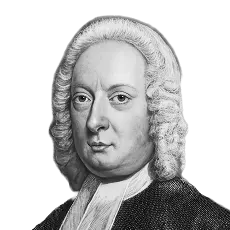
John Gill Commentary
Psalms 21:9
SCRIPTURE
"Thou wilt make them as a fiery furnace in the time of thine anger: Jehovah will swallow them up in his wrath, And the fire shall devour them." — Psalms 21:9 (ASV)
Thou shalt make them as a fiery oven
Some think the allusion is to David's causing the Ammonites to pass through the brick kiln, (2 Samuel 12:31); others to the burning of Sodom and Gomorrah: it represents what a severe punishment shall be inflicted on the enemies of Christ; they shall be cast into a fiery oven, or furnace of fire, as Shadrach, Meshach, and Abednego, were by the order of Nebuchadnezzar; so some render the words, "you shall put them into a fiery oven", (k) , "as", being put for (b) , "into" F3 : wicked men are as dry trees, as stubble, as thorns or briers, and are fit fuel for a fiery oven or furnace; by which is meant the wrath and fury of God, which is poured forth as fire; and this has had its fulfillment in part in the Jews at Jerusalem's destruction; when that day of the Lord burned like an oven, and the proud and haughty Jews, and who dealt wickedly by Christ, were burned up in it, (Malachi 4:1) ;
and will have an additional accomplishment when the whore of Babylon shall be burnt with fire, and when the beast and false prophet shall be cast alive into a lake of fire burning with brimstone; and still more fully at the general conflagration, when will be the perdition of ungodly men, and the earth and all that is therein shall be burnt up; and especially when all wicked men and devils shall be cast into the lake and furnace of fire, where will be weeping, wailing, and gnashing of teeth; see (Revelation 17:16) (19:20) (20:10-15) (Matthew 13:41Matthew 13:42) (25:41) (2 Peter 3:7 2 Peter 3:10 2 Peter 3:12) . This will be
in the time of thine anger ,
or "of your countenance" F4 ; not his gracious, but his angry countenance; when he shall put on a fierce look, and appear as the Lion of the tribe of Judah, and stir up all his wrath;
the Lord shall swallow them up in his wrath ;
not that they shall be annihilated; their souls remain after death, and their bodies after the resurrection; and will be tormented with the fire of God's wrath for ever and ever; the phrase is expressive of utter ruin, of the destruction of soul and body in hell; see (Psalms 35:25) ; Jarchi takes it to be a prayer, "may the Lord swallow them up"
and the fire shall devour them ;
that is, as the Targum paraphrases it, the fire of hell; or, however, it designs the wrath of God, who is a consuming fire; or that fiery indignation of his, which shall devour the adversaries; which comes down upon them either in temporal judgments here, or in their everlasting destruction hereafter.
FOOTNOTES:
- F3: Vide Aben Ezram in loc.
- F4: (Kynp) "vultus tui", V. L. so Sept. Aethiop. Gejerus, Muis, Ainsworth; "faciei iratae tuae", Junius & Tremellius; so Michaelis.