
Matthew Henry Commentary 1 Corinthians 15
Matthew Henry Commentary
1 Corinthians 15
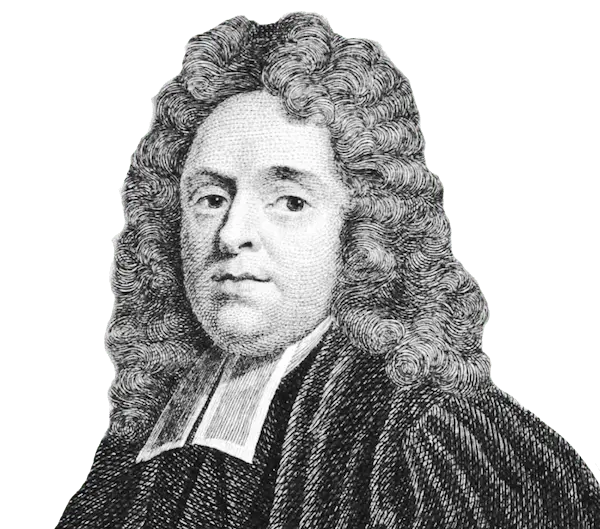
Matthew Henry Commentary
1 Corinthians 15
"Now I make known unto you brethren, the gospel which I preached unto you, which also ye received, wherein also ye stand, by which also ye are saved, if ye hold fast the word which I preached unto you, except ye believed in vain. For I delivered unto you first of all that which also I received: that Christ died for our sins according to the scriptures; and that he was buried; and that he hath been raised on the third day according to the scriptures; and that he appeared to Cephas; then to the twelve; then he appeared to above five hundred brethren at once, of whom the greater part remain until now, but some are fallen asleep; then he appeared to James; then to all the apostles; and last of all, as to the [child] untimely born, he appeared to me also. For I am the least of the apostles, that am not meet to be called an apostle, because I persecuted the church of God. But by the grace of God I am what I am: and his grace which was bestowed upon me was not found vain; but I labored more abundantly than they all: yet not I, but the grace of God which was with me. Whether then [it be] I or they, so we preach, and so ye believed." — 1 Corinthians 15:1-11 (ASV)
The word resurrection usually points to our existence beyond the grave. Not a trace of the apostle's doctrine can be found in all the teaching of philosophers. The doctrine of Christ's death and resurrection is the foundation of Christianity. Remove this, and all our hopes for eternity sink at once.
And it is by holding firm to this truth that Christians stand in the day of trial and are kept faithful to God. We believe in vain unless we remain in the faith of the gospel. This truth is confirmed by Old Testament prophecies, and many saw Christ after He had risen. This apostle was highly favoured, but he always had a low opinion of himself and expressed it.
When sinners are, by Divine grace, turned into saints, God causes the remembrance of former sins to make them humble, diligent, and faithful. He ascribes to Divine grace all that was valuable in him. True believers, though not ignorant of what the Lord has done for, in, and by them, yet when they look at their whole conduct and their obligations, they are led to feel that they themselves are utterly worthless.
All true Christians believe that Jesus Christ—and Him crucified, and then risen from the dead—is the sun and substance of Christianity. All the apostles agreed in this testimony. By this faith they lived, and in this faith they died.
"Now if Christ is preached that he hath been raised from the dead, how say some among you that there is no resurrection of the dead? But if there is no resurrection of the dead, neither hath Christ been raised: and if Christ hath not been raised, then is our preaching vain, your faith also is vain. Yea, we are found false witnesses of God; because we witnessed of God that he raised up Christ: whom he raised not up, if so be that the dead are not raised. For if the dead are not raised, neither hath Christ been raised: and if Christ hath not been raised, your faith is vain; ye are yet in your sins. Then they also that are fallen asleep in Christ have perished. If we have only hoped in Christ in this life, we are of all men most pitiable." — 1 Corinthians 15:12-19 (ASV)
Having shown that Christ was risen, the apostle answers those who said there would be no resurrection. There would have been no justification or salvation if Christ had not risen. And must not faith in Christ be vain, and of no use, if he is still among the dead?
The proof of the resurrection of the body is the resurrection of our Lord. Even those who died in the faith would have perished in their sins if Christ had not risen. All who believe in Christ have hope in him as a Redeemer; hope for redemption and salvation by him. But if there is no resurrection or future recompense, their hope in him can only be for this life.
And they must be in a worse condition than the rest of mankind, especially at the time and under the circumstances in which the apostles wrote, for then Christians were hated and persecuted by everyone. But it is not so; they, of all people, enjoy solid comforts amid all their difficulties and trials, even in the times of the sharpest persecution.
"But now hath Christ been raised from the dead, the firstfruits of them that are asleep. For since by man [came] death, by man [came] also the resurrection of the dead. For as in Adam all die, so also in Christ shall all be made alive. But each in his own order: Christ the firstfruits; then they that are Christ`s, at his coming. Then [cometh] the end, when he shall deliver up the kingdom to God, even the Father; when he shall have abolished all rule and all authority and power. For he must reign, till he hath put all his enemies under his feet. The last enemy that shall be abolished is death. For, He put all things in subjection under his feet. But when he saith, All things are put in subjection, it is evident that he is excepted who did subject all things unto him. And when all things have been subjected unto him, then shall the Son also himself be subjected to him that did subject all things unto him, that God may be all in all. Else what shall they do that are baptized for the dead? If the dead are not raised at all, why then are they baptized for them? Why do we also stand in jeopardy every hour? I protest by that glorifying in you, brethren, which I have in Christ Jesus our Lord, I die daily. If after the manner of men I fought with beasts at Ephesus, what doth it profit me? If the dead are not raised, let us eat and drink, for to-morrow we die. Be not deceived: Evil companionships corrupt good morals. Awake to soberness righteously, and sin not; for some have no knowledge of God: I speak [this] to move you to shame." — 1 Corinthians 15:20-34 (ASV)
All who are by faith united to Christ are by His resurrection assured of their own resurrection. Just as through the sin of the first Adam all humankind became mortal, because all inherited from him the same sinful nature, so, through the resurrection of Christ, all who are made to partake of the Spirit and the spiritual nature will revive and live forever. There will be an order in the resurrection.
Christ Himself has been the first-fruits; at His coming, His redeemed people will be raised before others; finally, the wicked will also rise. That will be the end of this present state of things. If we wish to triumph in that solemn and important time, we must now submit to His rule, accept His salvation, and live to His glory. Then we will rejoice in the completion of His undertaking, so that God may receive the whole glory of our salvation, and so that we may forever serve Him and enjoy His favor.
What, then, are those doing who are baptized for the dead, if the dead do not rise at all? Perhaps baptism is used here in a figurative sense for afflictions, sufferings, and martyrdom, as in Matthew 20:22-23. What will become of those who have suffered many great injuries, and have even lost their lives for this doctrine of the resurrection, if the dead do not rise at all? Whatever the meaning may be, the apostle's argument was undoubtedly understood by the Corinthians.
And it is equally plain to us that Christianity would be a foolish profession if its aim was merely that its adherents, through their faithfulness to God, should gain personal advantage for themselves in this life; rather, our calling is to bear fruit leading to holiness, so that our end may be everlasting life. But we must not live like beasts, since we do not die like them. It must be ignorance of God that leads anyone to disbelieve the resurrection and future life.
Those who acknowledge God and His providence, and observe how unequal things are in the present life—how frequently the best people fare worst—cannot doubt an afterlife, where everything will be set right. Let us not associate with ungodly people; but warn all around us, especially children and young persons, to shun them as a pestilence. Let us awake to righteousness, and not sin.
"But some one will say, How are the dead raised? and with what manner of body do they come? Thou foolish one, that which thou thyself sowest is not quickened except it die: and that which thou sowest, thou sowest not the body that shall be, but a bare grain, it may chance of wheat, or of some other kind; but God giveth it a body even as it pleased him, and to each seed a body of its own. All flesh is not the same flesh: but there is one [flesh] of men, and another flesh of beasts, and another flesh of birds, and another of fishes. There are also celestial bodies, and bodies terrestrial: but the glory of the celestial is one, and the [glory] of the terrestrial is another. There is one glory of the sun, and another glory of the moon, and another glory of the stars; for one star differeth from another star in glory. So also is the resurrection of the dead. It is sown in corruption; it is raised in incorruption: it is sown in dishonor; it is raised in glory: it is sown in weakness; it is raised in power: it is sown a natural body; it is raised a spiritual body. If there is a natural body, there is also a spiritual [body]. So also it is written, The first man Adam became a living soul. The last Adam [became] a life-giving spirit. Howbeit that is not first which is spiritual, but that which is natural; then that which is spiritual. The first man is of the earth, earthy: the second man is of heaven. As is the earthy, such are they also that are earthy: and as is the heavenly, such are they also that are heavenly. And as we have borne the image of the earthy, we shall also bear the image of the heavenly. Now this I say, brethren, that flesh and blood cannot inherit the kingdom of God; neither doth corruption inherit incorruption." — 1 Corinthians 15:35-50 (ASV)
- How are the dead raised up? That is, by what means? How can they be raised?
- Regarding the bodies that shall rise: will they be of the same shape, form, stature, members, and qualities?
The former objection is that of those who opposed the doctrine, the latter of curious doubters.
To the first, the answer is that this is to be brought about by divine power—a power that all may see doing something similar, year after year, in the death and revival of grain.
It is foolish to question the almighty power of God to raise the dead when we see it every day quickening and reviving things that are dead.
To the second inquiry: The grain undergoes a great change, and so will the dead when they rise and live again.
The seed dies, and although a part of it springs into new life, we cannot fully understand how this occurs.
The works of creation and providence daily teach us to be humble, as well as to admire the Creator's wisdom and goodness.
There is a great variety among other bodies, as there is among plants.
There is a variety of glory among heavenly bodies. The bodies of the dead, when they rise, will be fitted for the heavenly bodies. The bodies of the dead, when they rise, will be fitted for the heavenly state; and there will be a variety of glories among them.
Burying the dead is like committing seed to the earth, so that it may spring out of it again.
Nothing is more loathsome than a dead body.
But believers shall, at the resurrection, have bodies made fit to be forever united with spirits made perfect.
To God all things are possible.
He is the Author and Source of spiritual life and holiness to all his people, by the supply of his Holy Spirit to the soul; and he will also quicken and change the body by his Spirit.
The dead in Christ shall not only rise, but shall rise thus gloriously changed.
The bodies of the saints, when they rise again, will be changed. They will then be glorious and spiritual bodies, fitted to the heavenly world and state, where they are to dwell forever after.
The human body in its present form, and with its wants and weaknesses, cannot enter or enjoy the kingdom of God.
Then let us not sow to the flesh, of which we can only reap corruption.
And the body follows the state of the soul.
Therefore, he who neglects the life of the soul casts away his present good; he who refuses to live to God squanders all he has.
"Behold, I tell you a mystery: We all shall not sleep, but we shall all be changed, in a moment, in the twinkling of an eye, at the last trump: for the trumpet shall sound, and the dead shall be raised incorruptible, and we shall be changed. For this corruptible must put on incorruption, and this mortal must put on immortality. But when this corruptible shall have put on incorruption, and this mortal shall have put on immortality, then shall come to pass the saying that is written, Death is swallowed up in victory. O death, where is thy victory? O death, where is thy sting? The sting of death is sin; and the power of sin is the law: but thanks be to God, who giveth us the victory through our Lord Jesus Christ. Wherefore, my beloved brethren, be ye stedfast, unmoveable, always abounding in the work of the Lord, forasmuch as ye know that your labor is not vain in the Lord." — 1 Corinthians 15:51-58 (ASV)
Not all saints will die, but all will be changed. In the gospel, many truths, previously hidden in mystery, are made known. Death will never appear in the regions to which our Lord will bring His risen saints. Therefore, let us seek the full assurance of faith and hope, so that in the midst of pain and in the prospect of death, we may think calmly about the horrors of the tomb, assured that our bodies will sleep there, and in the meantime, our souls will be present with the Redeemer.
Sin gives death all its harmful power. The sting of death is sin; but Christ, by dying, has removed this sting. He has made atonement for sin; He has obtained its remission. The strength of sin is the law. No one can answer its demands, endure its curse, or abolish his own transgressions. From this comes terror and anguish.
And so, death is terrible to the unbelieving and the impenitent. Death may seize a believer, but it cannot hold him in its power. How many springs of joy to the saints, and of thanksgiving to God, are opened by the death and resurrection, the sufferings and conquests of the Redeemer! In 1 Corinthians 15:58, we find an exhortation that believers should be steadfast, firm in the faith of the gospel that the apostle preached and they received.
Also, that they should be unmovable in their hope and expectation of this great privilege of being raised incorruptible and immortal. And that they should abound in the work of the Lord, always doing the Lord's service, and obeying His commands. May Christ give us faith and increase our faith, so that we may not only be safe, but also joyful and triumphant.
Jump to: