
Matthew Henry Commentary 1 Corinthians 4
Matthew Henry Commentary
1 Corinthians 4
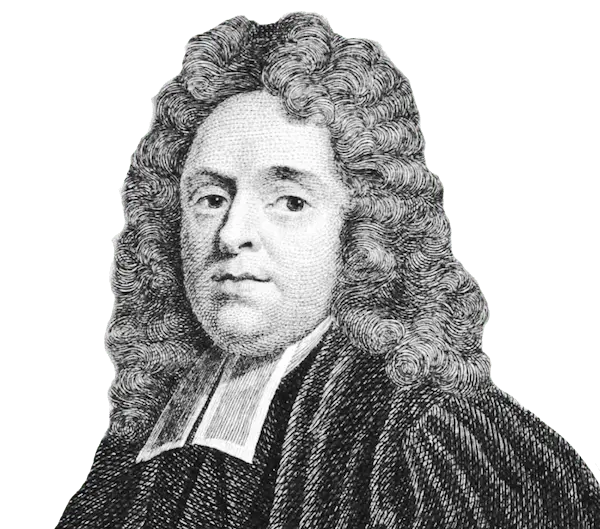
Matthew Henry Commentary
1 Corinthians 4
"Let a man so account of us, as of ministers of Christ, and stewards of the mysteries of God. Here, moreover, it is required in stewards, that a man be found faithful. But with me it is a very small thing that I should be judged of you, or of man`s judgment: yea, I judge not mine own self. For I know nothing against myself; yet am I not hereby justified: but he that judgeth me is the Lord. Wherefore judge nothing before the time, until the Lord come, who will both bring to light the hidden things of darkness, and make manifest the counsels of the hearts; and then shall each man have his praise from God. Now these things, brethren, I have in a figure transferred to myself and Apollos for your sakes; that in us ye might learn not [to go] beyond the things which are written; that no one of you be puffed up for the one against the other." — 1 Corinthians 4:1-6 (ASV)
Apostles were no more than servants of Christ, but they were not to be undervalued. They had a great trust and, for that reason, had an honourable office. Paul had a just concern for his own reputation, but he knew that he who chiefly aimed to please people would not prove himself a faithful servant of Christ. It is a comfort that human beings are not to be our final judges.
And it is not judging ourselves well, or justifying ourselves, that will prove us safe and happy. Our own judgment is not to be depended upon regarding our faithfulness, any more than our own works for our justification. A day is coming that will bring people's secret sins to light and discover the secrets of their hearts.
Then every slandered believer will be justified, and every faithful servant approved and rewarded. The word of God is the best rule by which to judge people. Pride is commonly at the bottom of quarrels. Self-conceit contributes to an undue esteem for our teachers, as well as for ourselves.
We will not be puffed up for one against another if we remember that all are instruments, employed by God, and endowed by him with various talents.
"For who maketh thee to differ? and what hast thou that thou didst not receive? but if thou didst receive it, why dost thou glory as if thou hadst not received it? Already are ye filled, already ye are become rich, ye have come to reign without us: yea and I would that ye did reign, that we also might reign with you. For, I think, God hath set forth us the apostles last of all, as men doomed to death: for we are made a spectacle unto the world, both to angels and men. We are fools for Christ`s sake, but ye are wise in Christ; we are weak, but ye are strong; ye have glory, but we have dishonor. Even unto this present hour we both hunger, and thirst, and are naked, and are buffeted, and have no certain dwelling-place; and we toil, working with our own hands: being reviled, we bless; being persecuted, we endure; being defamed, we entreat: we are made as the filth of the world, the offscouring of all things, even until now." — 1 Corinthians 4:7-13 (ASV)
We have no reason to be proud; all that we have, are, or do that is good is due to the free and rich grace of God. A sinner snatched from destruction by sovereign grace alone would be very absurd and inconsistent if they were proud of the free gifts of God.
St. Paul sets forth his own circumstances. In 1 Corinthians 4:9, an allusion is made to the cruel spectacles in the Roman games, where men were forced to cut one another to pieces to entertain the people. In these games, the victor, though he might destroy his adversary, did not escape with his life but was only kept for another combat and was certain to be killed in the end.
The thought that many eyes are upon believers when they are struggling with difficulties or temptations should encourage constancy and patience. We are weak, but ye are strong. All Christians are not exposed to suffering in the same way.
Some suffer greater hardships than others. The apostle enters into the particulars of their sufferings. And how glorious the charity and devotion that carried them through all these hardships! They suffered in their persons and characters as the worst and vilest of men, as the very dirt of the world that was to be swept away; indeed, as the offscouring of all things, the dross of all things. And everyone who would be faithful in Christ Jesus must be prepared for poverty and contempt.
Whatever the disciples of Christ suffer from other people, they must follow the example and fulfill the will and precepts of their Lord. They must be content, with him and for him, to be despised and abused. It is much better to be rejected, despised, and mistreated, as St. Paul was, than to have the good opinion and favor of the world. Though cast off by the world as vile, we may yet be precious to God, gathered up by his own hand, and placed upon his throne.
"I write not these things to shame you, but to admonish you as my beloved children. For though ye have ten thousand tutors in Christ, yet [have ye] not many fathers; for in Christ Jesus I begat you through the gospel. I beseech you therefore, be ye imitators of me. For this cause have I sent unto you Timothy, who is my beloved and faithful child in the Lord, who shall put you in remembrance of my ways which are in Christ, even as I teach everywhere in every church. Now some are puffed up, as though I were not coming to you. But I will come to you shortly, if the Lord will; and I will know, not the word of them that are puffed up, but the power. For the kingdom of God is not in word, but in power. What will ye? shall I come unto you with a rod, or in love and a spirit of gentleness?" — 1 Corinthians 4:14-21 (ASV)
In reproving sin, we should distinguish between sinners and their sins. Reproofs that kindly and affectionately warn are likely to reform.
Though the apostle spoke with authority as a parent, he would rather beseech them in love. As ministers are to set an example, others must follow them, to the extent that they follow Christ in faith and practice.
Christians may make mistakes and differ in their views, but Christ and Christian truth are the same yesterday, today, and forever.
Whenever the gospel is effectual, it comes not in word only, but also in power, by the Holy Spirit, quickening dead sinners, delivering people from the slavery of sin and Satan, renewing them both inwardly and outwardly, and comforting, strengthening, and establishing the saints.
This work cannot be done by the persuasive language of humans, but by the power of God.
It is a blessed disposition to have the spirit of love and meekness prevail, yet to maintain just authority.
Jump to: