
Matthew Henry Commentary 1 Peter 1:1-9
Matthew Henry Commentary
1 Peter 1:1-9
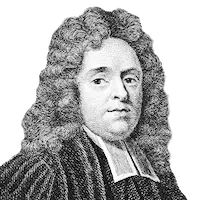
Matthew Henry Commentary
1 Peter 1:1-9
SCRIPTURE
"Peter, an apostle of Jesus Christ, to the elect who are sojourners of the Dispersion in Pontus, Galatia, Cappadocia, Asia, and Bithynia, according to the foreknowledge of God the Father, in sanctification of the Spirit, unto obedience and sprinkling of the blood of Jesus Christ: Grace to you and peace be multiplied. Blessed [be] the God and Father of our Lord Jesus Christ, who according to his great mercy begat us again unto a living hope by the resurrection of Jesus Christ from the dead, unto an inheritance incorruptible, and undefiled, and that fadeth not away, reserved in heaven for you, who by the power of God are guarded through faith unto a salvation ready to be revealed in the last time. Wherein ye greatly rejoice, though now for a little while, if need be, ye have been put to grief in manifold trials, that the proof of your faith, [being] more precious than gold that perisheth though it is proved by fire, may be found unto praise and glory and honor at the revelation of Jesus Christ: whom not having seen ye love; on whom, though now ye see him not, yet believing, ye rejoice greatly with joy unspeakable and full of glory: receiving the end of your faith, [even] the salvation of [your] souls." — 1 Peter 1:1-9 (ASV)
This epistle is addressed to believers in general, who are strangers in every city or country where they live, and are scattered through the nations. These are to ascribe their salvation to the electing love of the Father, the redemption of the Son, and the sanctification of the Holy Spirit; and so to give glory to one God in three Persons, into whose name they had been baptized. Hope, in the world's phrase, refers only to an uncertain good, for all worldly hopes are tottering, built upon sand, and the worldly person's hopes of heaven are blind and groundless conjectures.
But the hope of the sons of the living God is a living hope, not only concerning its object but also concerning its effect. It enlivens and comforts in all distresses and enables them to meet and overcome all difficulties. Mercy is the spring of all this; indeed, great mercy and manifold mercy. And this well-grounded hope of salvation is an active and living principle of obedience in the soul of the believer.
The source of a Christian's joy is the remembrance of the happiness laid up for him. It is incorruptible; it cannot come to nothing; it is an estate that cannot be spent. It is also undefiled, which signifies its purity and perfection. And it does not fade; it is not sometimes more or less pleasant, but always the same, still like itself.
All possessions here are stained with defects and failings; still, something is lacking. Fair houses have sad cares flying about the gilded and ceilinged roofs; soft beds and full tables are often accompanied by sick bodies and uneasy stomachs. All possessions are stained with sin, either in acquiring or in using them. How ready we are to turn the things we possess into occasions and instruments of sin, and to think there is no liberty or delight in their use without abusing them!
Worldly possessions are uncertain and soon pass away, like the flowers and plants of the field. That which is laid up in the highest and best place, in heaven, must be of the greatest worth. Happy are those whose hearts the Holy Spirit sets on this inheritance. God not only gives his people grace but also preserves them to glory.
Every believer always has something in which he may greatly rejoice; it should show itself in his countenance and conduct. The Lord does not willingly afflict, yet his wise love often appoints sharp trials to show his people their hearts and to do them good in the end. Gold does not increase by trial in the fire; it becomes less. But faith is made firm and multiplied by troubles and afflictions. Gold must perish at last and can only purchase perishing things, while the trial of faith will be found to result in praise, honour, and glory.
Let this reconcile us to present afflictions. Then seek to believe Christ's excellence in himself and his love to us; this will kindle such a fire in the heart as will make it rise up in a sacrifice of love to him. And the glory of God and our own happiness are so united that if we sincerely seek the one now, we will attain the other when the soul will no longer be subject to evil. The certainty of this hope is as if believers had already received it.