
Matthew Henry Commentary Exodus 12
Matthew Henry Commentary
Exodus 12
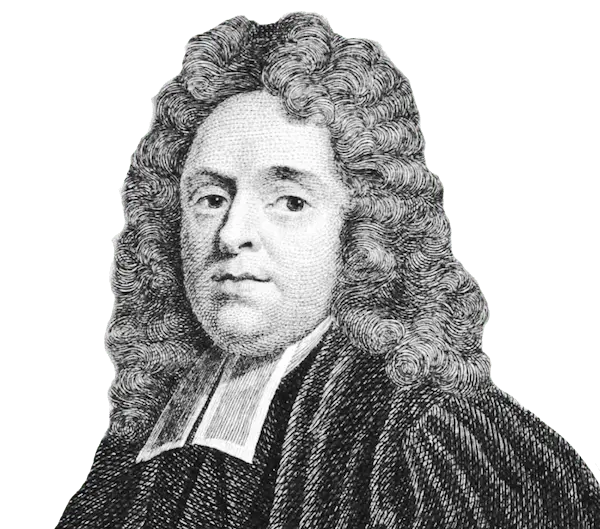
Matthew Henry Commentary
Exodus 12
"And Jehovah spake unto Moses and Aaron in the land of Egypt, saying, This month shall be unto you the beginning of months: it shall be the first month of the year to you. Speak ye unto all the congregation of Israel, saying, In the tenth [day] of this month they shall take to them every man a lamb, according to their fathers` houses, a lamb for a household: and if the household be too little for a lamb, then shall he and his neighbor next unto his house take one according to the number of the souls; according to every man`s eating ye shall make your count for the lamb. Your lamb shall be without blemish, a male a year old: ye shall take it from the sheep, or from the goats: and ye shall keep it until the fourteenth day of the same month; and the whole assembly of the congregation of Israel shall kill it at even. And they shall take of the blood, and put it on the two side-posts and on the lintel, upon the houses wherein they shall eat it. And they shall eat the flesh in that night, roast with fire, and unleavened bread; with bitter herbs they shall eat it. Eat not of it raw, nor boiled at all with water, but roast with fire; its head with its legs and with the inwards thereof. And ye shall let nothing of it remain until the morning; but that which remaineth of it until the morning ye shall burn with fire. And thus shall ye eat it: with your loins girded, your shoes on your feet, and your staff in your hand; and ye shall eat it in haste: it is Jehovah`s passover. For I will go through the land of Egypt in that night, and will smite all the first-born in the land of Egypt, both man and beast; and against all the gods of Egypt I will execute judgments: I am Jehovah. And the blood shall be to you for a token upon the houses where ye are: and when I see the blood, I will pass over you, and there shall no plague be upon you to destroy you, when I smite the land of Egypt. And this day shall be unto you for a memorial, and ye shall keep it a feast to Jehovah: throughout your generations ye shall keep it a feast by an ordinance for ever. Seven days shall ye eat unleavened bread; even the first day ye shall put away leaven out of your houses: for whosoever eateth leavened bread from the first day until the seventh day, that soul shall be cut off from Israel. And in the first day there shall be to you a holy convocation, and in the seventh day a holy convocation; no manner of work shall be done in them, save that which every man must eat, that only may be done by you. And ye shall observe the [feast of] unleavened bread; for in this selfsame day have I brought your hosts out of the land of Egypt: therefore shall ye observe this day throughout your generations by an ordinance for ever. In the first [month], on the fourteenth day of the month at even, ye shall eat unleavened bread, until the one and twentieth day of the month at even. Seven days shall there be no leaven found in your houses: for whosoever eateth that which is leavened, that soul shall be cut off from the congregation of Israel, whether he be a sojourner, or one that is born in the land. Ye shall eat nothing leavened; in all your habitations shall ye eat unleavened bread." — Exodus 12:1-20 (ASV)
The Lord makes all things new to those whom he delivers from the bondage of Satan, and takes to himself to be his people. The time when he does this is to them the beginning of a new life. God appointed that, on the night when they were to go out of Egypt, each family should kill a lamb, or that two or three families, if small, should kill one lamb.
This lamb was to be eaten in the manner directed here, and the blood to be sprinkled on the door-posts, to mark the houses of the Israelites from those of the Egyptians. The angel of the Lord, when destroying the first-born of the Egyptians, would pass over the houses marked by the blood of the lamb: thus came the name of this holy feast or ordinance. The passover was to be kept every year, both as a remembrance of Israel's preservation and deliverance out of Egypt, and as a remarkable type of Christ. Their safety and deliverance were not a reward of their own righteousness, but the gift of mercy.
They were reminded of this, and by this ordinance they were taught, that all blessings came to them through the shedding and sprinkling of blood. Observe:
The paschal lamb was typical. Christ is our passover (1 Corinthians 5:7). Christ is the Lamb of God (John 1:29); often in the Revelation he is called the Lamb. It was to be in its prime; Christ offered up himself in the midst of his days, not when a babe at Bethlehem. It was to be without blemish; the Lord Jesus was a Lamb without spot: the judge who condemned Christ declared him innocent. It was to be set apart four days before, denoting the marking out of the Lord Jesus to be a Savior, both in the purpose and in the promise. It was to be slain, and roasted with fire, denoting the painful sufferings of the Lord Jesus, even to death, the death of the cross. The wrath of God is as fire, and Christ was made a curse for us. Not a bone of it must be broken, which was fulfilled in Christ (John 19:33), denoting the unbroken strength of the Lord Jesus.
The sprinkling of the blood was typical. The blood of the lamb must be sprinkled, denoting the application of the merits of Christ's death to our souls; we must receive the atonement (Romans 5:11). Faith is the bunch of hyssop by which we apply the promises, and the benefits of the blood of Christ laid up in them, to ourselves. It was to be sprinkled on the door-posts, denoting the open profession we are to make of faith in Christ. It was not to be sprinkled upon the threshold, which cautions us to take heed of trampling under foot the blood of the covenant. It is precious blood, and must be precious to us. The blood, thus sprinkled, was a means of preserving the Israelites from the destroying angel, who was not to act where the blood was. The blood of Christ is the believer's protection from the wrath of God, the curse of the law, and the damnation of hell (Romans 8:1).
The solemn eating of the lamb was typical of our gospel duty to Christ. The paschal lamb was not to be looked upon only, but to be fed upon.
So we must by faith make Christ our own; and we must receive spiritual strength and nourishment from him, as from our food (see John 6:53, 55). It was all to be eaten; those who by faith feed upon Christ, must feed upon a whole Christ; they must take Christ and his yoke, Christ and his cross, as well as Christ and his crown. It was to be eaten at once, not set aside until morning.
Today Christ is offered, and is to be accepted while it is called to-day, before we sleep the sleep of death. It was to be eaten with bitter herbs, in remembrance of the bitterness of their bondage in Egypt; we must feed upon Christ with sorrow and brokenness of heart, in remembrance of sin. Christ will be sweet to us, if sin be bitter.
It was to be eaten standing, with their staffs in their hands, as being ready to depart. When we feed upon Christ by faith, we must forsake the rule and the dominion of sin; hold loosely to the world, and everything in it; forsake all for Christ, and reckon it no bad bargain (Hebrews 13:13–14).
The feast of unleavened bread was typical of the Christian life (1 Corinthians 5:7–8). Having received Christ Jesus the Lord, we must continually delight ourselves in Christ Jesus. No manner of work must be done, that is, no care admitted and indulged, which does not agree with, or would lessen this holy joy. The Jews were very strict as to the passover, so that no leaven should be found in their houses. It must be a feast kept in charity, without the leaven of malice; and in sincerity, without the leaven of hypocrisy. It was by an ordinance for ever; so long as we live we must continue feeding upon Christ, rejoicing in him always, with thankful mention of the great things he has done for us.
"Then Moses called for all the elders of Israel, and said unto them, Draw out, and take you lambs according to your families, and kill the passover. And ye shall take a bunch of hyssop, and dip it in the blood that is in the basin, and strike the lintel and the two side-posts with the blood that is in the basin; and none of you shall go out of the door of his house until the morning. For Jehovah will pass through to smite the Egyptians; and when he seeth the blood upon the lintel, and on the two side-posts, Jehovah will pass over the door, and will not suffer the destroyer to come in unto your houses to smite you. And ye shall observe this thing for an ordinance to thee and to thy sons for ever. And it shall come to pass, when ye are come to the land which Jehovah will give you, according as he hath promised, that ye shall keep this service. And it shall come to pass, when your children shall say unto you, What mean ye by this service? that ye shall say, It is the sacrifice of Jehovah`s passover, who passed over the houses of the children of Israel in Egypt, when he smote the Egyptians, and delivered our houses. And the people bowed the head and worshipped. And the children of Israel went and did so; as Jehovah had commanded Moses and Aaron, so did they." — Exodus 12:21-28 (ASV)
That night, when the first-born were to be destroyed, no Israelite must stir out of doors until called to march out of Egypt. Their safety was owing to the blood of sprinkling. If they went out from under that protection, it was at their own peril. They must stay inside to wait for the salvation of the Lord; it is good to do so.
In later times, they were to carefully teach their children the meaning of this service. It is good for children to ask about the things of God; those who ask for the way will find it.
The keeping of this solemnity every year was,
- To look backward, so that they might remember what great things God had done for them and their fathers. Old mercies, to ourselves or to our fathers, must not be forgotten, so that God may be praised, and our faith in him encouraged.
- It was designed to look forward, as a pledge of the great sacrifice of the Lamb of God in the fullness of time. Christ our passover was sacrificed for us; his death was our life.
"And it came to pass at midnight, that Jehovah smote all the first-born in the land of Egypt, from the first-born of Pharaoh that sat on his throne unto the first-born of the captive that was in the dungeon; and all the first-born of cattle. And Pharaoh rose up in the night, he, and all his servants, and all the Egyptians; and there was a great cry in Egypt, for there was not a house where there was not one dead. And he called for Moses and Aaron by night, and said, Rise up, get you forth from among my people, both ye and the children of Israel; and go, serve Jehovah, as ye have said. Take both your flocks and your herds, as ye have said, and be gone; and bless me also. And the Egyptians were urgent upon the people, to send them out of the land in haste; for they said, We are all dead men. And the people took their dough before it was leavened, their kneading-troughs being bound up in their clothes upon their shoulders. And the children of Israel did according to the word of Moses; and they asked of the Egyptians jewels of silver, and jewels of gold, and raiment. And Jehovah gave the people favor in the sight of the Egyptians, so that they let them have what they asked. And they despoiled the Egyptians." — Exodus 12:29-36 (ASV)
The Egyptians had been kept in anxiety and horror by the darkness for three days and nights; now their rest is broken by a far more terrible calamity. The plague struck their first-born, the joy and hope of their families. They had slain the Hebrews' children; now God killed theirs.
It reached from the throne to the dungeon: prince and peasant stand on the same level before God's judgments. The destroying angel entered every dwelling unmarked by blood, as the messenger of woe. He performed his dreadful errand, leaving no house in which there was not one dead. Imagine, then, the cry that rang through the land of Egypt, the long, loud shriek of agony that burst from every dwelling.
It will be thus in that dreadful hour when the Son of Man will visit sinners with the last judgment. God's sons, His first-born, were now released. People had better come to God's terms at first, for He will never come to theirs. Now Pharaoh's pride is abased, and he yields.
God's word will stand; we get nothing by disputing, or delaying to submit. In this terror, the Egyptians sought to purchase the favour and the speedy departure of Israel. Thus the Lord took care that their hard-earned wages were paid, and the people were provided for their journey.
"And the children of Israel journeyed from Rameses to Succoth, about six hundred thousand on foot that were men, besides children. And a mixed multitude went up also with them; and flocks, and herds, even very much cattle. And they baked unleavened cakes of the dough which they brought forth out of Egypt; for it was not leavened, because they were thrust out of Egypt, and could not tarry, neither had they prepared for themselves any victuals. Now the time that the children of Israel dwelt in Egypt was four hundred and thirty years. And it came to pass at the end of four hundred and thirty years, even the selfsame day it came to pass, that all the hosts of Jehovah went out from the land of Egypt. It is a night to be much observed unto Jehovah for bringing them out from the land of Egypt: this is that night of Jehovah, to be much observed of all the children of Israel throughout their generations." — Exodus 12:37-42 (ASV)
The children of Israel set out without delay. A mixed multitude went with them. Some, perhaps, were willing to leave their country, devastated by plagues; others, out of curiosity; perhaps a few out of love for them and their religion. But there were always those among the Israelites who were not Israelites. Thus, there are still hypocrites in the church.
This great event occurred 430 years after the promise made to Abraham . For so long, the promise of a settlement remained unfulfilled. But though God's promises are not fulfilled quickly, they will be, in due season.
This is that night of the Lord, that remarkable night, to be celebrated in all generations. The great things God does for his people are to be not only a few days' wonder, but to be remembered throughout all ages, especially the work of our redemption by Christ. This first Passover night was a night of the Lord, greatly to be observed; but the last Passover night, in which Christ was betrayed and in which the first Passover, with the rest of the Jewish ceremonies, was abolished, was a night of the Lord, much more to be observed.
Then a yoke, heavier than that of Egypt, was broken from our necks, and a land, better than that of Canaan, was set before us. It was a redemption to be celebrated in heaven, forever and ever.
"And Jehovah said unto Moses and Aaron, This is the ordinance of the passover: there shall no foreigner eat thereof; but every man`s servant that is bought for money, when thou hast circumcised him, then shall he eat thereof. A sojourner and a hired servant shall not eat thereof. In one house shall it be eaten; thou shalt not carry forth aught of the flesh abroad out of the house; neither shall ye break a bone thereof. All the congregation of Israel shall keep it. And when a stranger shall sojourn with thee, and will keep the passover to Jehovah, let all his males be circumcised, and then let him come near and keep it; and he shall be as one that is born in the land: but no uncircumcised person shall eat thereof. One law shall be to him that is home-born, and unto the stranger that sojourneth among you. Thus did all the children of Israel; as Jehovah commanded Moses and Aaron, so did they. And it came to pass the selfsame day, that Jehovah did bring the children of Israel out of the land of Egypt by their hosts." — Exodus 12:43-51 (ASV)
In times to come, all the congregation of Israel must keep the Passover. All who share in God's mercies should join in thankful praises for them. The New Testament Passover, the Lord's Supper, ought not to be neglected by any. Strangers, if circumcised, might eat of the Passover.
Here is an early indication of favor to the Gentiles. This taught the Jews that their being a nation favored by God entitled them to their privileges, not their descent from Abraham. Christ our passover is sacrificed for us (1 Corinthians 5:7); his blood is the only ransom for our souls; without the shedding of it there is no remission; without the sprinkling of it there can be no salvation.
Have we, by faith in him, sheltered our souls from deserved vengeance under the protection of his atoning blood? Do we keep close to him, constantly depending upon him? Do we so profess our faith in the Redeemer, and our obligations to him, that all who pass by may know to whom we belong? Do we stand prepared for his service, ready to walk in his ways, and to separate ourselves from his enemies?
These are questions of vast importance to the soul; may the Lord direct our consciences to answer them honestly.
Jump to: