
Matthew Henry Commentary Genesis 2
Matthew Henry Commentary
Genesis 2
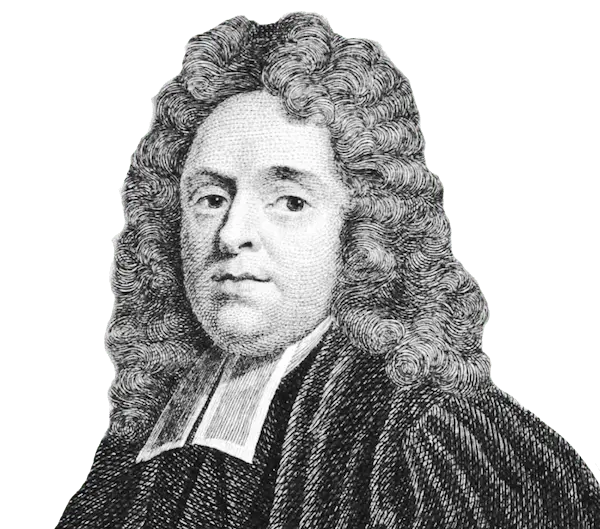
Matthew Henry Commentary
Genesis 2
"And the heavens and the earth were finished, and all the host of them. And on the seventh day God finished his work which he had made; and he rested on the seventh day from all his work which he had made. And God blessed the seventh day, and hallowed it; because that in it he rested from all his work which God had created and made." — Genesis 2:1-3 (ASV)
After six days, God ceased from all works of creation. In miracles, He has overruled nature, but never changed its settled course or added to it. God did not rest as one weary, but as one well pleased.
Notice the beginning of the kingdom of grace, in the sanctification, or keeping holy, of the Sabbath day. The solemn observance of one day in seven as a day of holy rest and holy work, to God's honor, is the duty of all to whom God has made known His holy Sabbaths.
At this time, none of the human race existed except our first parents. For them the Sabbath was appointed; and clearly for all succeeding generations also. The Christian Sabbath, which we observe, is a seventh day, and in it we celebrate the rest of God the Son and the finishing of the work of our redemption.
"These are the generations of the heavens and of the earth when they were created, in the day that Jehovah God made earth and heaven. And no plant of the field was yet in the earth, and no herb of the field had yet sprung up; for Jehovah God had not caused it to rain upon the earth: and there was not a man to till the ground; but there went up a mist from the earth, and watered the whole face of the ground. And Jehovah God formed man of the dust of the ground, and breathed into his nostrils the breath of life; and man became a living soul." — Genesis 2:4-7 (ASV)
Here is a name given to the Creator, “Jehovah.” When the word “LORD” is printed in capital letters in our English Bibles, in the original it is “Jehovah.” Jehovah is that name of God which denotes that He alone has His being of Himself, and that He gives being to all creatures and things. Further notice is taken of plants and herbs, because they were made and appointed to be food for man. The earth did not bring forth its fruits of itself: this was done by Almighty power.
Thus grace in the soul does not grow of itself in nature's soil, but is the work of God. Rain also is the gift of God; it did not come until the Lord God caused it. Though God works by means, yet when He pleases He can do His own work without them; and though we must not tempt God by neglecting means, we must trust God, both in the use and in the absence of means. Some way or other, God will water the plants of His own planting.
Man was made of the small dust, such as is on the surface of the earth. The soul was not made of the earth, as the body is: it is a pity then that it should cling to the earth and be concerned with earthly things. To God we must soon give an account of how we have employed these souls; and if it is found that we have lost them, even if it were to gain the world, we are undone forever!
Fools despise their own souls by caring for their bodies before their souls.
"And Jehovah God planted a garden eastward, in Eden; and there he put the man whom he had formed. And out of the ground made Jehovah God to grow every tree that is pleasant to the sight, and good for food; the tree of life also in the midst of the garden, and the tree of the knowledge of good and evil. And a river went out of Eden to water the garden; and from thence it was parted, and became four heads. The name of the first is Pishon: that is it which compasseth the whole land of Havilah, where there is gold; and the gold of that land is good: there is bdellium and the onyx stone. And the name of the second river is Gihon: the same is it that compasseth the whole land of Cush. And the name of the third river is Hiddekel: that is it which goeth in front of Assyria. And the fourth river is the Euphrates." — Genesis 2:8-14 (ASV)
The place chosen for Adam to live in was not a palace, but a garden. The better we are content with plain things, and the less we seek things to gratify pride and luxury, the nearer we approach innocence. Nature is content with a little, and that which is most natural; grace with less; but lust craves everything and is content with nothing.
No delights can be satisfying to the soul, except those which God himself has provided and appointed for it. Eden signifies delight and pleasure. Wherever it was, it had all desirable conveniences, without any inconvenience, although no other house or garden on earth has ever been so. It was adorned with every tree pleasant to the sight, and enriched with every tree that yielded fruit pleasing to the taste and good for food.
God, as a tender Father, desired not only Adam's benefit, but his pleasure; for there is pleasure with innocence; indeed, true pleasure is found only in innocence. When Providence puts us in a place of plenty and pleasure, we ought to serve God with gladness of heart in the good things he gives us. Eden had two trees unique to itself.
- There was the tree of life in the midst of the garden. From this tree, man could eat and live. Christ is now to us the Tree of life (Revelation 2:7; Revelation 22:2) and the Bread of life (John 6:48, 51).
- There was the tree of the knowledge of good and evil, so called because there was a positive revelation of the will of God about this tree, so that by it man could know moral good and evil.
What is good? It is good not to eat of this tree. What is evil? It is evil to eat of this tree. In these two trees God set before Adam good and evil, the blessing and the curse.
"And Jehovah God took the man, and put him into the garden of Eden to dress it and to keep it." — Genesis 2:15 (ASV)
After God had formed Adam, He put him in the garden. All boasting was, as a result of this, shut out. Only He who made us can make us happy; He who is the Maker of our bodies and the Father of our spirits, and He alone, can fully provide for the happiness of both. Even in paradise itself, man had to work.
None of us were sent into the world to be idle. He who made our souls and bodies has given us something to work with; and He who gave us this earth for our dwelling place has made us something to work on. The sons and heirs of heaven, while in this world, have something to do concerning this earth, which must have its share of their time and thoughts; and if they do this with an eye to God, they serve Him in it just as truly as when they are on their knees.
Observe that the farmer's calling is an ancient and honorable calling; it was necessary even in paradise. Also, there is true pleasure in the work God calls us to and employs us in. Adam could not have been happy if he had been idle: it is still God's law, He that will not work has no right to eat (2 Thessalonians 3:10).
"And Jehovah God commanded the man, saying, Of every tree of the garden thou mayest freely eat: but of the tree of the knowledge of good and evil, thou shalt not eat of it: for in the day that thou eatest thereof thou shalt surely die." — Genesis 2:16-17 (ASV)
Let us never set up our own will against the holy will of God. Not only was liberty allowed to man in taking the fruits of paradise, but everlasting life was also assured to him based on his obedience. A trial of his obedience was appointed. By transgression, he would forfeit his Maker's favour and deserve his displeasure, with all its dreadful effects, so that he would become liable to pain, disease, and death.
Worse than that, he would lose the holy image of God and all the comfort of his favour; and feel the torment of sinful passions and the terror of his Maker's vengeance, which must endure forever with his immortal soul. The prohibition against eating the fruit of a particular tree was wisely suited to the state of our first parents. In their state of innocence, and separated from any others, what opportunity or temptation did they have to break any of the Ten Commandments?
The event proves that the whole human race was implicated in the trial and fall of our first parents. To argue against these things is to contend against stubborn facts as well as Divine revelation; for humankind is sinful and shows by its first actions and subsequent conduct that it is prone to do evil. Humankind is under the Divine displeasure, exposed to sufferings and death.
The Scriptures always speak of humankind as having this sinful character and as being in this miserable state; and these things are true of people in all ages and of all nations.
Jump to: