
Matthew Henry Commentary Genesis 3
Matthew Henry Commentary
Genesis 3
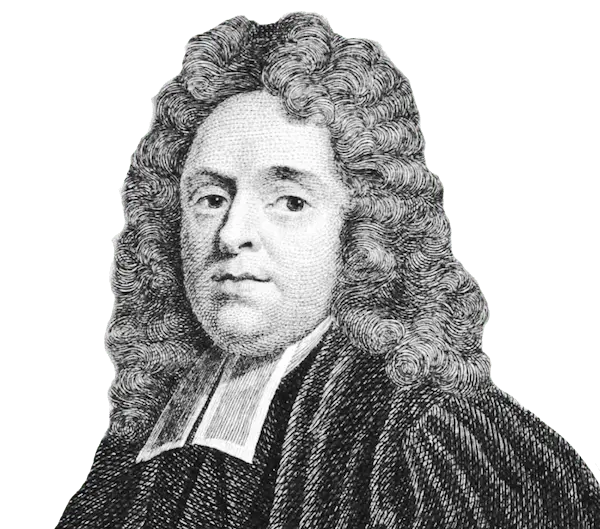
Matthew Henry Commentary
Genesis 3
"Now the serpent was more subtle than any beast of the field which Jehovah God had made. And he said unto the woman, Yea, hath God said, Ye shall not eat of any tree of the garden? And the woman said unto the serpent, Of the fruit of the trees of the garden we may eat: but of the fruit of the tree which is in the midst of the garden, God hath said, Ye shall not eat of it, neither shall ye touch it, lest ye die. And the serpent said unto the woman, Ye shall not surely die: for God doth know that in the day ye eat thereof, then your eyes shall be opened, and ye shall be as God, knowing good and evil." — Genesis 3:1-5 (ASV)
Satan assaulted our first parents to draw them to sin, and the temptation proved fatal to them. The tempter was the devil, in the shape and likeness of a serpent. Satan's plan was to draw our first parents to sin, and so separate them from their God. Thus the devil was from the beginning a murderer, and the great mischief-maker. The person tempted was the woman: it was Satan's policy to speak with her when she was alone.
There are many temptations to which being alone gives great advantage; but the communion of saints greatly contributes to their strength and safety. Satan took advantage by finding her near the forbidden tree. Those who would not eat the forbidden fruit must not come near the forbidden tree. Satan tempted Eve, so that through her he might tempt Adam. It is his policy to send temptations through those we do not suspect, and by those who have most influence on us.
Satan questioned whether it was a sin or not to eat of this tree. He did not disclose his design at first, but he asked a question that seemed innocent. Those who would be safe need to be cautious about speaking with the tempter. He quoted the command wrong. He spoke in a taunting way.
The devil, as he is a liar, so he is a scoffer from the beginning; and scoffers are his children. It is the craft of Satan to speak of the Divine law as uncertain or unreasonable, and so to draw people to sin; it is our wisdom to maintain a firm belief in God's command, and a high respect for it. Has God said, You shall not lie, nor take His name in vain, nor be drunk, etc.? Yes, I am sure He has, and it is well said; and by His grace I will abide by it.
It was Eve's weakness to engage in this conversation with the serpent; she might have perceived from his question that he had no good design and should therefore have drawn back. Satan teaches people first to doubt, and then to deny. He promises advantage from their eating this fruit. He aims to make them discontented with their present state, as if it were not so good as it might be, and should be.
No condition will of itself bring content, unless the mind is brought to it. He tempts them to seek advancement, as if they were fit to be gods. Satan ruined himself by desiring to be like the Most High; therefore, he sought to infect our first parents with the same desire, so that he might ruin them too. And still the devil draws people into his schemes by suggesting to them negative thoughts about God and false hopes of advantage from sin.
Let us, therefore, always think well of God as the best good, and think ill of sin as the worst evil: thus let us resist the devil, and he will flee from us.
"And when the woman saw that the tree was good for food, and that it was a delight to the eyes, and that the tree was to be desired to make one wise, she took of the fruit thereof, and did eat; and she gave also unto her husband with her, and he did eat. And the eyes of them both were opened, and they knew that they were naked; and they sewed fig-leaves together, and made themselves aprons. And they heard the voice of Jehovah God walking in the garden in the cool of the day: and the man and his wife hid themselves from the presence of Jehovah God amongst the trees of the garden." — Genesis 3:6-8 (ASV)
Observe the steps of the transgression: not steps upward, but downward toward the pit.
She saw. A great deal of sin comes in at the eye. Let us not look on that which we are in danger of lusting after (Matthew 5:28).
She took. It was her own act and deed. Satan may tempt, but he cannot force; he may persuade us to cast ourselves down, but he cannot cast us down (Matthew 4:6).
She did eat. When she looked, perhaps she did not intend to take; or when she took, not to eat: but it ended in that. It is wisdom to stop the first motions of sin and to desist from it before meddling with it.
She also gave it to her husband with her. Those who have done wrong are willing to draw others in to do the same.
He did eat. In neglecting the tree of life, of which he was allowed to eat, and eating of the tree of knowledge, which was forbidden, Adam plainly showed a contempt for what God had bestowed on him and a desire for what God did not see fit to give him.
He was determined to have what he pleased and do what he pleased. His sin was, in one word, disobedience (Romans 5:19)—disobedience to a plain, easy, and express command.
He had no corrupt nature within to betray him; but he had freedom of will, in full strength, not weakened or impaired. He turned aside quickly. He drew all his posterity into sin and ruin.
Who then can say that Adam's sin had but little harm in it?
When it was too late, Adam and Eve saw the folly of eating forbidden fruit. They saw the happiness they fell from and the misery they had fallen into.
They saw a loving God provoked, His grace and favor forfeited. See here what dishonor and trouble sin is: it makes mischief wherever it enters and destroys all comfort.
Sooner or later, it will bring shame; either the shame of true repentance, which ends in glory, or that shame and everlasting contempt to which the wicked shall rise at the great day.
See here what is commonly the folly of those who have sinned. They are more concerned with saving their reputation before men than with obtaining their pardon from God.
The excuses people make to cover and lessen their sins are vain and frivolous; like the aprons of fig leaves, these excuses do not make the matter any better. Yet we are all apt to cover our transgressions as Adam did.
Before they sinned, they would have welcomed God's gracious visits with humble joy, but now He had become a terror to them. No wonder they became a terror to themselves and were full of confusion.
This shows the falsehood of the tempter and the frauds of his temptations. Satan promised they would be safe, but they could not even consider themselves so!
Adam and Eve were now miserable comforters to each other!
"And Jehovah God called unto the man, and said unto him, Where art thou? And he said, I heard thy voice in the garden, and I was afraid, because I was naked; and I hid myself. And he said, Who told thee that thou wast naked? Hast thou eaten of the tree, whereof I commanded thee that thou shouldest not eat? And the man said, The woman whom thou gavest to be with me, she gave me of the tree, and I did eat. And Jehovah God said unto the woman, What is this thou hast done? And the woman said, The serpent beguiled me, and I did eat." — Genesis 3:9-13 (ASV)
Observe the startling question: Adam, where art thou? Those who by sin go astray from God should seriously consider where they are; they are far away from all good, in the midst of their enemies, in bondage to Satan, and on the direct path to utter ruin. This lost sheep would have wandered endlessly if the good Shepherd had not sought after him and told him that where he was straying, he could not be either happy or at ease.
If sinners will only consider where they are, they will not rest until they return to God. It is the common fault and folly of those who have done wrong, when questioned about it, to acknowledge only that which is so obvious that they cannot deny it. Like Adam, we have reason to be afraid of approaching God if we are not covered and clothed with the righteousness of Christ. Sin appears most plainly in the mirror of the commandment; therefore, God set it before Adam, and in it we should see our faces.
But instead of acknowledging the sin in its full extent and taking the shame upon themselves, Adam and Eve excuse the sin and place the shame and blame on others. There is a strange proneness in those who are tempted to say that they are tempted by God, as if our abuse of God's gifts would excuse our breaking God's laws. Those who are willing to take the pleasure and profit of sin are reluctant to take the blame and shame of it.
Learn from this that Satan's temptations are all deceptions; his arguments are all deceits; his allurements are all cheats; when he speaks pleasantly, do not believe him. It is by the deceitfulness of sin that the heart is hardened (Hebrews 3:13). But though Satan's subtlety may draw us into sin, it will not justify us in sin. Though he is the tempter, we are the sinners.
Do not let it lessen our sorrow for sin that we were deceived into it; but let it increase our self-indignation that we should allow ourselves to be deceived by a known cheat and a sworn enemy, who would destroy our souls.
"And Jehovah God said unto the serpent, Because thou hast done this, cursed art thou above all cattle, and above every beast of the field; upon thy belly shalt thou go, and dust shalt thou eat all the days of thy life: and I will put enmity between thee and the woman, and between thy seed and her seed: he shall bruise thy head, and thou shalt bruise his heel." — Genesis 3:14-15 (ASV)
God passes sentence; He begins where the sin began, with the serpent. The devil's instruments must share in the devil's punishments. Under the cover of the serpent, the devil is sentenced to be degraded and accursed by God; detested and abhorred by all mankind: also to be destroyed and ruined ultimately by the great Redeemer, signified by the breaking of his head. War is proclaimed between the Seed of the woman and the seed of the serpent.
It is the fruit of this enmity that there is a continual warfare between grace and corruption in the hearts of God's people. Satan, by their corruptions, buffets them, sifts them, and seeks to devour them. Heaven and hell can never be reconciled, nor light and darkness; nor can Satan and a sanctified soul. Also, there is a continual struggle between the wicked and the godly in this world.
A gracious promise is here made concerning Christ, as the Deliverer of fallen man from the power of Satan. This was the dawn of the gospel day: no sooner was the wound given than the remedy was provided and revealed. This gracious revelation of a Saviour came unsolicited and unexpected. Without a revelation of mercy, giving some hope of forgiveness, the convinced sinner would sink into despair and be hardened.
By faith in this promise, our first parents and the patriarchs before the flood were justified and saved. Notice is given concerning Christ:
- His incarnation, or coming in the flesh. It offers great encouragement to sinners that their Saviour is the Seed of the woman, bone of our bone (Hebrews 2:11, 14).
- His sufferings and death, pointed to in Satan's bruising His heel—that is, His human nature. And Christ's sufferings are continued in the sufferings of the saints for His name. The devil tempts them, persecutes, and slays them; and so bruises the heel of Christ, who is afflicted in their afflictions. But while the heel is bruised on earth, the Head is in heaven.
- His victory over Satan thereby. Christ baffled Satan's temptations and rescued souls out of his hands. By His death, He gave a fatal blow to the devil's kingdom, a wound to the head of this serpent that cannot be healed. As the gospel gains ground, Satan falls.
"Unto the woman he said, I will greatly multiply thy pain and thy conception; in pain thou shalt bring forth children; and thy desire shall be to thy husband, and he shall rule over thee. And unto Adam he said, Because thou hast hearkened unto the voice of thy wife, and hast eaten of the tree, of which I commanded thee, saying, Thou shalt not eat of it: cursed is the ground for thy sake; in toil shalt thou eat of it all the days of thy life; thorns also and thistles shall it bring forth to thee; and thou shalt eat the herb of the field; in the sweat of thy face shalt thou eat bread, till thou return unto the ground; for out of it wast thou taken: for dust thou art, and unto dust shalt thou return." — Genesis 3:16-19 (ASV)
The woman, for her sin, is condemned to a state of sorrow and of subjection—proper punishments for that sin, in which she had sought to gratify the desire of her eye, and of the flesh, and her pride. Sin brought sorrow into the world; that made the world a vale of tears. No wonder our sorrows are multiplied when our sins are so. He shall rule over you is but God's command: Wives, be subject to your own husbands. If man had not sinned, he would always have ruled with wisdom and love; if the woman had not sinned, she would always have obeyed with humility and meekness.
Adam laid the blame on his wife; but though it was her fault to persuade him to eat the forbidden fruit, it was his fault to listen to her. Thus men's frivolous pleas will, in the day of God's judgment, be turned against them. God put marks of displeasure on Adam.
His dwelling place is cursed. God gave the earth to the children of men to be a comfortable dwelling, but it is now cursed for man's sin. Yet Adam is not himself cursed, as the serpent was, but only the ground for his sake.
His work and enjoyments are embittered to him. Labour is our duty, which we must faithfully perform; it is part of man's sentence, which idleness daringly defies. Uneasiness and weariness with labour are our just punishment, which we must patiently submit to, since they are less than our iniquity deserves. Man's food shall become unpleasant to him. Yet man is not sentenced to eat dust as the serpent, only to eat the herb of the field.
His life also is but short; considering how full of trouble his days are, it is a kindness to him that they are few.
Yet death, being dreadful to nature even when life is unpleasant, concludes the punishment. Sin brought death into the world: if Adam had not sinned, he would not have died. He gave way to temptation, but the Saviour withstood it. And how admirably the satisfaction of our Lord Jesus, by his death and sufferings, answered the sentence passed on our first parents!
Did labor pains come with sin? We read of the travail of Christ's soul (Isaiah 53:11); and the pains of death he was held by are so called (Acts 2:24). Did subjection come in with sin? Christ was made under the law (Galatians 4:4). Did the curse come in with sin? Christ was made a curse for us, he died a cursed death (Galatians 3:13). Did thorns come in with sin?
He was crowned with thorns for us. Did sweat come in with sin? He sweated for us, as it had been great drops of blood. Did sorrow come in with sin? He was a man of sorrows; his soul was, in his agony, exceeding sorrowful.
Did death come in with sin? He became obedient unto death. Thus is the plaster as wide as the wound. Blessed be God for his Son our Lord Jesus Christ.
Jump to: