
Matthew Henry Commentary Genesis 41:9-32
Matthew Henry Commentary
Genesis 41:9-32
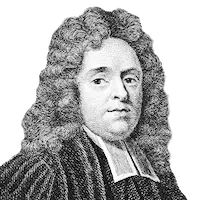
Matthew Henry Commentary
Genesis 41:9-32
SCRIPTURE
"Then spake the chief butler unto Pharaoh, saying, I do remember my faults this day: Pharaoh was wroth with his servants, and put me in ward in the house of the captain of the guard, me and the chief baker: and we dreamed a dream in one night, I and he; we dreamed each man according to the interpretation of his dream. And there was with us there a young man, a Hebrew, servant to the captain of the guard; and we told him, and he interpreted to us our dreams; to each man according to his dream he did interpret. And it came to pass, as he interpreted to us, so it was; me he restored unto mine office, and him he hanged. Then Pharaoh sent and called Joseph, and they brought him hastily out of the dungeon: and he shaved himself, and changed his raiment, and came in unto Pharaoh. And Pharaoh said unto Joseph, I have dreamed a dream, and there is none that can interpret it: and I have heard say of thee, that when thou hearest a dream thou canst interpret it. And Joseph answered Pharaoh, saying, It is not in me: God will give Pharaoh an answer of peace. And Pharaoh spake unto Joseph, In my dream, behold, I stood upon the brink of the river: and, behold, there came up out of the river seven kine, fat-fleshed and well-favored: and they fed in the reed-grass: and, behold, seven other kine came up after them, poor and very ill-favored and lean-fleshed, such as I never saw in all the land of Egypt for badness: and the lean and ill-favored kine did eat up the first seven fat kine: and when they had eaten them up, it could not be known that they had eaten them; but they were still ill-favored, as at the beginning. So I awoke. And I saw in my dream, and, behold, seven ears came up upon one stalk, full and good: and, behold, seven ears, withered, thin, [and] blasted with the east wind, sprung up after them: and the thin ears swallowed up the seven good ears: and I told it unto the magicians; but there was none that could declare it to me. And Joseph said unto Pharaoh, The dream of Pharaoh is one: what God is about to do he hath declared unto Pharaoh. The seven good kine are seven years; and the seven good ears are seven years: the dream is one. And the seven lean and ill-favored kine that came up after them are seven years, and also the seven empty ears blasted with the east wind; they shall be seven years of famine. That is the thing which I spake unto Pharaoh: what God is about to do he hath showed unto Pharaoh. Behold, there come seven years of great plenty throughout all the land of Egypt: and there shall arise after them seven years of famine; and all the plenty shall be forgotten in the land of Egypt; and the famine shall consume the land; and the plenty shall not be known in the land by reason of that famine which followeth; for it shall be very grievous. And for that the dream was doubled unto Pharaoh, it is because the thing is established by God, and God will shortly bring it to pass." — Genesis 41:9-32 (ASV)
God's time for the enlargement of his people is the fittest time. If the chief butler had obtained Joseph's release from prison, he probably would have gone back to the land of the Hebrews. Then he would neither have been so blessed himself, nor such a blessing to his family, as he afterwards proved to be. Joseph, when introduced to Pharaoh, gives honour to God.
Pharaoh had dreamed that he stood on the bank of the river Nile and saw the cattle, both the fat ones and the lean ones, come out of the river. Egypt has no rain, but the plenty of the year depends upon the overflowing of the river Nile. See how many ways Providence has of dispensing its gifts; yet our dependence remains the same on the First Cause, who makes every created thing what it is to us, whether it is rain or river. See what changes the comforts of this life are subject to.
We cannot be sure that tomorrow will be like today, or next year like this one. We must learn how to face want, as well as how to abound. Mark the goodness of God in sending the seven years of plenty before those of famine, so that provision could be made. The produce of the earth is sometimes more, and sometimes less; yet, taking one with another, he that gathers much, has nothing over; and he that gathers little, has no lack (Exodus 16:18). And see the perishing nature of our worldly enjoyments.
The great harvests of the years of plenty were completely lost, and swallowed up by the years of famine; and that which seemed like a great amount, yet only just served to keep the people alive. There is bread that lasts to eternal life, for which it is worthwhile to labour. Those who make the things of this world their good things will find little pleasure in remembering that they have received them.