
Matthew Henry Commentary Jeremiah 17
Matthew Henry Commentary
Jeremiah 17
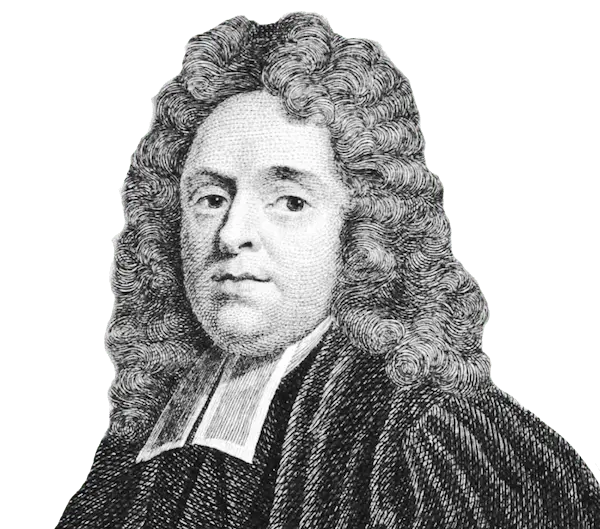
Matthew Henry Commentary
Jeremiah 17
"The sin of Judah is written with a pen of iron, [and] with the point of a diamond: it is graven upon the tablet of their heart, and upon the horns of your altars; whilst their children remember their altars and their Asherim by the green trees upon the high hills. O my mountain in the field, I will give thy substance and all thy treasures for a spoil, [and] thy high places, because of sin, throughout all thy borders. And thou, even of thyself, shalt discontinue from thy heritage that I gave thee; and I will cause thee to serve thine enemies in the land which thou knowest not: for ye have kindled a fire in mine anger which shall burn for ever." — Jeremiah 17:1-4 (ASV)
The sins which men commit make little impression on their minds, yet every sin is marked in the book of God; they are all so engraved upon the table of the heart that they will all be remembered by the conscience. That which is engraved in the heart will become plain in the life; men's actions show the desires and purposes of their hearts.
How great is our need to humble ourselves before God, who are so vile in His sight! How we should depend on His mercy and grace, begging God to search and prove us; not to allow us to be deceived by our own hearts, but to create in us a clean and holy nature by His Spirit!
"Thus saith Jehovah: Cursed is the man that trusteth in man, and maketh flesh his arm, and whose heart departeth from Jehovah. For he shall be like the heath in the desert, and shall not see when good cometh, but shall inhabit the parched places in the wilderness, a salt land and not inhabited. Blessed is the man that trusteth in Jehovah, and whose trust Jehovah is. For he shall be as a tree planted by the waters, that spreadeth out its roots by the river, and shall not fear when heat cometh, but its leaf shall be green; and shall not be careful in the year of drought, neither shall cease from yielding fruit. The heart is deceitful above all things, and it is exceedingly corrupt: who can know it? I, Jehovah, search the mind, I try the heart, even to give every man according to his ways, according to the fruit of his doings. As the partridge that sitteth on [eggs] which she hath not laid, so is he that getteth riches, and not by right; in the midst of his days they shall leave him, and at his end he shall be a fool." — Jeremiah 17:5-11 (ASV)
He who puts confidence in man will be like the heath in a desert, a naked tree, a pitiful shrub, the product of barren ground, useless and worthless. Those who trust in their own righteousness and strength, and think they can do without Christ, make flesh their arm, and their souls cannot prosper in graces or comforts. Those who make God their Hope will flourish like a tree always green, whose leaf does not wither.
They will be secure in peace and satisfaction of mind; they will not be anxious in a year of drought. Those who make God their Hope have enough in him to make up for the lack of all creature-comforts. They will not cease from yielding fruit in holiness and good works. The heart, the conscience of man, in his corrupt and fallen state, is deceitful above all things.
It calls evil good, and good evil, and cries peace to those to whom peace does not belong. In this, the heart is desperately wicked; it is deadly, it is desperate. The case is bad indeed if the conscience, which should correct the errors of other faculties, is a leader in the delusion. We cannot know our own hearts, nor what they will do in an hour of temptation.
Who can understand his errors? Much less can we know the hearts of others or depend upon them. He who believes God's testimony in this matter, and learns to watch his own heart, will find this is a correct, though sad, picture, and learns many lessons to direct his conduct. But much in our own hearts and in the hearts of others will remain unknown.
Yet whatever wickedness there is in the heart, God sees it. Men may be deceived, but God cannot be deceived. He who gets riches, and not by right, though he may make them his hope, will never have joy from them. This shows what vexation it is to a worldly man at death, that he must leave his riches behind; but though the wealth will not follow to another world, guilt will, and everlasting torment.
The rich man takes pains to get an estate, and sits brooding over it, but never has any satisfaction in it; through sinful ways it comes to nothing. Let us be wise in time; whatever we get, let us get it honestly; and whatever we have, let us use it charitably, so that we may be wise for eternity.
"A glorious throne, [set] on high from the beginning, is the place of our sanctuary. O Jehovah, the hope of Israel, all that forsake thee shall be put to shame. They that depart from me shall be written in the earth, because they have forsaken Jehovah, the fountain of living waters. Heal me, O Jehovah, and I shall be healed; save me, and I shall be saved: for thou art my praise. Behold, they say unto me, Where is the word of Jehovah? let it come now. As for me, I have not hastened from being a shepherd after thee; neither have I desired the woeful day; thou knowest: that which came out of my lips was before thy face. Be not a terror unto me: thou art my refuge in the day of evil. Let them be put to shame that persecute me, but let not me be put to shame; let them be dismayed, but let not me be dismayed; bring upon them the day of evil, and destroy them with double destruction." — Jeremiah 17:12-18 (ASV)
The prophet acknowledges the favor of God in establishing religion. There is fullness of comfort in God—overflowing, ever-flowing fullness, like a fountain. It is always fresh and clear, like spring water, while the pleasures of sin are puddle waters.
He prays to God for healing, saving mercy. He appeals to God concerning his faithful discharge of the office to which he was called. He humbly begs that God would acknowledge and protect him in the work to which He had plainly called him.
Whatever wounds or diseases we find in our hearts and consciences, let us turn to the Lord to heal us and to save us, so that our souls may praise His name. His hands can bind up the troubled conscience and heal the broken heart; He can cure the worst diseases of our nature.
"Thus said Jehovah unto me: Go, and stand in the gate of the children of the people, whereby the kings of Judah come in, and by which they go out, and in all the gates of Jerusalem; and say unto them, Hear ye the word of Jehovah, ye kings of Judah, and all Judah, and all the inhabitants of Jerusalem, that enter in by these gates: Thus saith Jehovah, Take heed to yourselves, and bear no burden on the sabbath day, nor bring it in by the gates of Jerusalem; neither carry forth a burden out of your houses on the sabbath day, neither do ye any work: but hallow ye the sabbath day, as I commanded your fathers. But they hearkened not, neither inclined their ear, but made their neck stiff, that they might not hear, and might not receive instruction. And it shall come to pass, if ye diligently hearken unto me, saith Jehovah, to bring in no burden through the gates of this city on the sabbath day, but to hallow the sabbath day, to do no work therein; then shall there enter in by the gates of this city kings and princes sitting upon the throne of David, riding in chariots and on horses, they, and their princes, the men of Judah, and the inhabitants of Jerusalem; and this city shall remain for ever. And they shall come from the cities of Judah, and from the places round about Jerusalem, and from the land of Benjamin, and from the lowland, and from the hill-country, and from the South, bringing burnt-offerings, and sacrifices, and meal-offerings, and frankincense, and bringing [sacrifices of] thanksgiving, unto the house of Jehovah. But if ye will not hearken unto me to hallow the sabbath day, and not to bear a burden and enter in at the gates of Jerusalem on the sabbath day; then will I kindle a fire in the gates thereof, and it shall devour the palaces of Jerusalem, and it shall not be quenched." — Jeremiah 17:19-27 (ASV)
The prophet was to present to the rulers and the people of Judah the command to keep the Sabbath day holy. Let them strictly observe the fourth commandment. If they obeyed this word, their prosperity would be restored. It is a day of rest and must not be made a day of labor, except in cases of necessity.
Take heed; watch against the profanation of the Sabbath. Do not let the soul be burdened with the cares of this world on Sabbath days. The streams of religion run deep or shallow, depending on how the banks of the Sabbath are kept up or neglected. The degree of strictness with which this ordinance is observed, or the neglect shown toward it, is a good test to determine the state of spiritual religion in any land.
Let all, by their own example and by attention to their families, strive to curb this evil, that national prosperity may be preserved and, above all, that souls may be saved.
Jump to: