
Matthew Henry Commentary Leviticus 5:1-13
Matthew Henry Commentary
Leviticus 5:1-13
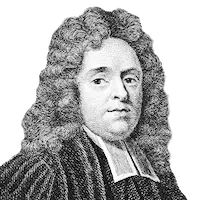
Matthew Henry Commentary
Leviticus 5:1-13
SCRIPTURE
"And if any one sin, in that he heareth the voice of adjuration, he being a witness, whether he hath seen or known, if he do not utter [it], then he shall bear his iniquity. Or if any one touch any unclean thing, whether it be the carcass of an unclean beast, or the carcass of unclean cattle, or the carcass of unclean creeping things, and it be hidden from him, and he be unclean, then he shall be guilty. Or if he touch the uncleanness of man, whatsoever his uncleanness be wherewith he is unclean, and it be hid from him; when he knoweth of it, then he shall be guilty. Or if any one swear rashly with his lips to do evil, or to do good, whatsoever it be that a man shall utter rashly with an oath, and it be hid from him; when he knoweth of it, then he shall be guilty in one of these [things]. And it shall be, when he shall be guilty in one of these [things], that he shall confess that wherein he hath sinned: and he shall bring his trespass-offering unto Jehovah for his sin which he hath sinned, a female from the flock, a lamb or a goat, for a sin-offering; and the priest shall make atonement for him as concerning his sin. And if his means suffice not for a lamb, then he shall bring his trespass-offering for that wherein he hath sinned, two turtle-doves, or two young pigeons, unto Jehovah; one for a sin-offering, and the other for a burnt-offering. And he shall bring them unto the priest, who shall offer that which is for the sin-offering first, and wring off its head from its neck, but shall not divide it asunder: and he shall sprinkle of the blood of the sin-offering upon the side of the altar; and the rest of the blood shall be drained out at the base of the altar: it is a sin-offering. And he shall offer the second for a burnt-offering, according to the ordinance; and the priest shall make atonement for him as concerning his sin which he hath sinned, and he shall be forgiven. But if his means suffice not for two turtle-doves, or two young pigeons, then he shall bring his oblation for that wherein he hath sinned, the tenth part of an ephah of fine flour for a sin-offering: he shall put no oil upon it, neither shall he put any frankincense thereon; for it is a sin-offering. And he shall bring it to the priest, and the priest shall take his handful of it as the memorial thereof, and burn it on the altar, upon the offerings of Jehovah made by fire: it is a sin-offering. And the priest shall make atonement for him as touching his sin that he hath sinned in any of these things, and he shall be forgiven: and [the remnant] shall be the priest`s, as the meal-offering." — Leviticus 5:1-13 (ASV)
The offenses noted here are:
A man's concealing the truth when he was sworn as a witness to speak the truth, the whole truth, and nothing but the truth. If, in such a case, for fear of offending someone who has been his friend, or might be his enemy, a man refuses to give evidence, or gives it only in part, he shall bear his iniquity. And that is a heavy burden, which, if some course is not taken to have it removed, will sink a man to hell. Let all who are called at any time to be witnesses think of this law, and be free and open in their evidence, and take care not to prevaricate. An oath of the Lord is a sacred thing, not to be trifled with.
A man's touching anything that was ceremonially unclean. Though his touching the unclean thing only made him ceremonially defiled, yet neglecting to wash himself according to the law was either carelessness or contempt, and contracted moral guilt. As soon as God, by His Spirit, convinces our consciences of any sin or duty, we must follow the conviction, not being ashamed to admit our former mistake.
Rash swearing, that a man will do or not do a particular thing.
This applies, for example, if the performance of his oath afterward proves unlawful, or is something that cannot be done. Wisdom and watchfulness beforehand would prevent these difficulties. In these cases, the offender must confess his sin and bring his offering. However, the offering was not accepted unless accompanied by confession and humble prayer for pardon. The confession must be particular: that he has sinned in that thing.
Deceit lies in generalities. Many will admit they have sinned—for that is something all must admit—but they are unwilling to acknowledge their sins in any specific instance. The way to be assured of pardon, and armed against sin for the future, is to confess the exact truth.
If any were very poor, they could bring some flour, and that would be accepted.
Thus, the expense of the sin offering was made lower than any other, to teach that no man's poverty shall ever bar the way of his pardon.
If the sinner brought two doves, one was to be offered as a sin offering, and the other as a burnt offering. We must first ensure that our peace is made with God, and then we may expect that our services for His glory will be accepted by Him.
To show the loathsomeness of sin, the flour, when offered, was not to be made pleasing to the taste with oil, or to the smell with frankincense.
God, by these sacrifices, spoke comfort to those who had offended, so that they might not despair or waste away in their sins. He also cautioned them not to offend anymore, reminding them how expensive and troublesome it was to make atonement.