
Matthew Henry Commentary Matthew 7
Matthew Henry Commentary
Matthew 7
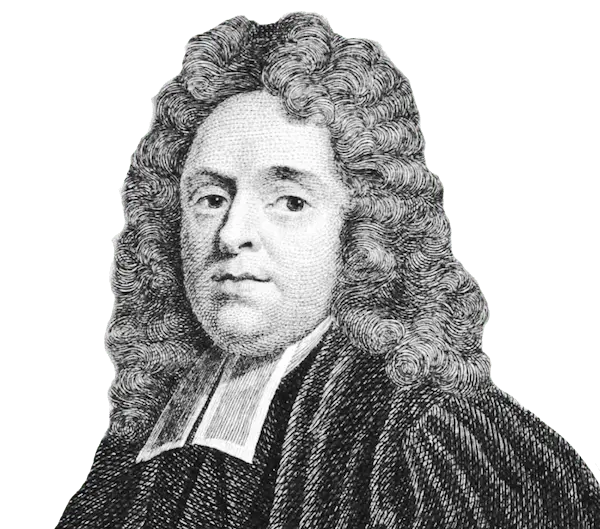
Matthew Henry Commentary
Matthew 7
"Judge not, that ye be not judged. For with what judgment ye judge, ye shall be judged: and with what measure ye mete, it shall be measured unto you. And why beholdest thou the mote that is in thy brother`s eye, but considerest not the beam that is in thine own eye? Or how wilt thou say to thy brother, Let me cast out the mote out of thine eye; and lo, the beam is in thine own eye? Thou hypocrite, cast out first the beam out of thine own eye; and then shalt thou see clearly to cast out the mote out of thy brother`s eye. Give not that which is holy unto the dogs, neither cast your pearls before the swine, lest haply they trample them under their feet, and turn and rend you." — Matthew 7:1-6 (ASV)
We must judge ourselves and judge our own acts, but not make our word a law for everyone. We must not judge rashly, nor pass judgment on our brother without any basis. We must not assume the worst of people. This is a just reproof to those who quarrel with their brothers for small faults, while they allow themselves greater ones.
Some sins are like motes, while others are like beams; some like a gnat, others like a camel. Not that any sin is small; if it is a mote, or splinter, it is in the eye; if a gnat, it is in the throat. Both are painful and dangerous, and we cannot be at ease or well until they are removed. What charity teaches us to call merely a splinter in our brother's eye, true repentance and godly sorrow will teach us to call a beam in our own.
It is as strange that a person can be in a sinful, miserable condition and not be aware of it, as that a person should have a beam in their eye and not notice it; but the god of this world blinds their minds. This is a good rule for reprovers: first reform yourself.
"Ask, and it shall be given you; seek, and ye shall find; knock, and it shall be opened unto you: for every one that asketh receiveth; and he that seeketh findeth; and to him that knocketh it shall be opened. Or what man is there of you, who, if his son shall ask him for a loaf, will give him a stone; or if he shall ask for a fish, will give him a serpent? If ye then, being evil, know how to give good gifts unto your children, how much more shall your Father who is in heaven give good things to them that ask him?" — Matthew 7:7-11 (ASV)
Prayer is the appointed means for obtaining what we need. Pray; pray often; make a business of prayer, and be serious and earnest in it. Ask, as a beggar asks for alms. Ask, as a traveller asks for the way. Seek, as for a thing of value that we have lost, or as the merchant who seeks goodly pearls.
Knock, as one who desires to enter the house knocks at the door. Sin has shut and barred the door against us; by prayer we knock. Whatever you pray for, according to the promise, will be given to you, if God sees it fit for you—and what more could you desire? This applies to all who pray rightly; every one that asketh receiveth, whether Jew or Gentile, young or old, rich or poor, high or low, master or servant, learned or unlearned, all are equally welcome to the throne of grace, if they come in faith.
This is explained by a comparison drawn from earthly parents and their readiness to give their children what they ask. Parents are often foolishly indulgent, but God is all-wise; he knows what we need, what we desire, and what is fit for us. Let us never suppose our heavenly Father would instruct us to pray, and then refuse to hear, or give us what would be harmful.
"All things therefore whatsoever ye would that men should do unto you, even so do ye also unto them: for this is the law and the prophets. Enter ye in by the narrow gate: for wide is the gate, and broad is the way, that leadeth to destruction, and many are they that enter in thereby. For narrow is the gate, and straitened the way, that leadeth unto life, and few are they that find it." — Matthew 7:12-14 (ASV)
Christ came to teach us, not only what we are to know and believe, but also what we are to do; not only toward God, but toward people; not only toward those of our own group and persuasion, but toward people in general, all with whom we interact. We must do to our neighbor what we ourselves acknowledge to be fit and reasonable. In our dealings with others, we must imagine ourselves in the same situation and circumstances as those with whom we are dealing, and act accordingly.
There are only two ways: right and wrong, good and evil; the way to heaven and the way to hell. Everyone is walking in one or the other of these: there is no middle place in the afterlife, no middle way now. All people are either saints or sinners, godly or ungodly. Consider the way of sin and sinners: the gate is wide and stands open.
You may go in at this gate with all your lusts about you; it places no restraint on your appetites or passions. It is a broad way; there are many paths in it; there is a choice of sinful ways. There is a large company on this way. But what profit is there in being willing to go to hell with others, simply because they will not go to heaven with us?
The way to eternal life is narrow. We are not in heaven as soon as we get through the strait gate. Self must be denied, the body kept under, and corruptions mortified. Daily temptations must be resisted; duties must be performed. We must watch in all things, walk with care, and we must go through much tribulation.
And yet this way should invite us all, for it leads to life: to present comfort in the favor of God, which is the life of the soul, and to eternal bliss, the hope of which at the end of our way should make all the difficulties of the road easy for us.
This plain declaration of Christ has been disregarded by many who have taken pains to explain it away. But in all ages, the real disciple of Christ has been regarded as a unique, unfashionable character; and all who have sided with the majority have continued on the broad road to destruction.
If we wish to serve God, we must be firm in our religion. Can we often hear of the strait gate and the narrow way, and how few there are that find it, without feeling concern for ourselves, or considering whether we have entered the narrow way and what progress we are making in it?
"Beware of false prophets, who come to you in sheep`s clothing, but inwardly are ravening wolves. By their fruits ye shall know them. Do [men] gather grapes of thorns, or figs of thistles? Even so every good tree bringeth forth good fruit; but the corrupt tree bringeth forth evil fruit. A good tree cannot bring forth evil fruit, neither can a corrupt tree bring forth good fruit. Every tree that bringeth not forth good fruit is hewn down, and cast into the fire. Therefore by their fruits ye shall know them." — Matthew 7:15-20 (ASV)
Nothing prevents people so much from entering the strait gate, and becoming true followers of Christ, as the carnal, soothing, flattering doctrines of those who oppose the truth. They may be known by the tendency and effects of their doctrines. Some part of their disposition and conduct is contrary to the mind of Christ. Those opinions that lead to sin do not come from God.
"Not every one that saith unto me, Lord, Lord, shall enter into the kingdom of heaven; but he that doeth the will of my Father who is in heaven. Many will say to me in that day, Lord, Lord, did we not prophesy by thy name, and by thy name cast out demons, and by thy name do many mighty works? And then will I profess unto them, I never knew you: depart from me, ye that work iniquity. Every one therefore that heareth these words of mine, and doeth them, shall be likened unto a wise man, who built his house upon the rock: and the rain descended, and the floods came, and the winds blew, and beat upon that house; and if fell not: for it was founded upon the rock. And every one that heareth these words of mine, and doeth them not, shall be likened unto a foolish man, who built his house upon the sand: and the rain descended, and the floods came, and the winds blew, and smote upon that house; and it fell: and great was the fall thereof. And it came to pass, when Jesus had finished these words, the multitudes were astonished at his teaching: for he taught them as [one] having authority, and not as their scribes." — Matthew 7:21-29 (ASV)
Christ here shows that it will not be enough to acknowledge Him as our Master, merely in word and tongue. It is necessary for our happiness that we believe in Christ, that we repent of sin, that we live a holy life, that we love one another. This is His will, namely, our sanctification.
Let us beware of resting in outward privileges and deeds, lest we deceive ourselves and perish eternally, as multitudes do, with a lie in our right hand. Let everyone who names the name of Christ depart from all sin. There are others whose religion rests in mere hearing, and it goes no further; their heads are filled with empty notions.
These two kinds of hearers are represented as two builders. This parable teaches us to hear and do the sayings of the Lord Jesus: some may seem hard to flesh and blood, but they must be done. Christ is laid as a foundation, and everything besides Christ is sand. Some build their hopes on worldly prosperity, others on an outward profession of religion.
On these they venture, but they are all sand, too weak to bear such a structure as our hopes of heaven. A storm is coming that will test every person's work. When God takes away the soul, where is the hope of the hypocrite? The house fell in the storm when the builder most needed it and expected it to be a shelter for him.
It fell when it was too late to build another. May the Lord make us wise builders for eternity. Then nothing shall separate us from the love of Christ Jesus. The multitudes were astonished at the wisdom and power of Christ's doctrine. And this sermon, however often it is read, is always new.
Every word proves its Author to be Divine. Let us be more and more decided and earnest, making one or another of these beatitudes and Christian graces the main subject of our thoughts, even for weeks at a time. Let us not rest in general and confused desires for them, by which we grasp at all, but catch nothing.
Jump to: