
Matthew Henry Commentary Nehemiah 8
Matthew Henry Commentary
Nehemiah 8
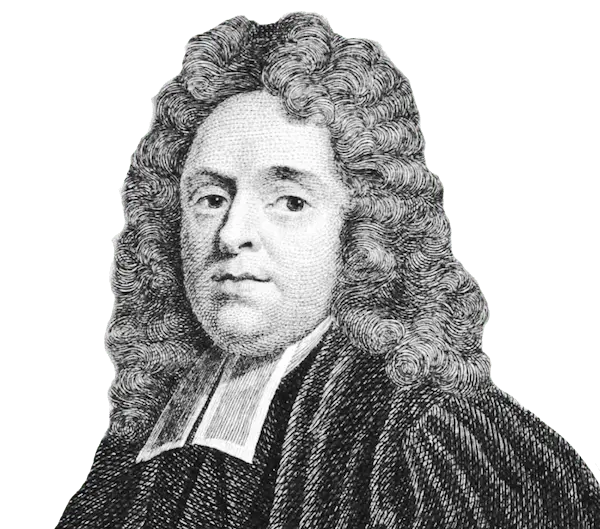
Matthew Henry Commentary
Nehemiah 8
"And all the people gathered themselves together as one man into the broad place that was before the water gate; and they spake unto Ezra the scribe to bring the book of the law of Moses, which Jehovah had commanded to Israel. And Ezra the priest brought the law before the assembly, both men and women, and all that could hear with understanding, upon the first day of the seventh month. And he read therein before the broad place that was before the water gate from early morning until midday, in the presence of the men and the women, and of those that could understand; and the ears of all the people were [attentive] unto the book of the law. And Ezra the scribe stood upon a pulpit of wood, which they had made for the purpose; and beside him stood Mattithiah, and Shema, and Anaiah, and Uriah, and Hilkiah, and Maaseiah, on his right hand; and on his left hand, Pedaiah, and Mishael, and Malchijah, and Hashum, and Hashbaddanah, Zechariah, [and] Meshullam. And Ezra opened the book in the sight of all the people; (for he was above all the people;) and when he opened it, all the people stood up: and Ezra blessed Jehovah, the great God. And all the people answered, Amen, Amen, with the lifting up of their hands: and they bowed their heads, and worshipped Jehovah with their faces to the ground. Also Jeshua, and Bani, and Sherebiah, Jamin, Akkub, Shabbethai, Hodiah, Maaseiah, Kelita, Azariah, Jozabad, Hanan, Pelaiah, and the Levites, caused the people to understand the law: and the people [stood] in their place. And they read in the book, in the law of God, distinctly; and they gave the sense, so that they understood the reading." — Nehemiah 8:1-8 (ASV)
Sacrifices were to be offered only at the door of the temple; but praying and preaching were, and are, services of religion, as acceptably performed in one place as in another. Masters of families should bring their families with them to the public worship of God. Women and children have souls to save, and are therefore to acquaint themselves with the word of God, and to attend on the means of grace. Little ones, as they come to reason, must be trained up in religion.
Ministers when they go to the pulpit, should take their Bibles with them; Ezra did so. From there they must draw their knowledge; according to that rule they must speak, and must show that they do so. Reading the Scriptures in religious assemblies is an ordinance of God, by which he is honored and his church edified. Those who hear the word should understand it; otherwise, it is to them merely an empty sound of words.
It is therefore required of teachers that they explain the word and convey its meaning. Reading is good, and preaching is good, but expounding makes reading better understood and preaching more convincing. It has pleased God in almost every age of the church to raise up, not only those who have preached the gospel, but also those who have given their views of Divine truth in writing; and though many who have attempted to explain Scripture have darkened counsel by words without knowledge, yet the labors of others are of excellent use. All that we hear must, however, be brought to the test of Scripture.
They heard readily and heeded every word. The word of God demands attention. If through carelessness we let much slip in hearing, there is danger that through forgetfulness we will let all slip after hearing.
"And Nehemiah, who was the governor, and Ezra the priest the scribe, and the Levites that taught the people, said unto all the people, This day is holy unto Jehovah your God; mourn not, nor weep. For all the people wept, when they heard the words of the law. Then he said unto them, Go your way, eat the fat, and drink the sweet, and send portions unto him for whom nothing is prepared; for this day is holy unto our Lord: neither be ye grieved; for the joy of Jehovah is your strength. So the Levites stilled all the people, saying, Hold your peace, for the day is holy; neither be ye grieved. And all the people went their way to eat, and to drink, and to send portions, and to make great mirth, because they had understood the words that were declared unto them." — Nehemiah 8:9-12 (ASV)
It was a good sign that their hearts were tender, when they heard the words of the law. The people were to send portions to those for whom nothing was prepared.
It is the duty of a religious feast, as well as of a religious fast, to give of ourselves to the hungry; God's bounty should make us bountiful. We must not only give to those who offer themselves, but send to those out of sight.
Their strength consisted in joy in the Lord. The better we understand God's word, the more comfort we find in it; the darkness of trouble arises from the darkness of ignorance.
"And on the second day were gathered together the heads of fathers` [houses] of all the people, the priests, and the Levites, unto Ezra the scribe, even to give attention to the words of the law. And they found written in the law, how that Jehovah had commanded by Moses, that the children of Israel should dwell in booths in the feast of the seventh month; and that they should publish and proclaim in all their cities, and in Jerusalem, saying, Go forth unto the mount, and fetch olive branches, and branches of wild olive, and myrtle branches, and palm branches, and branches of thick trees, to make booths, as it is written. So the people went forth, and brought them, and made themselves booths, every one upon the roof of his house, and in their courts, and in the courts of the house of God, and in the broad place of the water gate, and in the broad place of the gate of Ephraim. And all the assembly of them that were come again out of the captivity made booths, and dwelt in the booths; for since the days of Jeshua the son of Nun unto that day had not the children of Israel done so. And there was very great gladness. Also day by day, from the first day unto the last day, he read in the book of the law of God. And they kept the feast seven days; and on the eighth day was a solemn assembly, according unto the ordinance." — Nehemiah 8:13-18 (ASV)
They found it written in the Law about the Feast of Tabernacles. Those who diligently search the Scriptures find things written there that they have forgotten. This Feast of Tabernacles was a representation of the believer's temporary state in this world and a type of the holy joy of the gospel church. The conversion of the nations to the faith of Christ is foretold through the imagery of this feast (Zechariah 14:16). True religion will make us strangers and pilgrims on earth.
We read and hear the word acceptably and profitably when we act according to what is written in it; this happens when what appears to be our duty is revived after it has been neglected. They focused on the substance; otherwise, the ceremony would have been of no use. They did it, rejoicing in God and His goodness.
These are the means that the Spirit of God uses successfully to bring the hearts of sinners to tremble and to become humbled before God. But those who always indulge sorrow, even for sin, and reject the consolations offered by the word and Spirit of God are enemies to their own growth in holiness.
Jump to: