
Thomas Aquinas Commentary Isaiah 40
Thomas Aquinas Commentary
Isaiah 40
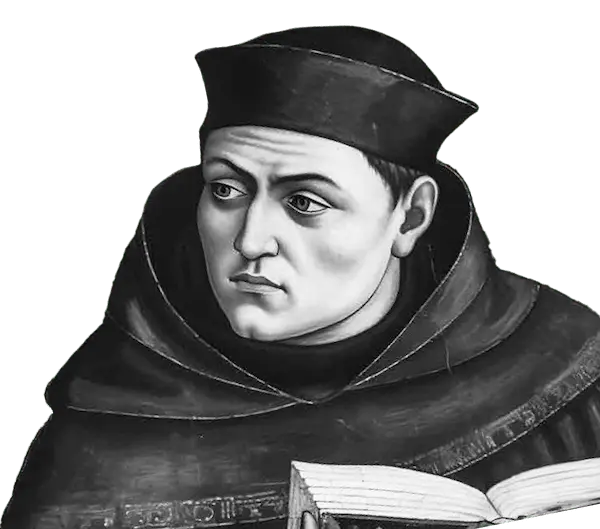
Thomas Aquinas Commentary
Isaiah 40
"Comfort ye, comfort ye my people, saith your God. Speak ye comfortably to Jerusalem; and cry unto her, that her warfare is accomplished, that her iniquity is pardoned, that she hath received of Jehovah`s hand double for all her sins. The voice of one that crieth, Prepare ye in the wilderness the way of Jehovah; make level in the desert a highway for our God. Every valley shall be exalted, and every mountain and hill shall be made low; and the uneven shall be made level, and the rough places a plain: and the glory of Jehovah shall be revealed, and all flesh shall see it together; for the mouth of Jehovah hath spoken it. The voice of one saying, Cry. And one said, What shall I cry? All flesh is grass, and all the goodliness thereof is as the flower of the field. The grass withereth, the flower fadeth, because the breath of Jehovah bloweth upon it; surely the people is grass. The grass withereth, the flower fadeth; but the word of our God shall stand forever. O thou that tellest good tidings to Zion, get thee up on a high mountain; O thou that tellest good tidings to Jerusalem, lift up thy voice with strength; lift it up, be not afraid; say unto the cities of Judah, Behold, your God! Behold, the Lord Jehovah will come as a mighty one, and his arm will rule for him: Behold, his reward is with him, and his recompense before him. He will feed his flock like a shepherd, he will gather the lambs in his arm, and carry them in his bosom, [and] will gently lead those that have their young. Who hath measured the waters in the hollow of his hand, and meted out heaven with the span, and comprehended the dust of the earth in a measure, and weighed the mountains in scales, and the hills in a balance? Who hath directed the Spirit of Jehovah, or being his counsellor hath taught him? With whom took he counsel, and who instructed him, and taught him in the path of justice, and taught him knowledge, and showed to him the way of understanding? Behold, the nations are as a drop of a bucket, and are accounted as the small dust of the balance: Behold, he taketh up the isles as a very little thing. And Lebanon is not sufficient to burn, nor the beasts thereof sufficient for a burnt-offering. All the nations are as nothing before him; they are accounted by him as less than nothing, and vanity. To whom then will ye liken God? or what likeness will ye compare unto him? The image, a workman hath cast [it], and the goldsmith overlayeth it with gold, and casteth [for it] silver chains. He that is too impoverished for [such] an oblation chooseth a tree that will not rot; he seeketh unto him a skilful workman to set up a graven image, that shall not be moved. Have ye not known? have yet not heard? hath it not been told you from the beginning? have ye not understood from the foundations of the earth? [It is] he that sitteth above the circle of the earth, and the inhabitants thereof are as grasshoppers; that stretcheth out the heavens as a curtain, and spreadeth them out as a tent to dwell in; that bringeth princes to nothing; that maketh the judges of the earth as vanity. Yea, they have not been planted; yea, they have not been sown; yea, their stock hath not taken root in the earth: moreover he bloweth upon them, and they wither, and the whirlwind taketh them away as stubble. To whom then will ye liken me, that I should be equal [to him]? saith the Holy One. Lift up your eyes on high, and see who hath created these, that bringeth out their host by number; he calleth them all by name; by the greatness of his might, and for that he is strong in power, not one is lacking. Why sayest thou, O Jacob, and speakest, O Israel, My way is hid from Jehovah, and the justice [due] to me is passed away from my God? Hast thou not known? hast thou not heard? The everlasting God, Jehovah, the Creator of the ends of the earth, fainteth not, neither is weary; there is no searching of his understanding. He giveth power to the faint; and to him that hath no might he increaseth strength. Even the youths shall faint and be weary, and the young men shall utterly fall: but they that wait for Jehovah shall renew their strength; they shall mount up with wings as eagles; they shall run, and not be weary; they shall walk, and not faint." — Isaiah 40:1-31 (ASV)
1. Be comforted, be comforted. This is the second principal part of this book, in which the prophet primarily intends to comfort the people through many promised benefits. It is divided into two parts:
- He leads them to the expectation of promises.
- He describes the promise of divine benefits, which begins later with: thus says the Lord to my anointed (Isaiah 45:1).
The first of these is divided into three parts:
- He comforts them with the power of the one who promises.
- He comforts them with His love, beginning with: let the islands keep silence (Isaiah 41:1).
- He comforts them with the weakness of the idols who might be thought to resist, beginning with: and now hear, O Jacob (Isaiah 44:1).
Concerning the first part, he does three things:
- He leads them to comfort.
- He promises the comforter: the voice of one crying in the desert (Isaiah 40:3).
- He shows the power of God who comforts: who has measured the waters in the hollow of his hand? (Isaiah 40:12).
2. Concerning the first point, he does three things.
- He leads the people to comfort: be comforted in spiritual goods, be comforted in the temporal goods granted to you. As it is written, he comforted the mourners in Zion ; and, the Lord answered the angel that spoke in me, good words, comfortable words (Zechariah 1:13).
- He orders the prophets and priests to announce this comfort: speak to the heart—that is, by comforting—and call them from sadness and from idolatry. I will lead her into the wilderness: and I will speak to her heart (Hosea 2:14).
- He gives the reason, which is twofold. Regarding the remission of their fault: for her evil is come to an end, as stated previously: and this is all the fruit, that the sin thereof should be taken away (Isaiah 27:9). Regarding the end of punishments: she has received; he speaks from the perspective of the time after the captivity. Compare to Jeremiah 17:18: with a double destruction.
Conversely, Nahum 1:9 says, there shall not rise a double affliction. The response to this is that the punishments are called "double" because they pertain to both body and soul, just as the fault is in both.
3. The voice of one crying in the desert. Here he promises the comforter. Concerning this, he does three things:
- He sends ahead the preparation.
- He shows the firmness of the prophecy: the voice of one, saying (Isaiah 40:6).
- He foretells the coming of the comforter: get you up upon a high mountain (Isaiah 40:9).
Concerning the first point, he does three things.
- He orders preparation. The voice of one crying in the desert—namely, the voice of John the Baptist—will be this: prepare by turning from evil, in the wilderness of vices. Be prepared to meet your God (Amos 4:12).
- He foretells the fulfillment, following the metaphor of a difficult road. If it is mountainous, it causes labor; thus it says, every valley shall be exalted, so that it is made as high as the mountains and everything becomes level. If it is winding, it causes one to wander; regarding this, he says, the crooked shall become straight. If it is rocky, it causes pain to the feet; regarding this, he says, the rough ways plain. Through this is signified that faintheartedness will be turned into security, pride into humility, wickedness into uprightness, and cruelty into meekness. Direct your heart into the right way (Jeremiah 31:21).
- He shows the benefit of this preparation: and the glory of the Lord shall be revealed—that is, the Son will be revealed. I will cure them: and I will reveal to them the prayer of peace (Jeremiah 33:6). All flesh together shall see, meaning he will make himself visible to all, or he is speaking of the day of judgment: every eye shall see him: and they also that pierced him (Revelation 1:7).
4. Some explain these verses this way: the voice of God, crying, is this: in the desert, prepare—that is, in the land of Judah, which was formerly a desert—the way of the Lord, namely, for going to the temple; or in the desert that is between Babylon and Judah. Every valley shall be exalted shows that all hindrances have been removed, so that the people may return freely. The glory of the Lord shall be revealed in the destruction of the Chaldeans, through which he will appear glorious.
5. The voice of one, saying. In this part, he shows the firmness of the prophecy by comparing it to the frailty of humanity. First, the Lord orders a cry, which signifies an explicit and plain announcement: cry, as it says later: cry, cease not (Isaiah 58:1). Second, he orders that human frailty be proclaimed. The prophet asks, And I said: what shall I cry?, fearing that he would be ordered to cry out something against his people, as he was previously (Isaiah 6:9). The Lord responds: all flesh is grass. The sun rose with a burning heat and parched the grass (James 1:11). Third, he shows the firmness of the divine word: indeed the people is grass, but heaven and earth shall pass away: but my words shall not pass away (Luke 21:33).
6. Get you up upon a high mountain. Here he foretells the coming comforter. Concerning this, he does three things:
- The Lord orders the prophet to announce it.
- He specifies the promise of His coming: behold your God.
- He shows the character of the one who comes: behold the Lord God shall come with strength (Isaiah 40:10).
Concerning the first point, he determines who should announce, to whom, and how. He determines that the one who should announce is the one who has the office: you that bring good tidings. How shall they preach unless they be sent? (Romans 10:15).
He designates the manner in three ways:
- By the height of the location, so that the one who announces good things will be heard from afar: upon a high mountain. Mystically, this is Christ, or a heavenly way of life and contemplation, as stated before: come and let us go up to the mountain of the Lord (Isaiah 2:3); and later: they shall cry from the top of the mountains (Isaiah 42:11).
- By the loudness of the voice: lift up your voice with strength, so that many may hear, by preaching plainly and constantly, as it says later: cry, cease not, lift up your voice (Isaiah 58:1).
- By boldness of heart: lift it up, fear not. Be not afraid at their presence (Jeremiah 1:8).
He determines to whom it should be announced in three respects:
- Regarding the province of the kingdom: say to the cities of Judah.
- Regarding the metropolis of the province: you that bring good tidings to Jerusalem.
- Regarding the rulers of the city: Zion, where the temple and the royal house were located, as it says later: the first shall say to Zion: behold they are here, and to Jerusalem I will give an evangelist (Isaiah 41:27). Compare to Acts 13:46: to you it behooved us first to speak the word of God.
7. Behold your God. Here he sets out the promise of God's coming: behold, He is near, your God will come, as stated before: God himself will come (Isaiah 35:4).
8. Behold the Lord. Here he shows the character of the one who comes.
- First, he shows that he will come strong to liberate: with strength, and his arm will rule for him—that is, his strength on the day of judgment; or in the first coming of Christ, in the power of his miracles; or in the destruction of Babylon. Have you an arm like God? (Job 40:9).
- Second, that he will come just to reward: behold his reward is with him and his work is before him, because it is accomplished with the ease of his will. But the just shall live for evermore: and their reward is with the Lord .
- Third, he shows that he will come kind to comfort, like a shepherd. He will come to feed the hungry: he shall feed his flock. I will feed them in the most fruitful pastures (Ezekiel 34:14); I will give you pastors who shall feed you (Jeremiah 3:15). He will come to gather the scattered: with his arm. Other sheep I have (John 10:16). He will come to carry the weak: in his bosom. When he has found it, lay it upon his shoulders, rejoicing (Luke 15:5).
9. Who has measured the waters. Here he shows God's divine power.
First, he establishes it against the errors of idolaters, who diminished divine power by making the creature equal to the Creator: they served the creature rather than the Creator (Romans 1:25).
Second, he establishes it against the despair of the Jews, who diminished divine power through distrust, which is addressed starting with: lift up your eyes on high (Isaiah 40:26).
Concerning the first point, he does two things:
- He shows the power of God.
- He excludes error: to whom then have you likened God (Isaiah 40:18).
Concerning the first of these, he does three things.
First, he shows divine power together with divine wisdom in the ease with which He measures and creates all things. For He makes all things in number, regarding the multitude of principles; in measure, regarding the determination of each thing's particular being; and in weight, regarding the inclination of each thing toward its end . In the hollow of his hand—that is, easily, like something measured in the hollow of a closed hand. With his palm—that is, easily, with the palm of an open hand. Who has poised with three fingers the bulk of the earth upon nothing (Job 26:7), for it is supported by nothing outside itself; otherwise the earth's rest would not be natural. It is poised over the waters (Psalms 136:6) regarding its place, for it is surrounded by waters, and upon its own bases (Psalms 104:5) regarding the proper cause of its rest, which is its own nature. With three fingers means easily; or, with three properties: weight, dryness, and immobility. Weighed—He makes each thing to be balanced by its own proper weight.
10. Second, he shows the sufficiency of His power, that He needs no helper: who has aided the Spirit of the Lord? This is against the philosophers who posited that the lower creatures were created through the mediation of the higher creatures. He also shows the sufficiency of His wisdom, that He needs no counselor: or who has been his counsellor, to give the Lord counsel? With whom has he consulted, that the Lord would ask counsel of him? Who has instructed him about the form of his work, or taught him the path of justice—that is, the natural justice he established for all things, so that nothing exceeds the bounds of its nature? Who taught him knowledge—that is, the knowledge of created things, both universal and particular, which is also against the philosophers? Who taught him the way of understandingPrudentiae. regarding the government of the world? Whose helper are you? Is it of him that is weak? And do you hold up the arm of him that has no strength? (Job 26:2).
11. Third, he shows its excellence, in that it exceeds the entire multitude of nations: behold the Gentiles are as a drop of a bucket, a small drop falling from a bucket, which is a vessel of water for the thirsty, and is counted as nothing. They are as the smallest grain of dust on a balance, which easily inclines it to either side. Seeing we have heard scarce a little drop of his word, who shall be able to behold the thunder of his greatness? (Job 26:14).
He also shows that God's excellence exceeds every fitting honor, especially regarding offerings: and Lebanon—that is, the trees of Lebanon, in which it abounds, for it is wooded—is not sufficient, nor its beasts, in which it abounds, for it is fit for pasture. What shall I offer to the Lord that is worthy? (Micah 6:6).
He also shows that it exceeds every perfection of creation. This is true of natural perfection, for the being of creatures, in comparison to God, is non-being. For Dionysius says, in his book on Divine Names 12.4, that just as participants surpass non-participants, and participations surpass participants, so too does the Principle of all participants (God) exceed both the participations and the participants. Thus, all nations are before him as if they had no being at all. This is also true regarding superadded perfections, which are in a certain way fulfilling: and are counted to him as nothing. I beheld the earth, and lo it was void, and nothing (Jeremiah 4:23).
12. To whom. Here he excludes the error of the idolaters.
First, he mocks this error regarding the intention of the craftsman who wished to make a god. If God is so powerful, to whom then have you likened God? He speaks according to the error of those who thought the images themselves were gods. Or what image will you make for him? This is directed at those who thought the things represented by the images were gods, such as the sun or the moon. Who is like to you, among the strong, O Lord? (Exodus 15:11). He also mocks the foolish work of those who wished to impart the noblest form to base matter: has the workman cast a graven statue? They gave the incommunicable name to stones and wood .
13. Second, he convicts the one who is in error.
First, he convicts them from the natural law, which dictates: Do you not know by natural reason that idols are not gods? And from the written law, which prohibits idolatry: Has it not been told you? (Compare to Romans 10:18: Have they not heard?).
He also convicts them from the consideration of terrestrial creatures, regarding their creation: Have you not understood the foundations of the earth, that they were founded by him? This refers to the part of the earth that is nearest to the center. When he balanced the foundations of the earth (Proverbs 8:29). And regarding their creator: it is he that sits upon the globe of the earth, for it is spherical, and he governs it as if sitting upon it, and its inhabitants are as locusts in comparison to the magnitude of the earth, or of God himself.
He also convicts them from the creation of heavenly creatures: he that stretches out the heavens, regarding the magnitude of heaven, as nothing, regarding the subtlety of its substance, and spreads them out as a tent for himself. This is because his power first shines forth in them among corporeal things, with respect to his power; or because they are the dwelling of the angels and saints, with respect to their dignity; or because they cover the whole lower creation, with respect to their brightness. He prepares the world by his wisdom (Jeremiah 10:12).
Third, he convicts them by pointing to the subjugation of the great, setting out the destruction of those who are great, whether in knowledge, such as he that brings the searchers of secrets to nothing, namely, the philosophers; or in power, such as the judges of the earth, that is, the princes. They have failed in their search (Psalms 64:6). He shows the ease of their destruction by a simile of grass or of a tree that does not have strong roots in the earth: And surely... against a leaf, that is carried away with the wind, you show your power, and you pursue a dry straw (Job 13:25).
14. Third, he states the conclusion: And to whom have you likened me? Who in the clouds can be compared to the Lord? (Psalms 89:6).
15. Lift up your eyes. Here he establishes this same divine power against those who despair.
First, he establishes divine majesty from the creation of things: who has created these things, namely, the heavenly bodies? He spoke, and they were made (Psalms 148:5). He establishes it from the perfection of his knowledge: who brings out their host in number, determined in his knowledge, to fulfill his will, and calls them all by their names, determining for each its proper nature, from which it can be named. Who tells the number of the stars: and calls them all by their names (Psalms 147:4). He establishes it from the fullness of his dominion: by the greatness of his might, and strength, and power—for battle, for resistance, and for action—not one of them was missing from his command. Is there any numbering of his soldiers? (Job 25:3).
16. Second, he excludes their error.
First, he states the error: Why say you: my way is hid from the Lord? They think, "He does not see the evils I suffer; otherwise, he would defend me." And, my judgment is passed over from my God, meaning the power to judge, which he previously had. Say not: I shall be hidden from God ; they have said: the Lord has forsaken the earth, and the Lord sees not (Ezekiel 9:9).
Second, he presents the refutation of the error. First, he confirms the proof from the law: Know you not, from the natural law, or have you not heard, from the written law, the things that follow?
Second, he presents the refutation by showing the greatness of God from the attributes he has in himself: the eternity of his dominion, for he is the everlasting God. The Lord shall reign for ever and ever (Exodus 15:18). He has unfailing power: he shall not faint, meaning he could not do all things, nor labor, meaning he could do them only with difficulty. His power is an everlasting power (Daniel 7:14). He has incomprehensible knowledge: neither is there any searching out of his wisdom. O the depth of the riches of the wisdom and of the knowledge of God! How incomprehensible are his judgments, and how unsearchable his ways (Romans 11:33).
17. He also shows God's greatness by the great things he does in others.
First, in those whom he strengthens, he shows their original weakness. It is he that gives strength to the weary, as with one who was first strong and then became weak. He gives power to them that are not, as with those who were never strong. As it says before, you have been a strength to the poor (Isaiah 25:4). He calls those things that are not (Romans 4:17); the weak things of the world has God chosen (1 Corinthians 1:27).
Second, he shows the greatness of his strength by comparison to natural strength. He first shows natural strength to be failing: youths shall faint, who are in their prime, and young men shall fall, who seem to be strong. No man shall prevail by his own strength (1 Samuel 2:9). Then he shows the greatness of the strength given by God: but they that hope in the Lord shall change their strength—that is, from natural strength to divine strength—so that they do not tire in ascending: they shall take wings as eagles. They shall make themselves wings like those of an eagle (Proverbs 23:5). They will not tire in running swiftly: they shall run and not be weary. Nor will they tire in walking continuously: they shall walk and not faint, as it says before: there is none that shall faint, nor labor (Isaiah 5:27).
18. The Spirit of the Lord is "helped" not in creation, but in justification. As Augustine says: "He who created you without you, will not justify you without you."Sermon 169.11.13 (PL 38, 923). This happens in several ways:
- Through preaching: for we are God’s co-workers (1 Corinthians 3:9).
- Through preparation: draw near to God: and he will draw near to you (James 4:8).
- Through cooperation: looking diligently, lest any man fall short of the grace of God (Hebrews 12:15).
19. The saints are compared to eagles for several reasons:
- Because of the height of their flight: Will the eagle mount up at your command, and make her nest in high places? (Job 39:27). This signifies the height of their contemplation, as stated before: his eyes shall see the king in his beauty (Isaiah 33:17).
- Because of the keenness of their sense of smell: wheresoever the body is, thither will the eagles be gathered together (Luke 17:37). This signifies the fervor of love: we will run after you to the odor of your ointments (Song of Solomon 1:3).
- Because of the loftiness of their place: Three things are hard to me, and the fourth I am utterly ignorant of. The way of an eagle in the air (Proverbs 30:18–19). This signifies zeal for a heavenly way of life: but our conversation is in heaven (Philippians 3:20).
- Because of the swiftness of their motion: our persecutors were swifter than the eagles of the air (Lamentations 4:19). This signifies promptness in good works: Have you seen a man swift in his work? (Proverbs 22:29).
- Because of their renewal: your youth shall be renewed like the eagle’s (Psalms 103:5). This signifies zeal for repentance and progress: though our outward man is corrupted, yet the inward man is renewed day by day (2 Corinthians 4:16).
- Because of the beauty of their parts: a large eagle with great wings, long-limbed, full of feathers, and of variety, came to Libanus (Ezekiel 17:3). This signifies the beauty of the virtues: you are all fair, O my love (Song of Solomon 4:7).
- Because of their care for their young: as the eagle enticing her young to fly, and hovering over them, he spread his wings (Deuteronomy 32:11). This signifies care for the saints: Who is weak, and I am not weak? Who is made to stumble, and I do not burn with indignation? (2 Corinthians 11:29).
Jump to: