
Thomas Aquinas Commentary Isaiah 63
Thomas Aquinas Commentary
Isaiah 63
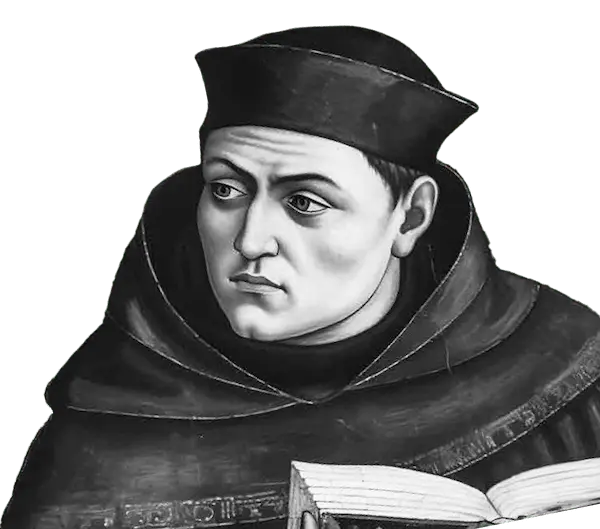
Thomas Aquinas Commentary
Isaiah 63
"Who is this that cometh from Edom, with dyed garments from Bozrah? this that is glorious in his apparel, marching in the greatness of his strength? I that speak in righteousness, mighty to save. Wherefore art thou red in thine apparel, and thy garments like him that treadeth in the winevat? I have trodden the winepress alone; and of the peoples there was no man with me: yea, I trod them in mine anger, and trampled them in my wrath; and their lifeblood is sprinkled upon my garments, and I have stained all my raiment. For the day of vengeance was in my heart, and the year of my redeemed is come. And I looked, and there was none to help; and I wondered that there was none to uphold: therefore mine own arm brought salvation unto me; and my wrath, it upheld me. And I trod down the peoples in mine anger, and made them drunk in my wrath, and I poured out their lifeblood on the earth. I will make mention of the lovingkindnesses of Jehovah, [and] the praises of Jehovah, according to all that Jehovah hath bestowed on us, and the great goodness toward the house of Israel, which he hath bestowed on them according to his mercies, and according to the multitude of his lovingkindnesses. For he said, Surely, they are my people, children that will not deal falsely: so he was their Saviour. In all their affliction he was afflicted, and the angel of his presence saved them: in his love and in his pity he redeemed them; and he bare them, and carried them all the days of old. But they rebelled, and grieved his holy Spirit: therefore he was turned to be their enemy, [and] himself fought against them. Then he remembered the days of old, Moses [and] his people, [saying], Where is he that brought them up out of the sea with the shepherds of his flock? where is he that put his holy Spirit in the midst of them? that caused his glorious arm to go at the right hand of Moses? that divided the waters before them, to make himself an everlasting name? that led them through the depths, as a horse in the wilderness, so that they stumbled not? As the cattle that go down into the valley, the Spirit of Jehovah caused them to rest; so didst thou lead thy people, to make thyself a glorious name. Look down from heaven, and behold from the habitation of thy holiness and of thy glory: where are thy zeal and thy mighty acts? the yearning of thy heart and thy compassions are restrained toward me. For thou art our Father, though Abraham knoweth us not, and Israel doth not acknowledge us: thou, O Jehovah, art our Father; our Redeemer from everlasting is thy name. O Jehovah, why dost thou make us to err from thy ways, and hardenest our heart from thy fear? Return for thy servants` sake, the tribes of thine inheritance. Thy holy people possessed [it] but a little while: our adversaries have trodden down thy sanctuary. We are become as they over whom thou never barest rule, as they that were not called by thy name." — Isaiah 63:1-19 (ASV)
Who is this. Here he begins to address the separation of the wicked from the good in the execution of the promised salvation. This is divided into three parts:
- In the first, he introduces the judge, as if to distinguish between them.
- In the second, he presents a petition to the judge, where it says, I will remember the tender mercies of the Lord (Isaiah 63:7).
- In the third, the judge wisely pronounces the separation: they have sought me (Isaiah 65).
Concerning the first part, he does two things:
- First, a question is raised about the person of the judge.
- Second, a question is raised about the quality of his clothing: why then is your apparel red? (Isaiah 63:2).
Concerning the first of these, he does two things:
- First, he presents the question.
- Second, he presents the response: I, that speak justice.
It should be known that all the saints agree in explaining these words as referring to Christ. The question comes from the angels, who indeed did not fully understand the mystery of the Incarnation of Christ, and therefore they asked as if they were ignorant, as Jerome says.Commentary on Isaiah ad loc. (610D; 721).
But Augustine seems to say the opposite of this in his work on Genesis,De Genesi ad litteram 5.19.38 (PL 34, 334; CSEL 81–1, 162). where he says that from the beginning of their creation the angels knew everything that God was going to do. This was true whether God imparted the seminal virtues of things to the things themselves, or retained to himself alone the knowledge that they would come to be, even though the potential for them to come to be would inhere in things. Thus, it seems that they did understand the mystery in this way.
To this, the Gloss on Ephesians 3:8, to me, the least of all the saints, responds by saying that the greater angels understood the mystery, but the lesser angels, whose voice this is, did not know of it. Nevertheless, Dionysius seems to say otherwise in On the Celestial Hierarchy 7.3. He thinks that this question belongs to the supreme angels, who receive illuminations immediately from God. Thus, God immediately responds to them: I, that speak. However, out of reverence for Christ, they ask each other, like disciples waiting for their teacher's response.
Although the supreme angels knew such mysteries regarding the substance of the deed, they did not know them perfectly regarding their particular circumstances. The mystery is seen even better by a superior, perfect intellect—namely, the divine intellect—than by an angelic intellect. Therefore, they seek to be further illuminated on this matter, so that they might understand more perfectly.
They are amazed, however, by three things.
- First, the coming of the victorious one: who is this that comes, into heaven, from Edom, the earth, for “Edom” means “bloody” or “earthly”; with dyed garments from Bosra, from hell, formerly fortified by a guard of demons. “Bosra” is sometimes the proper name of a city in the land of Moab and is sometimes an appellative name, meaning a fortified land or city. Thus, it is frequently used for the land of Idumea, which is fortified by mountains, but here it is used for Jerusalem, or hell. Garments, that is, bodily members, dyed with the blood of his passion, as stated above: behold it shall come down upon Idumea, and upon the people of my slaughter unto judgment (Isaiah 34:5).
- Second, they are amazed at the beauty of his appearance: this beautiful (formosus) one. This comes from “formo,” meaning hot, and thus someone is “formosus” who is roused up because of heat;Cf. Isidore, Etymologies 10.100. or it comes from “form,” and thus he is called “formosus” because of his shape, that is, the proper symmetry of his members; in his robe, in the clothing of humanity: on whom the angels desire to look (1 Peter 1:12).
- Third, they doubt his powerful advance, walking into heaven, not by angelic help, but by his own power, which was unheard of until this point: upholding all things by the word of his power (Hebrews 1:3).
I. Here he presents the response, and he shows himself to be a judge: that speak justice, that is, who has authority to bring forth judgment on the Gentiles (Isaiah 42:1); a teacher, as stated above: I am the Lord that speak justice (Isaiah 45:19); and a Savior: I am a defender, against the demons, to save the human race. The Lord is my strength and my praise, and he is become salvation to me (Exodus 15:2); the Lord is as a man of war, Almighty is his name (Exodus 15:3).
Note on the words, this beautiful one, that Christ is beautiful for four reasons:
- First, because he glows with the splendor of divinity: who being the brightness of his glory and the figure of his substance (Hebrews 1:3).
- Second, because he is fashioned in the conformity of the union: you are beautiful above the sons of men (Psalms 45:2).
- Third, because he is distinguished by the diverse color of virtue: my beloved is white and ruddy (Song of Solomon 5:10).
- Fourth, because he is clothed with integrity of conduct: be glorious, and put on goodly garments (Job 40:5).
Why then is your apparel red? Here he presents the second question, concerning his clothing.
First, he presents the question: why then, as if to say: it is not the just, but the wicked who usually bear the marks of blood like this—not saviors, but rather murderers; like theirs that tread in the winepress. For there is red wine in that region that dyes clothing like blood: and Jesus was clothed with filthy garments (Zechariah 3:3).
Second, he presents the answer: I have trodden.
And first, he assigns the reason for the redness of his garments; second, he goes through the entire order of the matter: for the day of vengeance is in my heart (Isaiah 63:4).
Concerning the first, he does three things.
- First, he tells of his victory alone: the winepress—namely, the cross on which he was pressed by the weight of his passion—I have trodden my enemies, alone, suffering and conquering. And of the Gentiles there is not a man with me, to help me, because everyone fled, abandoning him. And he says expressly, not a man,Vir. because of the Blessed Virgin, in whom faith never failed: a cluster of cypress my love is to me, in the vineyards of Engaddi (Song of Solomon 1:13); the Lord has trodden the winepress for the virgin daughter of Judah (Lamentations 1:15).
- Second, he touches on vengeance against his enemies: I have trampled on them—the demons, or the Jews—in my wrath, my kindled anger: you shall walk upon the asp and the basilisk: and you shall trample under foot the lion and the dragon (Psalms 91:13).
- Third, he deduces, as it were, the cause of the redness of his garments: blood—my own blood, for it comes forth from my body; their blood, for it is given over to their power to pour it out—is sprinkled. He says this in the likeness of a victor, whose garments are stained with gore, as stated above: garment mingled with blood (Isaiah 9:5); I have stained, in their estimation.
For the day of vengeance. Here he goes through the entire order of the matter.
- First, he presents the suitability of the time: vengeance, regarding the demons; redemption, regarding the just, whose recompense had been delayed until then, as stated above: it is the day of the vengeance of the Lord (Isaiah 34:8).
- Second, he presents the necessity of salvation: I looked about, and there was none to help the human race, who could save it, as stated above: he saw that there is not a man (Isaiah 59:16); or there was none to help me on the cross: my brethren have withdrawn from me, and my acquaintance have departed from me (Job 19:13); I looked on my right hand, and beheld, and there was no one that would know me (Psalms 142:4); they compassed me on every side .
- Third, the completion of salvation: and my own arm, my power, has saved for me, that is, accomplished the salvation of resurrection for me, or the salvation of the human race: his right hand has wrought for him salvation, and his arm is holy (Psalms 98:1).
- Fourth, the exposition of his vengeance: and I have trodden down the people, the Jews, through the Romans, and have made them drunk, filled them with affliction, and have brought down their strength, of the Jews and the demons, as stated above: the Lord of hosts has designed it, to pull down the pride of all glory, and bring to disgrace all the glorious ones of the earth (Isaiah 23:9).
This may all also be explained literally, so that the Lord would be introduced metaphorically, as though coming to wipe out the various enemy peoples of the Jews, and especially the Edomites. And he, according to the metaphorical manner of speaking, is clothed, as stated above: he put on justice as a breastplate (Isaiah 59:17).
I will remember the tender mercies of the Lord. Here the prophet offers a petition to the judge, who comes to speak and fulfill justice.
First, he inclines him to compassion; second, he offers his petition, O that you would rend the heavens (Isaiah 64).
The first of these is divided into two parts:
- In the first, he inclines him to compassion by recalling his former benefits, which have passed away.
- In the second, by recalling the dangers which they met: why have you made us to err? (Isaiah 63:17).
Concerning the first, he does two things.
First, he sets out the intention: all the things that the Lord has bestowed upon us, for our merits, both in good things and in the evils of punishments; good things, which he gave freely. I remembered your mercy, O Lord .
Second, he describes the intention.
And first, he recalls the benefits regarding their escape from dangers, recalling his particular election: and he, namely, God, said: surely, although they may be against me, they are children that will not deny, namely, Abraham, or that will not deny, because they at least keep my faith: the Lord is my strength and my praise (Exodus 15:2).
And regarding his diligent protection: in all their affliction; and he himself was troubled, from compassion; or he was not troubled right away, but he delayed, so that they might be corrected. And the angel of his face, that is, the angel that sees my face, saved them, as their leader in the desert: lead this people where I have told you: my angel shall go before you (Exodus 32:34); he has given his angels charge over you; to keep you in all your ways (Psalms 91:11).
And regarding fatherly love: in his love he redeemed them from Egypt; he carried them in the desert; and lifted them up, that is, he exalted them over the others in the promised land: Israel was a child (Hosea 11:1).
Second, he touches on the benefits regarding the remission of faults.
- First, he sets out their fault: but they; his spirit, namely God’s, or the spirit of his Holy One, Moses, through their various quarrels: and Moses was afflicted for their sakes, because they exasperated his spirit (Psalms 106:32–33).
- Second, he sets out their punishment: and he, namely, God, was turned to be their enemy: the Lord is become as an enemy (Lamentations 2:5); you are changed to be cruel toward me (Job 30:21).
- Third, he sets out the remission of the fault: and he remembered, at last, Moses, who prayed for them: either forgive them, or strike me out of the book that you have written (Exodus 32:31–32); he has remembered his covenant for ever: the word which he commanded to a thousand generations (Psalms 105:8).
Note on the words, I have trodden the winepress (Isaiah 63:3), that from the winepress of the cross flowed:
- First, blood to redeem: you were not redeemed with corruptible things, as gold or silver, from your vain conversation, but with the precious blood of Jesus Christ (1 Peter 1:18–19).
- Second, water to clean: he brought forth water out of the rock (Psalms 78:16); I will pour upon you clean water (Ezekiel 36:25).
- Third, oil to heal: the rock poured me out rivers of oil (Job 29:6).
- Fourth, honey to solidify: that he might suck honey out of the rock (Deuteronomy 32:13).
- Fifth, wine to console: your presses shall run over with wine (Proverbs 3:10).
Where is he that brought them up? Here he laments the same benefits being taken away from them.
First, he laments the lack of benefits: where is he that brought them up out of the sea?, Moses, or God; with the shepherds, Miriam and Aaron: she led them out in the hands of the holy prophet . Where is he that put in the midst of them the spirit of his Holy One?, Moses, which is found in Numbers 11. By the right hand, prosperously; where is the spirit that divided the waters before them? Who divided the Red Sea into parts (Psalms 136:13). And where is he that led them out as a horse that does not stumble, namely, without hindrance. As a beast that goes down, with an unhindered course; the spirit of the Lord was their, the people’s, leader: and in the Red Sea a way without hindrance ; they shall walk confidently (Proverbs 3:23); where are his miracles? (Judges 6:13).
Second, he inclines the judge to affection.
- First, he seeks a hearing: look down from heaven: you will hear from your holy heaven (1 Kings 8:32).
- Second, he provokes him to mercy: where is your zeal with which you loved us. Lord, where are your ancient mercies? (Psalms 89:49); if he withhold the waters, all things shall be dried up (Job 12:15).
- Third, he sets out a cause for having mercy: for you are our father, and Abraham has not known us, when he was still alive, because we did not then exist; or, even now, he is unwilling to pray for us, because we do not call upon him. Or, according to Augustine,Cf. Augustine, De cura pro mortuis 15.18 (PL 40, 605). the dead, even the saints, do not know what is to be done for the living. But this is to be understood regarding the power of human knowledge, not regarding the illumination of divine light: he is your father, that has possessed you, and made you, and created you (Deuteronomy 32:6).
Why have you made us to err? Here he sets out the evils which they met.
First, regarding the evils of their fault: you made us to err, by permitting it, not sending grace and not correcting, from your ways, your commands; you hardened, by permitting it: he has mercy on whom he will. And whom he will, he hardens (Romans 9:18).
Second, he sets out the evils of their punishment.
- First, he asks for mercy: return, from wrath to mercy, for the sake of your servants, our fathers: return, O Lord, how long? And be entreated in favor of your servants (Psalms 90:13); convert us, O Lord, to you, and we shall be converted: renew our days, as from the beginning (Lamentations 5:21).
- Second, he sets out their misery regarding slavery: they have possessed your holy people as nothing, that is, without resistance, as stated above: O Lord our God, other lords besides you have had dominion over us (Isaiah 26:13). Regarding the profanation of their holy places: our enemies have trodden down your sanctuary: the holy places are come into the hands of strangers . Regarding the loss of their former honor: we are become, without a king, without the temple, as in the beginning, in Egypt, or even before the calling of Abraham: but you, O Lord, are among us, and your name is called upon by us, forsake us not (Jeremiah 14:9).
Jump to: