
Thomas Aquinas Commentary John 2
Thomas Aquinas Commentary
John 2
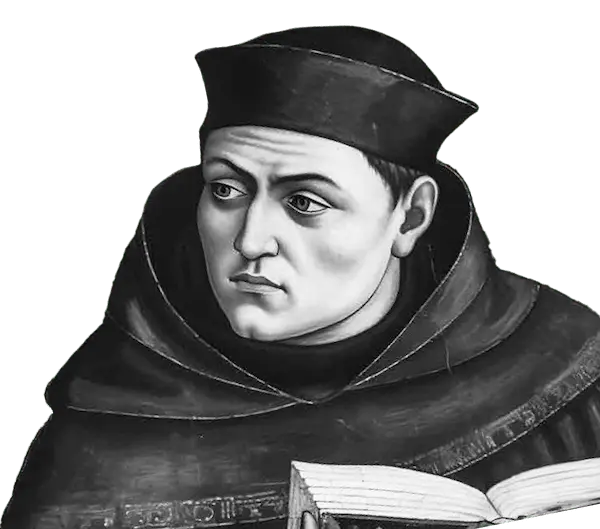
Thomas Aquinas Commentary
John 2
"And the third day there was a marriage in Cana of Galilee; and the mother of Jesus was there: and Jesus also was bidden, and his disciples, to the marriage. And when the wine failed, the mother of Jesus saith unto him, They have no wine. And Jesus saith unto her, Woman, what have I to do with thee? mine hour is not yet come. His mother saith unto the servants, Whatsoever he saith unto you, do it. Now there were six waterpots of stone set there after the Jews` manner of purifying, containing two or three firkins apiece. Jesus saith unto them, Fill the waterpots with water. And they filled them up to the brim. And he saith unto them, Draw out now, and bear unto the ruler of the feast. And they bare it. And when the ruler of the feast tasted the water now become wine, and knew not whence it was (but the servants that had drawn the water knew), the ruler of the feast calleth the bridegroom, and saith unto him, Every man setteth on first the good wine; and when [men] have drunk freely, [then] that which is worse: thou hast kept the good wine until now. This beginning of his signs did Jesus in Cana of Galilee, and manifested his glory; and his disciples believed on him." — John 2:1-11 (ASV)
Previously, the Evangelist showed the dignity of the incarnate Word and gave various proofs for it. Now he begins to recount the effects and actions by which the divinity of the incarnate Word was made known to the world.
He first describes the things Christ did while living in the world that reveal His divinity. Second, from chapter twelve onward, he describes how Christ showed His divinity while dying.
Regarding the first part, he does two things:
- He shows the divinity of Christ in relation to the power He had over nature.
- He shows it in relation to the effects of grace, starting in chapter three with and there was a man of the Pharisees, named Nicodemus (John 3:1).
Christ’s power over nature is shown to us by the fact that He changed a nature. This change was accomplished by Christ as a sign, first, for His disciples, to strengthen them; and second, for the people, to lead them to believe, which is discussed from after this he went down to Capernaum (John 2:12) onward.
This transformation of a nature, in order to strengthen the disciples, was accomplished at a wedding when He turned water into wine. The text says, there was a marriage in Cana of Galilee. The commentary on this event is structured as follows:
- The marriage is described.
- Those present are described, at and the mother of Jesus was there.
- The miracle performed by Christ is described, at and when the wine ran out.
In describing the marriage, the time is mentioned first. Thus, he says, and on the third day, there was a marriage in Cana of Galilee, that is, after the calling of the disciples mentioned earlier. For after being made known by the testimony of John, Christ also wanted to make Himself known through His own actions.
Second, the place is mentioned; hence he says, in Cana of Galilee. Galilee is a province, and Cana is a small village located in that province.
Regarding the literal meaning, we should note that there are two opinions about the timeline of Christ’s preaching. Some say that two and a half years passed from Christ’s baptism until His death. According to them, the events at this wedding took place in the same year that Christ was baptized. However, both the teaching and practice of the Church are opposed to this view. On the feast of the Epiphany, three miracles are commemorated: the adoration of the Magi, which took place in the first year of the Lord’s birth; the baptism of Christ, which implies He was baptized on the same day thirty years later; and this wedding, which took place on the same day one year after that. It follows from this that at least one year elapsed between His baptism and this wedding.
In that year, the only things recorded to have been done by the Lord are found in the fourth chapter of Matthew: the fasting in the desert and the temptation by the devil, as well as what John tells us in this Gospel about the testimony of the Baptist and the conversion of the disciples. After this wedding, Christ began to preach publicly and perform miracles up to the time of His passion, so that He preached publicly for two and a half years.
In the mystical sense, marriage signifies the union of Christ with His Church, as the Apostle says: this is a great mystery: I am speaking of Christ and his Church (Ephesians 5:32). This marriage began in the womb of the Virgin, when God the Father united a human nature to His Son in a unity of person. The chamber for this union was the Virgin’s womb: he established a chamber for the sun (Psalms 19:5). Of this marriage it is said: the kingdom of heaven is like a king who married his son (Matthew 22:2), which is when God the Father joined a human nature to His Word in the womb of the Virgin. It was made public when the Church was joined to Him by faith: I will bind you to myself in faith (Hosea 2:20). We read of this marriage: blessed are they who are called to the marriage supper of the Lamb (Revelation 19:9). It will be consummated when the bride, the Church, is led into the resting place of the groom, which is the glory of heaven.
The fact that this marriage took place on the third day is not without mystical significance. The first day is the time of the law of nature; the second day is the time of the written law. But the third day is the time of grace, when the incarnate Lord celebrated the marriage: he will revive us after two days: on the third day he will raise us up (Hosea 6:2).
The place is also appropriate. For Cana means “zeal” and Galilee means “passage.” So this marriage was celebrated in the “zeal of a passage,” to suggest that those persons are most worthy of union with Christ who, burning with the zeal of a conscientious devotion, pass over from the state of guilt to the grace of the Church. Pass over to me, all who desire me . They pass from death to life, that is, from the state of mortality and misery to the state of immortality and glory: I make all things new (Revelation 21:5).
Next, the persons invited are described: the mother of Jesus was there. Three are mentioned: the mother of Jesus, Jesus Himself, and the disciples. The mother of Jesus is mentioned first to indicate that Jesus was still unknown and not invited to the wedding as a famous person, but merely as one acquaintance among others; for as they invited the mother, so also her Son.
Or, perhaps His mother was invited first because they were uncertain whether Jesus would come to a wedding if invited, due to the unusual piety they noticed in Him and because they had not seen Him at other social gatherings. So I think they first asked His mother whether Jesus should be invited. That is why the Evangelist expressly said first that His mother was at the wedding, and that later Jesus was invited.
This is what comes next: and Jesus also was invited. Christ decided to attend this wedding, first, to give us an example of humility. For He did not look to His own dignity, but as Chrysostom says, “just as he condescended to accept the form of a servant, so he did not hesitate to come to the marriage of servants.” And as Augustine says, “let man blush to be proud, for God became humble.” Among His other acts of humility, the Son of the Virgin came to a marriage, which He had already instituted in paradise when He was with His Father. Of this example it is said: learn from me, for I am gentle and humble of heart (Matthew 11:29).
He came, second, to reject the error of those who condemn marriage. As Bede says, “if there were sin in a holy marriage bed and in a marriage carried out with due purity, the Lord would not have come to the marriage.” But because He did come, He implies that the baseness of those who denounce marriage deserves to be condemned. If she marries, it is not a sin (1 Corinthians 7:36).
The disciples are mentioned when he says, and his disciples. In its mystical meaning, the mother of Jesus, the Blessed Virgin, is present in spiritual marriages as the one who arranges the marriage, because it is through her intercession that one is joined to Christ through grace: in me is every hope of life and of strength . Christ is present as the true groom of the soul, as is said: he who has the bride is the bridegroom (John 3:29). The disciples are the groomsmen uniting the Church to Christ, as one of them said: I betrothed you to one husband, to present you as a chaste virgin to Christ (2 Corinthians 11:2).
At this physical marriage, some role in the miracle belongs to the mother of Christ, some to Christ, and some to the disciples. When he says, and when the wine ran out, he indicates the part of each:
- The role of Christ’s mother was to oversee the miracle.
- The role of Christ was to perform it, at there were six stone waterpots nearby.
- The role of the disciples was to bear witness to it, at Jesus did this beginning of miracles.
Regarding the first point, Christ’s mother assumed the role of a mediatrix. She does two things: first, she intercedes with her Son; second, she instructs the servants, at his mother said to the waiters. As to her intercession, two things are mentioned: first, his mother’s plea; second, the answer of her Son, at and Jesus said to her: woman, what is that to me and to you?
In Mary’s intercession, we should note several things:
- Her kindness and mercy. It is a quality of mercy to regard another’s distress as one’s own, because to be merciful is to have a heart distressed at the distress of another: who is weak, and I am not weak? (2 Corinthians 11:29). And so, because the Blessed Virgin was full of mercy, she desired to relieve the distress of others. So he says, and when the wine ran out, the mother of Jesus said to him.
- Her reverence for Christ. Because of the reverence we have for God, it is sufficient for us merely to express our needs: Lord, all my desires are known by you (Psalms 38:9). It is not our business to specify the way in which God will help us, for as it is said: we do not know what we should pray for as we ought (Romans 8:26). And so His mother merely told Him of their need, saying, they have no wine.
- The Virgin’s concern and care. She did not wait until they were in extreme need, but acted when the wine ran out, that is, immediately. This is similar to what is said of God: a helper in times of trouble (Psalms 9:9).
Chrysostom asks why Mary never encouraged Christ to perform any miracles before this time. She had been told of His power by the angel, whose words had been confirmed by the many things she had seen happening concerning Him, all of which she remembered, thinking them over in her heart (Luke 2:51). The reason is that before this time, He lived like any other person. So, because the time was not appropriate, she put off asking Him. But now, after John’s witness to Him and after the conversion of His disciples, she trustingly prompted Christ to perform miracles. In this, she was a true symbol of the synagogue, which is the mother of Christ, for it was customary for the Jews to require miracles: the Jews require signs (1 Corinthians 1:22).
She says to Him, they have no wine. Here we should note that before the incarnation of Christ, three kinds of wine were running out: the wine of justice, of wisdom, and of charity or grace. Wine stings, and in this respect it is a symbol of justice. The Samaritan poured wine and oil into the wounds of the injured man; that is, he mingled the severity of justice with the sweetness of mercy. You have made us drink the wine of sorrow (Psalms 60:3). But wine also delights the heart: wine cheers the heart of man (Psalms 104:15). In this respect, wine is a symbol of wisdom, the meditation of which is enjoyable in the highest degree: her companionship has no bitterness . Furthermore, wine intoxicates: drink, friends, and be intoxicated, my dearly beloved (Song of Solomon 5:1). In this respect, wine is a symbol of charity: I have drunk my wine with my milk (Song of Solomon 5:1). It is also a symbol of charity because of its fervor: wine makes the virgins flourish (Zechariah 9:17).
The wine of justice was indeed running out under the old law, in which justice was imperfect. But Christ brought it to perfection: unless your justice is greater than that of the scribes and of the Pharisees, you will not enter into the kingdom of heaven (Matthew 5:20). The wine of wisdom was also running out, for it was hidden and symbolic, as it says: all these things happened to them in symbol (1 Corinthians 10:11). But Christ plainly brought wisdom to light: he was teaching them as one having authority (Matthew 7:29). The wine of charity was also running out, because they had received a spirit of servitude only in fear. But Christ converted the water of fear into the wine of charity when He gave the spirit of adoption as sons, by which we cry: ‘Abba, Father’ (Romans 8:15), and when the charity of God was poured out into our hearts (Romans 5:5).
Next, when he says, Jesus said to her: woman, the answer of Christ is given. This answer has been the occasion for three heresies.
The Manicheans claim that Christ had only an imaginary body, not a real one. Valentinus maintained that Christ assumed a celestial body and that, as far as His body was concerned, Christ was not related to the Virgin at all. The source of this error was that he understood woman, what does that have to do with me and you? as if it meant, “I have received nothing from you.” But this is contrary to the authority of Sacred Scripture. For the Apostle says: God sent his Son, made from a woman (Galatians 4:4). Now Christ could not be said to have been made from her unless He had taken something from her. Furthermore, Augustine argues against them: “How do you know that our Lord said, ‘what does that have to do with me and you?’ You reply that it is because John says so. But he also says that the Virgin was the mother of Christ. So, if you believe the Evangelist when he states that Jesus said this to his mother, you should also believe him when he says, ‘and the mother of Jesus was there.’”
Then there was Ebion, who said that Christ was conceived from a man’s seed, and Helvidius, who said that the Virgin did not remain a virgin after childbirth. They were deceived by the fact that He said, woman, which they thought implied the loss of virginity. But this is false, for in Sacred Scripture the word “woman” sometimes refers merely to the female sex, as it does in made from a woman (Galatians 4:4). This is also clear from the fact that Adam, speaking to God about Eve, said: the woman whom you gave me as a companion, gave me fruit from the tree, and I ate it (Genesis 3:12); for Eve was still a virgin in Paradise, where Adam had not known her. Therefore, the fact that the mother of Christ is here called woman in this Gospel does not imply a loss of virginity, but refers to her sex.
The Priscillianists, however, erred by misunderstanding the words of Christ, my hour has not yet come. They claimed that all things happen by fate, and that the actions of men, including those of Christ, are subject to predetermined times. That is why, according to them, Christ said, my hour has not yet come. But this is false for any person. Since man has free choice—because he has reason and will, both of which are spiritual—then obviously, as far as choice is concerned, man is not subject to bodies but is really their master. For spiritual things are superior to material things, so much so that the Philosopher says that the wise man is master of the stars. Their heresy is even less true of Christ, who is the Lord and Creator of the stars. Thus, when He says, my hour has not yet come, He is referring to the time of His passion, which was fixed for Him not by necessity, but according to divine providence. What is said in Sirach 33:7 is also contrary to their opinion: why is one day better than another? The answer is: they have been differentiated by the knowledge of the Lord, meaning they were differentiated from one another not by chance, but by God’s providence.
Since we have eliminated the above opinions, let us look for the reason why our Lord answered, woman, what does that have to do with me and you? According to Augustine, Christ has two natures, the divine and the human. Although the same Christ exists in each, the things appropriate to Him according to His human nature are distinct from what is appropriate to Him according to His divine nature. To perform miracles is appropriate to Him according to His divine nature, which He received from the Father, while to suffer is according to His human nature, which He received from His mother. So when His mother requests this miracle, He answers, woman, what does that have to do with me and you? as if saying: “I did not receive from you that in me which enables me to perform miracles, but that which enables me to suffer.” In other words, “That which makes it appropriate for me to suffer, my human nature, I have received from you.” And so I will recognize you when this weakness hangs on the cross. He therefore continues with, my hour has not yet come, as if to say, “I will recognize you as my mother when the time of my passion arrives.” And so it was that on the cross He entrusted His mother to the disciple.
Chrysostom explains this differently. He says that the Blessed Virgin, burning with zeal for the honor of her Son, wanted Christ to perform miracles at once, before it was opportune. But Christ, being much wiser than His mother, restrained her. He was unwilling to perform the miracle before the need for it was known; otherwise, it would have been less appreciated and less credible. And so He says, woman, what does that have to do with me and you? as if to say, “Why bother me?” He continues, My hour has not yet come, meaning, “I am not yet known to those present, nor do they know that the wine has run out. They must first know this, because when they know their need, they will have a greater appreciation for the benefit they will receive.”
Now, although His mother was refused, she did not lose hope in her Son’s mercy. So she instructs the servants, saying do whatever he tells you, which is, in fact, the perfection of all justice. For perfect justice consists in obeying Christ in all things: we will do all that the Lord commanded us (Exodus 24:7). However, the phrase do whatever he tells you is fittingly said only of God alone, for man is able to err at times. Therefore, in matters that are against God, we are not held to obey men: we ought to obey God rather than men (Acts 5:29). We ought to obey God, who does not err and cannot be deceived, in all things.
Now Christ’s completion of the miracle is set forth, at now there were six stone waterpots nearby. The text describes:
- The vessels in which the miracle was performed.
- The matter of the miracle, at Jesus said to them: fill the waterpots with water.
- How the miracle was made known and approved, at and Jesus said to them: draw out now.
The miracle was performed in six vessels: now there were six stone waterpots nearby. Here we should note that, as mentioned, the Jews observed many bodily washings and the cleansing of their cups and dishes (Mark 7:4). Because they were in Palestine where there was a shortage of water, they had vessels in which they kept the purest water to be used for washing themselves and their utensils. Hence he says, there were six stone waterpots nearby, i.e., vessels for holding water, according to the purification of the Jews, that is, to use for purification, containing two or three measures apiece. The Greek ‘metrete’ is the same as the Latin ‘mensura’ (measure). These jars were standing there, as Chrysostom says, in order to eliminate any suspicion about the miracle. This was both on account of their cleanliness, so that no one could suspect that the water had acquired the taste of wine from the dregs of wine previously stored in them—for these jars were for purification and so had to be very pure—and also on account of their capacity, so that it would be abundantly clear that the water in such large jars could be changed into wine only by divine power (John 2:6).
In the mystical sense, the six water jars signify the six eras of the Old Testament, during which the hearts of men were prepared, made receptive to God’s Scriptures, and put forward as an example for our lives. The term measures, according to Augustine, refers to the Trinity of persons. They are described as two or three because at times in Scripture three persons in the Trinity are distinctly mentioned—baptizing them in the name of the Father, and of the Son, and of the Holy Spirit (Matthew 28:19)—and at other times only two, the Father and the Son, in whom the Holy Spirit, who is the union of the two, is implied: if anyone loves me, he will keep my word, and my Father will love him, and we will come to him (John 14:23). Or they are described as two on account of the two groups of mankind from which the Church arose, that is, Jews and Gentiles. Or three on account of the three sons of Noah, from whom the human race arose after the deluge.
Then, when he says Jesus said to them: fill the waterpots with water, he gives the material of the miracle. Here we might ask why this miracle was performed with existing material and not from nothing. There are three reasons for this.
- The first reason is literal and is given by Chrysostom: to make something from nothing is much greater and more marvelous than to make something from material that already exists, but it is not as evident and believable to many. And so, wishing to make what He did more believable, Christ made wine from water, thus condescending to human capacity.
- Another reason was to refute false doctrines. For there are some (like the Marcionites and Manicheans) who said that the founder of the world was someone other than God, and that all visible things were established by such a one, that is, the devil. And so the Lord performed many miracles using created and visible substances in order to show that these substances are good and were created by God.
- The third reason is mystical. Christ made the wine from water, and not from nothing, in order to show that He was not laying down an entirely new doctrine and rejecting the old, but was fulfilling the old: I have not come to destroy the law, but to fulfill it (Matthew 5:17). In other words, what was prefigured and promised in the old law was disclosed and revealed by Christ: then he opened their minds so they could understand the Scriptures (Luke 24:45).
Finally, He had the servants fill the jars with water so that He might have witnesses to what He did; so it is said, but the waiters, who had drawn the water, knew.
Then, the miracle is made known, at and Jesus said to them. As soon as the jars were filled, the water was turned into wine. So the Lord reveals the miracle at once, saying: draw out now, and carry to the head waiter. Here, we first have the command of Christ selecting who is to test the wine; second, we have the judgment of the head waiter who tasted it: and when the headwaiter had tasted the water made wine.
Then Jesus said to them, that is, to the waiters, draw out the wine from the jars, and carry to the head waiter. Here we should note that a ‘triclinium’ is a place with three rows of tables, so named from its three rows of dining couches (for ‘cline’ in Greek means couch). The ancients were accustomed to eat reclining on couches, as Maximus Valerius recounts. This is why the Scriptures speak of lying next to and lying down. Thus the ‘architriclinus’ (head waiter) was the first and chief among those dining.
According to Chrysostom, the head waiter was the one in charge of the whole banquet. Because he had been busy and had not tasted anything, the Lord wanted him, and not the guests, to be the judge of what had been done. This was so that some could not detract from the miracle by saying the guests were drunk and, with their senses dulled, could not tell wine from water. For Augustine, he was the chief guest, as was mentioned, and Christ wanted to have the opinion of this person in a high position so it would be more acceptable.
In the mystical sense, those who pour out the water are preachers: with joy you will draw water from the springs of the Savior (Isaiah 12:3). And the architriclinus is someone skilled in the law, like Nicodemus, Gamaliel, or Paul. So, when the word of the Gospel, which was hidden under the letter of the law, is entrusted to such persons, it is as though wine made from water is poured out for the architriclinus, who, when he tastes it, gives his assent to the faith of Christ.
Then the judgment of the one examining the wine is given, and when the head waiter had tasted. First, he investigates the truth of the matter; second, he gives his opinion, at every man at first sets forth the good wine. He says, and when the head waiter had tasted the water made wine and did not know where it was from, because he did not know that the water had miraculously been made wine by Christ, but the waiters knew, the reason being that they had drawn the water. Then, the head waiter called the bridegroom in order to learn the truth and give his opinion of the wine. Hence he adds: every man at first sets forth the good wine.
Here we should consider, according to Chrysostom, that everything is most perfect in the miracles of Christ. Thus, He restored most complete health to Peter’s mother-in-law, so that she arose at once and waited on them (Mark 1:31; Matthew 8:15). Again, He restored the paralytic to health so perfectly that he also arose immediately, took up his mat, and went home, as we read (John 5:9). This is also evident in this miracle, because Christ did not make mediocre wine from the water, but the very best possible. And so the head waiter says, every man at first sets forth the good wine, and when men have drunk well, then that which is worse. This is because they drink less, and because good wine consumed in quantity along with a quantity of food causes greater discomfort. It is as though he were saying: “Where did this very good wine come from which, contrary to custom, you saved until now?”
This is appropriate to a mystery. In the mystical sense, he serves good wine first who, with an intent to deceive others, does not first mention the error he intends, but other things that entice his hearers, so that he can disclose his evil plans after they have been intoxicated and enticed to consent. We read of such wine: it goes down pleasantly, but finally it will bite like a serpent (Proverbs 23:31–32). Again, he serves good wine first who begins to live in a saintly and spiritual manner at the start of his conversion, but later sinks into a carnal life: are you so foolish as, having begun in the Spirit, to end in the flesh? (Galatians 3:3).
Christ, however, does not serve the good wine first, for at the outset He proposes things that are bitter and hard: narrow is the way that leads to life (Matthew 7:14). Yet the more progress a person makes in His faith and teaching, the more pleasant it becomes and the more he becomes aware of a greater sweetness: I will lead you by the path of justice, and when you walk you will not be hindered (Proverbs 4:11–12). Likewise, all those who desire to live conscientiously in Christ suffer bitterness and troubles in this world: amen, amen I say to you, that you will lament and weep (John 16:20). But later they will experience delights and joys. So he goes on: but your sorrow will be turned into joy. I consider that the sufferings of this present time are not worthy to be compared with the glory to come, which will be revealed in us (Romans 8:18).
Then when he says, Jesus did this beginning of miracles in Cana of Galilee, he gives testimony of the miracle through the disciples. We can see from this the falsity of the apocryphal History of the Infancy of the Savior, which recounts many miracles performed by Christ as a boy. For if these accounts were true, the Evangelist would not have said, Jesus did this beginning of miracles in Cana of Galilee. We have already given the reason why Christ worked no miracles during His childhood: so that men would not regard them as illusions. It was for the reason given above, then, that Jesus performed this miracle of turning water into wine at Cana of Galilee, and manifested his glory. And Jesus revealed His glory, that is, the power by which He is glorious: the Lord of hosts, he is the King of glory (Psalms 24:10).
And his disciples believed in him. But how did they believe? For they already were His disciples and had believed before this. I answer that sometimes a thing is described not according to what it is at the time, but according to what it will be. For example, we say that the apostle Paul was born at Tarsus in Cilicia; not that an actual apostle was born there, but a future one was. Similarly, it says here that his disciples believed in him, meaning, those who would become His disciples in a fuller sense. Or, one might answer that previously they had believed in Him as a good man, preaching what was right and just, but now they believed in Him as God.
"After this he went down to Capernaum, he, and his mother, and [his] brethren, and his disciples; and there they abode not many days. And the passover of the Jews was at hand, and Jesus went up to Jerusalem. And he found in the temple those that sold oxen and sheep and doves, and the changers of money sitting: and he made a scourge of cords, and cast all out of the temple, both the sheep and the oxen; and he poured out the changers` money, and overthrew their tables; and to them that sold the doves he said, Take these things hence; make not my Father`s house a house of merchandise. His disciples remembered that it was written, Zeal for thy house shall eat me up." — John 2:12-17 (ASV)
-
Previously, the Evangelist presented the sign Christ worked to confirm his disciples, which related to his power to change nature. Now, he discusses the sign of his resurrection. This sign also relates to the same power but was proposed by Christ to convert the people.
Regarding this miracle, the Evangelist does two things:
- He mentions its occasion.
- He discusses the prediction of the miracle, beginning with the words, the Jews, therefore, answered (John 2:18).
Regarding the first point, he does two things:
- He describes the place.
- He tells of the incident that was the occasion for proposing this miracle, at the words, and he found in the temple merchants selling oxen and sheep.
The place where this happened was Jerusalem. And so, the Evangelist recounts step by step how the Lord had come to Jerusalem.
First, he shows how He went down to Capernaum. Second, how He then went up to Jerusalem, at the words, and the Passover of the Jews was at hand.
Regarding the first point, he does three things:
- He mentions the place to which He went down.
- He describes His company.
- He mentions the length of His stay.
-
The place to which Christ went down was Capernaum; and so he says, after this—that is, after the miracle of the wine—he went down to Capernaum.
Regarding the historical truth, this seems to conflict with Matthew’s account that the Lord went down to Capernaum after John had been thrown into prison (Matthew 4:12), while the entire series of events the Evangelist refers to here took place before John’s imprisonment.
I answer that to resolve this question, we should bear in mind what is learned from the Ecclesiastical History: that the other evangelists—Matthew, Mark, and Luke—began their account of Christ’s public life from the time that John was thrown into prison. Thus Matthew, after describing the baptism, fast, and temptation of Christ, immediately began to weave his narrative after John’s imprisonment, saying: when Jesus heard that John had been arrested (Matthew 4:12). And Mark says the same: after John had been arrested, Jesus came into Galilee (Mark 1:14).
John, who outlived the other three evangelists, approved the accuracy and truth of their accounts when they came to his notice. Yet he saw that certain things had been left unsaid, namely, things which the Lord had done in the very first days of his preaching before John’s imprisonment. And so, at the request of the faithful, John, after he began his own Gospel in a more elevated manner, recorded events that took place during the first year in which Christ was baptized, before John’s imprisonment, as is clear from the order of the events in his Gospel. According to this, then, the evangelists are not in disagreement. Rather, the Lord went down to Capernaum twice: once before John’s imprisonment, which is the one dealt with here, and once after his imprisonment (Matthew 4:13 and Luke 4:31).
-
Now, Capernaum means “very pretty village,” and it signifies this world, which has its beauty from the order and arrangement of divine wisdom: the beauty of the land is mine (Psalms 49:2). So the Lord went down to Capernaum—that is, this world—with his mother, brethren, and disciples. For in heaven, the Lord has a Father without a mother; and on earth, a mother without a father. Thus, he significantly mentions only his mother. In heaven, he does not have brothers either, but is the only begotten Son, who is in the bosom of the Father (John 1:18). But on earth, he is the firstborn of many brothers (Romans 8:29). And on earth he has disciples, to whom he can teach the mysteries of the divinity, which were not known to men before: in these days he has spoken to us in his Son (Hebrews 1:1).
Alternatively, Capernaum means “the field of consolation,” and this signifies every person who bears good fruit: the odor of my son is like the odor of a fruitful field (Genesis 27:27). Such a person is called a field of consolation because the Lord is consoled and rejoices in his achievement—God will rejoice over you (Isaiah 62:5)—and because the angels rejoice over his good: there is joy in the angels of God over one repentant sinner (Luke 15:10).
-
It says, he and his mother.
His companions were, first of all, his mother. So he says, and his mother, for because she had come to the wedding and had brought about the miracle, the Lord accompanied her back to the village of Nazareth. Nazareth was a village in Galilee, whose chief town was Capernaum.
-
Second, his companions were his brethren; and so he says, and his brethren.
We must avoid two errors here. First, that of Helvidius, who said that the Blessed Virgin had other sons after Christ; and he called these the brothers of the Lord. This is heretical, because our faith holds that just as the mother of Christ was a virgin before giving birth, so in giving birth and after giving birth, she remained a virgin.
We must also avoid the error of those who say that Joseph fathered sons with another wife, and that these are called the brothers of the Lord, for the Church does not admit this. Jerome refutes this opinion, for on the cross the Lord entrusted his virgin mother to the care of his virgin disciple. Therefore, since Joseph was the special guardian of the Virgin, and of the Savior too, in his childhood, one may believe that he was a virgin.
Consequently, it is a reasonable interpretation to say that the brothers of the Lord were those related to his virgin mother by some degree of blood relationship, or even to Joseph, who was the reputed father. This agrees with the custom of Scripture, which generally refers to relatives as brothers. Thus we read: let us not quarrel, for we are brothers (Genesis 13:8), as Abram said to Lot, who was his nephew.
Note that he distinguishes between relatives and disciples, because not all of Christ’s relatives were his disciples; hence we read: for neither did his brethren believe in him (John 7:5).
-
Third, his disciples were his companions; hence he says, and his disciples.
But from this, the question arises of who his disciples were. For it seems, according to Matthew, that the first ones to be converted to Christ were Peter and Andrew, and John and James; but they were called after John’s imprisonment, as is clear from Matthew (Matthew 4:18). Thus it does not seem that they went down to Capernaum with Christ, as it says here, since this was before John’s imprisonment.
There are two answers to this.
- One is from Augustine, in his De Consensu Evangelistarum, namely, that Matthew does not follow the historical order but, in summarizing what he omitted, relates events that occurred before John’s imprisonment as though they happened after. So, without suggesting any time has passed, he says, as Jesus was walking by the sea of Galilee, he saw two brothers (Matthew 4:18), without adding “after this” or “at that time.”
- The other answer, also by Augustine, is that in the Gospel, not only the twelve whom the Lord chose and named apostles are called disciples of the Lord (Luke 6:13), but also all who believed in him and were instructed for the kingdom of heaven by his teaching. Therefore, it is possible that although those twelve did not yet follow him, others who adhered to him are called disciples here.
But the first answer is better.
-
His stay there was short; hence he says, and they did not remain there many days.
The reason for this was that the citizens of Capernaum were not eager to accept the teachings of Christ, as they were very corrupt. The Lord rebukes them for not repenting in spite of the miracles done there and of Christ’s teaching: and you Capernaum, will you be lifted up to heaven? You will go down to hell. For if the mighty works that were done in you had been performed in Sodom, it would have stood until this day (Matthew 11:23). But although they were evil, he went there to accompany his mother and to stay there for a few days for her consolation and honor.
-
As for its mystical sense, this signifies that some cannot remain long with the many words spoken by Christ; a few of these words are enough for them, to enlighten them, because of the weakness of their understanding. Hence as Origen said, Christ reveals few things to such persons, according to the verse: I have yet many things to say to you, but you cannot bear them now (John 16:12).
-
Then when he says, and the Passover of the Jews was at hand, he mentions the place to which He went up.
Concerning this he does two things:
- The occasion is given.
- The going up is described, at the words, and Jesus went up.
-
The occasion for his going up was the Jewish Passover. For it is commanded that every male be presented to the Lord three times a year (Exodus 23:17), and one of these times was the Jewish Passover. So, since the Lord came to teach everyone by his example of humility and perfection, he wished to observe the law as long as it was in effect. For he did not come to destroy the law, but to fulfill it (Matthew 5:17). And so, because the Passover of the Jews was at hand, he went up to Jerusalem.
So we, after his example, should carefully observe the divine precepts. For if the Son of God fulfilled the decrees of a law he himself had given, and celebrated the great feasts, with what zeal for good works should we both prepare for them and observe them?
-
It should be noted that in John’s Gospel, mention is made of the Passover in three passages: here; when he worked the miracle of the loaves, where it is said, now the Passover, the festival day of the Jews, was near (John 6:4); and again, where it says, before the festival day of the Passover (John 13:1). So, according to this Gospel, we understand that after the miracle of the wine, Christ preached for two years plus the interval between his baptism and this Passover. For what he did here occurred near the Passover, as it says here. Then a year later, near the time of another Passover, he performed the miracle of the loaves, and in the same year John was beheaded. Thus John was beheaded near the time of the Passover, because we read that immediately after John was beheaded, Christ withdrew to the desert, where he worked the miracle of the loaves (Matthew 14:13); and this miracle took place near Passover time (John 6:4). Nevertheless, the feast of the beheading of John is celebrated on the day his head was found. It was later, during another Passover, that Christ suffered.
So, according to the opinion of those who say that the miracle worked at the wedding and the events being discussed here occurred in the same year in which Christ was baptized, there was an interval of two and a half years between Christ’s baptism and his passion. According to them, the Evangelist says, and the Passover of the Jews was at hand, to show that Christ had been baptized just a few days before.
But the Church holds the opposite. For we believe that Christ worked the miracle of the wine on the first anniversary of the day of his baptism. Then a year later, near Passover time, John was beheaded. Then there was another year between the Passover near which John was beheaded and the Passover during which Christ suffered. So between the baptism of Christ and the miracle of the wine, there had to be another Passover which the Evangelist does not mention. And so, according to what the Church holds, Christ preached for three and a half years.
-
He says, the Passover of the Jews, not as if the people of other nations celebrated a Passover, but for two reasons. One is that when people celebrate a feast in a holy and pure way, it is said that they celebrate it for the Lord. But when they celebrate it in neither of these ways, they do not celebrate it for the Lord, but for themselves: my soul hates your new moons and your feasts (Isaiah 1:14). It is as though he said: Those who celebrate for themselves and not for me do not please me: when you fasted, did you fast for me? (Zechariah 7:5). As if to say: you did not do it for me, but for yourselves. And so because these Jews were corrupt and celebrated their Passover in an unbecoming manner, the Evangelist does not say, “the Passover of the Lord,” but the Passover of the Jews.
Alternatively, he says this to differentiate it from our Passover. For the Passover of the Jews was symbolic, being celebrated by the sacrificing of a lamb which was a symbol. But our Passover is true, in which we recall the true passion of the immaculate Lamb: Christ, our Passover, has been sacrificed (1 Corinthians 5:7).
-
The journey was to Jerusalem, and so he says, and Jesus went up to Jerusalem.
Note here that according to the historical order, Jesus went up to Jerusalem near the time of the Passover and expelled the merchants from the temple on two occasions. The first, before John’s imprisonment, is the one the Evangelist mentions here. The other is mentioned elsewhere as occurring when the Passover and the hour of his passion were at hand (Matthew 21:13). For the Lord frequently repeated similar works, for example, the two cases of giving sight to the blind (Matthew 9:28 and Mark 10:46). In a similar way, he twice cast merchants from the temple.
-
In the mystical sense, Jesus went up to Jerusalem, which is translated as “the vision of peace,” signifies eternal happiness. It is to here that Jesus ascended, and he took his own with him.
There is significant mystery in the fact that he went down to Capernaum and later went up to Jerusalem. For if he did not first go down, he would not have been suited to go up, because, as it is said: he who descended is the same as he who ascended (Ephesians 4:10). Furthermore, no mention is made of the disciples in the ascent to Jerusalem because the ascent of the disciples comes from the ascent of Christ: and no man has ascended into heaven, except he who descended from heaven, the Son of man, who is in heaven (John 3:13).
-
Then when he says, and he found in the temple merchants selling oxen and sheep and doves, and money changers sitting, the Evangelist explains what moved Christ to propose the sign of the resurrection.
He does three things with this:
- He exposes the faulty behavior of the Jews.
- He discloses Christ’s remedy, at the words, and when he had made a whip of little cords.
- He gives the announcement of the prophecy, at the words, and his disciples remembered that it was written.
-
With respect to the first point, we should note that the devil plots against God’s work and strives to destroy it. Now among the means by which he destroys holy things, the chief is avarice; hence it is said: the shepherds have no understanding. All have turned aside to their own way; everyone after his own gain, from the first one to the last (Isaiah 56:11). And the devil has done this from the earliest times. For the priests of the Old Testament, who had been established to care for divine matters, gave themselves over to greed. God commanded in the law that animals should be sacrificed to the Lord on certain feasts. To fulfill this command, those who lived nearby brought the animals with them. But those who came a long distance were unable to bring animals from their own homes. And so, because offerings of this kind resulted in profit for the priests, and so that animals to offer would not be lacking to those who came from a distance, the priests themselves saw to it that animals were sold in the temple. They had them displayed for sale in the temple, that is, in the courtyard of the temple. This is what he says: in the temple precincts he came upon merchants selling oxen, sheep, and doves: and he found in the temple merchants selling oxen and sheep and doves, and the moneychangers sitting.
Mention is first made of two land animals that, according to the law, could be offered to the Lord: the ox and the sheep. The third land animal offered, the goat, is implied when he says sheep; similarly, the turtledove is included when he says doves.
-
It sometimes happened that some came to the temple not only without animals, but also without money to buy them. And so the priests found another avenue for their avarice: they set up money-changers who would lend money to those who came without it. And although they would not accept usury, because this was forbidden in the law, they nevertheless accepted certain offerings in its place, that is, small items and minor gifts. So this also was turned to the profit of the priests. And this is what he says, moneychangers sitting, that is, in the temple, ready to lend money.
-
This can be understood mystically in three ways.
- The merchants signify those who sell or buy the things of the Church, for the oxen, sheep, and doves signify the spiritual goods of the Church and the things connected with them. These goods have been consecrated and authenticated by the teachings of the apostles and doctors, signified by the oxen—when there is an abundant harvest the strength of the ox is evident (Proverbs 14:4); by the blood of the martyrs, who are signified by the sheep—so it is said for them: we are regarded as sheep for the slaughter (Romans 8:36); and by the gifts of the Holy Spirit, signified by the doves, for as stated above, the Holy Spirit appeared in the form of a dove. Therefore, those who presume to sell the spiritual goods of the Church and the goods connected with them are selling the teachings of the apostles, the blood of the martyrs, and the gifts of the Holy Spirit.
- It happens that certain prelates or heads of churches sell these oxen, sheep, and doves, not openly through simony, but secretly through negligence; that is, when they are so eager for and occupied with temporal gain that they neglect the spiritual welfare of their subjects. This is how they sell the oxen, sheep, and doves, that is, the three classes of people subject to them. First, they sell the preachers and laborers, who are signified by the oxen: happy are you who sow beside all the streams, letting the ox and the donkey range free (Isaiah 32:20). Because prelates ought to arrange the oxen (teachers and wise men) with the donkeys (the simple and uneducated). They also sell those in the active life and those occupied with ministering, signified by the sheep: my sheep hear my voice (John 10:27); and as is said: but these, who are the sheep, what have they done? (2 Samuel 24:17). They also sell the contemplatives, signified by the doves: who will give me wings like a dove, and I will fly? (Psalms 55:6).
- By the temple of God we can understand the spiritual soul, as it says: the temple of God is holy, and that is what you are (1 Corinthians 3:17). Thus a man sells oxen, sheep, and doves in the temple when he harbors animal-like impulses in his soul, for which he sells himself to the devil. For oxen, which are used for cultivating the earth, signify earthly desires; sheep, which are stupid animals, signify man’s obstinacy; and doves signify man’s instability. It is God who drives these things out of men’s hearts.
-
The Lord’s remedy is at once set forth, at the words, and when he had made a whip of little cords, he drove them all out of the temple. Here the Lord’s remedy consisted in action and in words, to instruct those who have charge of the Church that they must correct their subjects by action and by word.
He does two things with respect to this:
- He gives the remedy Christ applied by his action.
- He gives the remedy he applied by word, at the words, and to those who sold doves he said.
-
As to the first, he does three things. First, he drives the men out. Second, the oxen and sheep. Third, he sweeps away the money.
He drives the men out with a whip; and this is what he says, when he had made a kind of whip from cords: he drove them all out of the temple. This is something that could be done only by divine power. For as Origen says, the divine power of Jesus was as able, when he willed, to extinguish the rising anger of men as to calm the storms of minds: the Lord brings to naught the thoughts of men (Psalms 33:10). He makes the whip from cords because, as Augustine says, it is from our own sins that he forms the material with which he punishes us. For a series of sins, in which sins are added to sins, is called a cord: he is bound fast by the cords of his own sins (Proverbs 5:22); woe to you who haul wickedness with cords (Isaiah 5:18). Then, just as he drove the merchants from the temple, so he swept away the gold of the money-changers and knocked over their tables.
-
Mark well that if he expelled from the temple things that seemed somewhat permissible, in the sense that they were intended for the worship of God, how much more would he do if he comes upon unlawful things? The reason he cast them out was because in this matter the priests did not intend God’s glory, but their own profit. Hence it is said: it is for yourselves that you placed guardians of my service in my sanctuary (Ezekiel 44:8). Furthermore, our Lord showed zeal for the things of the law so that he might by this answer the chief priests and the priests who were later to bring a charge against him concerning the law.
Again, by casting things of this kind out of the temple, he let it be understood that the time was coming in which the sacrifices of the law were to cease, and the true worship of God transferred to the Gentiles: the kingdom of God will be taken away from you (Matthew 21:43). This also shows us the condemnation of those who sell spiritual things: may your money perish together with you (Acts 8:20).
-
Then when he says, to those who sold doves he said, he records the treatment which the Lord applied by word.
Here it should be noted that those who engage in simony should, of course, first be expelled from the Church. But because as long as they are alive, they can change through their own free will and by the help of God return to the state of grace, they should not be given up as hopeless. If, however, they are not converted, then they are not merely to be expelled, but handed over to those to whom it is said: bind him hand and foot, and cast him into outer darkness (Matthew 22:13).
And so the Lord, attending to this, first warns them, and second, he gives the reason for his warning, at the words, and do not make the house of my Father a marketplace.
-
He warns those selling the doves by rebuking them, for they signify those who sell the gifts of the Holy Spirit, that is, those who engage in simony.
-
He gives his reason for this when he says, and do not make the house of my Father a marketplace. Take away your evil from my sight (Isaiah 1:16).
Note what is said elsewhere: do not make my house a den of thieves (Matthew 21:13), while here he says, a marketplace. The Lord does this because, like a good physician, he begins first with gentler things; later on, he would propose harsher things. The action recorded here was the first of the two; hence in the beginning he does not call them thieves but merchants. But because they did not stop such business due to their obstinacy, the Lord, when driving them out the second time (Mark 11:17), rebukes them more severely, calling robbery what he had first called business.
He says, the house of my Father, to refute the error of Manichaeus, who said that while the God of the New Testament was the Father of Christ, the God of the Old Testament was not. But if this were true, then since the temple was the house of the God of the Old Testament, Christ would not have referred to the temple as his Father’s house.
-
Why were the Jews not disturbed here when he called God his Father? For as is said elsewhere, this is why the Jews sought all the more to kill him (John 5:18).
I answer that God is the Father of certain men through adoption; for example, he is the Father of the just in this way. This was not a new idea for the Jews: you will call me Father, and you will not cease to walk after me (Jeremiah 3:19). However, by nature he is the Father of Christ alone: the Lord said to me: ‘you are my Son’ (Psalms 2:7), that is, the true and natural Son. It is this that was unheard of among the Jews. And so the Jews persecuted him because he called himself the true Son of God: therefore, the Jews sought all the more to kill him, because he not only broke the Sabbath, but also said that God was his Father, making himself equal to God (John 5:18). But when he called God his Father on this occasion, they assumed he meant it was by adoption.
-
That the house of God shall not be made a marketplace is taken from Zechariah: on that day there will no longer be any merchants in the house of the Lord of hosts (Zechariah 14:21); and from the Psalm, where one version has the reading: because I was not part of the marketplace, I will enter into the strength of the Lord (Psalms 71:16).
-
Then when he says, and his disciples remembered, he sets down a prophecy: zeal for your house consumes me (Psalms 69:9).
Here we should remark that zeal, properly speaking, signifies an intensity of love, whereby the one who loves intensely does not tolerate anything which is opposed to his love. So it is that men who love their wives intensely and cannot endure their being in the company of other men, as this conflicts with their own love, are called jealous husbands. Thus, properly speaking, one is said to have zeal for God who cannot patiently endure anything contrary to the honor of God, whom he loves above all else: I have been very zealous for the Lord God of hosts (1 Kings 19:10). Now we should love the house of the Lord: O Lord, I have loved the beauty of your house (Psalms 26:8). Indeed, we should love it so much that our zeal consumes us, so that if we notice anything wrong being done, we should try to eliminate it, no matter how dear to us are those who are doing it; nor should we fear any evils that we might have to endure as a result. So the Gloss says: “Good zeal is a fervor of spirit, by which, scorning the fear of death, one is on fire for the defense of the truth. He is consumed by it who takes steps to correct any perversity he sees; and if he cannot, he tolerates it with sadness.”
"The Jews therefore answered and said unto him, What sign showest thou unto us, seeing that thou doest these things? Jesus answered and said unto them, Destroy this temple, and in three days I will raise it up. The Jews therefore said, Forty and six years was this temple in building, and wilt thou raise it up in three days? But he spake of the temple of his body. When therefore he was raised from the dead, his disciples remembered that he spake this; and they believed the scripture, and the word which Jesus had said. Now when he was in Jerusalem at the passover, during the feast, many believed on his name, beholding his signs which he did. But Jesus did not trust himself unto them, for that he knew all men, and because he needed not that any one should bear witness concerning man; for he himself knew what was in man." — John 2:18-25 (ASV)
Having explained the occasion for showing the sign, the Evangelist then states the sign that would be given. He does this in a structured way:
- First, he gives the sign.
- Second, he mentions the fruit of the signs Christ performed, at when he was at Jerusalem during the Passover.
Regarding the first point, he does three things:
- First, the request for the sign is given.
- Second, the sign itself is given, at Jesus answered and said to them: destroy this temple.
- Third, the way the sign was understood is explained, at the Jews then said: this temple was built in forty-six years.
The Jews ask for a sign, which the Evangelist records: the Jews, therefore, answered and said to him: what sign can you show us, because you do these things?
Here we should note that when Jesus drove the merchants out of the temple, two things could be considered in Christ: his righteousness and zeal, which relate to virtue; and his power or authority. It was not appropriate to ask for a sign from Christ concerning the virtue and zeal with which he acted, since everyone may lawfully act according to virtue. However, he could be required to give a sign concerning his authority for driving them out of the temple, since it is not lawful for anyone to do this unless he has the authority.
And so the Jews, not questioning his zeal and virtue, ask for a sign of his authority. They say, what sign can you show us, because you do these things?—that is, why do you drive us out with such power and authority, for this does not seem to be your office? They say the same thing elsewhere: by what authority are you doing these things? (Matthew 21:23).
The reason they ask for a sign is that it was customary for Jews to require one, since they were called to the law by signs: there did not arise again in Israel a prophet like Moses, whom the Lord knew face to face, with all his signs and wonders (Deuteronomy 34:10), and the Jews require signs (1 Corinthians 1:22). For this reason, David complains on behalf of the Jews, saying: we have not seen our signs (Psalms 74:9).
However, they asked him for a sign not in order to believe, but in the hope that he would not be able to provide one, so they could then hinder and restrain him. And so, because they asked with evil intent, he did not give them an obvious sign, but one veiled in a symbol—a sign concerning the resurrection.
Therefore it says, Jesus answered and said to them: destroy this temple, and in three days I will raise it up. Here he gives the sign for which they asked.
He gives them the sign of his future resurrection because this most powerfully shows the power of his divinity, for it is not within the power of a mere man to raise himself from the dead. Christ alone, who was free among the dead, did this by the power of his divinity. He shows them a similar sign elsewhere: an evil and adulterous generation asks for a sign. And a sign will not be given it, except the sign of Jonah the prophet (Matthew 12:39). And although he gave a hidden and symbolic sign on both occasions, the first was stated more clearly, and the second more obscurely.
We should note that before the incarnation, God gave a sign of the incarnation to come: the Lord himself will give you a sign. A virgin will conceive, and give birth to a son (Isaiah 7:14). Similarly, before the resurrection, he gave a sign of the resurrection to come. He did this because it is especially through these two events that the power of the divinity in Christ is demonstrated. For nothing more marvelous could be done than for God to become man and for Christ’s humanity to share in divine immortality after his resurrection: Christ, rising from the dead, will not die again . . . his life is life with God (Romans 6:9), that is, in a likeness to God.
We should note the words Christ used in giving this sign. He calls his body a temple, because a temple is something in which God dwells, according to the Lord is in his holy temple (Psalms 11:4). For this reason, a holy soul, in which God dwells, is also called a temple of God: the temple of God is holy, and that is what you are (1 Corinthians 3:17). Therefore, because the divinity dwells in the body of Christ, the body of Christ is the temple of God, not only with respect to the soul but also with respect to the body: in him all the fullness of the divinity dwells bodily (Colossians 2:9).
God dwells in us by grace—that is, according to an act of the intellect and will, which is an act of the soul alone, not the body. But he dwells in Christ according to a union in the person, and this union includes not only the soul but the body as well. And so the very body of Christ is God’s temple.
But Nestorius, using this text in support of his error, claimed that the Word of God was joined to human nature only by an indwelling, from which it follows that the person of God is distinct from that of man in Christ.
Therefore, it is important to insist that God’s indwelling in Christ refers to the nature, since in Christ human nature is distinct from the divine, and not to the person, which in the case of Christ is the same for both God and man—that is, the person of the Word, as was said above.
Therefore, granting this, the Lord does two things with respect to this sign:
- First, he foretells his future death.
- Second, his resurrection.
Christ foretells his own death when he says, destroy this temple. For Christ died and was killed by others—and they will kill him (Matthew 17:23)—yet with him willing it, because as is said: he was offered because it was his own will (Isaiah 53:7). And so he says, destroy this temple, that is, my body.
He does not say that it will be destroyed, so that you do not think he killed himself. He says, destroy, which is not a command but a prediction and a permission. It is a prediction, so that the sense is, destroy this temple, meaning, "you will destroy." And it is a permission, so that the sense is, destroy this temple, meaning, "do with my body what you will; I submit it to you." As he said to Judas, that which you do, do quickly (John 13:27), not as commanding him, but as abandoning himself to his decision.
He says destroy, because the death of Christ is the dissolution of his body, but in a way different from that of other men. For the bodies of other men are destroyed by death even to the point of returning to dust and ashes. But such a dissolution did not take place in Christ, for it is said: you will not allow your Holy One to see corruption (Psalms 16:10). Nevertheless, death did bring a dissolution to Christ, because his soul was separated from his body as a form from matter, his blood was separated from his body, and his body was pierced with nails and a lance.
He foretells his resurrection when he says, and in three days I will raise it up, that is, his body; I will raise it from the dead.
He does not say, "I will be raised up," or "the Father will raise it up," but I will raise it up, to show that he would rise from the dead by his own power. Yet we do not deny that the Father raised him from the dead, because as it is said: who raised Jesus from the dead (Romans 8:11); and O Lord, have pity on me, and raise me up (Psalms 41:10). And so God the Father raised Christ from the dead, and Christ arose by his own power: I have slept and have taken my rest, and I have risen, because the Lord has taken me (Psalms 3:5). There is no contradiction in this, because the power of both is the same; therefore, whatever the Father does, these the Son also does in like manner (John 5:19). For if the Father raised him up, so too did the Son: although he was crucified through weakness, he lives through the power of God (2 Corinthians 13:4).
He says, in three days, and not "after three days," because he did not remain in the tomb for three complete days. As Augustine says, he is employing synecdoche, in which a part is taken for the whole.
Origen, however, assigns a mystical reason for this expression. He says that the true body of Christ is the temple of God, and this body symbolizes the mystical body, that is, the Church: you are the body of Christ and members of member (1 Corinthians 12:27). And as the divinity dwells in the body of Christ through the grace of union, so too he dwells in the Church through the grace of adoption. Although that body may seem to be destroyed mystically by the hardships of persecutions with which it is afflicted, it is nevertheless raised up in three days: namely, in the day of the law of nature, the day of the written law, and the day of the law of grace. In those days a part of that body was destroyed, while another still lived. And so he says, in three days, because the spiritual resurrection of this body is accomplished in three days. But after those three days we will be perfectly risen, not only with respect to the first resurrection, but also the second: happy are they who share in the second resurrection (Revelation 20:6).
Then when he says, the Jews then said: this temple was built in forty-six years, we have the interpretation of the sign he gave.
- First, the false interpretation of the Jews.
- Second, its true understanding by the apostles, at but he spoke of the temple of his body.
The interpretation of the Jews was false because they believed that Christ was speaking of the material temple in which he then was. Therefore, they answer according to this interpretation and say: this temple was built in forty-six years, that is, this material temple in which we are standing, and you will raise it up in three days?
There is a literal objection to this. For the temple in Jerusalem was built by Solomon, and it is recorded that it was completed by him in seven years (1 Kings 6:38). How then can it be said that this temple was built in forty-six years?
I answer that according to some, this is not to be understood of the very first temple, which was completed by Solomon in seven years, for that temple was destroyed by Nebuchadnezzar. Rather, it is to be understood of the temple rebuilt under Zerubbabel after the return from captivity (Ezra 5:2). However, this rebuilding was so hindered and delayed by the frequent attacks of their enemies on all sides that the temple was not finished until forty-six years had passed.
Or it could be said, according to Origen, that they were speaking of Solomon’s temple. It did take forty-six years to build if the time is calculated from the day when David first spoke of building a temple, discussing it with Nathan the prophet (2 Samuel 7:2), until its final completion under Solomon. For from that first day onward, David began preparing the material and the things necessary for building the temple. Accordingly, if the time in question is carefully calculated, it will add up to forty-six years.
But although the Jews referred their interpretation to the material temple, according to Augustine, it can be referred to the temple of Christ’s body. As he says in The Book of Eighty-three Questions, the conception and formation of the human body is completed in forty-five days in the following manner. During the first six days, the conception of a human body has a likeness to milk; during the next nine days, it is converted into blood; then in the next twelve days, it is hardened into flesh; then the remaining eighteen days, it is formed into a perfect outlining of all the members. If we add six, nine, twelve, and eighteen, the number forty-five arises; and if we add one for the sacrament of unity, we get forty-six.
However, a question arises about this, because this process of formation does not seem to have taken place in Christ, who was formed and animated at the very instant of conception.
But one may answer that although there was something unique in the formation of Christ’s body—in that it was perfect at that instant with respect to the outlining of its members—it was not perfect with respect to the quantity due the body. So he remained in the Virgin’s womb until he attained the proper quantity. However, let us take the above numbers and select six, which was the first, and forty-six, which was the last, and let us multiply one by the other. The result is two hundred seventy-six.
Now if we assemble these days into months, allotting thirty days to a month, we get nine months and six days. Thus it was correct to say that it took forty-six years to build the temple, which signifies the body of Christ. The suggestion is that there were as many years in building the temple as there were days in perfecting the body of Christ. For from March twenty-five, when Christ was conceived and (as is believed) when he suffered, to December twenty-five, there are this number of days—namely, two hundred seventy-six, which is the result of multiplying forty-six by six.
Augustine (as is clear from the Gloss) has another mystical interpretation of this number. He says that if one adds the letters in the name Adam, using for each the number it represented for the Greeks, the result is forty-six. For in Greek, A represents the number one, since it is the first letter of the alphabet. According to this order, D is four. Adding to the sum of these another one for the second A and forty for the letter M, we have forty-six. This signifies that the body of Christ was derived from the body of Adam.
Again, according to the Greeks, the name Adam is composed of the first letters of the names of the four directions of the world: namely, Anathole (east), Disis (west), Arctos (north), and Mensembria (south). This signifies that Christ derived his flesh from Adam in order to gather his elect from the four parts of the world: he will gather his elect from the four winds (Matthew 24:31).
Then, the true interpretation of this sign as understood by the apostles is given, at but he spoke of the temple of his body.
- First, the way they understood it is given.
- Second, the time when they understood it, at when, therefore, he had risen from the dead.
He says therefore: the Jews said this out of ignorance. But Christ did not understand it in their way; in fact, he meant the temple of his body, and this is what he says: but he spoke of the temple of his body. We have already explained why the body of Christ could be called a temple.
Apollinaris misunderstood this and said that the body of Christ was inanimate matter because the temple was inanimate. He was mistaken in this, for when it is said that the body of Christ is a temple, one is speaking metaphorically. In a metaphor, the likeness does not apply in every respect, but only in some respect—namely, with respect to the indwelling, which refers to the nature, as was explained. Furthermore, this is evident from the authority of Sacred Scripture, when Christ himself said: I have the power to lay it down (John 10:18).
The time when the apostles acquired this true understanding is then shown by the Evangelist when he says, when, therefore, he had risen from the dead, his disciples remembered that he had said this. This is for two reasons. First, because this statement asserted that the true divinity was in the body of Christ; otherwise, it could not be called a temple. To understand this at that time was beyond human ability. Second, because this statement mentions the passion and resurrection when he says, I will raise it up, which was something none of the disciples had heard mentioned before. Consequently, when Christ spoke of his passion and resurrection to the apostles, Peter was scandalized when he heard it, saying, God forbid, Lord (Matthew 16:22).
But after the resurrection, when they now clearly understood that Christ was God through what he had shown regarding his passion and resurrection, and when they had learned of the mystery of his resurrection, his disciples remembered that he had said this of his body. They then believed the Scripture, that is, the prophets: he will revive us after two days; on the third day he will raise us up (Hosea 6:2), and Jonah was in the belly of the fish three days and three nights (Jonah 1:17). So it is that on the very day of the resurrection he opened their understanding so that they might understand the Scriptures and the statement Jesus had made: destroy this temple, and in three days I will raise it up.
In the anagogical sense, according to Origen, we understand by this that in the final resurrection of nature we will be disciples of Christ. In the great resurrection, the entire body of Jesus—that is, his Church—will be made certain of the things we now hold obscurely through faith. Then we shall receive the fulfillment of faith, seeing in reality what we now observe through a mirror.
Then at when he was at Jerusalem, he sets forth the fruit that resulted from the signs, namely, the conversion of certain believers.
Concerning this he does three things:
- First, he mentions those who believed on account of the miracles.
- Second, he shows the attitude of Christ toward them, at but Jesus did not trust himself to them.
- Third, he gives the reason for this, at for he knew all men.
The fruit that developed from the signs of Jesus was abundant, because many believed and were converted to him. This is what he says: now when he was at Jerusalem during the Passover, upon the festival day, many believed in his name, seeing the signs that he did.
Note that people believed in two ways: some on account of the miracles they saw, and some on account of the revelation and prophecy of hidden things. Now those who believe on account of doctrine are more commendable because they are more spiritual than those who believe on account of signs, which are more tangible and on a sensory level. Those who were converted are shown to be more on a sensory level by the fact that they did not believe on account of the doctrine, as the disciples did, but seeing the signs that he did, believed in his name: prophecies are for those who believe (1 Corinthians 14:22).
One might ask which signs worked by Jesus they saw, for we do not read of any sign he worked in Jerusalem at that time.
According to Origen, there are two answers to this. First, Jesus did work many miracles there at that time which are not recorded here. The Evangelist purposely omitted many of Christ’s miracles, since he worked so many that they could not easily be recorded: but there are also many other things which Jesus did; which, if every one of them was written, the world itself, I think, would not be able to contain the books that should be written (John 21:25). The Evangelist expressly shows this when he says, seeing the signs that he did, without mentioning them, because it was not his intention to record all the signs of Jesus, but as many as were needed to instruct the Church of the faithful.
The second answer is that among the miracles, the greatest could be the sign in which Jesus by himself drove a crowd of men from the temple with a whip of small cords (John 2:15).
The attitude of Jesus toward those who believed in him is shown when he says, but Jesus did not trust himself to them, that is, to those who had believed in him.
What is this? Men entrust themselves to God, and Jesus himself does not entrust himself to them? Could they kill him against his will? Some will say that he did not trust himself to them because he knew that their belief was not genuine. But if this were true, the Evangelist would surely not have said that many believed in his name, and yet he did not trust himself to them.
According to Chrysostom, the reason is that they did believe in him, but imperfectly, because they were not yet able to attain to the profound mysteries of Christ. And so Jesus did not trust himself to them, that is, he did not yet reveal his secret mysteries to them. For there were many things he would not reveal even to the apostles: I have yet many things to say to you: but you cannot bear them now (John 16:12), and I could not speak to you as spiritual persons, but as sensual (1 Corinthians 3:1). To show that they believed imperfectly, it is significant that the Evangelist does not say that they believed "in him," because they did not yet believe in his divinity, but he says, in his name—that is, they believed what was said about him nominally, for instance, that he was just, or something of that sort.
Or, according to Augustine, these people represent the catechumens in the Church, who, although they believe in the name of Christ, Jesus does not trust himself to them, because the Church does not give them the body of Christ. For just as no priest except one ordained in the priesthood can consecrate that body, so no one but a baptized person may receive it.
The reason Jesus did not trust himself to them arises from his perfect knowledge; hence he says, for he knew all men.
For although one must ordinarily presume the best of everyone, yet after the truth about certain people is known, one should act according to their condition. Now because nothing in man was unknown to Christ, and since he knew that they believed imperfectly, he did not trust himself to them.
The universal knowledge of Christ is then described, for he knew not only those who were close to him, but strangers too. And therefore he says, for he knew all men, and this by the power of his divinity: the eyes of the Lord are far brighter than the sun . Now a man, although he may know other people, cannot have a sure knowledge of them, because he sees only what appears; consequently, he must rely on the testimony of others. But Christ knows with the greatest certainty, because he sees the heart, and so he did not need anyone to give testimony of man. In fact, he is the one who gives testimony: look, my witness is in heaven (Job 16:19).
His knowledge was perfect because it extended not only to what was exterior, but even to the interior. Thus he says, he was well aware of what was in man’s heart, that is, the secrets of the heart: hell and destruction are open to the Lord: how much more the hearts of the children of men (Proverbs 15:11).
Jump to: