
Thomas Aquinas Commentary John 3
Thomas Aquinas Commentary
John 3
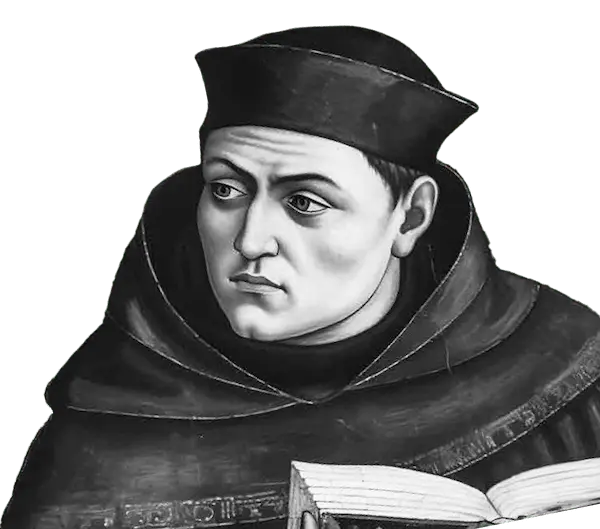
Thomas Aquinas Commentary
John 3
"Now there was a man of the Pharisees, named Nicodemus, a ruler of the Jews: the same came unto him by night, and said to him, Rabbi, we know that thou art a teacher come from God; for no one can do these signs that thou doest, except God be with him. Jesus answered and said unto him, Verily, verily, I say unto thee, Except one be born anew, he cannot see the kingdom of God. Nicodemus saith unto him, How can a man be born when he is old? can he enter a second time into his mother`s womb, and be born? Jesus answered, Verily, verily, I say unto thee, Except one be born of water and the Spirit, he cannot enter into the kingdom of God! That which is born of the flesh is flesh; and that which is born of the Spirit is spirit." — John 3:1-6 (ASV)
Previously, the Evangelist showed Christ’s power in relation to changes affecting nature;This is an allusion to the miracle at Cana, where Jesus transformed water into wine. See C. 2, L. 1. here he shows it in relation to our reformation by grace, which is his principal subject. Reformation by grace comes about through spiritual generation and by the conferring of benefits on those regenerated.
First, he treats of spiritual generation.
Second, he treats of the spiritual benefits divinely conferred on the regenerated, beginning with, after these things was a festival day of the Jews (John 5:1).
Regarding the first point, he does two things:
- First, he treats of spiritual regeneration in relation to the Jews.
- Second, he treats of the spreading of the fruits of this regeneration to foreign peoples, beginning with, when Jesus therefore understood that the Pharisees had heard (John 4:1).
Concerning the first of these, he does two things:
- First, he explains spiritual regeneration with words.
- Second, he completes it with deeds, beginning with, after these things Jesus and his disciples came into Judean territory (John 3:22).
Regarding the first of these, he does three things:
- First, he shows the need for a spiritual regeneration.
- Second, he shows its quality, beginning with, Nicodemus said to him: how can a man be born when he is old?
- Third, he shows its mode and nature, beginning with, Nicodemus answered and said to him: how can these things be done? (John 3:9).
Regarding the first of these, he does two things:
- First, he mentions the occasion for showing this need.
- Second, he shows the need itself for this regeneration, beginning with, Jesus answered, and said to him: amen, amen I say to you, unless a man be born again.
The occasion was presented by Nicodemus; hence he says, and there was a man of the Pharisees named Nicodemus. And he describes him based on his person, the time, and his statements.
He describes his person in three ways. First, as to his religion, because he was a Pharisee, hence he says, there was a man of the Pharisees. For there were two sects among the Jews: the Pharisees and the Sadducees. The Pharisees were closer to Christian beliefs, for they believed in the resurrection and acknowledged the existence of spiritual beings. The Sadducees, on the other hand, disagree more with us, for they believed neither in the resurrection to come nor in the existence of spirits. The former were called Pharisees, as if separated from the others. And because their opinion was more credible and nearer to the truth, it was easier for Nicodemus to be converted to Christ. I lived as a Pharisee, according to the strictest sect of our religion (Acts 26:5).
As to his name, he says, named Nicodemus, which means “victor,” or “the victory of the people.” This signifies those who overcame the world through faith by being converted to Christ from Judaism. This is the victory that overcomes the world, our faith (1 John 5:4).
Third, as to his rank he says, a member of the Sanhedrin. For although our Lord did not choose the wise or powerful or those of high birth at the beginning—so that the power of the faith would not be attributed to human wisdom and power—not many of you are learned in the worldly sense, not many powerful, not many of high birth. But God chose the simple ones of the world (1 Corinthians 1:26). Still, he willed to convert some of the wise and powerful to himself at the very beginning.
He did this so that his doctrine would not be held in contempt, as if accepted exclusively by the lowly and uneducated, and so that the number of believers would not be attributed to the simplicity and ignorance of the converts rather than to the power of the faith. However, he did not will that a large number of those converted to him be powerful and of high birth, lest, as has been said, it should be ascribed to human power and wisdom. And so it says, many of the chief men also believed in him (John 12:42), among whom was this Nicodemus. The rulers of the people have come together (Psalms 46:10).
Then he describes him as to the time, saying, this man came to Jesus at night.
In regard to this, it should be noted that in Scripture the time is mentioned in connection with certain persons in order to indicate their knowledge or the condition of their actions. Here a dark time is mentioned, when it says he came at night. For the night is dark and suited to the state of mind of Nicodemus, who did not come to Jesus free of fear and anxiety, but in fear. He was one of those of whom it is said that they believed in him; but because of the Pharisees they did not confess him, that they might not be cast out of the synagogue (John 12:42). For their love was not perfect, so it continues, for they loved the glory of men more than the glory of God (John 12:43).
Furthermore, night was appropriate to his ignorance and the imperfect understanding he had of Christ: the night has passed, and day is at hand. So let us cast off the works of darkness (Romans 13:12); they have not known or understood; they are walking in darkness (Psalms 81:5).
Then he is described by his statements, when he says that Nicodemus said to Jesus: Rabbi, we know that you are a teacher come from God. Here he affirms Christ’s office as teacher when he says, Rabbi, and his power of acting, saying, for no man can do these signs which you do, unless God is with him. In both remarks he says what is true, but he does not go far enough.
He is right in calling Jesus Rabbi, that is, Teacher, because, you call me Master, and Lord; and you say well, for so I am (John 13:13). For Nicodemus had read what was written: children of Zion, rejoice, and be joyful in the Lord your God, because he has given you a teacher of justice (Joel 2:23).
But he says too little, because he says that Jesus came as a teacher from God, but is silent on whether he is God. For to come as a teacher from God is common to all good church leaders: I will give you shepherds after my own heart, and they will feed you with knowledge and doctrine (Jeremiah 3:15). Therefore, this is not unique to Christ, even though Christ taught in a manner unlike other men. For some teachers teach only from without, but Christ also instructs from within, because he was the true light, which enlightens every man (John 1:9). Thus he alone gives wisdom: I will give you an eloquence and a wisdom (Luke 21:15), and this is something that no mere man can say.
He affirms his power because of the signs he saw. It is as if to say: I believe that you are a teacher come from God, for no man can do these signs which you do. And he is speaking the truth, because the signs which Christ did cannot be worked except by God, and because God was with him: he who sent me is with me (John 8:29). But he says too little, because he believed that Christ did not perform these signs through his own power, but by relying on the power of another, as though God were with him not by a unity of essence but merely by an infusion of grace. But this is false, because Christ performed these signs not by an external power but by his own, for the power of God and of Christ is one and the same. It is similar to what the woman says to Elijah: because of this I know that you are a man of God (1 Kings 17:24).
Then when he says that Jesus answered, amen, amen, I say to you, he establishes the necessity for spiritual regeneration because of the ignorance of Nicodemus. And so he says, amen, amen.
Here we should note that this word amen is a Hebrew word frequently employed by Christ; hence, out of reverence for him, no Greek or Latin translator dared to translate it. Sometimes it means the same as “true” or “truly,” and sometimes the same as “so be it.” Thus we have in the Psalms “so be it,” where the Hebrew has “amen, amen” (Psalms 71:19; Psalms 88:53; 106).
But John is the only Evangelist who duplicates this word. The reason for this is that the other Evangelists are concerned mainly with matters pertaining to the humanity of Christ. Since these are easier to believe, they need less reinforcement. John, however, deals chiefly with things pertaining to the divinity of Christ. Since these are hidden and remote from human knowledge and experience, they require a greater formal declaration.
Next, we should point out that at first glance this answer of Christ seems to be entirely unrelated to Nicodemus’s statement. For what connection is there between Nicodemus’s statement, Rabbi, we know that you are a teacher come from God, and the Lord’s reply, unless a man is born again, he cannot see the kingdom of God?
But we should note, as has already been stated, that Nicodemus, having an imperfect opinion about Christ, affirmed that he was a teacher and performed these signs as a mere man. And so the Lord wishes to show Nicodemus how he might arrive at a deeper understanding of him. The Lord might have done so with an argument, but because this might have resulted in a quarrel—and the opposite was prophesied about him: he will not quarrel (Isaiah 42:2)—he wished to lead him to a true understanding with gentleness. It is as if to say: It is not strange that you regard me as a mere man, because one cannot know these secrets of the divinity unless he has achieved a spiritual regeneration. And this is what he says: unless a man is born again, he cannot see the kingdom of God.
Here we should point out that since vision is an act of life, then according to the diverse kinds of life there will be a diversity of vision. There is a sensory life which some living things share in common, and this life has a sensory vision or knowledge. There is also a spiritual life, by which a person is made like God and other holy spirits, and this life enjoys a spiritual vision. Now spiritual things cannot be seen by the senses: the sensual man does not perceive those things that pertain to the Spirit of God (1 Corinthians 2:14), but they are perceived by spiritual vision: no one knows the things of God but the Spirit of God (1 Corinthians 2:11). So the apostle says: you did not receive the spirit of slavery, putting you in fear again, but the spirit of adoption (Romans 8:15). And we receive this spirit through a spiritual regeneration: he saved us by the cleansing of regeneration in the Holy Spirit (Titus 3:5).
Therefore, if spiritual vision comes only through the Holy Spirit, and if the Holy Spirit is given through a cleansing of spiritual regeneration, then it is only by a cleansing of regeneration that we can see the kingdom of God. Thus he says, unless a man is born again of water and the Holy Spirit, he cannot enter the kingdom of God. It is as if to say: It is not surprising if you do not see the kingdom of God, because no one can see it unless he receives the Holy Spirit, through whom one is reborn a son of God.
It is not only the royal throne that pertains to a kingdom, but also the things needed for governing it, such as the royal dignity, royal favors, and the way of justice by which the kingdom is established. Hence he says, he cannot see the kingdom of God, that is, the glory and dignity of God, the mysteries of eternal salvation which are seen through the justice of faith: the kingdom of God is not food and drink (Romans 14:17).
Now in the Old Testament there was a spiritual regeneration, but it was imperfect and symbolic: all were baptized into Moses, in the cloud and in the sea (1 Corinthians 10:2), that is, they received baptism in symbol. Accordingly, they did see the mysteries of the kingdom of God, but only symbolically: seeing from afar (Hebrews 11:13). But in the New Testament there is a manifest spiritual regeneration, although imperfect, because we are renewed only inwardly by grace, but not outwardly by incorruption: although our outward nature is wasting away, yet our inward nature is being renewed day by day (2 Corinthians 4:16). And so we do see the kingdom of God and the mysteries of eternal salvation, but imperfectly, for as it says, now we see in a mirror, in an obscure manner (1 Corinthians 13:12).
But there is perfect regeneration in heaven, because we will be renewed both inwardly and outwardly. And therefore we shall see the kingdom of God in a most perfect way: but then we will see face to face (1 Corinthians 13:12); and when he appears we will be like him, because we will see him as he is (1 John 3:2).
It is clear, therefore, that just as one does not have bodily vision unless he is born, so one cannot have spiritual vision unless he is reborn. And corresponding to the threefold regeneration, there is a threefold kind of vision.
Note that the Greek word is not “again,” but anōthen, that is, “from above,” which Jerome translated as again to suggest addition. And this is the way Jerome understood the saying, unless one is born again. It is as if he were saying: unless one is reborn once more through a supernatural generation.
Chrysostom, however, says that to be born from above is peculiar to the Son of God, because he alone is born from above: he who came from above is above all (John 3:31).John Chrysostom, Commentary on Saint John, hom. 26, ch. 1. And Christ is said to be born from above both regarding time (if we may speak this way), because he was begotten from eternity—before the daystar I begot you (Psalms 109:3)—and regarding the principle of his generation, because he proceeds from the heavenly Father: I came down from heaven, not to do my own will, but the will of him who sent me (John 6:38). Therefore, because our regeneration is in the likeness of the Son of God, according to: those whom he foreknew he predestined to become conformed to the image of his Son (Romans 8:29), and because that generation is from above, our generation also is from above. This is true regarding time, because of our eternal predestination—he chose us in him before the foundation of the world (Ephesians 1:4)—and regarding its being a gift of God: no man can come to me, unless the Father, who has sent me, draws him (John 6:44); and you have been saved by the grace of God (Ephesians 2:5).
Then when he says, Nicodemus said to him: how can a man be born when he is old? he gives the manner of and the reason for this spiritual regeneration.
- First, the doubt of Nicodemus is set forth.
- Second, Christ’s response is given, at Jesus answered: amen, amen I say to you.
Regarding the first point, we should note that: the sensual man does not perceive those things that pertain to the Spirit of God (1 Corinthians 2:14). And so because Nicodemus was still carnal and worldly, he was unable to grasp what was said to him except in a carnal way. Consequently, what the Lord said to him about spiritual regeneration, he understood as carnal generation. And this is what he says: how can a man be born when he is old?
We should note here, according to Chrysostom, that Nicodemus wanted to object to what was said by the Savior.John Chrysostom, Commentary on Saint John, hom. 25, ch. 1. But his objection is foolish, because Christ was speaking of spiritual regeneration, and he is objecting in terms of carnal generation. In the same way, all arguments brought against the articles of faith are foolish, since they are not in accord with the meaning of Sacred Scripture.
Nicodemus objected to the Lord’s statement that a man must be born again based on two ways in which this seemed impossible. One way was because of the irreversibility of human life, for a man cannot return to infancy from old age. Hence we read, I am walking on a path, namely, this present life, by which I will not return (Job 16:23). And it is from this point of view that he says, how can a man be born when he is old? As if to say: Shall he become a child once more so that he can be reborn? He will not return again to his home, and his place will not know him any more (Job 7:10).
The second way regeneration seemed impossible was because of the mode of carnal generation. For in the beginning, when a man is generated, he is small in size, so that his mother’s womb can contain him. But later, after he is born, he continues to grow and reaches such a size that he cannot be contained within his mother’s womb. And so Nicodemus says, can he enter a second time into his mother’s womb and be born again? As if to say: He cannot, because the womb cannot contain him.
But this does not apply to spiritual generation. For no matter how spiritually old a man might become through sin—because I kept silent, all my bones grew old (Psalms 31:3)—he can, with the help of divine grace, become new: your youth will be renewed like the eagle’s (Psalms 102:5). And no matter how large he is, he can enter the spiritual womb of the Church by the sacrament of baptism. And it is clear what that spiritual womb is; otherwise it would never have been said: from the womb, before the daystar, I begot you (Psalms 109:3).
Yet there is a sense in which his objection applies. For just as a man, once he is born according to nature, cannot be reborn, so once he is born in a spiritual way through baptism, he cannot be reborn, because he cannot be baptized again: one Lord, one faith, one baptism (Ephesians 4:5).
Following this, when it says Jesus answered, the response of Christ is given.
Concerning this, he does three things:
- He answers the arguments of Nicodemus by showing the nature of regeneration.
- He explains this answer with a reason, at that which is born of the flesh, is flesh.
- He explains it with an example, at do not wonder that I said to you, you ought to be born again (John 3:7).
He answers the objections by showing that he is speaking of a spiritual regeneration, not a carnal one. And this is what he says: unless a man is born again of water and the Holy Spirit, he cannot enter into the kingdom of God. It is as if to say: You are thinking of a carnal generation, but I am speaking of a spiritual generation.
Note that above he had said, he cannot see the kingdom of God, while here he says, he cannot enter into the kingdom of God, which is the same thing. For no one can see the things of the kingdom of God unless he enters it; and to the extent that he enters, he sees. I will give him a white stone upon which is written a new name, which no one knows but he who receives it (Revelation 5:5).
Now there is a reason why spiritual generation comes from the Spirit. It is necessary that the one who is born be born in the likeness of the one who gives birth; but we are regenerated as sons of God, in the likeness of his true Son. Therefore, it is necessary that our spiritual regeneration come about through that by which we are made like the true Son. And this comes about by our having his Spirit: if any one does not have the Spirit of Christ, he is not his (Romans 8:9); by this we know that we abide in him, and he in us: because he has given us of his Spirit (1 John 4:13). Thus spiritual regeneration must come from the Holy Spirit. You did not receive the spirit of slavery, putting you in fear again, but the spirit of adoption (Romans 8:15); it is the Spirit that gives life (John 6:64).
Water, too, is necessary for this regeneration, and for three reasons.
- First, because of the condition of human nature. For man consists of soul and body, and if the Spirit alone were involved in his regeneration, this would indicate that only the spiritual part of man is regenerated. Hence in order that the flesh also be regenerated, it is necessary that, in addition to the Spirit through whom the soul is regenerated, something bodily be involved, through which the body is regenerated; and this is water.
- Second, water is necessary for the sake of human knowledge. For, as Dionysius says, divine wisdom so disposes all things that it provides for each thing according to its nature.Pseudo-Dionysius, The Divine Names , ch. 4, n. 33. Now it is natural for man to know; and so it is fitting that spiritual things be conferred on men in such a way that they may know them: so that we may know what God has given us (1 Corinthians 2:12). But the natural manner of this knowledge is that man knows spiritual things by means of sensible things, since all our knowledge begins with the senses. Therefore, in order that we might understand what is spiritual in our regeneration, it was fitting that there be in it something sensible and material, that is, water, through which we understand that just as water washes and cleanses the exterior in a bodily way, so through baptism a man is washed and cleansed inwardly in a spiritual way.
- Third, water was necessary so that there might be a correspondence of causes. For the cause of our regeneration is the incarnate Word: he gave them power to be made the sons of God (John 1:12). Therefore it was fitting that in the sacraments, which have their efficacy from the power of the incarnate Word, there be something corresponding to the Word, and something corresponding to the flesh, or body. And spiritually speaking, this is water when the sacrament is baptism, so that through it we may be conformed to the death of Christ, since we are submerged in it during baptism as Christ was in the womb of the earth for three days: we are buried with him by baptism (Romans 6:4).
Further, this mystery was suggested in the first production of things, when the Spirit of God hovered over the waters (Genesis 1:2). But a greater power was conferred on water by contact with the most pure flesh of Christ; because in the beginning water brought forth living, moving creatures, but since Christ was baptized in the Jordan, water has yielded spiritual souls.
It is clear that the Holy Spirit is God, since he says, unless a man is born again of water and the Holy Spirit. For he also says: who are born not of blood, nor of the will of the flesh, nor of the will of man, but of God (John 1:13). From this we can form the following argument: he from whom men are spiritually reborn is God; but men are spiritually reborn through the Holy Spirit, as it is stated here; therefore, the Holy Spirit is God.
Two questions arise here. First, if no one enters the kingdom of God unless he is born again of water, and if the fathers of old were not born again of water, for they were not baptized, then they have not entered the kingdom of God.
The second is that since baptism is of three kinds—that is, of water, of desire, and of blood—and many have been baptized in the latter two ways, who we say have entered the kingdom of God immediately (even though they were not born again of water), it does not seem to be true to say that unless a man is born again of water and the Holy Spirit, he cannot enter the kingdom of God.
The answer to the first is that rebirth or regeneration from water and the Holy Spirit takes place in two ways: in reality and in symbol. Now the fathers of old, although they were not reborn with a true rebirth, were nevertheless reborn with a symbolic rebirth, because they always had a sign perceptible to the senses in which true rebirth was prefigured. So according to this, thus reborn, they did enter the kingdom of God, after the ransom was paid.
The answer to the second is that those who are reborn by a baptism of blood and desire, although they do not have regeneration in fact, they do have it in desire. Otherwise, neither would the baptism of blood mean anything nor could there be a baptism of the Spirit. Consequently, in order that a person may enter the kingdom of heaven, it is necessary that there be a baptism of water in fact, as in the case of all baptized persons; or in desire, as in the case of the martyrs and catechumens, who are prevented by death from fulfilling their desire; or in symbol, as in the case of the fathers of old.
It might be remarked that it was from this statement, unless a man is born again of water and the Holy Spirit, that the Pelagians derived their error that children are baptized not in order to be cleansed from sin, since they have none, but in order to be able to enter the kingdom of God.
But this is false, because as Augustine says in his book, The Baptism of Children, it is not fitting for an image of God—that is, man—to be excluded from the kingdom of God except for some obstacle, which can be nothing but sin.Augustine, The Punishment and Forgiveness of Sins and the Baptism of Little Ones bk. 1, ch. 30. Therefore, there must be some sin, namely, original sin, in children who are excluded from the kingdom.
Then when he says, that which is born of flesh, is flesh, he proves by reason that it is necessary to be born of water and the Holy Spirit. And the reasoning is this: no one can reach the kingdom unless he is made spiritual; but no one is made spiritual except by the Holy Spirit; therefore, no one can enter the kingdom of God unless he is born again of the Holy Spirit.
So he says, that which is born of flesh, is flesh, that is, birth according to the flesh makes one be born into the life of the flesh: the first man was from the earth, earthly (1 Corinthians 15:47); and that which is born of the Spirit, that is, from the power of the Holy Spirit, is spirit, that is, spiritual.
Note, however, that the preposition “of” sometimes designates a material cause, as when I say that a knife is made “of” iron; sometimes it designates an efficient cause, as when I say that a house was built “by” a carpenter. Accordingly, the phrase, that which is born of flesh, is flesh, can be understood according to either efficient or material causality. As an efficient cause, because a power existing in flesh is productive of generation; and as a material cause, because some carnal element in animals makes up the animal generated. But nothing is said to be made “of” spirit in a material sense, since spirit is unchangeable, whereas matter is the subject of change; but it is said in the sense of efficient causality.
According to this, we can discern a threefold generation. One is materially and effectively from the flesh, and is common to all who exist according to the flesh. Another is effectively from the Spirit, and according to it we are reborn as sons of God through the grace of the Holy Spirit and are made spiritual. The third is midway: that is, only materially from the flesh but effectively from the Holy Spirit. And this is true in the unique case of Christ, because he was born deriving his flesh materially from the flesh of his mother, but effectively from the Holy Spirit: what she has conceived is of the Holy Spirit (Matthew 1:20). Therefore, he was born holy: The Holy Spirit will come upon you, and the power of the Most High will overshadow you. And so the Holy One who will be born from you, will be called the Son of God (Luke 1:35).
"Marvel not that I said unto thee, Ye must be born anew. The wind bloweth where it will, and thou hearest the voice thereof, but knowest not whence it cometh, and whither it goeth: so is every one that is born of the Spirit. Nicodemus answered and said unto him, How can these things be? Jesus answered and said unto him, Art thou the teacher of Israel, and understandest not these things? Verily, verily, I say unto thee, We speak that which we know, and bear witness of that which we have seen; and ye receive not our witness. If I told you earthly things and ye believe not, how shall ye believe if I tell you heavenly things? And no one hath ascended into heaven, but he that descended out of heaven, [even] the Son of man, who is in heaven. And as Moses lifted up the serpent in the wilderness, even so must the Son of man be lifted up; that whosoever believeth may in him have eternal life." — John 3:7-15 (ASV)
Above, in His instruction on spiritual generation, the Lord presented a reason; here He gives an example. For we see that Nicodemus was troubled when he heard that that which is born of the Spirit, is spirit (John 3:6). And so the Lord says to him, do not wonder that I said to you, you must be born again.
Here we should note that there are two kinds of surprise or astonishment. One is the astonishment of devotion, where someone, considering the great things of God, sees that they are incomprehensible to him, and so he is full of astonishment: the Lord on high is wonderful (Psalms 92:4); your testimonies are wonderful (Psalms 118:129). People should be encouraged, not discouraged, in this kind of astonishment.
The other is the astonishment of disbelief, when someone does not believe what is said. Thus it is said: they were astonished, and adds further on that they did not accept him (Matthew 13:54). The Lord diverts Nicodemus from this kind of astonishment by proposing an example, saying: the wind blows where it wills.
In the literal sense, these same words can be explained in two ways.
In the first way, according to Chrysostom, wind is taken to mean the literal wind: the winds of the storm that fulfill his word (Psalms 148:8). According to this interpretation, He says four things about the wind. First, the power of the wind, when He says, the wind blows where it wills. And if you say that the wind has no will, one may answer that will is taken to mean a natural appetite, which is nothing more than a natural inclination, about which it is said: he created the weight of the wind (Job 28:25).
Second, He tells the evidence for the wind, when He says, and you hear its sound, where sound refers to the sound the wind makes when it strikes a body. Of this we read: the sound of your thunder was in the whirlwind (Psalms 76:19).
Third, He mentions the origin of the wind, which is unknown; so He says, but you do not know where it comes from, that is, from where it starts: he brings forth the winds out of his storehouse (Psalms 134:7).
Fourth, He mentions the wind’s destination, which is also unknown; so He says, or where it goes, that is, where it remains. And He applies this similarity to the subject under discussion, saying, so it is with every man who is born of the Spirit. It is as if to say: If the wind, which is a physical thing, has a hidden origin and an unknown course, why are you surprised that you cannot understand the process of spiritual regeneration?
Augustine objects to this explanation and says that the Lord was not speaking here about the wind when He said, the wind blows where it wills, for we know where each of the winds comes from and where it goes. For Auster comes from the south and goes to the north; Boreas comes from the north and goes to the south. Why, then, does the Lord say of this wind, but you do not know where it comes from or where it goes?
One may answer that there are two ways in which the source of the wind might be unknown. First, in a general sense: in this way, it is possible to know where it comes from—that is, from which direction of the world, for example, that Auster comes from the south, and where it goes, that is, to the north. Second, in a particular sense: in this way, it is not known where the wind comes from—that is, at which precise place it originated, or where it goes—that is, exactly where it stops. And almost all the Greek Fathers agree with this explanation by Chrysostom.
Alternatively, wind is taken to mean the Holy Spirit. According to this, He mentions four things about the Holy Spirit. First, His power, saying, the wind blows where it wills, because by the free use of His power, He breathes where He wills and when He wills, instructing hearts: one and the same Spirit does all these things, distributing to each as he wills (1 Corinthians 12:11). This refutes the error of Macedonius, who thought that the Holy Spirit was a servant of the Father and the Son. But then He would not be breathing where He willed, but where He was commanded.
Second, He mentions the evidence for the Holy Spirit, when He says, and you hear its sound; today, if you hear his voice, do not harden your hearts (Psalms 94:8).
Chrysostom objects to this and says that this cannot apply to the Holy Spirit. For the Lord was speaking to Nicodemus, who was still an unbeliever and thus not fit to hear the voice of the Holy Spirit.
We may answer this, with Augustine, that the Holy Spirit has a twofold voice. One is the voice by which He speaks inwardly in a person’s heart, and only believers and the saints hear this voice: I will hear what the Lord God says within me (Psalms 84:9). The other is the voice by which the Holy Spirit speaks in the Scriptures or through those who preach: for it is not you who speak, but the Holy Spirit who is speaking through you (Matthew 10:20). And this voice is heard by unbelievers and sinners.
Third, He refers to the origin of the Holy Spirit, which is hidden; thus He says, but you do not know where it comes from, although you hear its voice. This is because the Holy Spirit proceeds from the Father and the Son: when the Paraclete comes whom I will send you from the Father, the Spirit of truth, who proceeds from the Father (John 15:26). But the Father and the Son dwell in inaccessible light, whom no man has seen or is able to see (1 Timothy 6:16).
Fourth, He gives the destination of the Holy Spirit, which is also hidden; and so He says, you do not know... where it goes, because the Spirit leads one to a hidden end: eternal happiness. Thus it is said that the Holy Spirit is the pledge of our inheritance (Ephesians 1:14). And again, the eye has not seen, nor has the ear heard, nor has the heart of man conceived, what God has prepared for those who love him (1 Corinthians 2:9). Alternatively, you do not know where it comes from means how the Spirit enters a person, or where it goes means to what perfection He may lead him: if he comes toward me, I will not see him (Job 9:11).
So it is with every man who is born of the Spirit, that is, they are like the Holy Spirit.
This is no wonder, for as He had said before, that which is born of the Spirit, is spirit (John 3:6), because the qualities of the Holy Spirit are present in the spiritual person, just as the qualities of fire are present in burning coal.
Therefore, the four qualities of the Holy Spirit mentioned above are found in one who has been born of the Holy Spirit. First, he has freedom: where the Spirit of the Lord is, there is freedom (2 Corinthians 3:17), for the Holy Spirit leads us to what is right—your good Spirit will lead me to the right path (Psalms 142:10)—and frees us from the slavery of sin and the law: the law of the Spirit, of life in Christ, has set me free (Romans 8:2).
Second, we receive an indication of him through the sound of his words. When we hear them, we know his spirituality, for it is out of the abundance of the heart that the mouth speaks (Matthew 12:34).
Third, he has an origin and an end that are hidden, because no one can judge a spiritual person: the spiritual man judges all things, and he himself is judged by no one (1 Corinthians 2:15).
Alternatively, you do not know where it comes from refers to the source of his spiritual birth—baptismal grace. Or where it goes refers to that of which he is made worthy—eternal life, which remains concealed from us.
Then the cause and reason for spiritual regeneration are set forth.
First, a question is asked by Nicodemus.
Second, the Lord’s answer is given, at Jesus answered and said to him.
From this, it is apparent that Nicodemus, still dull and thinking like a Jew on a purely sensory level, was unable to understand the mysteries of Christ despite the examples and explanations given. And so he asks, how can these things be done?
There are two reasons why one may ask a question. Some question out of disbelief, as Zechariah did, saying: how will I know this? For I am an old man, and my wife is advanced in age (Luke 1:18); he confounds those who search into mysteries (Isaiah 40:23). Others, however, question from a desire to learn, as the Blessed Virgin did when she said to the angel: how shall this be, since I do not know man? (Luke 1:34). It is these who are instructed. Therefore, because Nicodemus asked from a desire to learn, he deserved to be instructed.
And this is what follows: Jesus answered, and said to him: you are a teacher in Israel.
First the Lord rebukes him for his slowness.
Second, He answers his question, at and no man has ascended into heaven.
He rebukes him for his slowness based on three things. First, the condition of the person to whom He is speaking, when He says, you are a teacher in Israel. Here the Lord did not rebuke him to insult him. Rather, because Nicodemus presumed upon his own knowledge and was still relying on his status as a teacher, the Lord wished to make him a temple of the Holy Spirit by humbling him: for whom will I have regard? For he who is humble and of contrite spirit (Isaiah 66:2). He says, you are a teacher, because while it is tolerable for a simple person not to grasp profound truths, in a teacher it deserves rebuke. And so He says, you are a teacher—that is, of the letter that kills (2 Corinthians 3:6)—and you do not know these things?—that is, spiritual things. For although you ought to be teachers by now, you yourselves need to be taught again (Hebrews 5:12).
You might say that the Lord would have been just in rebuking Nicodemus if He had spoken to him about matters of the Old Law and Nicodemus did not understand them; but He spoke to him about the New Law.
I answer that the things the Lord says about spiritual generation are contained in the Old Law, although in a figurative way, as it is said: all were baptized into Moses, in the cloud and in the sea (1 Corinthians 10:2). And the prophets also said this: I will pour clean water upon you, and you will be cleansed from all your uncleanness (Ezekiel 36:25).
Second, He rebukes him for his slowness because of the character of the one speaking. For it is tolerable if one does not accept the statements of an ignorant person, but it is reprehensible to reject the statements of a man who is wise and possesses great authority. And so He says, amen, amen I say to you, that we speak what we know, and we testify what we have seen. A qualified witness must base his testimony on hearing or sight: what we have seen and heard (1 John 1:3). Therefore, the Lord mentions both: we speak what we know, and we testify what we have seen. Indeed, the Lord as man knows all things: Lord, you know all things (John 21:17); the Lord, whose knowledge is holy, knows clearly . Furthermore, He sees all things by His divine knowledge: I speak that which I have seen with my Father (John 8:38).
He speaks in the plural—we know and we have seen—to suggest the mystery of the Trinity: the Father who abides in me, he does the works (John 14:10). Alternatively, we know means, “I and others who have been made spiritual,” because no one knows the Father but the Son, and he to whom the Son wishes to reveal him (Matthew 11:27). But you do not receive our testimony, which is so proven and solid. And no man receives his testimony (John 3:32).
Third, He rebukes him for his slowness because of the nature of the things being discussed. For it is not unusual for someone to fail to grasp difficult matters, but it is inexcusable not to grasp easy things. So He says, if I have spoken of earthly things, and you do not believe, how will you believe if I speak to you of heavenly things? It is as if to say: If you do not grasp these easy things, how will you be able to understand the work of the Holy Spirit? What is on earth we find difficult, and who will search out the things in heaven .
But one might object that the preceding text does not show that the Lord spoke of earthly things to Nicodemus.
I answer, according to Chrysostom, that the Lord’s statement, if I have spoken to you of earthly things, refers to the example of the wind. For the wind, being something that can be generated and corrupted, is regarded as an earthly thing.
Or one might say, again according to Chrysostom, that the spiritual generation which is given in baptism is heavenly as to its source, which sanctifies and regenerates; but it is earthly regarding its subject, for the one regenerated—man—is of the earth.
Or one might answer, according to Augustine, that we must understand this in reference to what Christ said earlier: destroy this temple (John 2:19), which is earthly, because He said this about the temple of His body, which He had taken from the earth. If I have spoken to you of earthly things, and you do not believe, how will you believe if I speak to you of heavenly things? It is as if to say: If you do not believe in a spiritual generation that occurs in time, how will you believe in the eternal generation of the Son? Or, if you do not believe what I tell you about the power of my body, how will you believe what I tell you about the power of my divinity and about the power of the Holy Spirit?
Jesus replied and said to him: you are a teacher. Here He answers the question.
First, He lays down the causes of spiritual regeneration.
Second, He explains what He says, at for God so loved the world that he gave his only begotten Son (John 3:16).
Now there are two causes of spiritual regeneration: namely, the mystery of the incarnation of Christ, and His Passion.
So first, He treats the incarnation.
Second, He treats the Passion, at just as Moses lifted up the serpent.
Here we should consider, first of all, how this answer of Christ is an adequate reply to the question of Nicodemus. For earlier, when the Lord was speaking of the Spirit, He said, but you do not know where it comes from or where it goes. We understand from this that spiritual regeneration has a hidden source and a hidden end. Now, the things in heaven are hidden from us: who will search out the things in heaven? . Therefore, the meaning of Nicodemus’s question, how can these things be done?, is this: How can something come from the secret things of heaven or go to the secret things of heaven? So, before answering, the Lord stated this interpretation of the question, saying, how will you believe if I speak to you of heavenly things? And immediately He begins to show whose prerogative it is to ascend into heaven: namely, the one who came down from heaven: he who descended is he who ascended (Ephesians 4:10). This is true even in natural things, where each body tends toward a place according to its origin or nature. And so in this way it can come about that someone, through the Spirit, may go to a place which carnal persons do not know—that is, by ascending into heaven, if this is done through the power of the One who descended from heaven. For He descended so that, in ascending, He might open a way for us: he ascends, opening the way before them (Micah 2:13).
Some have fallen into error because of His saying, he who descended from heaven, the Son of man. For since “Son of man” designates human nature, which is composed of soul and body, then because He says that the Son descended from heaven, Valentinus wanted to maintain that Christ even took His body from heaven and thus passed through the Virgin without receiving anything from her, as water passes through a pipe. The result would be that His body was neither of an earthly substance nor taken from the Virgin. But this is contrary to the statement of the Apostle: who was made from the seed of David according to the flesh (Romans 1:3).
On the other hand, Origen said that He descended from heaven with respect to His soul, which, Origen says, had been created along with the angels from the very beginning, and that later this soul descended from heaven and took flesh from the Virgin. But this also conflicts with the catholic faith, which teaches that souls do not exist before their bodies.
Therefore, we should not understand that the Son of Man descended from heaven according to His human nature, but only according to His divine nature. For since in Christ there is one suppositum, or hypostasis, or person of two natures—the divine and the human—then regardless of which of these two natures this suppositum is named from, both divine and human things can be attributed to Him. For we can say that the Son of Man created the stars and that the Son of God was crucified. But the Son of God was crucified, not according to His divine nature, but according to His human nature; and the Son of Man created the stars according to His divine nature. And so, in things that are said of Christ, the distinction should not be made regarding the subject of the statement (that about which they are said), because divine and human things are said of God and man interchangeably. Instead, a distinction must be made regarding the basis of the statement (that according to which they are said), because divine things are said of Christ according to His divine nature, while human things are said according to His human nature. Thus, to descend from heaven is said of the Son of Man, not according to His human nature, but according to His divine nature, according to which it was appropriate for Him to have been from heaven before the incarnation, as is said, heaven belongs to the Lord (Psalms 113:16).
He is said to have come down, but not by physical movement from one place to another, because then He would not have remained in heaven. For nothing that moves physically remains in the place from which it moves. And so, to exclude physical movement, He adds, who is in heaven. It is as if to say: He descended from heaven in such a way that He was still in heaven. For He came down from heaven without ceasing to be above, yet He assumed a nature that is from below. And because He is not enclosed or confined by His body, which exists on earth, He was, according to His divinity, in heaven and everywhere. Therefore, to indicate that He is said to have come down in this way—because He assumed a nature—He said, the Son of man descended, that is, insofar as He became the Son of Man.
Alternatively, as Hilary says, it can be said that He came down from heaven with respect to His body: not that the material of Christ’s body came down from heaven, but that the power that formed it was from heaven.
But why does He say, and no man has ascended into heaven, except he who descended from heaven, the Son of man, who is in heaven? For have not Paul and Peter and the other saints gone up? We have a house in the heavens (2 Corinthians 5:1).
I answer that no one goes up into heaven except Christ and His members—that is, those believers who are righteous. Accordingly, the Son of God came down from heaven so that, by making us His members, He might prepare us to ascend into heaven—now, indeed, in hope, but later in reality. He has raised us up, and has given us a place in heaven in Christ Jesus (Ephesians 2:6).
Here He mentions the mystery of the Passion, by virtue of which baptism has its efficacy: we who have been baptized into Christ Jesus, have been baptized into his death (Romans 6:3).
In this regard, He does three things.
First, He gives a symbol for the Passion.
Second, the manner of the Passion.
Third, the fruit of the Passion.
He takes the symbol from the Old Law to adapt to Nicodemus’s understanding, so He says, just as Moses lifted up the serpent in the desert, so must the Son of man be lifted up. This refers to when the Lord, faced with the Jewish people saying, we are sick of this useless food, sent serpents to punish them (Numbers 21:5). When the people came to Moses and he interceded with the Lord, the Lord commanded that, as a remedy, they make a serpent of bronze. This was to serve both as a remedy against those serpents and as a symbol of the Lord’s Passion. Hence, it says that this bronze serpent was lifted up as a sign (Numbers 21:9). Now, it is characteristic of serpents that they are poisonous, but this was not so for the serpent of bronze, although it was a symbol of a poisonous serpent. So, too, Christ did not have sin, which is also a poison—sin, when it is fully developed, brings forth death (James 1:15)—but He had the likeness of sin: God sent his own Son, in the likeness of sinful flesh (Romans 8:3). And thus Christ had the effect of the serpent against the uprising of inflamed sinful desires.
He shows the manner of the Passion when He says, so must the Son of man be lifted up; this refers to being lifted up on the cross. So when it says later, the Son of man must be lifted up, it is added, he said this signifying what death he should die (John 12:33–34). He willed to die lifted up, first, to cleanse the heavens. For since He had cleansed the things on earth by the holiness of His life, the things of the air were left to be cleansed by His death: through him he should reconcile all things to himself, whether on earth or in the heavens, making peace through his blood (Colossians 1:20). Second, to triumph over the demons who prepare for war in the air: the prince of the power of the air (Ephesians 2:2). Third, He wished to die lifted up to draw our hearts to Himself: I, if I am lifted up from the earth, will draw all things to myself (John 12:32). Fourth, because in the death of the cross He was lifted up in the sense that He triumphed over His enemies there; so it is not called a death, but a “lifting up”: he will drink from the stream on the way, therefore he will lift up his head (Psalms 109:7). Fifth, He willed to die lifted up because the cross was the reason for His being lifted up—that is, exalted: he became obedient to the Father even to death, the death of the cross; on account of which God has exalted him (Philippians 2:8).
Now, the fruit of Christ’s Passion is eternal life. Hence, He says, so that whoever believes in him—by good works—may not perish but have eternal life. This fruit corresponds to the fruit of the symbolic serpent. For whoever looked upon the bronze serpent was freed from its poison, and his life was preserved. But he who looks upon the lifted-up Son of Man and believes in the crucified Christ is freed from the poison of sin. All who live and believe in me will never die (John 11:26), and they are preserved for eternal life. These are written, so that you may believe... and so that believing, you may have life in his name (John 20:31).
"For God so loved the world, that he gave his only begotten Son, that whosoever believeth on him should not perish, but have eternal life. For God sent not the Son into the world to judge the world; but that the world should be saved through him. He that believeth on him is not judged: he that believeth not hath been judged already, because he hath not believed on the name of the only begotten Son of God. And this is the judgment, that the light is come into the world, and men loved the darkness rather than the light; for their works were evil. For every one that doeth evil hateth the light, and cometh not to the light, lest his works should be reproved. But he that doeth the truth cometh to the light, that his works may be made manifest, that they have been wrought in God." — John 3:16-21 (ASV)
Above, the Lord assigned the coming down of the Son and the lifting up of the Son of Man as the cause of spiritual regeneration, and he explained its fruit, which is eternal life (John 3:13–15). But this fruit seemed unbelievable to people struggling with the inevitability of death. So now the Lord explains this.
First, he proves the greatness of the fruit from the greatness of God’s love.
Second, he rejects a potential reply, at for God did not send his Son into the world to judge the world.
Here we should note that the cause of all our good is the Lord and divine love. For to love is, properly speaking, to will good for someone. Therefore, since the will of God is the cause of all things, good comes to us because God loves us. God’s love is the cause of the good of nature: you love everything which exists . It is also the cause of the good of grace: I have loved you with an everlasting love, and so I have drawn you—that is, through grace (Jeremiah 31:3). But it is because of his great love that he gives us the good of glory.
So he shows us here, from four standpoints, that this love of God is the greatest. First, from the person of the one who loves, because it is God who loves, and immeasurably. So he says, for God so loved; he has loved the people; all the holy ones are in his hand (Deuteronomy 33:3). Second, from the condition of the one who is loved, because it is man, a bodily creature of the world, existing in sin: God shows his love for us, because while we were still his enemies, we were reconciled to God by the death of his Son (Romans 5:8). Thus he says, the world. Third, from the greatness of his gifts, for love is shown by a gift; as Gregory says, the proof of love is given by action. But God has given us the greatest of gifts, his only begotten Son, and so he says, that he gave his only begotten Son. God did not spare his own Son, but delivered him up for all of us (Romans 8:32).
He says his Son, meaning his natural, consubstantial Son, not an adopted son like those of whom the Psalmist says: I said: you are gods (Psalms 81:6). This shows that the opinion of Arius is false, for if the Son of God were a creature, as he said, the immensity of God’s love—revealed through the taking on of infinite goodness, which no creature can receive—could not have been shown in him. He further says only begotten to show that God does not have a love divided among many sons, but all of it is for that Son whom he gave to prove the immensity of his love: for the Father loves the Son and shows him all things that he himself does (John 5:20). Fourth, from the greatness of its fruit, because through him we have eternal life. Hence he says, so that whoever believes in him should not perish but have eternal life, which he obtained for us through the death of the cross.
But did God give his Son with the intention that he should die on the cross? He did indeed give him for the death of the cross, insofar as he gave him the will to suffer on it. And he did this in two ways. First, because as the Son of God he willed from eternity to assume flesh and to suffer for us; and this will he had from the Father. Second, because the will to suffer was infused into the soul of Christ by God.
Note that above, when the Lord was speaking about the descent that belongs to Christ according to his divinity, he called him the Son of God. This is because of the one suppositum of the two natures, as was explained previously. And so divine things can be said about the suppositum of the human nature, and human things can be said about the suppositum of the divine nature, but not with reference to the same nature. Rather, divine things are said with reference to the divine nature, and human things with reference to the human nature. Now the specific reason he here calls him the Son of God is that he presented that gift as a sign of the divine love, through which the fruit of eternal life comes to us. And so, he should be called by the name that indicates the power that produces eternal life; and this power is not in Christ as Son of man but as Son of God: this is the true God and eternal life (1 John 5:20); in him was life (John 1:4).
Note also that he says, should not perish. A person is said to perish when they are prevented from reaching the end for which they are destined. The end for which humanity is destined is eternal life, and as long as a person sins, they turn away from that end. And although while they are living, they cannot perish entirely in the sense that they cannot be restored, when they die in sin, then they perish completely: the way of the wicked will perish (Psalms 1:6).
He indicates the immensity of God’s love in saying, have eternal life, for by giving eternal life, he gives himself. For eternal life is nothing other than enjoying God. But to give oneself is a sign of great love: but God, who is rich in mercy, has brought us to life in Christ (Ephesians 2:5), that is, he gave us eternal life.
Here, the Lord addresses a potential objection. For in the Old Law it was promised that the Lord would come to judge: the Lord will come to judge (Isaiah 3:14). So someone might say that the Son of God had not come to give eternal life but in order to judge the world. The Lord rejects this.
First, he shows that he has not come to judge.
Second, he proves it, at he who believes in him is not judged.
So he says: the Son of God has not come to judge, because God did not send his Son, referring to his first coming, into the world to judge the world, but that the world might be saved through him. The same thing is said later: I came not to judge the world, but to save the world (John 12:47).
Now, a person’s salvation is to attain to God: my salvation is in God (Psalms 61:8). And to attain to God is to obtain eternal life; hence to be saved is the same as to have eternal life. However, because the Lord says, I came not to judge the world (John 12:47), people should not become lazy, abuse God’s mercy, or give themselves over to sin. For although in his first coming he did not come to judge but to forgive, in his second coming he will come to judge, not to forgive. At the appointed time I will judge with rigor (Psalms 75:2).
However, this seems to conflict with what is said: for judgment I came into the world (John 9:39).
I answer that there are two kinds of judgment. One is the judgment of distinction, and the Son has come for this in his first coming, because with his coming people are distinguished, some by blindness and some by the light of grace. The other is the judgment of condemnation, and he did not come for this in itself.
He now proves what he said, as if by a process of elimination, in the following way: whoever will be judged will be either a believer or an unbeliever. But I have not come to judge unbelievers, because they are already judged. Therefore, from the outset, God did not send his Son into the world to judge the world.
So first he shows that believers are not judged.
Second, that unbelievers are judged, at whoever does not believe is already judged.
He says, therefore, I came not to judge the world (John 12:47), because he did not come to judge believers, for he who believes in him is not judged with the judgment of condemnation. No one who believes in him with a faith formed by love is judged in this way: he will not come into judgment but passes from death to life (John 5:24). But he is judged with the judgment of reward and approval, of which the Apostle says: it is the Lord who judges me (1 Corinthians 4:4).
But will many believing sinners not be damned?
I answer that some heretics have said that no believer, however great a sinner he may be, will be damned. Instead, he will be saved because of his foundation of salvation—namely, his faith—although he may be permitted to suffer some punishment. They base their error on the Apostle’s statement: no one can lay a foundation other than the one that has been laid, that is, Jesus Christ (1 Corinthians 3:11); and further on: if a man’s building burns... he himself will be saved as one fleeing through fire (1 Corinthians 3:15).
But this view is clearly contrary to what the Apostle says: it is obvious what proceeds from the flesh: lewd conduct, impurity, licentiousness... those who do such things will not inherit the kingdom of God (Galatians 5:19–21).
Therefore, we must say that the foundation of salvation is not unformed faith, but faith that is formed and works through love. It is significant, therefore, that the Lord did not say, "he who believes in him," but whoever believes in him. This means that whoever, by believing, moves toward him through love is not judged, because such a person does not sin mortally, which would remove the foundation. Alternatively, one could say that anyone who acts sinfully does not truly believe: they profess to know God, but they deny him by their actions (Titus 1:16). But the one who acts worthily shows their faith by their works ; such a person is not judged and not condemned for unbelief.
Here he shows that unbelievers are judged.
First he makes the statement.
Second, he explains it at: and this is the judgment.
Regarding the first point, we should note that Christ does not say, "he who does not believe will be judged," but rather that he is already judged. This can be explained in three ways. First, whoever does not believe is not judged in the future because he is already judged, not in fact, but in God’s foreknowledge; that is, it is already known to God that he will be condemned: the Lord knows who are his (2 Timothy 2:19).
In another way, whoever does not believe is already judged means that the very fact that he does not believe is his condemnation. For not to believe is not to adhere to the light—which is to live in darkness, and this is a great condemnation: all were bound with one chain of darkness . What kind of joy can I have, I who sit in darkness and do not see the light of heaven? .
In a third way, whoever does not believe, being already condemned, displays the obvious reason for his condemnation. This is like saying that a person who is proven guilty of a capital crime is already dead, even before the sentence of death has been passed on him, because he is as good as dead.
Hence, in passing judgments there is a twofold order. Some will be sentenced by a trial; such are the ones who have something not deserving of condemnation, namely, the good of faith—that is, believing sinners. But unbelievers, whose reason for condemnation is obvious, are sentenced without a trial; and of these it is said, whoever does not believe is already judged. In judgment the wicked will not stand (Psalms 1:5), that is, stand in trial.
It should be noted that to be judged is the same as to be condemned; and to be condemned is to be shut out from salvation, to which only one road leads: the name of the Son of God. There is no other name under heaven given to men, by which we are saved (Acts 4:12); O God, save me by your name (Psalms 54:1). Therefore, those who do not believe in the Son of God are cut off from salvation, and the cause of their damnation is evident.
Here the Lord explains his statement that unbelievers have an evident cause for their condemnation.
First, he sets forth the sign which shows this.
Second, the appropriateness of this sign: for everyone who does evil hates the light.
In the sign he presents, he does three things. First, he mentions the gift of God. Second, the perversity of mind in unbelievers. Third, the cause of this perversity.
So he says: it is abundantly clear that whoever does not believe is already judged. This is apparent from the kindness of God, because the light has come into the world. For people were in the darkness of ignorance, and God destroyed this darkness by sending a light into the world so that they might know the truth: I am the light of the world: he who follows me does not walk in darkness but will have the light of life (John 8:12); to enlighten those who sit in darkness and in the shadow of death (Luke 1:79).
Now the light came into the world because people could not come to it, for he dwells in inaccessible light, whom no man has seen or is able to see (1 Timothy 6:16). It is also clear from the perversity of mind in unbelievers who loved darkness more than the light; that is, they preferred to remain in the darkness of ignorance rather than be instructed by Christ: they have rebelled against the light (Job 24:13); woe to you who substitute darkness for light, and light for darkness (Isaiah 5:20).
The cause of this perversity is that their works were evil. Such works do not conform to the light but seek the darkness: let us cast off the works of darkness (Romans 13:12), that is, sins, which seek the darkness. Those who sleep, sleep at night (1 Thessalonians 5:7); the eye of the adulterer watches for the darkness (Job 24:15). Now, a person does not believe the light because they withdraw from it, finding it unpleasant.
But do all unbelievers perform evil works? It seems not, for many gentiles, such as Cato and others, have acted virtuously.
I answer that it is one thing to act from virtue, and another to act from a natural aptitude or disposition. For some act well because of their natural disposition, because their temperament is not inclined toward the opposite. And even unbelievers can act well in this way. For example, one may live chastely because he is not assailed by sinful desire; and the same for the other virtues. But those who act well from virtue do not abandon virtue, despite inclinations to the contrary vice, because of the rightness of their reason and the goodness of their will; and this is characteristic of believers.
Alternatively, one might answer that although unbelievers may do good things, they do them not for the love of virtue but out of vainglory. Furthermore, they did not do all things well, for they failed to give God the worship he is due.
Then when he says, for everyone who does evil hates the light, he shows the appropriateness of the sign he used.
First, with respect to those who are evil.
Second, with respect to the good, at but he who practices truth comes to the light.
So he says: they did not love the light because their works were evil. This is plain because everyone who does evil hates the light. He does not say "did," but rather does. This is because if someone has acted evilly but has repented and is sorry, seeing that they have done wrong, such a person does not hate the light but comes to it. But everyone who does evil—that is, persists in evil—is not sorry, does not come to the light, but hates it; not because it reveals truth, but because it exposes a person’s sins.
For an evil person still wants to know the light and the truth, but he hates to be exposed by it. If the dawn suddenly appears, they regard it as the shadow of death (Job 24:17). And so he does not come to the light, and this is so that his works may not be exposed. For no one who is unwilling to abandon evil wants to be rebuked; such rebuke is fled from and hated. They hate the one who rebukes at the city gate (Amos 5:10); a corrupt man does not love the one who rebukes him (Proverbs 15:12).
Now he shows the same things with respect to the good, who practice the truth—that is, who perform good works. For truth is found not only in thought and words, but also in deeds. Every one of these comes to the light.
But did anyone practice the truth before Christ? It seems not, for to practice the truth is to not sin, and before Christ all have sinned (Romans 3:23).
I answer that a person practices the truth in himself when he is displeased with the evil he has done. After leaving the darkness, he keeps himself from sin, and repenting of the past, comes to the light with the special intention that his works may be made manifest.
But this conflicts with the teaching that no one should publicize the good they have done; this was a reason why the Lord rebuked the Pharisees.
I answer that it is permissible to want one’s works to be seen by God so that they may be approved: it is not the one who commends himself who is approved, but the one whom God commends (2 Corinthians 10:18); my witness is in heaven (Job 16:19). It is also permissible to want them to be seen by one’s own conscience, so that one may rejoice: our glory is this: the testimony of our conscience (2 Corinthians 1:12). But it is blameworthy to want them to be seen by others in order to be praised or for one’s own glory.
Yet, holy people desire their good works to be known to others for the sake of God’s glory and the good of the faith: let your light so shine before men that they may see your good works, and glorify your Father in heaven (Matthew 5:16). Such a person comes to the light, so that his works may be made manifest, because they are done in God—that is, according to God’s commandment or through the grace of God. For whatever good we do, whether avoiding sin, repenting of what has been done, or performing good works, it is all from God: you have accomplished all our works for us (Isaiah 26:12).
"After these things came Jesus and his disciples into the land of Judea; and there he tarried with them, and baptized. And John also was baptizing in Enon near to Salim, because there was much water there: and they came, and were baptized. For John was not yet cast into prison. There arose therefore a questioning on the part of John`s disciples with a Jew about purifying. And they came unto John, and said to him, Rabbi, he that was with thee beyond the Jordan, to whom thou hast borne witness, behold, the same baptizeth, and all men come to him." — John 3:22-26 (ASV)
Previously, the Lord gave us His teaching on spiritual regeneration in words; here He completes His teaching through action, by baptizing.
First, two kinds of baptism are mentioned.
Second, a question about their relationship is raised, at and there arose a question.
Regarding the first, two things are done.
First, mention is made of the baptism of Christ.
Second, of the baptism of John, at and John also was baptizing.
He says first, after these things, that is, the teaching on spiritual regeneration, Jesus and his disciples came into Judean territory.
There is a question here about the literal meaning. For previously, the Evangelist had said that the Lord had come from Galilee to Jerusalem, which is in Judean territory, where He taught Nicodemus. So how, after teaching Nicodemus, can He come into Judea, since He was already there?
Two answers are given to this. According to Bede, after His discussion with Nicodemus, Christ went to Galilee, and after remaining there for a time, returned to Judea. And so, after these things Jesus and his disciples came into Judean territory should not be understood to mean that He came into Judea immediately after His talk with Nicodemus.
Another explanation, given by Chrysostom, is that He did come into the territory of Judea immediately after this discussion. For Christ wanted to preach where the people gathered, so that many might be converted: I have declared your justice in the great assembly (Psalms 39:10); I have spoken openly to the world (John 18:20). Now there were two places in Judea where the Jewish people gathered: Jerusalem, where they went for their feasts, and the Jordan, where they gathered on account of John’s preaching and his baptism. And so the Lord used to visit both places. After the feast days were over in Jerusalem, which is in one part of Judea, He went to another part, to the Jordan, where John was baptizing.
As for the moral sense, Judea means confession, to which Jesus came, for Christ visits those who confess their sins or speak in praise of God: Judea became his sanctuary (Psalms 113:2). He stayed there, because He did not make a merely temporary visit: we will come to him, and will make our abode with him (John 14:23). And there He baptizes, that is, cleanses from sin, because unless one confesses his sins he does not obtain forgiveness: he who hides his sins will not prosper (Proverbs 28:13).
Then when he says, and John also was baptizing in Aenon, the Evangelist presents the baptism of John.
In regard to this he does four things:
He presents the person who is baptizing.
He presents the place of the baptism.
He presents its fruit.
He presents the time.
John is the person who is baptizing, so he says, John also was baptizing.
There is a question about this: since John’s baptism was ordained for the baptism of Christ, it seems that John should have stopped baptizing when Christ started to baptize, just as a symbol does not continue when the reality arrives.
Three reasons are given for this.
The first is in relation to Christ, for John baptized in order that Christ might be baptized by him. But it was not fitting that John baptize only Christ; otherwise, on this point alone, it might seem that John’s baptism was superior to Christ’s. Accordingly, it was expedient that John baptize others before Christ, because before Christ’s teaching was to be made public it was necessary that people be prepared for Christ by John’s baptism. In this way, the baptism of John is related to the baptism of Christ as the religious instruction given to prepare candidates for baptism is related to true baptism. It was likewise important that John baptize others after he had baptized Christ, so that John’s baptism would not seem to be worthless. For the same reason, the practice of the ceremonies of the old law was not abolished as soon as the reality came, but as Augustine says, the Jews could lawfully observe them for a time.
The second reason relates to John. For if John had stopped baptizing at once after Christ began baptizing, it might have been thought that he stopped out of envy or anger. And because, as the Apostle says, we ought to look after what is good, not only before God, but also before all men (Romans 12:17), this is the reason why John did not stop at once.
The third reason relates to John’s disciples, who were already beginning to act like zealots toward Christ and His disciples because they were baptizing. So if John had entirely stopped baptizing, it would have provoked his disciples to an even greater zeal and opposition to Christ and His disciples. For even while John continued baptizing, they were hostile to Christ’s baptism, as later events showed. And so John did not stop at once: take care that your freedom does not become a hindrance to those who are weak (1 Corinthians 8:9).
The place of his baptism was at Aenon near Salim, where there was much water. Another name for Salim is Salem, which is the village from which the king Melchizedek came. It is called Salim here because among the Jews a reader may use any vowel he chooses in the middle of his words; hence it made no difference to the Jews whether it was pronounced Salim or Salem. He added, where there was much water, to explain the name of this place, Aenon, which is the same as water.
The fruit of his baptism is the remission of sins; thus he says, and they came and were baptized, that is, cleansed, for great crowds came to John (Matthew 3:5 and Luke 3:7).
The time is indicated when he says, for John was not yet cast into prison. He says this so that we may know that he began his narrative of Christ’s life before the other Evangelists, for the others began their account only from the time of John’s imprisonment. So it is said: when Jesus heard that John had been arrested, he withdrew into Galilee (Matthew 4:12). And so, because they had passed over the things that Christ did before John’s imprisonment, John, who was the last to write a Gospel, supplied these omissions. He suggests this when he says: for John was not yet cast into prison.
Note that by divine arrangement it came about that when Christ began to baptize, John did not continue his own baptizing and preaching for very long, in order not to create disunion among the people. But he was granted a little time so that it would not seem that he deserved to be repudiated, as was mentioned before. Again, by God’s arrangement, it came about that after the faith had been preached and the faithful converted, the temple was utterly destroyed, so that all the devotion and hope of the faithful could be directed to Christ.
Then when he says, there arose a question, he brings in the issue of the two baptisms.
The issue is mentioned.
It is brought to John’s attention, at and they came to John.
The issue is resolved, at John answered and said (John 3:27).
Therefore, because two were baptizing, as was said, namely Christ and John, the disciples of John, zealous for their teacher, started a controversy over this. And this is what he says, there arose a question, that is, a dispute, between some of John’s disciples, who were the first to raise the issue, and the Jews, whom the disciples of John had rebuked for preferring Christ to John because of the miracles He did, while John did not do any miracles.
The issue was concerning purification, that is, baptizing. The cause of their envy and the reason they started the controversy was the fact that John sent those he baptized to Christ, but Christ did not send those He baptized to John. It seemed from this, and perhaps the Jews even said so, that Christ was greater than John. Thus, the disciples of John, not yet having become spiritual, quarreled with the Jews over the baptisms. While there is envy and fighting among you, are you not carnal? (1 Corinthians 3:3).
They referred this issue to John; hence he says, they came to John. If we examine this closely, we see that they were trying to incite John against Christ. Indeed, they are like the gossip and the double-tongued: those who gossip and are double-tongued are accursed, for they disturb many who are at peace .
So they bring up four things calculated to set John against Christ.
They recall the previous unimportant status of Christ.
They recall the good John did for Him.
They recall the role which Christ took on.
They recall the loss to John because of Christ’s new role.
They recall Christ’s unimportance when they say, he who was with you, as one of your disciples, and not the one you were with as your teacher. For there is no good reason for envy if honor is shown to one who is greater; rather, envy is aroused when honor is given to an inferior: I have seen slaves on horses, and princes walking like slaves (Ecclesiastes 10:7); I called my servant, and he did not answer me (Job 19:16). For a master is more disturbed at the rebellion of a servant and a subject than of anyone else.
Second, they remind John of the good he did Christ. Thus they do not say, “the one whom you baptized,” because they would then be admitting the greatness of Christ which was shown during His baptism when the Holy Spirit came upon Him in the form of a dove and in the voice of the Father speaking to Him. So they say, to whom you gave testimony. In other words, “We are very angry that the one you made famous and admired dares to repay you in this way”: the one who ate my bread has lifted his heel against me (Psalms 40:10). They said this because those who seek their own glory and personal profit from their office become dejected if their office is taken over by someone else.
And so third, they even add that Christ took over John’s office for Himself, when they say, behold he baptizes, that is, He is exercising your office; and this also disturbed them very much. For we generally see that men of the same craft are envious and underhanded with respect to one another; a potter envies another potter, but does not envy a carpenter. So, even teachers who are seeking their own honor become sad if another teaches the truth. In opposition to them, Gregory says: the mind of a holy pastor wishes that others teach the truth which he cannot teach all by himself. So also Moses: would that all the people might prophesy (Numbers 11:29).
Yet they were not satisfied with merely disturbing John; rather, they report something that should really excite him, that is, the loss that John seemed to be having because of the office Christ took over. They state this when they say: and all men come to him, that is, the ones who used to come to you. In other words, they have rejected and disowned you, and now are all going to His baptism. It is clear from the testimony of Matthew that before this, they used to go to John: what did you go out to the desert to see? (Matthew 11:7). By such envy the Pharisees were moved against Christ; and they said that the whole world is gone after him (John 12:19). But John was not moved against Christ by this: he was not a reed shaken by the wind, as Matthew says (Matthew 11:7). This follows from his response to the question submitted to him.
"John answered and said, A man can receive nothing, except it have been given him from heaven. Ye yourselves bear me witness, that I said, I am not the Christ, but, that I am sent before him. He that hath the bride is the bridegroom: but the friend of the bridegroom, that standeth and heareth him, rejoiceth greatly because of the bridegroom`s voice: this my joy therefore is made full. He must increase, but I must decrease. He that cometh from above is above all: he that is of the earth is of the earth, and of the earth he speaketh: he that cometh from heaven is above all. What he hath seen and heard, of that he beareth witness; and no man receiveth his witness." — John 3:27-32 (ASV)
Here we have John’s answer to the question his disciples presented to him. Their question contained two points: a complaint about the office Christ took on, and so they said, behold he baptizes (John 3:26); and a complaint about Christ’s increasing fame and reputation among the people, for which they said, and all men come to him (John 3:26). Accordingly, John directs his answer to these two complaints.
First, he answers the complaint about the office Christ took on.
Second, he answers the complaint about Christ’s increasing reputation, with the words, he must increase, but I must decrease.
Regarding the first complaint, he does three things.
First, he shows the source of Christ’s office and of his own.
Second, he shows their difference, beginning with, you yourselves bear witness to me.
Third, he shows how Christ and he are related to these offices, with the words, he who has the bride is the bridegroom.
Regarding the first point, note that although John’s disciples raise their question maliciously and so deserve to be rebuked, John nevertheless does not sharply rebuke them, and this is because of their imperfection. For he feared that they might be provoked by a rebuke, leave him, and, joining forces with the Pharisees, publicly harass Christ. In acting this way, he was putting into practice what is said of the Lord: the bruised reed he will not break (Isaiah 42:3).
Again, we should also note that he begins his answer not by telling them what is great and wonderful about Christ, but what is common and obvious; he did this because of their envy. For since the excellence of a person provokes others to envy, if John had stressed Christ’s excellence at once, he would have fed the fire of their envy.
Thus he states something unpretentious, saying, a man cannot receive anything, unless it is given to him from heaven. He said this to them in order to inspire them with reverence. It is as if to say: If all men are going to him, it is God’s doing, because a man cannot receive anything in the order of perfection and goodness unless it is given to him from heaven. Therefore, if you oppose him, you oppose God. If this plan or work is from men, it will fail (Acts 5:38). This is the way Chrysostom explains it, applying these words to Christ.
Augustine, on the other hand, does much better when he refers them to John. A man cannot receive anything, unless it is given to him from heaven; as if to say: You are zealous on my behalf and you want me to be greater than Christ, but that has not been given to me, and I do not wish to usurp it: no one takes this honor on himself (Hebrews 5:4). This is the origin of their offices.
Then the difference between their offices follows, when he says, you yourselves bear witness to me. It is as if to say: From the testimony I gave about him, you can know the office committed to me by Christ. For you yourselves bear witness to me—that is, you can testify to the fact—that I said: I am not the Christ, as he declared openly and did not deny (John 1:20). But this I said: that I am sent before him, as a herald before a judge. And so from my own testimony you can know my office, which is to go before Christ and prepare the way for him: there was a man sent from God, whose name was John (John 1:6). But the office of Christ is to judge and to preside.
If we look at this closely, we can see that John, like a skillful debater, answers them with their own arguments: I judge you out of your own mouth (Luke 19:22).
He shows how John is related to his own office when he says: he who has the bride is the bridegroom.
First, he gives a simile.
Second, he applies it to his own situation, with the words, therefore, my joy is fulfilled.
With respect to the first, he does two things.
First, he gives a simile that applies to Christ.
Second, one that applies to himself, with the words, but the friend of the bridegroom.
As to the first, we should note that on a human level, it is the bridegroom who regulates, governs, and possesses the bride. Hence he says, he who has the bride is the bridegroom. Now, the groom is Christ: like a bridegroom coming out of his bridal chamber (Psalms 19:5). His bride is the Church, which is joined to him by faith: I will espouse you to myself in faith (Hosea 2:20). In keeping with this figure, Zipporah said to Moses: you are a spouse of blood to me (Exodus 4:25). We read of the marriage: the marriage of the Lamb has come (Revelation 19:7). So, because Christ is the groom, he has the bride, that is, the Church; but my part is only to rejoice in the fact that he has the bride.
Consequently he says, but the friend of the bridegroom, who stands and hears him, rejoices with joy. Although John had said earlier that he was not worthy to untie the strap of Jesus’ sandal, he here calls himself the friend of Jesus in order to show the faithfulness of his love for Christ. For a servant does not act in a spirit of love regarding the things that pertain to his master, but in a spirit of servitude. A friend, however, seeks his friend’s interests out of love and faithfulness. Hence a faithful servant is like a friend to his master: if you have a faithful servant, treat him like yourself . Indeed, it is proof of a servant’s faithfulness when he rejoices in the prosperity of his master and when he obtains not his own good, but his master’s. And so because John did not keep the bride entrusted to his care for himself, but for the bridegroom, we can see that he was a faithful servant and a friend of the bridegroom. It is to suggest this that he calls himself the bridegroom’s friend.
Those who are friends of the truth should act in the same way, not turning the bride entrusted to their care to their own advantage and glory, but treating her honorably for the honor and glory of the groom; otherwise they would not be friends of the groom but adulterers. This is why Gregory says that a servant who is sent by the groom with gifts for the bride is guilty of adulterous thoughts if he himself desires to please the bride. This is not what the Apostle did: I espoused you to one husband in order to present you to Christ as a chaste virgin (2 Corinthians 11:2). And John did the same, because he did not keep the bride, that is, the faithful, for himself, but brought them to the groom, that is, to Christ.
And so by saying, the bridegroom’s friend, he suggests the faithfulness of his love.
Further, he suggests his constancy when he says, stands, firm in friendship and faithfulness, not exalting himself above what he really is: I will stand my watch (Habakkuk 2:1); Be steadfast and unchanging (1 Corinthians 15:58); a faithful friend, if he is constant, is like another self .
He suggests his attention when he says, and hears him, that is, attentively considers the way in which the groom is united to the bride. For according to Chrysostom, these words explain the manner of this marriage, for it is accomplished through faith, and faith comes through hearing (Romans 10:17). Or, he hears him, that is, reverently obeys him, by caring for the bride according to the commands of the groom: I will listen to him as my master (Isaiah 50:4). This is in opposition to those evil prelates who do not follow Christ’s command in governing the Church.
Likewise, he hints at his spiritual joy when he says, rejoices with joy because of the bridegroom’s voice. And he says, rejoices with joy, to show the truth and perfection of his joy. For one whose rejoicing is not over what is good does not rejoice with true joy. And so, if it made me sad that Christ, who is the true groom, preaches to the bride, that is, the Church, I would not be a friend of the groom; but I am not sad.
Hence, therefore, my joy is fulfilled, namely, in seeing what I have desired for so long: the groom speaking clearly to his bride. Or, therefore, my joy is fulfilled, that is, brought to its perfect and due measure, when the bride is united to the groom, because I now have my grace and I have completed my work: I will rejoice in the Lord, and I will take joy in God, my Jesus (Habakkuk 3:18).
Then when he says, he must increase, but I must decrease, he answers their complaint about the increasing esteem given to Christ.
First, he notes that such an increase is fitting.
Second, he gives the reason for it, with the words, he who came from above is above all.
So he says: You say that all the people are flocking to him, that is, to Christ, and therefore that he is growing in honor and esteem among the people. But I say that this is not unfitting, because he must increase, not in himself, but in relation to others, in the sense that his power becomes more and more known. And I must decrease in the reverence and esteem of the people, for esteem and reverence are not due to me as if I were the principal figure, but they are due to Christ. Therefore, since he has come, the signs of honor cease for me but increase for Christ, just as with the coming of the prince, the office of the ambassador ceases: when the perfect comes, what is imperfect will pass away (1 Corinthians 13:10).
And just as in the heavens the morning star appears and gives light before the sun, but when the sun comes its light ceases, so John went before Christ and is compared to the morning star: can you bring out the morning star? (Job 38:32).
This is also signified in John’s birth and in his death. In his birth, because John was born when the days were beginning to grow shorter, while Christ was born when the days were beginning to grow longer, on the twenty-fifth of December. Regarding his death, it is signified because John died cut short by beheading, but Christ died lifted up on the cross.
In the moral sense, this should take place in each one of us. He, that is, Christ, must increase in you; that is, you should grow in the knowledge and love of Christ, because the more you are able to grasp him by knowledge and love, the more Christ increases in you, just as the more one improves in seeing the same light, the more that light seems to increase.
From this, it is necessary that as people advance, their self-esteem decreases. For the more one knows of the divine greatness, the less one thinks of human smallness, which is why it is said: the revelation spoken by the man close to God (Proverbs 30:1); and then follows: I am the most foolish of men, and the wisdom of men is not in me. I have heard you, but now I see you, and so I reprove myself, and do penance in dust and ashes (Job 42:5).
Then when he says, he who came from above is above all, he gives the reason for what he has just said. He does this in two ways.
First, on the basis of Christ’s origin.
Second, by considering Christ’s teaching, with the words, he who is of the earth is earthly, and he speaks of the earth.
Regarding the first, we should note that for something to be perfect, it must reach the goal set for it by its origin; for example, if one is born from a king, he should continue to progress until he becomes a king. Now Christ has an origin that is most excellent and eternal; therefore he must increase by the manifestation of his power, in relation to others, until it is recognized that he is above all things. Thus he says, he who came from above, that is, Christ, according to his divinity. No man has ascended into heaven, except he who descended from heaven (John 3:13); you are from below, and I am from above (John 8:23).
Or, he came from above regarding his human nature, that is, from the highest condition of human nature, by assuming it according to what was predominant in it in each of its states.
For it is considered according to three states. First is the state of human nature before sin; from this state he took his purity by assuming a flesh unmarked by the stain of original sin: a lamb without blemish (Exodus 12:5). The second state is after sin; from this he took his capacity to suffer and die by assuming the likeness of sinful flesh regarding its punishment, though it was not sinful regarding guilt: God sent his own Son in the likeness of sinful flesh (Romans 8:3). The third state is that of resurrection and glory; and from this he took the impossibility of sinning and the joy of soul.
Here we must be on guard against the error of those who say that something was left in Adam materially unmarked by the original stain, and that this was passed on to his descendants—for example, to the Blessed Virgin—and that Christ’s body was formed from this. This is heretical, because whatever existed in Adam in a material way was marked by the stain of original sin. Furthermore, the matter from which the body of Christ was formed was purified by the power of the Holy Spirit when he sanctified the Blessed Virgin.
He, who, as was said, came from above according to his divinity as well as his human nature, is above all, both by the eminence of His rank—the Lord is high above all nations (Psalms 113:4)—and by his authority and power: he has made him the head of the Church (Ephesians 1:22).
Now he gives the reason with regard to the teaching of Christ.
First, he describes the doctrine of Christ and its grandeur.
Second, he describes the difference in those who receive or reject this doctrine, with the words, and no man receives his testimony.
He does two things with respect to the first point.
First, he describes John’s doctrine.
Second, he describes the doctrine of Christ, with the words, he who came from above is above all.
As to the first, we should note that a person is known mainly by what he says: your accent gives you away (Matthew 26:73); out of the abundance of the heart the mouth speaks (Matthew 12:34). This is why the quality of a teaching or doctrine is considered according to the quality of its origin.
Accordingly, in order to understand the quality of John’s doctrine, we should first consider his origin. So he says, he who is of the earth, that is John, not only regarding the matter from which he was made, but also in his efficient cause, because the body of John was formed by a created power: they dwell in houses of clay, and have a foundation of earth (Job 4:19).
Second, we should consider the quality of John himself, which is earthly; and so he says, is of the earth.
Third, his teaching is described: he speaks of the earth. You shall speak out of the earth, and your speech shall be heard out of the ground (Isaiah 29:4).
But since John was full of the Holy Spirit while still in his mother’s womb, how can he be said to speak of earthly things?
I answer that, according to Chrysostom, John says he speaks of earthly things by comparison with the teaching of Christ. It is as if to say: The things I speak of are slight and inferior, as befits one of an earthly nature, in comparison to him in whom are hidden all the treasures of wisdom and knowledge (Colossians 2:3); as the heavens are high above the earth, so my ways are high above your ways (Isaiah 55:9).
Or we could say according to Augustine, and this is a better explanation, that we can consider what any person has of himself and what he has received from another. Now John and every mere human is, of himself, from the earth. Therefore, from this standpoint, he has nothing to speak of except earthly things. And if he does speak of divine things, it is because of a divine enlightenment: your heart has visions, but unless they come from the Almighty, ignore them . So the Apostle says, it is not I, but the grace of God which is with me (1 Corinthians 15:10); for it is not you who speak, but the Holy Spirit who is speaking through you (Matthew 10:20). Accordingly, as regards John, he is earthly and speaks of the earth. And if there was anything divine in him, it did not come from him, as he was the recipient, but from the one enlightening him.
Now he describes the doctrine of Christ. And he does three things.
First, he shows its origin, which is heavenly; hence he says, he who came from above is above all. For although the body of Christ was of the earth regarding the matter of which it was made, yet it came from heaven regarding its efficient cause, since his body was formed by divine power. It also came from heaven because the eternal and uncreated person of the Son came from heaven by assuming a body. And no man has ascended into heaven, except he who descended from heaven, the Son of man, who is in heaven (John 3:13).
Second, he shows the dignity of Christ, which is very great; so he says, is above all. This was explained above.
Third, he infers the dignity of Christ’s doctrine, which is completely certain, because he testifies to what he sees and to what he hears. For Christ, as God, is truth itself; but as man, he is its witness: for this I was born, and for this I came into the world, that I should give testimony to the truth (John 18:37). Therefore, he gives testimony to himself: you give testimony about yourself (John 8:13). And he testifies to what is certain, because his testimony is about what he has heard with the Father: the things that I have heard from him are the same that I speak to the world (John 8:26); what we have seen and heard (1 John 1:3).
Note that knowledge of a thing is acquired in one way through sight and in another way through hearing. By sight, knowledge is acquired by the thing itself being seen. By hearing, however, a thing is not known by its own voice being heard, but through the understanding of the one speaking. And so, because the Lord has knowledge that He has received from the Father, He says what he has seen, insofar as He proceeds from the essence of the Father, and what He has heard, insofar as He proceeds as the Word of the Father’s intellect.
Now, because among intellectual beings their act of being is different from their act of understanding, their knowledge through sight is different from their knowledge through hearing. But in God the Father, the act of being and the act of understanding are the same. Thus, in the Son, to see and to hear are the same.
Moreover, since even in one who sees there is not the essence of the thing seen in itself but only its likeness (just as in the hearer there is not the actual thought of the speaker but only an indication of it), the one who sees is not the essence of the thing itself, nor is the listener the very word expressed. In the Son, however, the very essence of the Father is received by generation, and He Himself is the Word. Therefore, in Him, to see and to hear are the same.
And so John concludes that since Christ’s doctrine has more grandeur and is more certain than his, one must listen to Christ rather than to him.
Jump to: