
Thomas Aquinas Commentary John 5
Thomas Aquinas Commentary
John 5
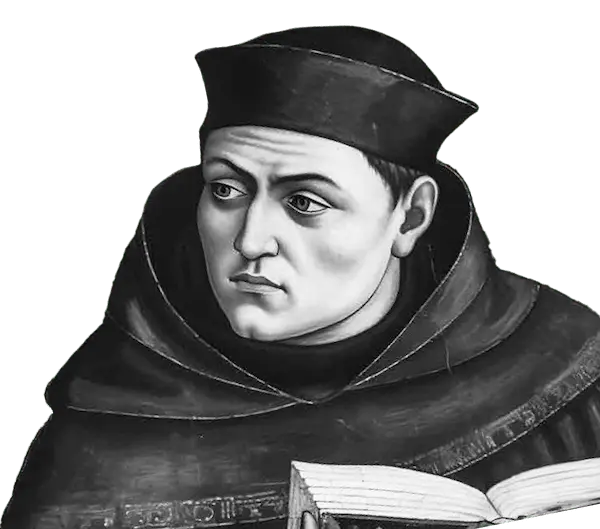
Thomas Aquinas Commentary
John 5
"After these things there was a feast of the Jews; and Jesus went up to Jerusalem. Now there is in Jerusalem by the sheep [gate] a pool, which is called in Hebrew Bethesda, having five porches. In these lay a multitude of them that were sick, blind, halt, withered, [waiting for the moving of the water.] [for an angel of the Lord went down at certain seasons into the pool, and troubled the water: whosoever then first after the troubling of the waters stepped in was made whole, with whatsoever disease he was holden.] And a certain man was there, who had been thirty and eight years in his infirmity. When Jesus saw him lying, and knew that he had been now a long time [in that case], he saith unto him, Wouldest thou be made whole? The sick man answered him, Sir, I have no man, when the water is troubled, to put me into the pool: but while I am coming, another steppeth down before me." — John 5:1-7 (ASV)
John 5:8: Jesus said to him, “Arise, take up your bed and walk.” [n. 716]
Above, our Lord dealt with spiritual rebirth; here He deals with the benefits God gives to those who are spiritually reborn. We see that parents give three things to those who are physically born from them: life, nourishment, and instruction or discipline. In the same way, those who are spiritually reborn receive these three things from Christ: spiritual life, spiritual nourishment, and spiritual teaching.
And so, three topics are considered here:
- The giving of spiritual life.
- The giving of spiritual food, beginning at after these things, Jesus went over the sea of Galilee, which is that of Tiberias (John 6:1).
- Spiritual teaching, beginning at after these things, Jesus walked in Galilee (John 7:1).
Regarding the first topic, the author does three things.
- He presents a visible sign in which he shows Christ’s power to produce and restore life. This is the usual practice in this Gospel: to always join some appropriate visible action to the teaching of Christ, so that what is invisible can be made known through the visible.
- He gives the occasion for this teaching, at and it was the Sabbath that day.
- He gives the teaching itself, at then Jesus answered and said to them: Amen, amen, I say to you, the Son cannot do anything of himself (John 5:19).
Concerning the visible sign, he does three things.
- The place of the miracle is given.
- The illness involved is described, at and there was a certain man there, having been under his infirmity thirty-eight years.
- The sick person is restored to health, at Jesus said to him: Arise, take up your bed and walk.
The place of this miracle is described in two ways: in general and in particular.
The general location is Jerusalem. Thus, he says, after this—that is, after the miracle performed in Galilee—there was a festival day of the Jews, which was Pentecost, according to Chrysostom. For when Christ went to Jerusalem previously, it was the Passover that was mentioned; now, on the following festival of Pentecost, Jesus went up to Jerusalem again. For as we read, the Lord commanded that all Jewish males be presented in the temple three times a year: on the festival days of the Passover, Pentecost, and the Dedication (Exodus 23:17).
There were two reasons why our Lord went up to Jerusalem for these festivals. First, so that He would not seem to oppose the Law, for He said Himself, I have not come to destroy the law, but to complete it (Matthew 5:17). Second, He went in order to draw the many people gathered there on the feast days to God through His signs and teaching: I will praise him in the midst of the people (Psalms 109:30); and again, I have declared your justice in the great assembly (Psalms 40:9). So Christ Himself says, I have spoken openly to the world (John 18:20).
The specific place of the miracle was the pool called the Sheep Pool; so he says, now there is a pond at Jerusalem, called the Sheep Pool. This is described in four ways: by its name, its structure, its occupants, and its power.
First, it is described by its name when he says, the Sheep Pool, for probaton is Greek for sheep. It was called the Sheep Pool because it was there that the priests washed the sacrificial animals, especially the sheep, which were used more than other animals. And so in Hebrew it was called Bethsaida, that is, “the house of sheep.” This pool was located near the temple and was formed from collected rainwater.
In its mystical sense, this pool, according to Chrysostom, prefigured Baptism. For the Lord, wishing to prefigure the grace of baptism in different ways, first chose water, for this washes the body from the uncleanness that came from contact with what was legally unclean (Numbers 19). Second, He gave this pool a power that expresses the power of Baptism even more vividly than water alone. It not only cleansed the body from its uncleanness but also healed it from its illness, for symbols are more expressive the closer they approach the reality.
Thus, it signified the power of Baptism. For just as this water, when applied to the body, had the power to heal its illness—not by its own nature, but from an angel—so the water of Baptism has the power to heal and cleanse the soul from sins: he loved us, and washed us from our sins (Revelation 1:5). This is why the Passion of Christ, prefigured by the sacrifices of the Old Law, is represented in Baptism: all of us who have been baptized into Christ Jesus, have been baptized into his death (Romans 6:3).
According to Augustine, the water in this pool signified the condition of the Jewish people, according to the verse, the waters are the peoples (Revelation 17:15). The Gentiles were not confined within the limits of the divine law, but each of them lived according to the vanity of his heart (Ephesians 4:17). The Jews, however, were confined under the worship of the one God: we were kept under the law, confined, until the faith was revealed (Galatians 3:23). Therefore, this water, confined to the pool, signified the Jewish people. And it was called the Sheep Pool because the Jews were the special sheep of God: we are his people, his sheep (Psalms 95:7).
The pool is described in its structure as having five porches, that is, surrounding it, so that a number of priests could stand and wash the bodies of the animals without inconvenience.
In the mystical sense, these five porticoes, according to Chrysostom, signify the five wounds in the body of Christ, about which we read: bring your hand here, and put it in my side, and do not be faithless, but believing (John 20:27). But according to Augustine, these five porticoes signify the five books of Moses.
The pool is also described by its occupants, for in these porticoes lay a great multitude of the sick, the blind, the lame and the withered, waiting for the motion of the water. The literal explanation is that afflicted people gathered because of the water's curative power. However, since the water did not always heal, nor could it heal many at once, it was inevitable that a large number would remain, waiting to be cured.
The mystical meaning of this, for Augustine, was that the Law was incapable of healing sins: it is impossible that sins be taken away by the blood of bulls and goats (Hebrews 10:4). The Law merely shed light on them, for the knowledge of sin comes from the law (Romans 3:20).
And so, subject to various illnesses, these people lay there, unable to be cured. They are described in several ways. First, by their posture: for there they lay, clinging to earthly things by their sins, because one who is lying down is in direct contact with the earth. He had compassion on them, for they were suffering, and lying like sheep without a shepherd (Matthew 9:36). But the just do not lie down; they stand upright, toward the things of heaven: they, that is, sinners, are bound, and have fallen down; but we, the just, have stood and are erect (Psalms 20:8).
Second, they are described by their number, for there was a great multitude: the evil are hard to correct, and the number of fools is infinite (Ecclesiastes 1:15); and, the road that leads to destruction is wide, and many go this way (Matthew 7:13).
Third, these sick people are described by their condition. The author mentions four things a person brings on himself through sin. First, a person ruled by sinful passions is made listless or feeble, and so he says, the sick. This is why Cicero calls certain passions of the soul, such as anger and sinful desire, illnesses of the soul. And the Psalm says: have mercy on me, O Lord, for I am weak (Psalms 6:2). Second, when a man’s passions rule and conquer him, his reason is blinded by consent; regarding this, he says, the blind, that is, through sins. Their own evil blinded them ; and, fire, that is, the fire of anger and sinful desire, fell on them, and they did not see the sun (Psalms 58:8). Third, a person who is feeble and blind is inconstant in his works and is, in a way, lame. So we read: the work of the wicked is unsteady (Proverbs 11:18). With respect to this the Evangelist says, the lame. How long will you be lame? (1 Kings 18:21). Fourth, a man who is thus feeble, blind in understanding, and lame in his actions becomes dry in his affections, in the sense that all the richness of devotion withers within him. This devotion is sought in the Psalm: may my soul be filled with fat and marrow (Psalms 63:5). With respect to this the Evangelist says, the withered. My strength is dried up like baked clay (Psalms 22:15).
But there are some so afflicted by the weariness of sin that they do not wait for the moving of the water, but wallow in their sins: they live in a great strife of ignorance, and they call so many and great evils peace . We read of such people: they are glad when they do evil, and rejoice in the worst of things (Proverbs 2:14). The reason for this is that they do not hate their sins; they do not sin from ignorance or weakness, but from malice. But others, who do not sin from malice, do not wallow in their sins but wait with desire for the moving of the water. So he says, waiting. Every day of my service I wait for my relief to come (Job 14:14). This is the way those in the Old Testament waited for Christ: I will wait for your salvation, O Lord (Genesis 49:18).
Finally, the power of the pool is described, for it healed all physical illnesses by virtue of an angel who came to it; so he says, and an angel of the Lord descended at certain times into the pond.
In certain ways, the power of this pool is like that of Baptism, and in other ways it differs.
It is similar, first, in that its power was unseen. The power of the water in this pool did not come from its own nature—otherwise it would have healed at all times. Its power was unseen, coming from an angel. So he says, and an angel of the Lord descended at certain times into the pond. The water of Baptism is like this in that, as mere water, it does not have the power to cleanse souls; this comes from the unseen power of the Holy Spirit, according to: unless a man is born again of water and the Holy Spirit, he cannot enter the kingdom of God (John 3:5). It is similar, in a second way, in its effect: for as the water of Baptism heals, so also the water of that pool healed. So he says, and whoever descended first into the pond after the motion of the water was made well. Furthermore, God gave that water the power to heal so that men, by washing, might learn through their bodily health to seek their spiritual health.
Yet the water of this pool differs from the water of Baptism in three ways.
- In the source of its power: the water in the pool produced health because of an angel, but the water of Baptism produces its effect by the uncreated power not only of the Holy Spirit, but of the entire Trinity. Thus, the entire Trinity was present at the baptism of Christ: the Father in the voice, the Son in person, and the Holy Spirit in the form of a dove. This is why we invoke the Trinity in our baptism.
- In its power: the water in the pool did not have a continuous power to cure, but only at certain times, while the water of Baptism has a permanent power to cleanse, according to: on that day a fountain will be open to the house of David, and to the inhabitants of Jerusalem, to cleanse the sinner and the unclean (Zechariah 13:1).
- As regards the number of people healed: only one person was cured when the water of this pool was moved, but all are healed when the water of Baptism is moved. And no wonder, for the power of the water in the pool, since it is created, is finite and has a finite effect. But in the water of Baptism there is an infinite power capable of cleansing an infinite number of souls, if there were such: I will pour clean water upon you, and you will be cleansed from all your uncleanness (Ezekiel 36:25).
According to Augustine, however, the angel signifies Christ, according to this reading: he will be called the angel of great counsel (Isaiah 9:6). Just as the angel descended at certain times into the pool, so Christ descended into the world at a time fixed by the Father: her time is near at hand, and her days shall not be prolonged (Isaiah 13:22); when the fullness of time had come, God sent his Son, made from a woman, made under the law (Galatians 4:4).
Again, just as the angel was not seen except by the motion of the water, so Christ was not known in His divinity, for if they had known, they would never have crucified the Lord of glory (1 Corinthians 2:8). For it is said: truly, you are a hidden God (Isaiah 45:15). And so the motion of the water was seen, but not the one who set it in motion, because, seeing the weakness of Christ, the people did not know of His divinity. And just as the one who went into the pool was healed, so a person who humbly believes in God is healed by His passion: justified by faith, through the redemption which is in Christ, whom God put forward as an expiation (Romans 3:24–25).
Only one was healed, because no one can be healed except in the unity of the Church: one Lord, one faith, one baptism (Ephesians 4:5). Therefore, woe to those who hate unity and divide people into sects.
Then, at and there was a certain man there, having been under his infirmity thirty-eight years, the Evangelist mentions the disability of a man who lay by the pool. Two points are made:
- We are told how long he was disabled.
- We are told why it was so long, at when Jesus had seen him lying there and knew that he had been there a long time.
He was disabled for a long time, for and there was a certain man there, having been under his infirmity thirty-eight years. This episode is very aptly mentioned: the man who could not be cured by the pool was to be cured by Christ, because those whom the Law could not heal, Christ heals perfectly, according to: God did what the law, weakened by the flesh, could not do: by sending his own Son in the likeness of sinful flesh, and as a sin-offering, he condemned sin in his flesh (Romans 8:3), and: perform new signs and wonders .
The number thirty-eight is well-suited to his disability, for we see it associated with sickness rather than with health. As Augustine says, the number forty signifies the perfection of justice, which consists in observing the Law. But the Law was given in ten precepts and was to be preached to the four corners of the world, or be completed by the four Gospels, according to: the end of the law is Christ (Romans 10:4). So since ten times four is forty, this number appropriately signifies perfect justice. Now if two is subtracted from forty, we get thirty-eight. These two are the two precepts of charity, by which all perfect justice is fulfilled. And so this man was sick because he had forty minus two; that is, his justice was imperfect, for on these two commandments all the law and the prophets depend (Matthew 22:40).
Now, at when Jesus had seen him lying there, the reason for the length of the man’s illness is considered. This involves two parts:
- The Lord’s question.
- The sick man’s answer, at the infirm man answered him.
John says, when Jesus had seen him, the man, lying there. Jesus saw him not only with His physical eyes, but also with the eyes of His mercy. This is the way David begged to be seen, saying: look at me, O Lord, and have mercy on me (Psalms 86:16). And Jesus knew that he had been there a long time in his disability—which was repugnant to the heart of Christ as well as to the sick man: a long illness is a burden to the physician ()—and said to him: Do you wish to be made well? He did not say this because He did not know the answer, for it was quite evident that the man wanted to be healed. He said it to arouse the sick man’s desire and to show his patience in waiting so many years to be cured of his sickness without giving up. We see from this that he was all the more worthy to be cured: act bravely, and let your heart be strengthened, all you who hope in the Lord (Psalms 31:24).
Jesus incites the man’s desires because we keep more securely what we acquire with desire, and we acquire it more easily. Knock, with your desire, and it will be opened to you (Matthew 7:7).
Note that in other situations the Lord requires faith: Do you believe that I can do this for you? (Matthew 9:28). But here He does not make any such demand. The reason is that the others had heard of the miracles of Jesus, of which this man knew nothing. And so Jesus does not ask for faith from him until after the miracle has been performed.
Then, at Lord, I have no man, the sick man’s answer is given. Two reasons are given for the length of his illness: his poverty and his weakness. Because he was poor, he could not afford a man to plunge him into the pool; so he says, Lord, I have no man who, when the water is troubled, might put me into the pond. For while I am coming, another goes down before me. Perhaps he thought, as Chrysostom says, that Christ might even help to put him into the water.
Someone else always reached the pool before him because he was weak and not able to move fast; so he says, for while I am coming, another goes down before me. He could say with Job: I cannot help myself (Job 6:13). This signifies that no mere man could save the human race, for all had sinned and needed the grace of God. Mankind had to wait for the coming of Christ, God and man, by whom it would be healed.
Now, at arise, take up your bed, we see the man restored to health, that is, the working of the miracle. This involves two parts:
- The Lord’s command.
- The man’s obedience, at and immediately the man was made well, and he took up his bed and walked.
The Lord commanded both the man’s nature and his will, for both are under the Lord’s power. He commanded his nature when He said, arise. This command was not directed to the man’s will, for this was not within the power of his will. But it was within the power of his nature, to which the Lord gave the power to stand by His command.
He gave two commands to the man’s will: take up your bed and walk. The literal meaning is that these two things were commanded in order to show that the man had been restored to perfect health. For in all His miracles the Lord produced a perfect work, according to what was best in the nature of each case: the works of God are perfect (Deuteronomy 32:4). Now this man was lacking two things: first, his own energy, since he could not stand up by himself, for our Lord found him lying by the pool. Second, he lacked the help of others, for he said, I have no man. So our Lord, in order that this man might recognize his perfect health, ordered him who could not help himself to pick up his mat, and him who could not walk to walk.
These are the three things which the Lord commands in the justification of a sinner.
- He should stand up, by leaving his sinful ways: Rise up, you who sleep, and arise from the dead (Ephesians 5:14).
- He is commanded to take up your bed, by making satisfaction for the sins he has committed. For the mat on which a man rests signifies his sins. And so a man takes up his mat when he begins to do the penance given to him for his sins. I will bear the anger of God, because I have sinned against him (Micah 7:9).
- He is commanded to walk, by advancing in what is good, according to: they will go from strength to strength (Psalms 84:7).
According to Augustine, this sick man was lacking two things: the two precepts of charity. And so our Lord gives two commands to his will, which is perfected by charity: to take up his mat, and to walk. The first concerns the love of neighbor, which is first in the order of action; the second concerns the love of God, which is first in the order of precept.
With respect to the first, Christ says, take up your bed. As if to say: when you are weak, your neighbor bears with you and, like a mat, patiently supports you: we who are stronger ought to bear with the infirmities of the weak, and not seek to please ourselves (Romans 15:1). Thus, after you have been cured, take up your bed, that is, bear and support your neighbor, who carried you when you were weak: carry each other’s burdens (Galatians 6:2).
About the second he says, walk, by drawing near to God. So we read: they will go from strength to strength, and it then says, the God of gods shall be seen in Zion (Psalms 84:7); walk while you have the light (John 12:35).
Next we see the man’s obedience: and immediately the man was made well. First, we see the obedience of his nature, because immediately the man was made well. And no wonder, because Christ is the Word through whom heaven and earth were made: he commanded and they were created (Psalms 148:5); by the Word of the Lord the heavens were made (Psalms 33:6). Second, we see the obedience of the man’s will: first, because he picked up his bed, and second, because he walked. We will do everything that the Lord commands, and obey him (Exodus 24:7).
"And straightway the man was made whole, and took up his bed and walked. Now it was the sabbath on that day. So the Jews said unto him that was cured, It is the sabbath, and it is not lawful for thee to take up thy bed. But he answered them, He that made me whole, the same said unto me, Take up thy bed, and walk. They asked him, Who is the man that said unto thee, Take up [thy bed], and walk? But he that was healed knew not who it was; for Jesus had conveyed himself away, a multitude being in the place. Afterward Jesus findeth him in the temple, and said unto him, Behold, thou art made whole: sin no more, lest a worse thing befall thee. The man went away, and told the Jews that it was Jesus who had made him whole. And for this cause the Jews persecuted Jesus, because he did these things on the sabbath. But Jesus answered them, My Father worketh even until now, and I work. For this cause therefore the Jews sought the more to kill him, because he not only brake the sabbath, but also called God his own Father, making himself equal with God." — John 5:9-18 (ASV)
Having seen a visible miracle that shows the power of Christ to restore spiritual life, we now see an opportunity given to him to teach. This opportunity was the persecution launched against him by the Jews. These Jews, who were envious of Christ, persecuted him for two reasons:
- First, the act of mercy described above.
- Second, his teaching of the truth, when Jesus answered them, “My Father works until now, and I also work.”
Regarding the first reason, the Evangelist does three things:
- First, he gives the occasion for their persecution.
- Second, he describes the false accusation against the man who was just cured, where it says, the Jews therefore said to him who was healed.
- And third, he shows their attempt to belittle Christ, where it says, they asked him therefore: Who is that man?
Their opportunity to persecute Christ was the fact that he cured the man on the Sabbath; accordingly, the Evangelist says, and it was the Sabbath that day, when Christ performed the miracle of commanding the man to pick up his mat.
Three reasons are given why our Lord began to work on the Sabbath. The first is given by Ambrose in his commentary on Luke. He says that Christ came to renovate the work of creation—that is, man, who had become deformed. Therefore, he should have begun where the Creator had left off the work of creation, namely, on a Sabbath (Genesis 1). Thus, Christ began to work on the Sabbath to show that he was the one who renews all of creation.
Another reason was that the Sabbath day was celebrated by the Jews in memory of the first creation. But Christ came to make, in a way, a new creation: “In Christ Jesus, neither circumcision nor the lack of circumcision is a benefit; what counts is a new creation” (Galatians 6:15). This new creation comes through grace, which is from the Holy Spirit: “You will send forth your Spirit, and they will be created; and you will renew the face of the earth” (Psalms 104:30). And so Christ worked on the Sabbath to show that a new creation, a re-creation, was taking place through him, so “that we might be the first fruits of his creatures” (James 1:18).
The third reason was to show that he was about to do what the law could not do: “God did what the law, weakened by the flesh, could not do: by sending his own Son in the likeness of sinful flesh, he condemned sin in his flesh, in order that the requirements of the law might be accomplished in us” (Romans 8:3).
The Jews, however, did not do any work on the Sabbath, as a symbol that there were certain things pertaining to the Sabbath that were to be accomplished, but which the law could not do. This is clear in the four things which God ordained for the Sabbath: for he sanctified the Sabbath day, blessed it, completed his work on it, and then rested. These things the law was not able to do. It could not sanctify, so we read: “Save me, O Lord, for there are no holy people left” (Psalms 12:1). Nor could it bless; rather, “those who rely on the works of the law are under a curse” (Galatians 3:10). Neither could it complete and perfect, because “the law brought nothing to perfection” (Hebrews 7:19). Nor could it bring perfect rest: “If Joshua had given them rest, God would not be speaking after of another day” (Hebrews 4:8).
Therefore, these things, which the law could not do, Christ did. For he sanctified the people by his passion: “Jesus, in order to sanctify the people with his own blood, suffered outside the gate” (Hebrews 13:12). He blessed them by an inpouring of grace: “Blessed be God, the Father of our Lord Jesus Christ, who has blessed us with every spiritual blessing of heaven, in Christ” (Ephesians 1:3). He brought the people to perfection by instructing them in the ways of perfect justice: “Be perfect, as your heavenly Father is perfect” (Matthew 5:48). He also led them to true rest: “We who have believed shall enter into rest; as he said: ‘I have sworn in my wrath, if they shall enter into my rest’” (Hebrews 4:3). Therefore, it is proper for him to work on the Sabbath, for he is able to perfect those things that pertain to the Sabbath, from which a powerless law rested.
Then, where it says, the Jews therefore said to him who was healed, the Evangelist gives the accusation brought against the man who was healed.
- First, we have the accusation.
- Second, the explanation given by the man who was healed, where it says, he answered them: He who made me well.
The man was accused of carrying his mat on the Sabbath, not for being healed, so they say: It is the Sabbath; it is not lawful for you to take up your bed. There are several reasons for this.
One is that the Jews, although frequently charging Christ with healing on the Sabbath, had been embarrassed by him on the grounds that they themselves used to pull their cattle from ditches on the Sabbath to save them (Luke 14:5). For this reason, the Jews did not mention his healing, as it was useful and necessary. Instead, they charged him with carrying his mat, which did not seem to be necessary, as if to say: “Although your cure need not have been postponed, there was no need for you to carry your mat, or for the order to carry it.”
Another reason was that the Lord had shown, contrary to their opinion, that it was lawful to do good on the Sabbath. And so, because being healed is not the same as doing good, but receiving a good, they attack the one healed rather than the one who healed.
The third reason was that the Jews thought they were forbidden by the law to do any work on the Sabbath, and carrying burdens was especially forbidden: “Do not carry a burden on the Sabbath” (Jeremiah 17:21). Accordingly, they made a special point of being against the carrying of anything on the Sabbath, as being opposed to the teaching of the prophet.
But this command of the prophet was symbolic, for when he forbade them to carry burdens, he wanted to encourage them to rest from the burdens of their sins on the Sabbath. Of these sins it is said: “My iniquities are a heavy burden and have weighed me down” (Psalms 38:4). Therefore, since the time had come to explain the meaning of obscure symbols, Christ commanded him to take up his mat, that is, to help his neighbors in their weaknesses: “Bear one another’s burdens, and so you will fulfill the law of Christ” (Galatians 6:2).
Then, where it says, he answered them: He who made me well said to me, we see the man who was healed defending himself. His defense is wisely taken, for a doctrine is never so well proved to be divinely inspired as by miracles that can be accomplished only by divine power: “Going out, they preached everywhere, and the Lord worked with them and confirmed the word by the signs that followed” (Mark 16:20). Thus he argued with those who were slandering the one who healed him, saying, He who made me well said to me. It is as if he said: “You say that I am forbidden to carry a burden on the Sabbath, and this on divine authority; but I was commanded by the same authority to pick up my mat. For, he who made me well, and by restoring my health showed that he had divine power, said to me, take up your bed and walk. Therefore, I was duty-bound to obey the commands of one who has such power and who had done me such a favor.” “I will never forget your precepts because you have brought me to life by them” (Psalms 119:93).
Then he says, they asked him therefore. Since they could not very well charge the man who was cured, they try to belittle Christ’s cure, for this man defended himself through Christ. But since he did not indicate precisely who Christ was, they maliciously ask him who it was. With respect to this:
- First, the search for Christ is set down.
- Second, his discovery, where it says, afterwards, Jesus found him.
- And third, his persecution, where it says, therefore the Jews persecuted Jesus.
Three things are mentioned about the first point: the Jews’ interrogation, the ignorance of the man who was cured, and the cause of that ignorance.
As to the first, we read: they asked him therefore, not with the good intention of making progress, but for the evil purpose of persecuting and destroying Christ: “You will seek me, and you will die in your sin” (John 8:21). Their very words show their malice. For while our Lord had commanded the man who was sick to become healed and to pick up his mat, they ignored the first, which is an undeniable sign of divine power, and focused on the second, which seemed to be against the law, saying, Who is that man who said to you, “Take up your bed and walk”? “He lies in wait, and turns good into evil, and he will put blame,” that is, attempt to put blame, “on the elect” .
As to the second, the Evangelist says, but he who was healed did not know who it was. This cured man signifies those who believe and have been healed by the grace of Christ: “You are saved by grace” (Ephesians 2:8). Indeed, they do not know who Christ is, but they know only his effects: “While we are in the body, we are absent from the Lord: for we walk by faith, and not by sight” (2 Corinthians 5:6–7). We will know who Christ is when “we shall see him as he is” (1 John 3:2).
Next, the Evangelist gives the reason for the man’s ignorance, saying, for Jesus went aside from the multitude that was in the place. There are both literal and symbolic reasons why Christ left.
Of the two literal reasons, the first is to give us the example of concealing our good deeds and not using them to seek the applause of others: “Take care not to perform your good actions in the sight of men, in order to be seen by them” (Matthew 6:1). The second literal reason is to show us that, in all our actions, we should leave and avoid those who are envious, so as not to feed and increase their envy: “Do not be provoked by one who speaks evil of you, so he will not trap you by your own words” .
There are also two symbolic reasons why Christ withdrew. First, it teaches us that Christ is not easy to find in the midst of a crowd, or in the whirlwind of temporal cares; rather, he is found in spiritual seclusion: “I will lead her into the wilderness, and there I will speak to her heart” (Hosea 2:14); and, “The words of the wise are heard in silence” (Ecclesiastes 9:17). Second, this suggests to us that Christ was to leave the Jews for the Gentiles: “He hid his face for a while from the house of Jacob” (Isaiah 8:17), that is, he withdrew the knowledge of his truth from the Jewish people.
Then, where it says, afterwards, Jesus found him in the temple, the Evangelist tells us how Jesus was found.
- First, he says that he was found.
- Second, that after having been found, he taught.
- Third, that after having taught, his identity was reported to the Jews.
The Evangelist tells us both where and how Christ was found.
The way he was found was remarkable, for Christ is not found unless he first finds us; hence he says, afterwards, after the above events, Jesus found him. For we cannot find Jesus by our own power unless Christ first presents himself to us; so we read: “Seek your servant” (Psalms 119:176); and, “She goes to meet those who desire her” .
The place Christ was found was holy, in the temple, according to: “The Lord is in his holy temple” (Psalms 11:4). For his mother had also found him in the temple (Luke 2:46), and he was there because he had to be concerned with his Father’s affairs. We see from this that this man was not cured in vain, but having been converted to a religious way of life, he visited the temple and found Christ. For if we desire to come to a knowledge of the Creator, we must flee from the turmoil of sinful affections, leave the company of evil men, and flee to the temple of our heart, where God graciously visits and lives.
After Christ was found, he began to teach, where it says, and said to him: Behold, you are made well: sin no more.
- First, Christ reminded the man of the gift he was given.
- Second, he offered him sound advice.
- And third, he pointed out an approaching danger.
The gift was remarkable, for it was a sudden restoration to health; so he says, Behold, you are made well. Therefore, you should always keep this in mind, according to: “I will remember the tender mercies of the Lord” (Isaiah 63:7).
His advice, too, was useful: sin no more. “My son, you have sinned. Do not sin again” .
Why did our Lord mention sin to this paralytic and to certain others that he cured, and not to the rest? He did this to show that illness comes to certain people as a result of their previous sins, according to: “For this reason many of you are weak and sick, and many have died” (1 Corinthians 11:30). In this way he even showed himself to be God, pointing out sins and the hidden secrets of the heart: “Hell and destruction are open to the Lord; how much more the hearts of the children of men” (Proverbs 15:11). And so Christ mentioned sin only to some he cured and not to all, for not all infirmities are due to previous sins: some come from one’s natural disposition, and some are permitted as a trial, as with Job. Or, Christ might have brought up sin to some because they were better prepared for his correction: “Do not rebuke one who mocks, lest he hate you; rebuke a wise man, and he will love you” (Proverbs 9:8). Or, we could say, in telling some not to sin, he intended his words for all the others.
The approaching danger was great, so he says, lest some worse thing happen to you. This can be understood in two ways, according to the two events that preceded. For this man was first punished with a burdensome illness, and then received a wonderful favor. Accordingly, Christ’s statement can refer to each.
It can refer to the first, for when anyone is punished for his sin, and the punishment does not stop him from sinning, it is just for him to be punished more severely. So Christ says, sin no more, because if you do sin, lest some worse thing happen to you. “I have struck your children in vain” (Jeremiah 2:30).
It can also refer to the second, for one who falls into sin after receiving favors deserves a more severe punishment because of his ingratitude, as we see: “It would be better for them not to know the way of truth, than to turn back after knowing it” (2 Peter 2:21). Also, after a man has once returned to sin, he sins more easily: “The last state of that man becomes worse than the first” (Matthew 12:45); and: “You broke your yoke a long time ago, and snapped off your chains, and said: ‘I will not serve’” (Jeremiah 2:20).
Then when he says, the man went his way and told the Jews that it was Jesus who had made him well. Some think, as Chrysostom reports, that this man identified Jesus out of malice. But this does not seem probable: that he would be so ungrateful after receiving such a favor. He told the Jews that it was Jesus who had made him well in order to make it clear that Christ had the power to heal: “Come... and I will tell you what great things the Lord has done for me” (Psalms 66:16). This is obvious, for they had asked him who commanded him to pick up his mat, but he told them that it was Jesus who had made him well.
Next, where it says, therefore the Jews persecuted Jesus, we have the persecution of Christ, begun because he performed a work of mercy on the Sabbath. Thus the Evangelist says, therefore the Jews persecuted Jesus, because he performed such works on the Sabbath. “Princes have persecuted me without cause” (Psalms 119:161).
Then, in the words, but Jesus answered them: “My Father works until now, and I also work,” the second reason for his persecution is given: what he taught.
- First, we are given the truth he taught.
- Second, the perversity of his persecutors, where it says, therefore the Jews sought the more to kill him.
Our Lord taught the truth while justifying his breaking of the Sabbath.
Here we should note that our Lord justified both himself and his disciples for breaking the Sabbath. He justified his disciples, since they were men, by comparing them to other men: like the priests who, although they worked in the temple on the Sabbath, did not break the Sabbath; and like David, who, while Ahimelech was priest, took the consecrated bread from the temple on the Sabbath when he was fleeing from Saul (1 Samuel 21:1–6). Our Lord, who was both God and man, sometimes justified himself in breaking the Sabbath by comparing himself to men: “Which of you, if his donkey or ox falls into a pit, will not take him out on the Sabbath?” (Luke 14:5).
And sometimes he justified himself by comparing himself to God, particularly in this place by saying: My Father works until now, and I also work. It is as if to say: “Do not think that my Father rested on the Sabbath in such a way that from that time on he does not work; rather, just as he is working even now without laboring, so I also am working.” By saying this, Christ eliminated the misunderstanding of the Jews, for in their desire to imitate God, they did not do any work on the Sabbath, as if God entirely ceased from work on that day. In fact, although God rested on the Sabbath from producing new creatures, he is always and continuously working even until now, conserving creatures in existence. Hence it is significant that Moses used the word “rest” after recounting the works of God from which he rested. For this signifies, in its hidden meaning, the spiritual rest which God, by the example of his own rest, promised to the faithful after they have done their own good works. So we may say that this command was a foreshadowing of something that lay in the future.
He expressly says, works until now, and not “has worked,” to indicate that God’s work is continuous. For they might have thought that God is the cause of the world as a craftsman is the cause of a house; that is, the craftsman is responsible only for the making or coming into existence of the house. In other words, just as the house continues in existence even when the craftsman has ceased working, so the world would exist if God’s influence ceased. But according to Augustine, God is the cause of all creatures in such a way as to be the cause of their existing. For if his power were to cease even for a moment, all things in nature would at once cease to be, just as we may say that the air is illuminated only as long as the light of the sun remains in it. The reason for this is that things which depend on a cause only for their coming into existence are able to exist when that cause ceases; but things that depend on a cause not only for their coming into existence but also to exist, need that cause for their continuous conservation in existence.
Further, in saying, My Father works until now, he rejects the opinion of those who say that God creates through the instrumentality of secondary causes. This opinion conflicts with what is said: “O Lord, you have accomplished all our works for us” (Isaiah 26:12). Therefore, just as my Father, who in the beginning created nature, works until now by preserving and conserving his creation by the same activity, I also work, because I am the Word of the Father, through whom he accomplishes all things: “God said, ‘Let there be light’” (Genesis 1:3). Thus, just as he accomplished the first production of things through the Word, so also their conservation. Consequently, if he works until now, then I also work, because I am the Word of the Father, through whom all things are made and conserved.
Then, where it says, therefore the Jews sought the more to kill him, the Evangelist mentions the persecution of Christ, which resulted from his teaching. For it was because of his teaching that the Jews sought the more—that is, with greater eagerness and a higher pitch of zeal—to kill him.
In the law, two crimes were punished by death: the crime of breaking the Sabbath—thus anyone who gathered wood on the Sabbath was stoned (Numbers 15:32–36)—and the crime of blasphemy. So we read: “Bring the blasphemer outside the camp... and let all the children of Israel stone him” (Leviticus 24:14). Now they thought it was blasphemy for a man to claim that he was God: “We do not stone you for a good work but for blasphemy; and because you, being a man, make yourself God” (John 10:33). It was these two crimes they imputed to Christ: the first because he broke the Sabbath, and the second because he said he was equal to God.
So the Evangelist says, therefore the Jews sought the more to kill him, because he did not only break the Sabbath, but also said that God was his Father. Because other just men had also called God their Father, as in “You will call me ‘Father’” (Jeremiah 3:19), they do not just say that he said that God was his Father, but added what made it blasphemy: making himself equal to God. They understood this from his statement: My Father works even until now, and I also work.
He said that God was his Father so that we might understand that God is his Father by nature, and the Father of others by adoption. He referred to both of these when he said: “I ascend to my Father,” by nature, “and to your Father,” by grace (John 20:17). Again, he said that as the Father works, so he works.
This answers the accusation of the Jews about his breaking the Sabbath, for this would not be a valid excuse unless he had equal authority with God in working. It was for this reason they said he made himself equal to God.
How great then is the blindness of the Arians when they say that Christ is less than God the Father, for they cannot understand in our Lord’s words what the Jews were able to understand. For the Arians say that Christ did not make himself equal to God, while the Jews saw this.
There is another way to resolve this from the very things mentioned in the text. For the Evangelist says that the Jews persecuted Christ because he broke the Sabbath, because he said God is his Father, and because he made himself equal to God. But Christ is either a liar or equal to God. And if he is equal to God, Christ is God by nature.
Finally, the Evangelist says, making himself equal to God, not as though he was making himself become equal to God, because he was equal to God through an eternal generation. Rather, the Evangelist is speaking according to the understanding of the Jews who, not believing that Christ was the Son of God by nature, understood him to say that he was the Son of God in the sense of wishing to make himself equal to God. But they could not believe he was such: “And because you, being a man, make yourself God” (John 10:33), that is, “You say that you are God,” understanding this as “You wish to make yourself God.”
"For this cause therefore the Jews sought the more to kill him, because he not only brake the sabbath, but also called God his own Father, making himself equal with God. Jesus therefore answered and said unto them, Verily, verily, I say unto you, The Son can do nothing of himself, but what he seeth the Father doing: for what things soever he doeth, these the Son also doeth in like manner. For the Father loveth the Son, and showeth him all things that himself doeth: and greater works than these will he show him, that ye may marvel." — John 5:18-20 (ASV)
Here we have Christ’s teaching on his life-giving power.
First, his teaching is presented.
Second, it is confirmed, at if I bear witness about myself, my witness is not true (John 5:31).
Two things are done with the first point.
First, Christ’s teaching on his life-giving power in general is given.
Second, it is presented in particular, at and greater works than these will he show him.
Regarding the first, three things are done.
First, the origin of this power is mentioned.
Second, the greatness of this power, at for whatever he does, these the Son also does in like manner.
Third, the reason for each is given, at for the Father loves the Son.
We should point out, with respect to the first point, that the Arians use what Christ said here, the Son cannot do anything of himself, to support their error that the Son is less than the Father. As the Evangelist said, the Jews persecuted Christ for making himself equal to God. But the Arians say that when our Lord saw that this disturbed the Jews, he tried to correct this by stating that he was not equal to the Father, saying, amen, amen, I say to you, the Son cannot do anything of himself, but only what he sees the Father doing. As if to say: Do not interpret what I said, my Father works even until now, and so do I, as meaning that I work as though I am equal to the Father, for I cannot do anything of myself. Therefore, they say, because the Son cannot do anything of himself, but only what he sees the Father doing, he is less than the Father.
But this interpretation is false and erroneous. For if the Son were not equal to the Father, then the Son would not be the same as the Father; and this is contrary to: I and the Father are one (John 10:30). Equality is considered with respect to greatness, which in divine realities is the essence itself. Hence, if the Son were not equal to the Father, he would be different from him in essence.
To understand the true meaning of Christ’s statement, we should know that in those matters which seem to imply inferiority in the Son, it could be said, as some do, that they apply to Christ according to the human nature he assumed; as when he said: the Father is greater than I (John 14:28). According to this, they would say that our Lord’s statement, the Son cannot do anything of himself, should be understood of the Son in his assumed nature. However, this does not stand up, because then one would be forced to say that whatever the Son of God did in his assumed nature, the Father had done before him. For example, that the Father had walked on the water as Christ did; otherwise, he would not have said, but only what he sees the Father doing.
And if we say that whatever Christ did in his flesh, God the Father also did insofar as the Father works in him—the Father who abides in me, he does the works (John 14:10)—then Christ would be saying that the Son cannot do anything of himself, but only what he sees the Father doing in him, that is, in the Son. But this cannot stand either, because Christ’s next statement, for whatever he does, these the Son also does in like manner, could not, in this interpretation, be applied to him, that is, to Christ. For the Son, in his assumed nature, never created the world, as the Father did. Consequently, what we read here must not be understood as pertaining to Christ’s assumed nature.
According to Augustine, however, there is another way of understanding statements which seem to, but do not, imply inferiority in the Son: namely, by referring them to the origin of the Son, who comes from or is begotten by the Father. For although the Son is equal to the Father in all things, he receives all these things from the Father in an eternal begetting. But the Father receives these from no one, for he is unbegotten.
According to this explanation, the continuity of thought is the following: Why are you offended because I said that God is my Father, and because I made myself equal to God? Amen, amen, I say to you, the Son cannot do anything of himself. As if to say: I am equal to the Father, but in such a way that I am from him, and not he from me. Whatever I do is in me from the Father.
According to this interpretation, mention is made of the power of the Son when he says, can, and of his activity when he says, do. Both can be understood here, so that, first, the derivation of the Son’s power from the Father is shown, and second, the conformity of the Son’s activity to that of the Father.
Regarding the first, Hilary explains it this way: a little earlier our Lord said that he is equal to the Father. Some heretics, basing themselves on certain scriptural texts which assert the unity and equality of the Son to the Father, claim that the Son is unbegotten. For example, the Sabellians say that the Son is identical in person with the Father.
Therefore, so that you do not understand this teaching in this way, he says, the Son cannot do anything of himself, for the Son’s power is identical with his nature. The Son therefore has his power from the same source as he has his being; but he has his being from the Father: I came forth from the Father, and I have come into the world (John 16:28). He also has his nature from the Father, because he is God from God; therefore, it is from him that the Son has his power.
So his statement, the Son cannot do anything of himself, but only what he sees the Father doing, is the same as saying: the Son, just as he does not have his being except from the Father, so he cannot do anything except from the Father. For in natural things, a thing receives its power to act from the very thing from which it receives its being; for example, fire receives its power to ascend from the very thing from which it receives its form and being. Furthermore, in saying, the Son cannot do anything of himself, no inequality is implied, because this refers to a relation, while equality and inequality refer to quantity.
Someone might misunderstand his statement, but only what he sees the Father doing, and take it to mean that the Son works or acts in the way he sees the Father acting—that is, that the Father acts first, and when the Son sees this, then the Son begins to act. It would be like two carpenters, a master and his apprentice, with the apprentice making a cabinet in the way he saw the master do it. But this is not true for the Word, for it was said: all things were made through him (John 1:3). Therefore, the Father did not make something in such a way that the Son saw him doing it and so learned from it.
Rather, this is said so that the communication of the Father’s nature to the Son might be designated through terms of generation. The verb sees is fittingly used because knowledge is conveyed to us by another through seeing and hearing. We receive our knowledge from things through seeing, and we receive knowledge through hearing from words. Now the Son is none other than wisdom, as we read: I came forth out of the mouth of the Most High, the first-born before all creatures . Accordingly, the derivation of the Son from the Father is nothing other than the derivation of divine wisdom. And so, because the act of seeing indicates the derivation of knowledge and wisdom from another, it is proper for the generation of the Son from the Father to be indicated by an act of seeing. Thus, for the Son to see the Father doing something is nothing other than to proceed by an intellectual procession from the acting Father.
Another possible explanation of this is given by Hilary. For him, the word sees eliminates all imperfection from the generation of the Son or Word. In physical generation, what is generated changes gradually over time from imperfect to perfect, since it is not perfect when first generated. But this is not so in eternal generation, since this is the generation of what is perfect from what is perfect. And so he says, but only what he sees the Father doing. For since the act of seeing is the act of a perfect thing, it is plain that the Son was begotten as perfect at once, as seeing at once, and not as coming to perfection over a course of time.
Regarding the second point, Chrysostom explains it as showing the conformity of the Father to the Son in operation. The meaning is this: I say that it is lawful for me to work on the Sabbath, because my Father, too, continues to work, and I cannot do anything opposed to him. This is because the Son cannot do anything of himself. For one does something of himself when he does not conform himself to another in his actions. But whoever is from another sins if he is opposed to him: he who speaks of himself seeks his own glory (John 7:18). Therefore, whoever exists from another, but acts of himself, sins. Now the Son is from the Father; thus, if he acts of himself, he sins, and this is impossible. So by saying, the Son cannot do anything of himself, he means nothing more than that the Son cannot sin. As if to say: You are persecuting me unjustly for breaking the Sabbath, because I cannot sin, since I do not act in a way opposed to my Father.
Augustine makes use of both of these explanations, that of Hilary and the one given by Chrysostom, but in different places.
Then when he says, for whatever he does, these the Son also does in like manner, he affirms the greatness of Christ's power. He excludes three things in the power of Christ: limitation, difference, and imperfection.
First, limitation is excluded. Since there are diverse agents in the world, and the first universal agent has power over all other agents, some might think that since the Son is not of himself, he must have a power limited to certain beings, rather than a universal power over all, as the Father has. The other agents, which are from him, have a limited power in proportion to their rank in the order of causality. And so to exclude this he says, whatever he, namely, the Father, does—that is, to all the things to which the Father’s power extends, the Son’s power also extends: all things were made through him (John 1:3).
Second, difference is excluded. For sometimes a thing that exists from another is able to do whatever that from which it exists does. And yet the things the former does are not the same as those done by that from which it is. For example, if one fire which exists from another can do whatever that other does (i.e., cause combustion), the act of causing combustion would be specifically the same in each, even though one fire ignites certain things and the other fire ignites different things. And so that you do not think that the Son’s activity is different from the activity of the Father in this way, he says, whatever the Father does, these the Son also does, that is, not different things, but the very same.
Third, imperfection is excluded. Sometimes one and the same thing comes from two agents: from one as the principal and perfect agent, and from the other as an instrumental and imperfect agent. But it does not come in the same way, because the principal agent acts in a different way from the instrumental agent; for the instrumental agent acts imperfectly, and by the power of the other. And so that no one thinks that this is the way the Son does whatever the Father does, he says that whatever the Father does, the Son does in like manner. This means with the same power by which the Father acts, the Son also acts, because the same power and the same perfection are in the Father and the Son: I was with him, forming all things (Proverbs 8:30).
Then when he says, for the Father loves the Son, he gives the reason for both the origin of the Son’s power and for its greatness. This reason is the love of the Father, who loves the Son. Thus he says, for the Father loves the Son.
To understand how the Father’s love for the Son is the reason for the origin and communication of the Son’s power, we should note that a thing is loved in two ways. Since only the good is lovable, a good can be related to love in two ways: as the cause of love, or as caused by love. In us, the good causes love, for the cause of our loving something is its own goodness. Therefore, it is not good because we love it, but rather we love it because it is good. Accordingly, in us, love is caused by what is good. But it is different with God, because God’s love itself is the cause of the goodness in the things that are loved. For it is because God loves us that we are good, since to love is nothing else than to will a good to someone. Thus, since God’s will is the cause of things—for whatever he willed he made (Psalms 113:3)—it is clear that God’s love is the cause of the goodness in things. Hence Dionysius says in The Divine Names (ch. 4) that the divine love did not allow itself to be without issue. So, if we wish to consider the origin of the Son, let us see whether the love with which the Father loves the Son is the principle of his origin, so that he proceeds from it.
In divine realities, love is taken in two ways: essentially, insofar as the Father and the Son and the Holy Spirit love; and notionally or personally, insofar as the Holy Spirit proceeds as Love. But in neither of these ways of taking love can it be the principle of origin of the Son. For if it is taken essentially, it implies an act of the will; and if that were the sense in which it is the principle of origin of the Son, it would follow that the Father generated the Son, not by nature, but by will—and this is false. Again, love is not understood notionally, as pertaining to the Holy Spirit. For it would then follow that the Holy Spirit would be the principle of the Son—which is also false. Indeed, no heretic ever went so far as to say this. For although love, notionally taken, is the principle of all the gifts given to us by God, it is nevertheless not the principle of the Son; rather it proceeds from the Father and the Son.
Consequently, we must say that this explanation is not taken from love as from a principle but as from a sign. For since likeness is a cause of love (for every animal loves its like), wherever a perfect likeness of God is found, there also is found a perfect love of God. But the perfect likeness of the Father is in the Son, as is said: he is the Image of the invisible God (Colossians 1:15); and he is the brightness of the Father’s glory, and the image of his substance (Hebrews 1:3). Therefore, the Son is loved perfectly by the Father, and because the Father perfectly loves the Son, this is a sign that the Father has shown him everything and has communicated to him his very own power and nature. And it is of this love that we read: the Father loves the Son, and he has given all things into his hand (John 3:35); and, this is my beloved Son (Matthew 3:17).
With respect to what follows, and shows him all things that he himself does, we should note that someone can show another his works in two ways: either by sight, as an artisan shows his apprentice the things he has made, or by hearing, as when he verbally instructs him.
Whichever way shows is understood, an inappropriate conclusion can follow, that is, something that is not present when the Father shows things to the Son. For if we say the Father shows things to the Son by sight, then it follows, as with humans, that the Father first does something which he then shows to the Son, and that he does this by himself, without the Son. But the Father does not show the Son things which he did before, for the Son himself says: the Lord possessed me at the beginning of his ways, before he made anything (Proverbs 8:22). Nor does the Father show the Son things he has done without the Son, for the Father does all things through the Son: all things were made through him (John 1:3).
If shows is understood as a kind of hearing, two things seem to follow. For the one who teaches by word first points out something to the one who is ignorant; again, the word is something intermediate between the one showing and the one being shown. But it is in neither of these ways that the Father shows things to the Son: for he does not do so to one who is ignorant, since the Son is the Wisdom of the Father—Christ is the power of God, and the wisdom of God (1 Corinthians 1:24)—nor does the Father use some intermediate word, because the Son himself is the Word of the Father: the Word was with God (John 1:1).
Therefore, it is said that the Father shows all that he does to the Son, inasmuch as he gives the Son a knowledge of all of his works. For it is in this way that a master is said to show something to his disciple, inasmuch as he gives him a knowledge of the things he makes. Hence, according to Augustine, for the Father to show anything to the Son is nothing more than for the Father to beget or generate the Son. And for the Son to see what the Father does is nothing more than for the Son to receive his being and nature from the Father.
Nevertheless, this showing can be considered similar to seeing insofar as the Son is the brightness of the paternal vision, as we read: for the Father, by seeing and understanding himself, conceives the Son, who is the concept of this vision . Again, it can be considered similar to hearing insofar as the Son proceeds from the Father as the Word. As if to say: the Father shows him everything, insofar as he generates him as the brightness and concept of his own wisdom, and as the Word. Thus the words, the Father shows, refer to what was said before: the Son cannot do anything of himself, but only what he sees the Father doing. And the words, all things, refer to, for whatever he does, the Son also does in like manner.
"For the Father loveth the Son, and showeth him all things that himself doeth: and greater works than these will he show him, that ye may marvel. For as the Father raiseth the dead and giveth them life, even so the Son also giveth life to whom he will. For neither doth the Father judge any man, but he hath given all judgment unto the Son; that all may honor the Son, even as they honor the Father. He that honoreth not the Son honoreth not the Father that sent him. Verily, verily, I say unto you, He that heareth my word, and believeth him that sent me, hath eternal life, and cometh not into judgment, but hath passed out of death into life. Verily, verily, I say unto you, The hour cometh, and now is, when the dead shall hear the voice of the Son of God; and they that hear shall live." — John 5:20-25 (ASV)
Having pointed out the power of the Son in general, the author now shows it in more detail.
First, the Lord discloses his life-giving power.
Second, he clarifies what was said before, which appeared to be obscure: for as the Father has life in himself, so he has also given to the Son to have life in himself (John 5:26).
Regarding the first point, he does two things.
First, he shows that the Son has life-giving power.
Second, he teaches how life is received from the Son, beginning with, amen, amen I say to you: he who hears my word.
Concerning this, he does three things.
First, he presents the life-giving power of the Son.
Second, he gives a reason for what he says, starting with, for neither does the Father judge any man.
Third, he shows the effect of this, at, so that all men may honor the Son, as they honor the Father.
With respect to the first of these, he does two things.
First, he sets forth this life-giving power in general.
Second, he expands on it, at, for as the Father raises up the dead.
He says, regarding the first point, and greater works than these will he show him. It is as if to say: You are astonished and moved by the power of the Son in his healing of the sick man, but the Father will show him greater works than these, such as raising the dead, so that you may wonder.
This passage gives rise to two difficulties. First, concerning his saying, will he show. The earlier statement that the Father shows everything to the Son (John 5:20) refers to his eternal generation. How, then, can he say here, will he show, if the Son is coeternal with him and eternity does not allow for a future?
The second difficulty is over the phrase, so that you may wonder. If he intends to show something to amaze the Jews, then he will be showing it to the Son at the same time as to them, for they could not be amazed unless they saw it. And yet the Son saw all things from eternity with the Father.
We must say that this is explained in three ways. The first way is given by Augustine, and in it this future showing is referred to the disciples.
For it is Christ’s custom to say that what happens to his members happens to himself: as long as you did it to one of the least of my brethren, you did it to me (Matthew 25:40). The meaning is this: You saw the Son do something great in healing the sick man, and you were amazed; and greater works than these will he show him, that is, in his members, the disciples: greater than these he will do (John 14:12). He then says, so that you may wonder, for the miracles of the disciples so amazed the Jews that a great many of them were converted to the faith, as we see in the book of Acts.
The second explanation, also by Augustine, refers this showing to Christ according to his assumed human nature.
For in Christ there is both a divine nature and a human nature, and in each he has life-giving power from the Father, although not in the same way. According to his divinity, he has the power to give life to souls; but according to his assumed nature, he gives life to bodies. Hence Augustine says: The Word gives life to souls; but the Word made flesh gives life to bodies. The resurrection of Christ and the mysteries which Christ fulfilled in his flesh are the cause of the future resurrection of bodies: God, who is rich in mercy, has brought us to life in Christ (Ephesians 2:5); if it is preached that Christ rose from the dead, how can some of you say that there is no resurrection of the dead? (1 Corinthians 15:12). The first life-giving power he has from eternity, and he indicated this when he said, the Father shows him all things that he himself does (John 5:20). The other life-giving power he has in time, and concerning this he says, greater works than these will he show him; that is, his power will be shown by the fact that he will do greater works by raising the dead. He will raise some of the dead here, such as Lazarus, the young girl, and the widow's only son; and finally he will raise all on the day of judgment.
A third explanation refers this showing to Christ in his divine nature, according to the custom of Scripture in which a thing is said to begin to take place when it begins to be known. For example: all power has been given to me, in heaven and on earth (Matthew 28:18). Although Christ had the complete fullness of power from eternity, because whatever he, the Father, does, these the Son also does in like manner (John 5:19), he still speaks of this power as being given to him after the resurrection. This is not because he was then receiving it for the first time, but because it became most known through the glory of the resurrection.
In this interpretation, then, he says that power is given to him insofar as he exercises it in some work. It is as if to say: greater works than these will he show him, meaning, he will show by his works what has been given to him. And this will come about when you are amazed—that is, when the one who seems to you to be a mere man is revealed to be a person of divine power and as God. We could also take the word show as referring to an act of seeing, as was explained above.
Now he explains the life-giving power of the Son in more detail by indicating those greater works which the Father will show the Son, at for as the Father raises up the dead... so the Son also.
Here we should point out that in the Old Testament the divine power is particularly emphasized by the fact that God is the author of life: the Lord kills, and brings to life (1 Samuel 2:6); I will kill, and bring to life again (Deuteronomy 32:39). Now just as the Father has this power, so also does the Son; hence he says, for as the Father raises up the dead and gives life, so the Son also gives life to whom he wills. This is as if to say: These are those greater works that the Father will show the Son, that is, giving life to the dead. Such works are obviously greater, for it is greater to raise the dead than for a sick man to become well. Thus, the Son also gives life to whom he wills, that is, by giving initial life to the living and by raising the dead. We should not think that some are raised up by the Father and others by the Son. Rather, the same ones who are raised and given life by the Father are also raised and given life by the Son. For just as the Father does all things through the Son, who is his power, so he also gives life to all through the Son, who is life: I am the way, and the truth, and the life (John 14:6). The Father does not raise up and give life through the Son as through an instrument, because then the Son would not have freedom of power. To exclude this, he says, the Son also gives life to whom he wills, meaning, it lies in the freedom of his power to grant life to whom he wills. For the Son does not will anything different than the Father wills, because just as they are one substance, so they have one will. Hence it is said: is it not lawful for me to do as I will? (Matthew 20:15).
Then when he says, for neither does the Father judge any man, he gives the reason for what was said above and indicates his own power.
It should be noted that there are two expositions for the present passages: one is given by Augustine, and the other by Hilary and Chrysostom.
Augustine’s explanation is this. The Lord had said that just as the Father raises the dead, so also does the Son. But so that we do not think that this refers only to those miracles the Son performs in raising the dead to this life, and not to the Son’s raising to eternal life, he leads them to the deeper consideration of the resurrection to occur at the future judgment. Thus he refers explicitly to the judgment, saying, for neither does the Father judge any man.
Another explanation by Augustine, in which the same meaning is maintained, is that the earlier statement, as the Father raises the dead and grants life, so the Son also, should be referred to the resurrection of souls, which the Son causes inasmuch as he is the Word. But the text, for neither does the Father judge any man, should be referred to the resurrection of bodies, which the Son causes inasmuch as he is the Word made flesh. For the resurrection of souls is accomplished through the person of the Father and of the Son, and for this reason he mentions the Father and Son together, saying, as the Father raises the dead... so the Son also. But the resurrection of bodies is accomplished through the humanity of the Son, not his coeternity with the Father. Consequently, he attributes judgment solely to the Son.
Note the wonderful variety of expressions. The Father is first presented as acting and the Son as resting, when it says, the Son cannot do anything of himself, but only what he sees the Father doing (John 5:19). But here, on the contrary, the Son is presented as acting and the Father as resting: neither does the Father judge any man, but he has given all judgment to the Son. We can see from this that he is speaking from different points of view at different times. At first, he was speaking of an action which belongs to the Father and the Son; thus he says that the Son cannot do anything of himself, but only what he sees the Father doing (John 5:19). But here he is speaking of an action by which the Son, as man, judges, and the Father does not; thus he says that the Father has given all judgment to the Son. For the Father will not appear at the judgment because, in accordance with justice, God cannot appear in his divine nature before all who are to be judged. Since our happiness consists in the vision of God, if the wicked were to see God in his own nature, they would be enjoying happiness. Therefore, only the Son will appear, who alone has an assumed human nature. Therefore, he alone will judge who alone will appear to all. Yet he will judge with the authority of the Father: he is the one appointed by God to be the judge of the living and of the dead (Acts 10:42); and we read: O Lord, give your judgment to the king (Psalms 72:1).
Then when he says, so that all men may honor the Son, he states the effect that results from the power of the Son.
First, he gives the effect.
Second, he excludes an objection, at he who does not honor the Son, does not honor the Father, who has sent him.
He says that the Father has given all judgment to the Son according to his human nature, because in the incarnation the Son emptied himself, taking the form of a servant, under which form he was dishonored by men: I honor my Father, and you have dishonored me (John 8:49). Therefore, judgment was given to the Son in his assumed nature so that all men may honor the Son, as they honor the Father. For on that day they will see the Son of man coming with great power and glory (Luke 21:27); they fell on their faces and worshipped, saying: blessing and glory, and wisdom and thanks, and honor, power and strength, to our God (Revelation 7:11).
Someone might say: "I am willing to honor the Father, but do not care about the Son." This cannot be, because he who does not honor the Son, does not honor the Father, who has sent him.
For it is one thing to honor God precisely as God, and another to honor the Father. Someone may well honor God as the omnipotent and immutable Creator without honoring the Son. But no one can honor God as Father without honoring the Son, for he cannot be called Father if he does not have a Son. And if you dishonor the Son by diminishing his power, this also dishonors the Father, because where you give less to the Son, you are taking away from the power of the Father.
Another explanation, given by Augustine, is this. A twofold honor is due to Christ. One is according to his divinity, in which he is owed an honor equal to that given the Father; regarding this he says, so that all men may honor the Son, as they honor the Father. Another honor is due to the Son according to his humanity, but not one equal to that given the Father; regarding this he says, he who does not honor the Son, does not honor the Father who sent him. Thus, in the first case he significantly used the word as, but the second time, he does not say as. Instead, he states absolutely that the Son should be honored: he who rejects you, rejects me; and he who rejects me, rejects him who sent me (Luke 10:16).
Hilary and Chrysostom give a more literal explanation, but it is only slightly different. They explain it this way.
Our Lord said above, the Son also gives life to whom he wills. Now, whoever does anything according to the free decision of his will acts from his own judgment. But it was stated above that for whatever he does, these the Son also does in like manner (John 5:19). Therefore, the Son enjoys a free decision of his own will in all things, since he acts from his own judgment. Thus he immediately mentions judgment, saying that neither does the Father judge any man, that is, without or apart from the Son. Our Lord used this way of speaking: I do not judge him, meaning, "I alone," but the word which I have spoken, the same will judge him on the last day (John 12:47–48). But he has given all judgment to the Son, as he has given all things to him. For as he has given him life and begotten him as living, so he has given him all judgment, that is, begotten him as judge: as I hear, so I judge (John 5:30), meaning, just as I have being from the Father, so also I have judgment. The reason for this is that the Son is nothing other than the conception of the paternal wisdom, as was said. But each one judges by the concept of his wisdom. Hence, just as the Father does all things through the Son, so he judges all things through him. And the fruit of this is that all men may honor the Son, as they honor the Father, that is, that they may render to him the worship of latria as they do to the Father.
The rest does not change.
Hilary calls our attention to the remarkable relationship of the passages so that the errors concerning eternal generation can be refuted.
Two heresies have arisen concerning this eternal generation. One was that of Arius, who said that the Son is less than the Father; this is contrary to their equality and unity. The other was that of Sabellius, who said that there is no distinction of persons in the divinity; this is contrary to their origin. So, whenever the author mentions their unity and equality, he immediately also adds their distinction as persons according to origin, and vice versa. Thus, because he mentions the origin of the persons when he says, the Son cannot do anything of himself, but only what he sees the Father doing (John 5:19), then, so we do not think this involves inequality, he at once adds: for whatever he does, these the Son also does in like manner (John 5:19). Conversely, when he states their equality by saying, for as the Father raises up the dead and gives life, so the Son also gives life to whom he wills, then, so that we do not deny that the Son has an origin and is begotten, he adds, for neither does the Father judge any man, but he has given all judgment to the Son. Similarly, when he mentions the equality of the persons by saying, that all men may honor the Son, as they honor the Father, he immediately adds something about a mission, which indicates an origin, saying, he who does not honor the Son, does not honor the Father, who has sent him, but not in such a way that involves a separation. Christ mentions such a mission in saying, he who sent me is with me, and he has not left me alone (John 8:29).
Above, our Lord showed that he had life-giving power; here he shows how someone can share in this life coming from him.
First, he tells how one can share in this life through him.
Second, he predicts its fulfillment, at amen, amen I say unto you, that the hour is coming.
With respect to the first point, we should point out that there are four grades of life. One is found in plants, which take nourishment, grow, and reproduce. Another is in animals which only sense. Another is in living things that move, that is, the perfect animals. Finally, there is another form of life which is present in those who understand. Now among these grades of life, it is impossible that the foremost life be that found in plants, or in those with sensation, or even in those with motion. For the first and foremost life must be that which is ‘per se,’ not that which is participated. This can be none other than intellectual life, for the other three forms are common to a corporeal and spiritual creature. Indeed, a body that lives is not life itself, but one participating in life. Hence intellectual life is the first and foremost life, which is the spiritual life, that is immediately received from the first principle of life, which is why it is called the life of wisdom. For this reason, in the Scriptures life is attributed to wisdom: he who finds me finds life, and has salvation from the Lord (Proverbs 8:35). Therefore we share life from Christ, who is the wisdom of God, insofar as our soul receives wisdom from him.
Now this intellectual life is made perfect by the true knowledge of divine wisdom, which is eternal life: this is eternal life: that they may know you, the only true God, and Jesus Christ, whom you have sent (John 17:3). But no one can arrive at any wisdom except by faith. Thus, in the sciences, no one acquires wisdom unless he first believes what is said by his teacher. Therefore, if we wish to acquire this life of wisdom, we must believe through faith the things that are proposed to us by it. He who comes to God must believe that he is and rewards those who seek him (Hebrews 11:6); and as we read in another version: if you do not believe, you will not understand (Isaiah 28:16).
Thus, our Lord fittingly shows that the way of obtaining life is through faith, saying, he who hears my word, and believes him who sent him, has eternal life.
First, he mentions the merit of faith.
Second, the reward of faith, eternal life.
Concerning the merit of faith, he first indicates how faith is brought to us, and second, the foundation of faith, that on which it rests.
Faith comes to us through the words of men: faith comes through hearing, and hearing through the word of Christ (Romans 10:17). But faith does not rest on man’s word, but on God himself: Abram believed God, who counted this as his justification (Genesis 15:6); you who fear the Lord, believe in him . Thus we are led to believe through the words of men, not in the man himself who speaks, but in God, whose words he speaks: when you heard the word we brought you as God’s word, you did not receive it as the word of men, but, as what it really is, the word of God (1 Thessalonians 2:13). Our Lord mentions these two things. First, how faith is brought to us, when he says, he who hears my word, which leads to faith. Second, he mentions that on which faith rests, saying, and believes him who sent me, that is, not in me, but in him in virtue of whom I speak.
This text can apply to Christ, as man, insofar as it is through Christ’s human words that men were converted to the faith. And it can apply to Christ, as God, insofar as Christ is the Word of God. For since Christ is the Word of God, it is clear that those who heard Christ were hearing the Word of God, and as a consequence, were believing in God. And this is what he says: he who hears my word, meaning me, the Word of God, and believes him, that is, the Father, whose Word I am.
Then when he says, has eternal life, he mentions the reward of faith. He states three things we will possess in the state of glory, but they are mentioned in reverse order. First, there will be the resurrection from the dead. Second, we will have freedom from the future judgment. Third, we will enjoy everlasting life, for as we read, the just will enter into everlasting life (Matthew 25:46). He mentions these three as belonging to the reward of faith, and the third was mentioned first since it is desired more than the others.
So he says, he who believes, that is, through faith, has eternal life, which consists in the full vision of God. It is fitting that one who, on account of God, believes certain things that he does not see, should be brought to the full vision of these things: these things are written, so that you may believe... and so that believing, you may have life in his name (John 20:31).
He mentions the second reward when he says, and he will not come into judgment.
But the Apostle says something which contradicts this: we must all appear before the judgment seat of Christ (2 Corinthians 5:10), even the apostles. Therefore, even one who does believe will encounter judgment.
I answer that there are two kinds of judgment. One is a judgment of condemnation, and no one encounters that judgment if he believes in God with a formed faith. We read about this judgment: do not enter into judgment with your servant, for no living man is just in your sight (Psalms 143:2); and it was said: he who believes in him is not judged (John 3:18). There is also a judgment of separation and examination, and as the Apostle says, all must present themselves before the tribunal of Christ for this judgment. Of this judgment we read: judge me, O God, and distinguish my cause from those people who are not holy (Psalms 43:1).
Third, he mentions a reward when he says, but passes from death to life, or will pass, as another version says. This statement can be explained in two ways. First, it can refer to the resurrection of the soul. In this case, the obvious meaning is that he is saying: through faith we attain not only eternal life and freedom from judgment, but also the forgiveness of our sins. Hence he says, but passes, from unbelief to belief, from injustice to justice: we know that we have passed from death to life (1 John 3:14).
Second, this statement can be explained as referring to the resurrection of the body. Then it is an elaboration of the phrase, has eternal life. For some might think from what was said that whoever believes in God will never die, but live forever. But this is impossible, because all must pay the debt incurred by the first sin: where is the man who lives, and will not see death? (Psalms 89:48). Consequently, we should not think that one who believes has eternal life in such a way as never to die. Rather, he will pass from this life, through death, to life; that is, through the death of the body he will be revived to eternal life. Or, will pass might refer to the cause, for when a person believes, he already has the merit for a glorious resurrection: your dead will live, your slain will rise (Isaiah 26:19). And then, once released from the death of the old man, we will receive the life of the new man, that is, Christ.
Since some might doubt that anyone could pass from death to life, our Lord predicts that this will happen, saying that he passes from death to life, and he says it before it actually occurs. This is what he states when he says, amen, amen, I say to you, that the hour is coming. This hour is not determined by a necessity of fate, but by God’s decree: it is the last hour (1 John 2:18). And so that we do not think that it is far off, he adds, and now is—as in, it is now the time for us to rise from sleep (Romans 13:11). This means the hour is now here when the dead will hear the voice of the Son of God, and they who hear will live.
This can be explained in two ways. In one way, it refers to the resurrection of the body, and so it is said that the hour is coming, and now is, as if he had said: It is true that eventually all will rise, but even now is the hour when some, whom the Lord was about to raise, will hear the voice of the Son of God. This is how Lazarus heard it when it was said to him, come forth (John 11:43); and in this way the daughter of the synagogue leader heard it (Matthew 9:18); and the widow’s son (Luke 7:12). Therefore, he significantly says, and now is, because through me the dead are already beginning to be raised.
Another explanation is given by Augustine, according to which and now is refers to the resurrection of the soul. As was said above, resurrection is of two kinds: the resurrection of bodies, which will happen in the future, and the resurrection of souls from the death of unbelief to the life of faith. The first does not take place now, but will occur at the future judgment. The other, the resurrection of souls from the death of injustice to the life of justice, now is. Hence he says, the hour is coming, and now is, when the dead, that is, unbelievers and sinners, will hear the voice of the Son of God, and they who hear will live, according to the true faith.
This passage seems to imply two strange things. One, when he says that the dead will hear. The other, when he adds that it is through hearing that they will come to life again, as though hearing comes before life, whereas hearing is a function of life.
However, if we refer this to the resurrection of the body, it is true that the dead will hear, that is, obey the voice of the Son of God. For the voice expresses the interior concept. Now all nature obeys the slightest command of the divine will: he calls into existence what does not exist (Romans 4:17). According to this, then, wood, stones, all things—not just the dry bones but also the dust of dead bodies—will hear the voice of the Son of God, insofar as they obey his slightest will. This belongs to Christ, not insofar as he is the Son of man, but insofar as he is the Son of God, because all things obey the Word of God. And so he significantly says, of the Son of God; what kind of man is this, for the sea and winds obey him? (Matthew 8:27).
If this statement is understood as referring to the resurrection of souls, then the reason for it is this: the voice of the Son of God has a life-giving power. This is the voice by which he moves the hearts of the faithful interiorly by inspiration, or exteriorly by his preaching and that of others: the words that I have spoken to you are spirit and life (John 6:63). And so he gives life to the dead when he justifies the wicked.
Since hearing is the way to life—either of nature through obedience (which repairs nature), or of faith (which repairs life and justice)—he therefore says, and they who hear... will live. They hear by obedience with respect to the resurrection of the body, or by faith with respect to the resurrection of souls. They will then live in the body in eternal life, and in justice in the life of grace.
"For as the Father hath life in himself, even so gave he to the Son also to have life in himself: and he gave him authority to execute judgment, because he is a son of man. Marvel not at this: for the hour cometh, in which all that are in the tombs shall hear his voice, and shall come forth; they that have done good, unto the resurrection of life; and they that have done evil, unto the resurrection of judgment. I can of myself do nothing: as I hear, I judge: and my judgment is righteous; because I seek not mine own will, but the will of him that sent me." — John 5:26-30 (ASV)
Above, our Lord has shown that he had the power to give life and to judge, and he explained each by its effect. Here he shows how each of these powers belongs to him.
First, he shows this with respect to his life-giving power.
Second, with respect to his power to judge, at the words, and he has given him power to do judgment.
So he says, first: I say that as the Father raises the dead, so I do also; and anyone who hears my word has eternal life. I possess this because, as the Father has life in himself, so he has given to the Son to have life in himself.
Regarding this, we should note that some who live do not have life in themselves. As Paul says, I am living by faith in the Son of God (Galatians 2:20); and again in the same place: it is not I who now live, but Christ lives in me. Thus he lived, yet not in himself, but in another through whom he lived. In the same way, a body lives, although it does not have life in itself, but in a soul through which it lives. Therefore, that which has life in itself is that which has an essential, non-participated life—that is, that which is life itself.
Now in every category of things, that which is something through its essence is the cause of those things that are it by participation, just as fire is the cause of all things that are on fire. And so, that which is life through its essence is the cause and principle of all life in living things. Accordingly, if something is to be a principle of life, it must be life through its essence. Our Lord therefore appropriately shows that he is the principle of all life by saying that he has life in himself—that is, through his essence—when he says: as the Father has life in himself, meaning, as he is living through his essence, so does the Son. Therefore, as the Father is the cause of life, so also is his Son.
Furthermore, he shows the equality of the Son to the Father when he says, for as the Father has life in himself; and he shows their distinction when he says, he has also given to the Son. For the Father and the Son are equal in life, but they are distinct, because the Father gives, and the Son receives.
However, we should not understand this to mean that the Son receives life from the Father as if the Son first existed without having life, as in lesser things a pre-existing subject receives accidents. In the Son there is nothing that exists prior to the reception of life. For as Hilary says, the Son has nothing unless it is begotten—that is, nothing but what he receives through his birth. Since the Father is life itself, the meaning of he has also given to the Son to have life in himself is that the Father produced the Son as living. It is as if one were to say: the mind gives life to the word, not as though the word existed and then received life, but because the mind produces the word in the same life by which it lives.
According to Hilary, this passage destroys three heresies. First, that of the Arians, who said that the Son is inferior to the Father. They were forced by what was stated earlier—that is, for whatever he does, these the Son also does in like manner (John 5:19)—to say that the Son is equal to the Father in power; but they still denied that the Son is equal to the Father in nature. But now, this too is refuted by this statement: for as the Father has life in himself, so he has also given to the Son to have life in himself. For since life pertains to nature, if the Son has life in himself as the Father does, it is clear that he has in himself, by his very origin, a nature indivisible from and equal to that of the Father.
The second error is also Arian: their denial that the Son is coeternal with the Father, when they say that the Son began to exist in time. This is destroyed when he says, the Son has life in himself. For in all living things whose generation occurs in time, it is always possible to find something that at some time was not living. But in the Son, whatever is, is life itself. Consequently, he so received life itself that he has life in himself, so as always to have been living.
Third, by saying, he has given, he destroys the error of Sabellius, who denied the distinction of persons. For if the Father gave life to the Son, it is obvious that the Father, who gave it, is other than the Son, who received it.
Then, at the words and he has given him power to do judgment, he makes it clear that he has the power to judge.
First, he reveals his judicial power.
Second, he gives a reason for what he has said, at the words, I cannot do anything of myself.
Regarding the first point, he does two things.
First, he indicates the origin of his judicial power.
Second, he shows that his judgment is just, at the words, and they who have done good things will come forth to the resurrection of life.
With regard to the first point, we should note that his statement, he has given him the power, can be understood in two ways: one way is that of Augustine, and the other is that of Chrysostom.
If we understand it as Chrysostom does, then this section is divided into two parts. First, he reveals the origin of his judicial power. Second, he resolves a difficulty, at the words, because he is the Son of man.
Chrysostom punctuates this section in the following way: he gave him the power to do judgment. And then a new sentence begins: because he is the Son of man, do not wonder at this. The reason for this punctuation is that Paul of Samosata, an early heretic who, like Photinus, said that Christ was only a man and took his origin from the Virgin, punctuated it as: he gave him the power to do judgment because he is the Son of man. He then began a new sentence: do not wonder at this, for the hour is coming. It was as if he thought that it was necessary for judicial power to be given to Christ because he is the Son of man—that is, a mere man, who, of himself, cannot judge others. And so, if Christ is to judge others, he must be given the power to judge.
But this, according to Chrysostom, cannot stand, because it is not at all in agreement with what is stated. For if he receives judicial power because he is a man, then for the same reason, it would belong to every man to have judicial power by virtue of his human nature. In that case, this power would not belong to Christ any more than to other men.
So we should not understand it this way. Rather, we should say that because Christ is the ineffable Son of God, he is on that account also judge. And this is what he says: the Father not only gives him the power to give life, but also he has given him the power, through eternal generation, to do judgment, just as he gave him, through eternal generation, to have life in himself. As Scripture says, he is the one appointed by God to be the judge of the living and of the dead (Acts 10:42). He resolves a difficulty when he says, do not wonder at this. First, he mentions the difficulty. Second, he clears it up, at the words, the hour is coming in which all who are in the graves will hear the voice of the Son of God.
The difficulty arose in the hearts of the Jews, and they were surprised because while they thought that Christ was no more than a man, he was saying things about himself that surpassed man and even the angels. So he says, do not wonder at this—that is, that I have said that the Son gives life to the dead and has the power to judge precisely because he is the Son of man. They were surprised because, although they thought he was only a man, they saw that he accomplished divine effects: what kind of man is this, for the sea and winds obey him? (Matthew 8:27). And he gives a reason why they should not be surprised, which is, because he who is the Son of man is the Son of God.
Although, as Chrysostom says, it is not said explicitly that the Son of man is the Son of God, our Lord lays down the premises from which this statement necessarily follows. We notice that those who use syllogisms in their teaching often do not express their main conclusion, but only that from which it follows with necessity. So our Lord does not say that he is the Son of God, but that the Son of man is such that at his voice all the dead will rise. From this it necessarily follows that he is the Son of God, for it is a proper effect of God to raise the dead. Thus he says, do not wonder at this, for the hour is coming when all who are in the graves will hear the voice of the Son of God. But he does not say of this hour, as he said above, and now is (John 5:25). Again, here he says, all, which he did not say above. This is because at the first resurrection he raised only some, like Lazarus, the widow’s son, and the young girl; but at the future resurrection, at the time of judgment, all who are in the graves will hear the voice of the Son of God, and will rise. I will open your graves, and lead you out of your tombs (Ezekiel 37:12).
Augustine punctuates this passage in the following way: And he gave him the power to do judgment, because he is the Son of man. And then a new sentence follows: do not wonder at this. In this interpretation there are two parts. The first concerns the power to judge granted to the Son of man. In the second, the granting of an even greater power is made clear, at the words, do not wonder at this.
As to the first point, we should note that, according to Augustine, he spoke above of the resurrection of souls, which is accomplished through the Son of God, but here he is speaking of the resurrection of bodies, which is accomplished through the Son of man. Because the general resurrection of bodies will take place at the time of judgment, he mentions the judgment first, saying, and he gave him, that is, Christ, the power to do judgment, and this, because he is the Son of man—that is, according to his human nature. Thus it is also after the resurrection that he says: all power has been given to me, in heaven and on earth (Matthew 28:18).
There are three reasons why judicial power has been given to Christ as man.
So that he might be seen by all, for it is necessary that a judge be seen by all who are to be judged. Now both the good and the wicked will be judged. The good will see Christ in his divinity and in his humanity, while the wicked will not be able to see him in his divinity, because this vision is the happiness of the saints and is seen only by the pure in heart: happy are the pure in heart, for they will see God (Matthew 5:8). Therefore, so that Christ can be seen at the judgment not only by the good but also by the wicked, he will judge in human form: every eye will see him, and all who pierced him (Revelation 1:7).
Because by the humiliation of his passion he merited the glory of an exaltation. Thus, just as he who died arose, so that form which was judged will judge, and he who stood before a human judge will preside over the judgment of all people. He who was falsely found guilty will condemn the truly guilty, as Augustine remarks. Your cause has been judged as that of the wicked; but you will recover cause and judgment (Job 36:17).
Christ as man was given judicial power to suggest the compassion of the judge. For it is very terrifying for a person to be judged by God—it is a terrible thing to fall into the hands of the living God (Hebrews 10:31)—but it produces confidence for a person to have another human as his judge. Accordingly, so you can experience the compassion of your judge, you will have a man as judge: we do not have a high priest who cannot have compassion on our weakness (Hebrews 4:15).
Thus, he has given him, Christ, power to do judgment, because he is the Son of man.
Do not wonder at this, for he has given him a greater power: the power to raise the dead. Thus he says, for the hour is coming—that is, the last hour at the end of the world: the time has come, the day of slaughter is near (Ezekiel 7:7)—when all those buried in tombs will hear the voice of the Son of God. Above he did not say all, because there he was speaking of the spiritual resurrection, in which not all rose at his first coming, for we read: all do not have faith (2 Thessalonians 3:2). But here he is speaking of the resurrection of the body, and all will rise in this way (1 Corinthians 15:20). He adds, all who are in the graves, which he had not mentioned above, because only bodies, not souls, are in tombs, and it is the resurrection of bodies that will then take place. All therefore who are in the graves will hear the voice of the Son of God. This voice will be a sign of the Son of God, perceptible to the senses, at whose sound all will be raised: the Lord will come with the cry of the archangel and with the trumpet of God (1 Thessalonians 4:16); we find the same in the epistle to the Corinthians (1 Corinthians 15:52); and: there was a cry at midnight (Matthew 25:6). This voice will derive its power from the divinity of Christ: he will make his voice a powerful voice (Psalms 68:33).
As we saw, Augustine says that the resurrection of the body will be accomplished through the Word made flesh, but the resurrection of the soul is accomplished through the Word. One may wonder how to understand this: whether we are talking about a first cause or a meritorious cause. If we are referring to a first cause, then it is clear that the divinity of Christ is the cause of both the bodily and spiritual resurrection—that is, of the resurrection of bodies and of souls, according to the verse: I will kill, and I will bring to life again (Deuteronomy 32:39). But if we are referring to a meritorious cause, then the humanity of Christ is the cause of both resurrections, because through the mysteries accomplished in the flesh of Christ we are restored not only to an incorruptible life in our bodies, but also to a spiritual life in our souls: he was put to death on account of our sins, and he rose for our justification (Romans 4:25). Accordingly, what Augustine says does not seem to be true.
I answer that Augustine is speaking of the exemplary cause and of that cause by which that which is brought to life is made conformable to that which brings it to life, for everything that lives through another is conformed to that through which it lives. Now the resurrection of souls does not consist in souls being conformed to the humanity of Christ, but to the Word, because the life of the soul is through the Word alone; and so he says that the resurrection of souls takes place through the Word. But the resurrection of the body will consist in our bodies being conformed to the body of Christ through the life of glory—that is, through the glory of our bodies—according to the verse: he will change our lowly body so it is like his glorious body (Philippians 3:21). And it is from this point of view that he says that the resurrection of the body will take place through the Word made flesh.
Then, at the words and they who have done good things will come forth to the resurrection of life, he shows the justice of his judgment. Because the good will be rewarded, he says, and they who have done good things will come forth to the resurrection of life—that is, to living in eternal glory. But the wicked will be condemned, and so he says, they who have done evil, to the resurrection of judgment—that is, they will rise for condemnation. These, the wicked, will go into everlasting punishment; but the just will go to eternal life (Matthew 25:46); many of those who sleep in the dust of the earth will awake: some to an everlasting life, and others to everlasting shame (Daniel 12:2).
Note that when he was speaking above of the resurrection of souls, he said, they who hear will live (John 5:25); but here he says, will come forth. He says this because of the wicked, who will be condemned, for their state should not be called a life, but rather an eternal death.
Again, above he mentioned only faith, saying, he who hears my word, and believes him who sent me, has eternal life; and he will not come into judgment (John 5:24). But here he mentions works, so that we do not think that faith alone, without works, is sufficient for salvation, saying: and they who have done good things will come forth to the resurrection of life. It is as if to say: those will come forth to a resurrection of life who do not just believe, but who have accomplished good works along with their faith. For, faith without works is dead (James 2:26).
Then when he says, I cannot do anything of myself, he gives the reason for what he has just said. He had spoken of two things: the origin of his power, and the justice of his judgment. Consequently, he gives the reason for each.
First, concerning the origin of his power.
Second, concerning the justice of his judgment, at the words, and my judgment is just.
The first point, when he says, I cannot do anything of myself, can be understood in two ways, according to Augustine.
First, as referring to the Son of man in this manner: You say that you have the power to raise the dead because you are the Son of man. But do you have this power precisely because you are the Son of man? No, because I cannot do anything of myself; as I hear, so I judge. He does not say, as I see, as he said above: the Son cannot do anything of himself, but only what he sees the Father doing (John 5:19). Instead he says, as I hear, for in this context to hear is the same as to obey. Now to obey belongs to one who receives a command, while to command pertains to one who is superior. Accordingly, because Christ, as man, is inferior to the Father, he says, as I hear—that is, as it is infused into my soul by God. We read of this kind of hearing elsewhere: I will hear what the Lord God says in me (Psalms 85:8). But above he said sees (John 5:19), because he was then speaking of himself as the Word of God.
Then when he says, and my judgment is just, he shows the justice of his judgment. For he had said: and they who have done good will come forth to the resurrection of life. But some might say: Will he be partial and uneven when he punishes and rewards? So he answers: no, saying, my judgment is just; and the reason is because I am not seeking my own will, but the will of him who sent me.
For there are two wills in our Lord Jesus Christ: one is a divine will, which is the same as the will of the Father; the other is a human will, which is proper to himself, just as it is proper to him to be a man. A human will is drawn to its own good, but in Christ it was ruled and regulated by right reason, so that it would always be conformed in all things to the divine will. Accordingly he says: I am not seeking my own will, which as such is inclined to its own good, but the will of him who sent me, that is, of the Father. I have desired to do your will, my God (Psalms 40:8); not as I will, but as you will (Matthew 26:39).
If this is carefully considered, the Lord is assigning the true nature of a just judgment, saying: because I am not seeking my own will. For one’s judgment is just when it is passed according to the norm of law. But the divine will is the norm and the law of the created will. And so, the created will, and the reason which is regulated according to the norm of the divine will, is just, and its judgment is just.
Second, it is explained as referring to the Son of God, and then the previously mentioned division remains the same. Thus Christ, as the divine Word showing the origin of his power, says: I cannot do anything of myself, in the same way he said above, the Son cannot do anything of himself (John 5:19). For his very action and his power are his being; but his being is from another, that is, from his Father. And so, just as he is not of himself, so of himself he cannot do anything: I do nothing of myself (John 8:28).
His statement, as I hear, so I judge, is explained in the same way as his previous statement, but only what he sees the Father doing (John 5:19).
For we acquire knowledge through sight and hearing, as these two senses are those most used in learning. But because sight and hearing are different in us, we acquire knowledge in one way through sight (that is, by discovering things), and in a different way through hearing (that is, by being taught). But in the Son of God, sight and hearing are the same. Thus, when he says either sees or hears, the meaning is the same so far as the acquisition of knowledge is concerned. And because judgment in any intellectual nature comes from knowledge, he says significantly, as I hear, so I judge. This means: as I have acquired knowledge together with my being from the Father, so I judge. All I have heard from my Father I have made known to you (John 15:15).
Showing the justice of his judgment he says: and my judgment is just, the reason being, I am not seeking my own will.
But do not the Father and the Son have the same will?
I answer that the Father and the Son do have the same will, but the Father does not have his will from another, whereas the Son does have his will from another—that is, from the Father. Thus the Son accomplishes his own will as being from another, that is, as having it from another. But the Father accomplishes his will as his own, that is, not having it from another. Thus he says: I am not seeking my own will, that is, a will that would be mine if it originated from myself, but my will as it is from another, that is, from the Father.
Jump to: